Let’s be clear, Dark Fairy Tales is not in any way appropriate for children. This is not reverse psychology or some trick by educators to make you read something. Dark Fairy Tales is a collection of fairy tales from around the world that are set in areas where things go bump in the night. Do not confuse any of these stories with something that a child would read and be entertained by. Instead, think of something by Lovecraft, Clive Barker or Stephen King, condense it into a short narrative like a fairy tale, and you’re close to what’s in this book.
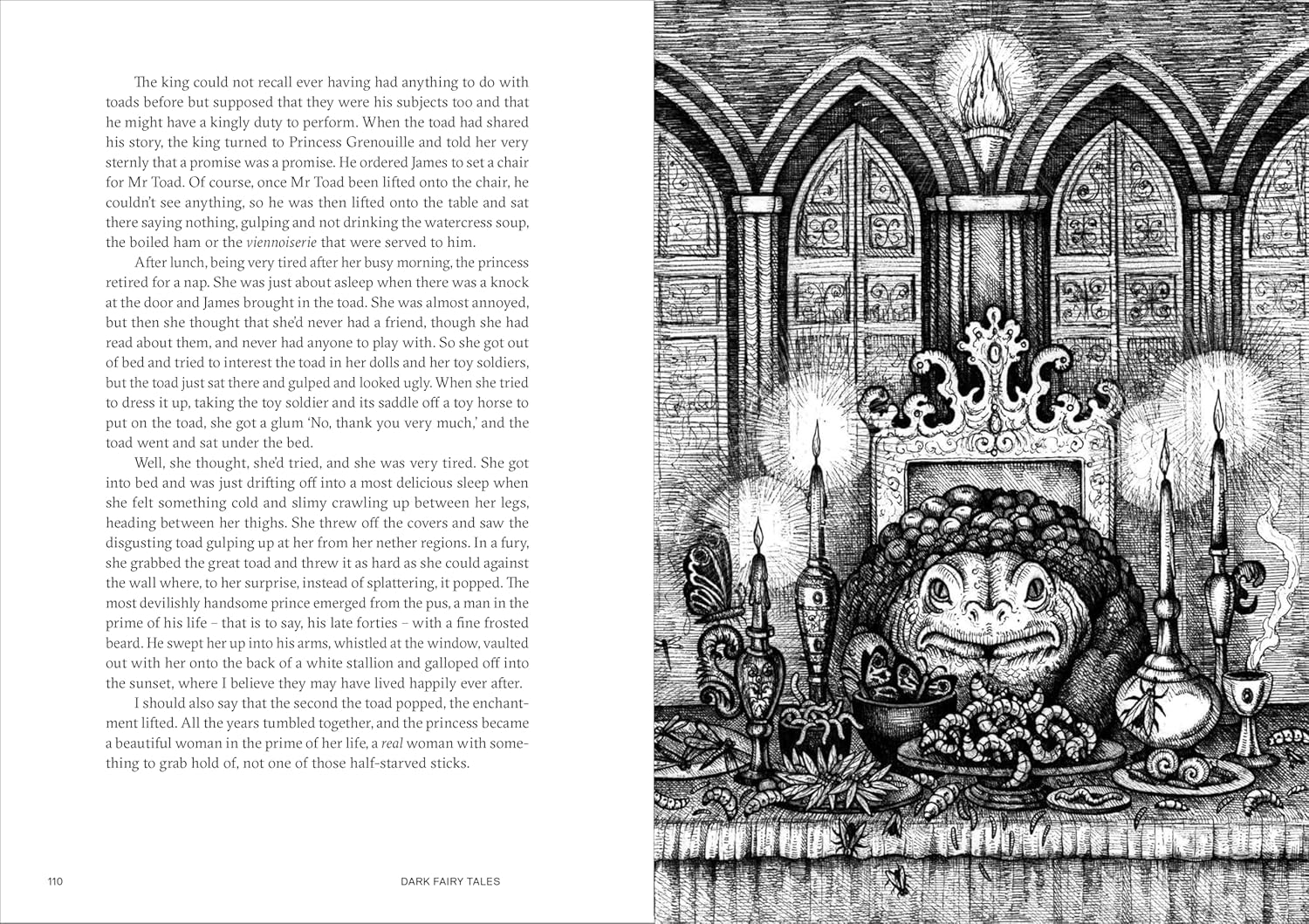
Dark Fairy Tales is by Viktor Wynd, who has collected stories from all over the world, but mainly the ethereal places one would associate with ancient myths. Wales, Ireland, Arabia, Germany, Norway, Papua New Guinea and Borneo, these are the places you want your vengeful creatures to come from. I want my trolls from Norway. I prefer for my maggot-eating toads, who are orally pleasuring princesses, before being brutally smashed into a wall and turning into a prince-to be from Germany.
I want my princesses who are unable to conceive to seek the help of a warlock from Borneo. Unfortunately for said princess, her child would be far from normal. The prince would eventually have to split the baby in half with a sword, revealing the full-grown baby to be made up of leeches. These stories are beautifully disgusting and wildly creative.
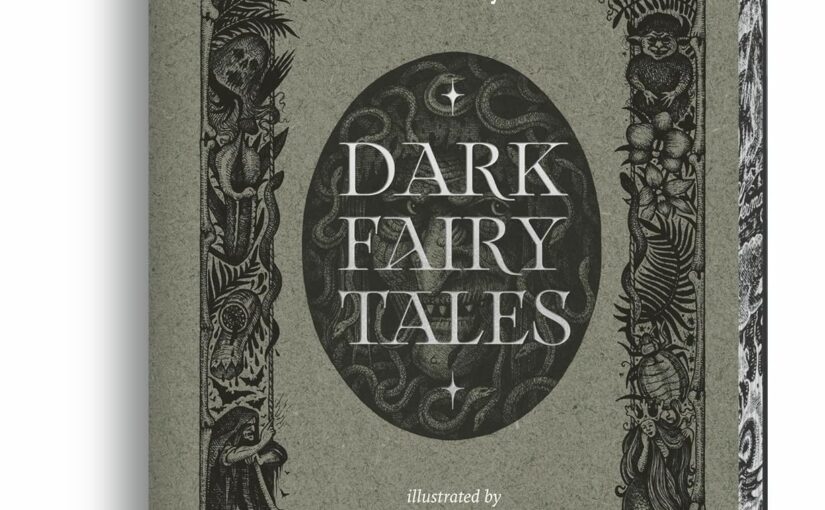
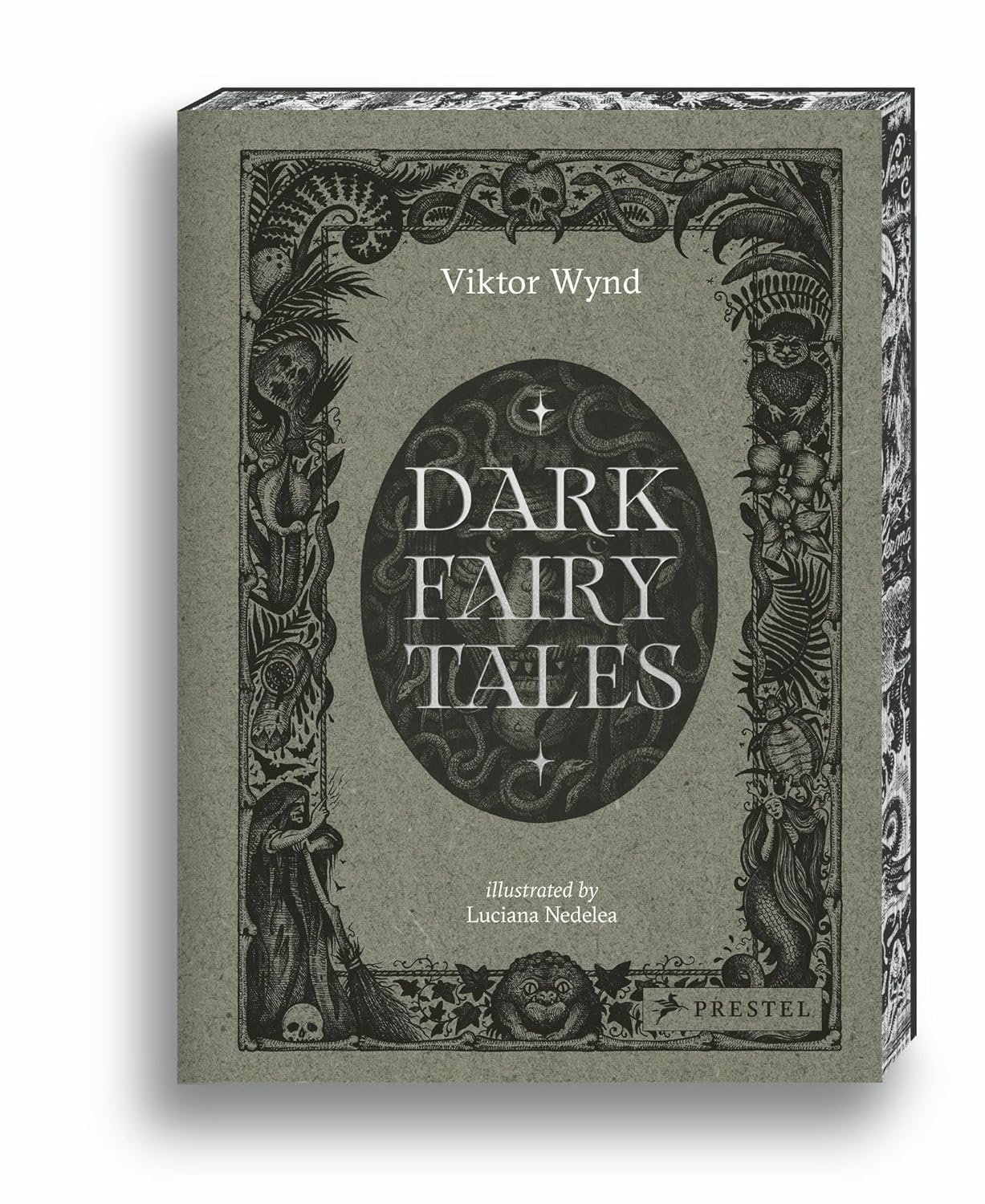
The allure of Dark Fairy Tales starts with its cover. The speckled dark green background has black trolls, serpents, mermaids, warlocks, monsters, insects, and skulls around the perimeter. The face of a witch is barely visible in the center of the book, like a seek-and-find you’re not looking for-and are trying to avoid, under its title. The fore-edge of the book, the part that the individual pages comprise, have witch huts, tentacles, insects, and beasts on it. These inverted illustrations have a black background, with the white lines telling the eyes where they should look for details. From its cover, this is close to a Necronomicon as you’ll get, without looking over the shoulder of a guy who has a chainsaw on his right hand.
Fairy tales are stories that live in folklore and have a common theme. It could be a story of not judging a book by its cover, being kind to others, or any lesson that could translate to any person anywhere. Modern IP’s have trained us to think of these as happy princess-borne stories that usually end happily or are crafted on a pleasant palette.
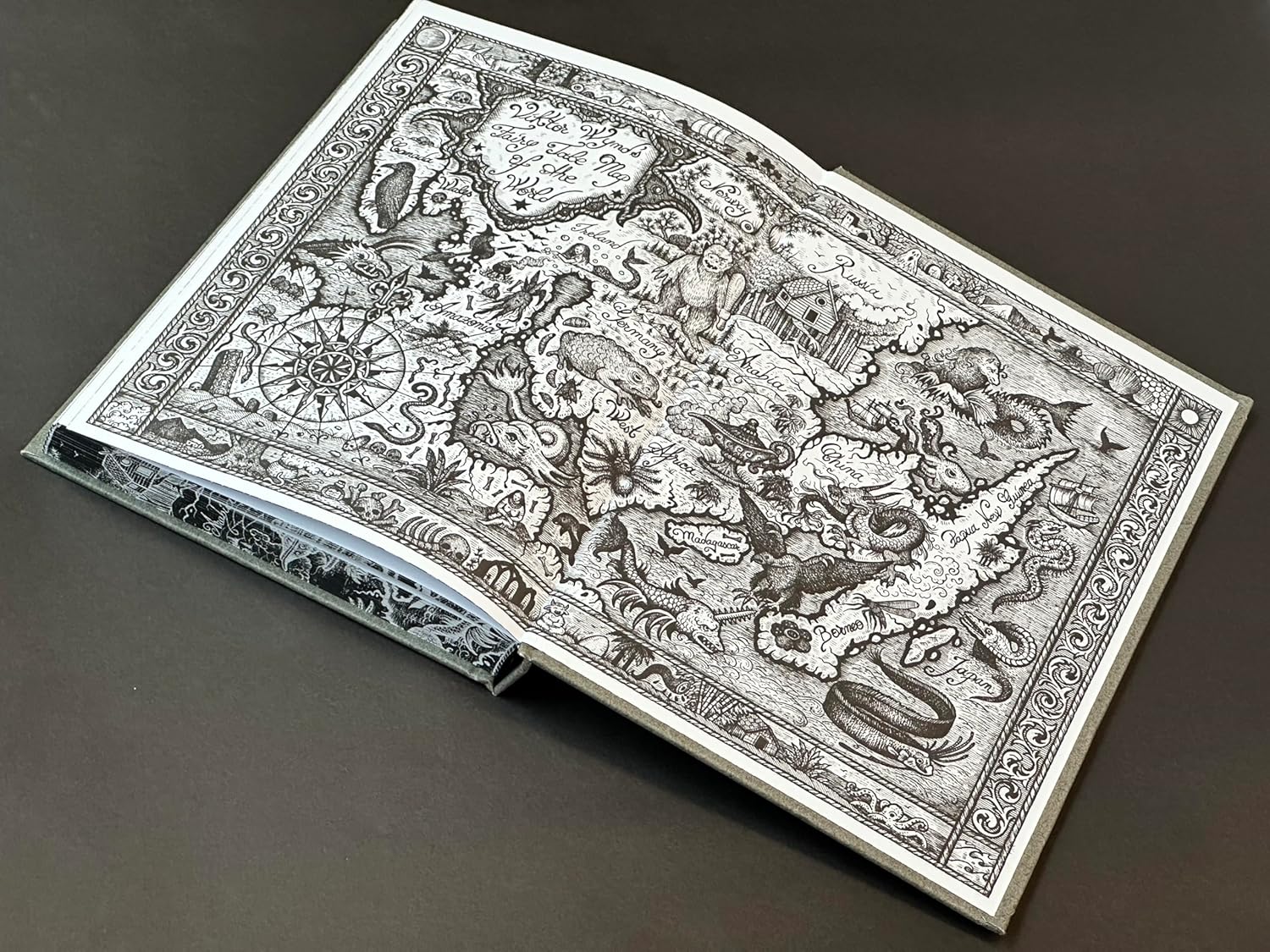
When you open Dark Fairy Tales, you’ll see a map of the world. It’s a map presented in a way that sailors in the 1500s interpreted the land and water, with giant monsters in the shaded-in oceans. The real estate is populated by countries’ names and the totems one would associate with it, like a dragon, mermaid, troll, priestess, witch or cauldron.
There’s a section in the book about how to use the book. There’s an introduction from the author where he presents his overview on fairy tales. These two things might lead some readers to think that Dark Fairy Tales is wonky or difficult to understand. On the contrary, those two segments help you understand the book more accurately, answering the questions of where these stories came from and what led Wynd to collect them. They also present one final warning for the squeamish, easily offended, monster-averse, tender-eared, torture-impaired, virginous souls to stop reading the book.
Art the clown could live in these stories. However, he’d be too passé, a gross, westernized stereotype of a boogeyman to successfully weave his way through Dark Fairy Tales. His spirit would work in these stories, but it’s too over the top. Dark Fairy Tales is evil. The evil at its core is badness that, for the most part, doesn’t seek you out. As with most fairy tales, the protagonist needs or wants something and has to go to a forbidden place to solve their problem.
The antagonists around the world in Dark Fairy Tales fit that bill too. They warn the beautiful maiden who desperately wants to get pregnant. The only son goes to the dark castle where he’s been warned about not going to. The beautiful, but lazy wife attempts a short cut to get to prosperity and pleasure. In almost every story the friend or wife/husband of the protagonist learns a lesson, usually through, disembowelment, slashes, torture, being eaten alive, or decapitation.
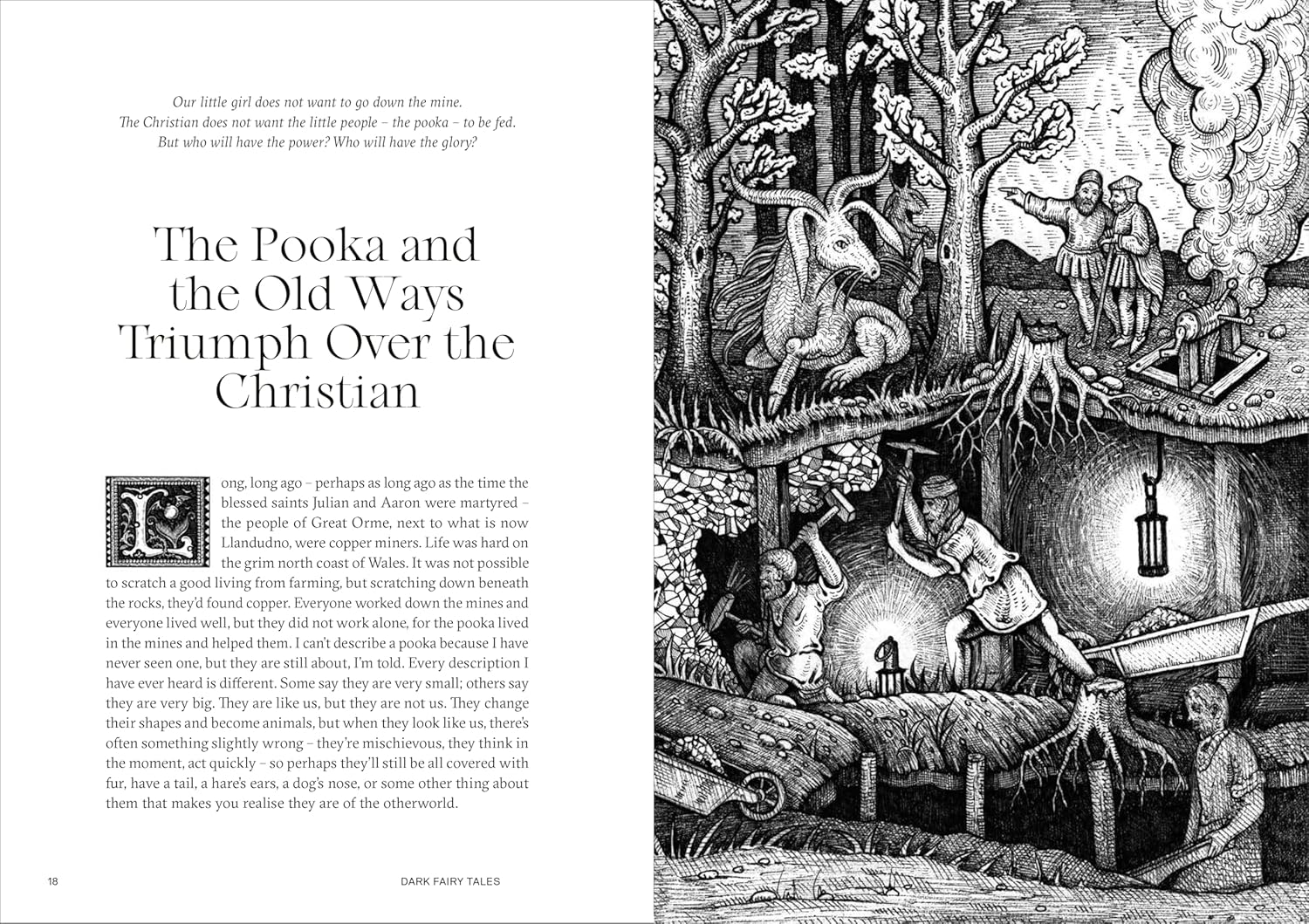
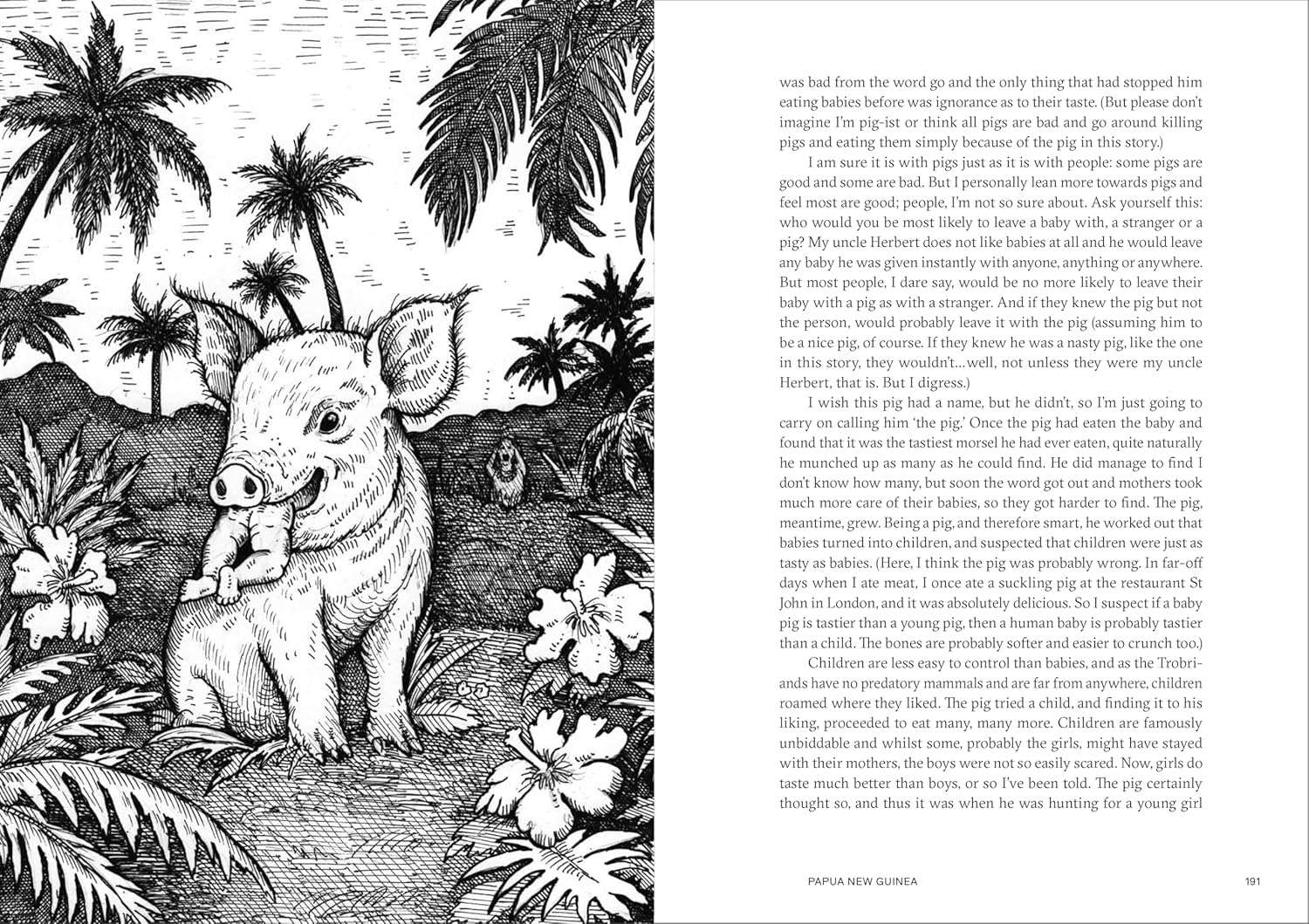
The illustrations in Dark Fairy Tales go a long way towards the enjoyment of the book. They’re Luciana Nedelea and are as beautiful and creative as they are cruel. They’re also very accurate, depicting violence, sexual acts, and beastly monsters doing cruel things, not excluding sexual acts and violence to humans or other monsters.
If you like reading horror and are an adult, you will enjoy Dark Fairy Tales. They’re fairy tales with a worldwide lens that keep the cruel in its sight. It’s unflinching in the way they’re portrayed, save for the occasional commentary or side note from the third-person omniscient. You can read the book numerically, which would go through the countries in order. I read the book by randomly opening and digging into it. This allowed me to explore the cultural differences between the trolls, virgins, djinns, pigs, and witches relative to their origin. Dark Fairy Tales isn’t for every adult horror reader, but for those who want to color outside of the lines in a haunted, semi-familiar way, it’s worth the walk.
Dark Fairy Tales: Stories from Around the World (That Are Definitely Not Suitable for Children) is by Viktor Wynd, with illustrations by Luciana Nedelea and is available on Prestel Publishing, an imprint of Penguin Random House.
There are affiliate links in this post.


 Facebook
 Twitter
 Youtube