
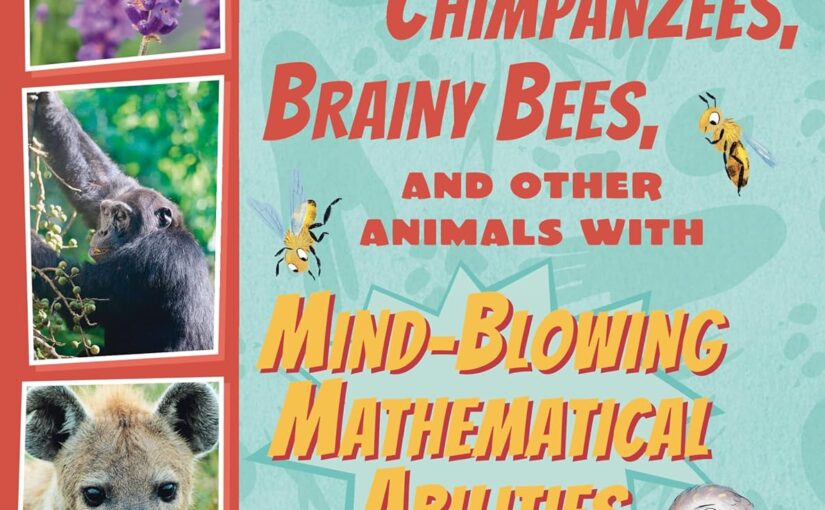
The educator wonk in me loves books that aren’t scared to display their intelligence. The realist in me knows something that’s too smart will scare off some readers. The second book in the Extraordinary Animals series is Calculating Chimpanzees, Brainy Bees, and Other Animals with Mind-Blowing Mathematical Abilities. That’s a mouthful of a title and it has the intellect to back up. Not that a reference, non-fiction book aimed at elementary school readers has a beef with anybody, other than ignorance.
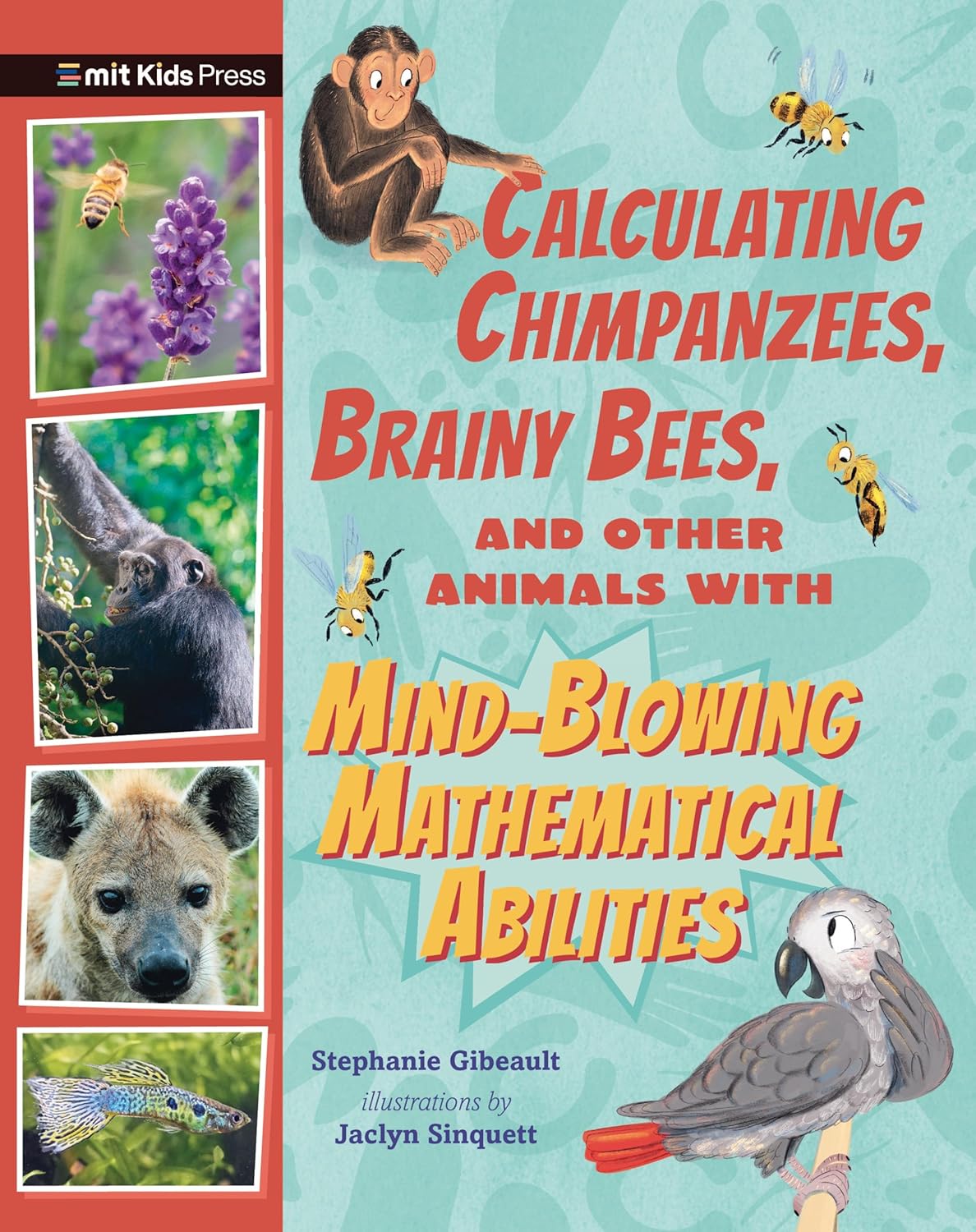
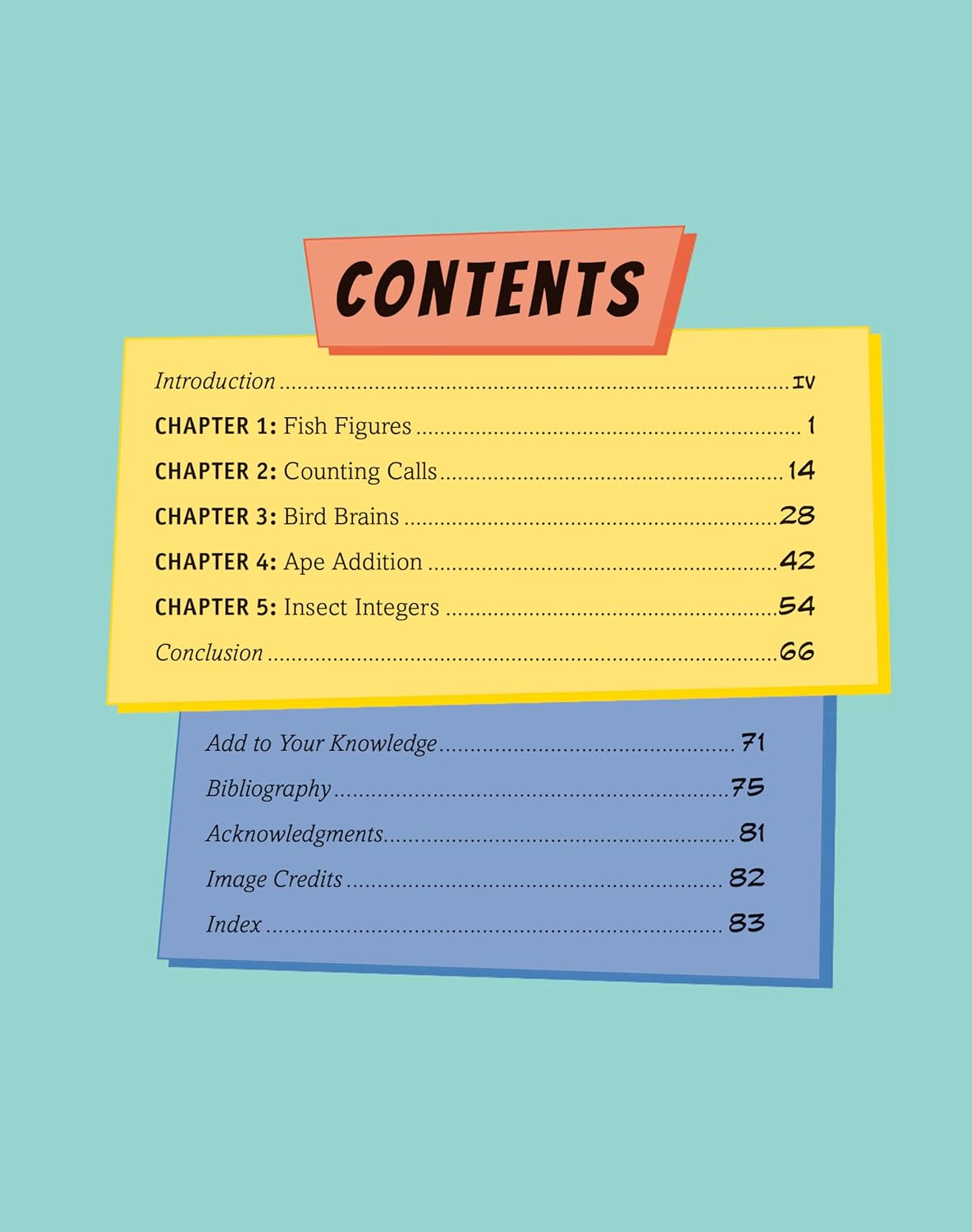
Calculating Chimpanzees, Brainy Bees and other Animals with Mind-Blowing Mathematical Abilities is spread out over five chapters, with each one highlighting a different animal. It’s about those animals who have special math abilities. You’ve probably never thought about the minute math talents that certain animals have. It’s those little things that us humans have and take for granted. Then, we look at certain animals, or packs of them and wonder how or why they do the things that they do.
Did you ever have an aquarium as a kid? You probably had guppies and if you’ve seen a shoal of them in a tank you’ve noticed that they swim together. First off, it is a shoal and not a school, the difference is close. A school is a shoal of fish swimming in the same direction. Guppies prefer to swim in large shoals due to predators (or green nets coming in from an hourly employee). If a shoal has two guppies and the other one has five, the fish will instinctively go to the larger group. Hello Relative Numerosity Jedgement, humans have it too and it’s essentially the ability to quickly estimate the number of something. Scientists have done studies on this effect and others in regards to goldfish, and have figured out why they do the things they do…and math plays a big part in it.
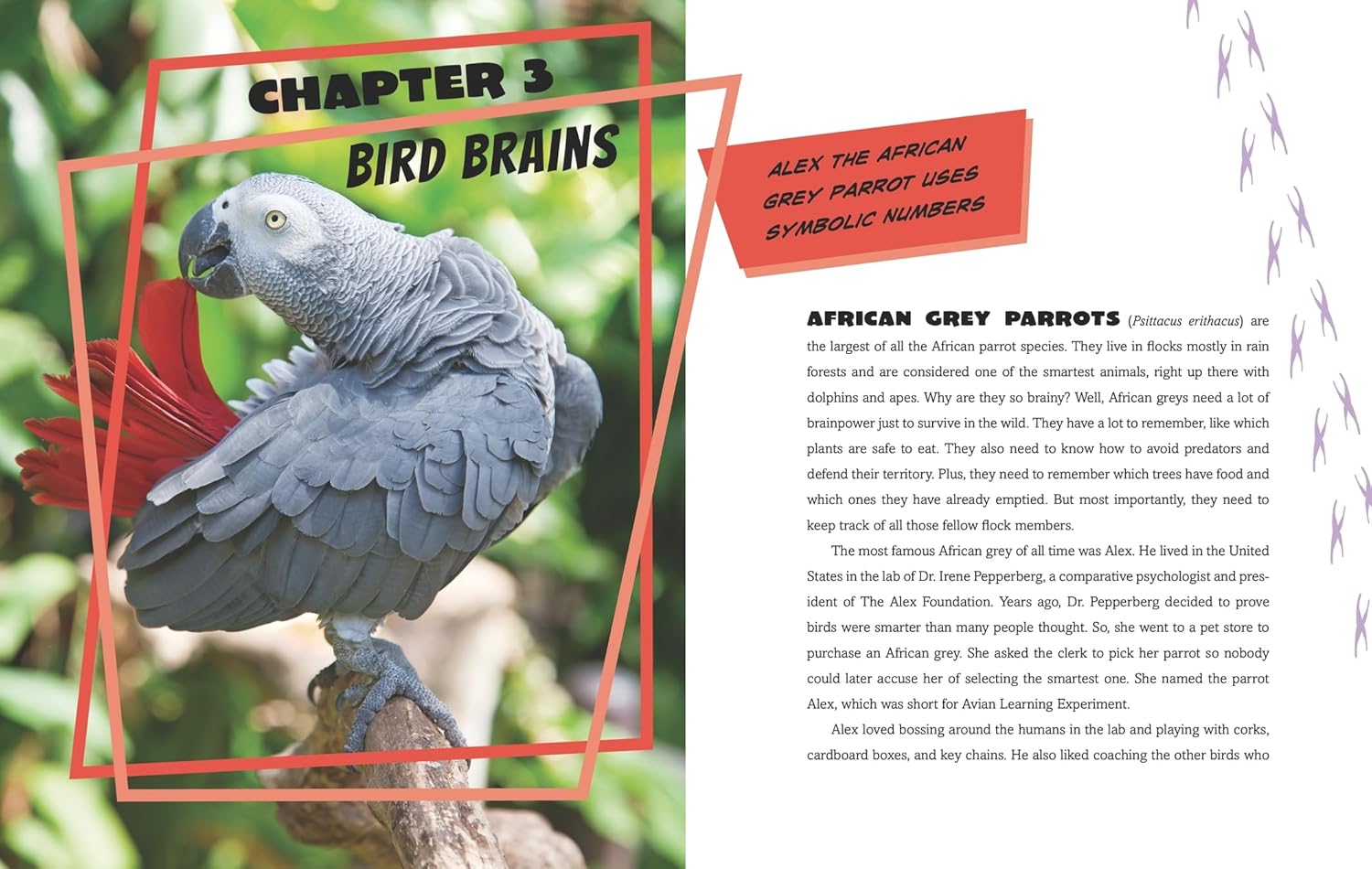
Hyenas have a similar talent in that they’re able to subitize. Subitizing is something that we do too, we just don’t know that we do-and most of us didn’t know the name of it until Calculating Chimpanzees. There’s a great chapter about Alex, an African Grey Parrot who knew the power of ordiality. That’s the ability to know that one number is greater, or smaller than another number, I didn’t know that either.
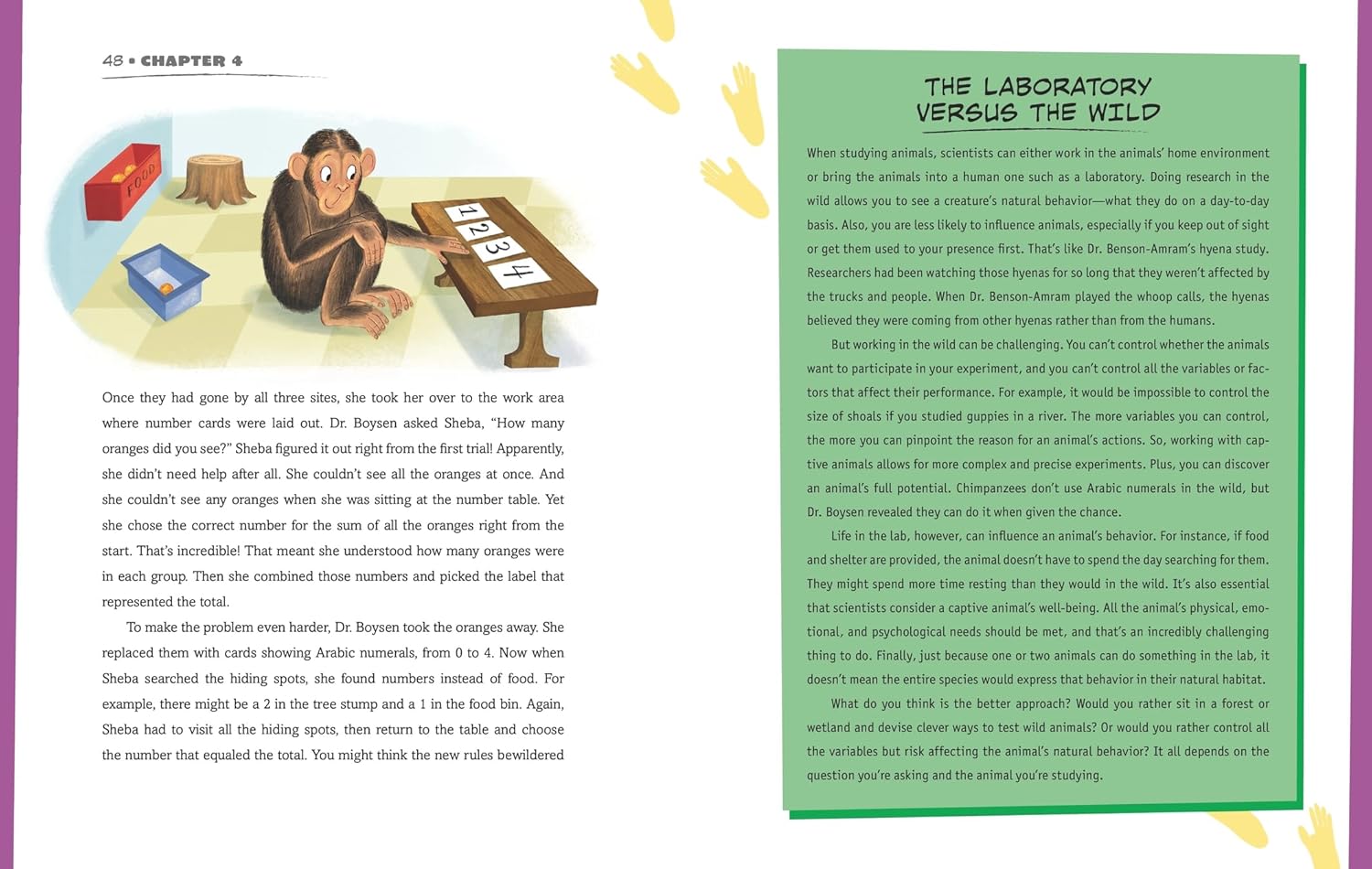
There’s a lot of information that you won’t know in Calculating Chimpanzee, and that’s ok. Because of that, there’s even more information that middle-elementary school students through those middle school ages can learn. These are those repeatable tidbits of knowledge that kids love to share. They love to share them because they’re unique and many adults won’t know them. And any time a kid can get a genuine sense of surprise and wonder from an adult they are winning.
This type of book has a lot in common with Nat Geo Kids, with two large and obvious differences. This series focuses more on the scientific research and reading. The paragraphs are entertaining and suck you in with vocabulary that’s at a sixth-grade level. There’s also a very logical flow to the way they’re create. It is educational and lists facts, but it also does it in a narrative fashion so that everything builds up to it.
It also isn’t big and flashy. Calculating Chimpanzee is the same size as other books that middle school kids probably aren’t reading, but is more attractive due to the animals on the cover. You won’t mistake this for a massive reference book that hammers you over the head with glossy photos, too many puns and a kinetic energy that almost gives you seizures. These two differences will attract some readers and deter others.
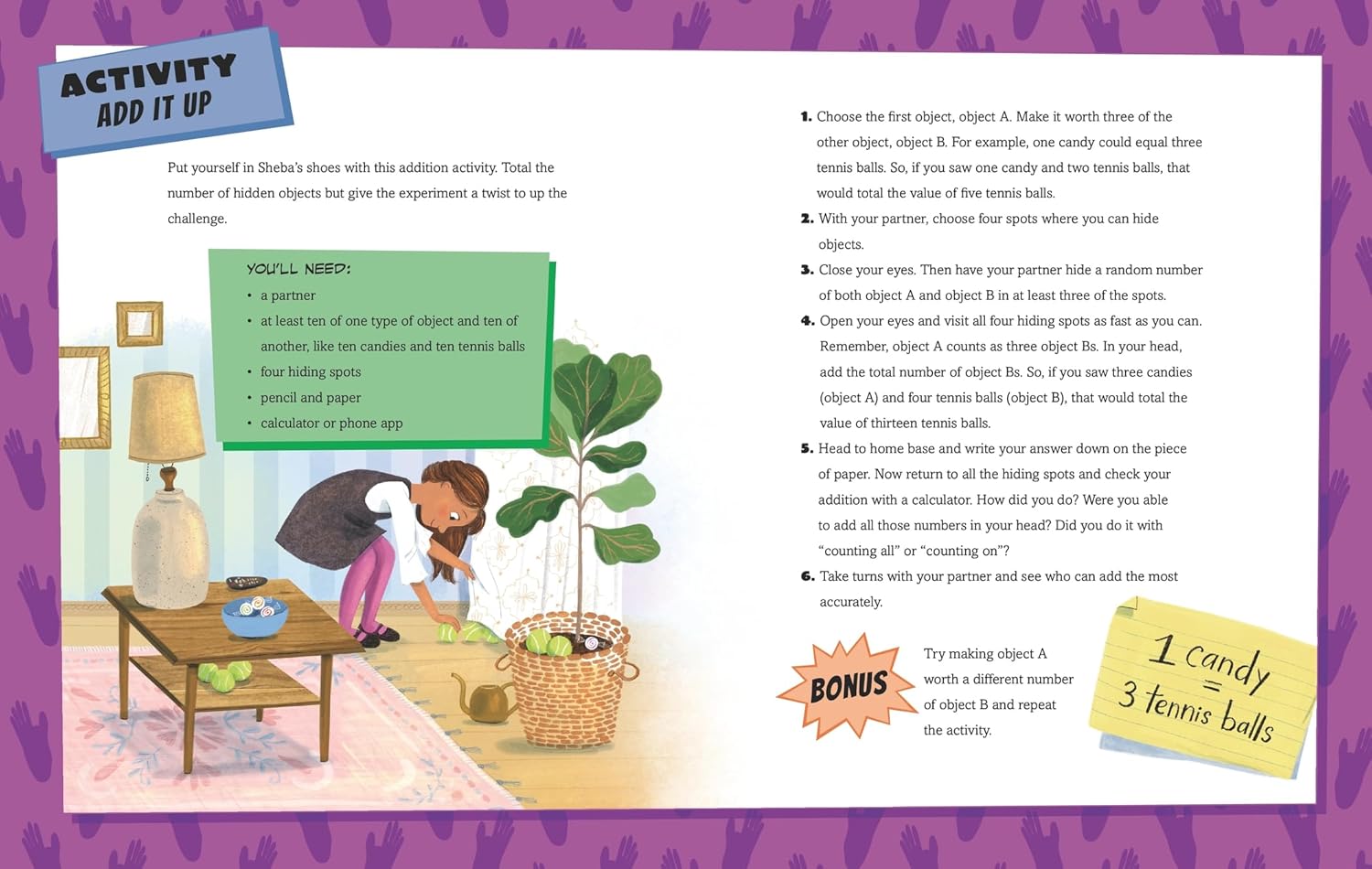
As an educator and reader, I prefer this approach. The content is more engrossing and complete. You feel like you know Alex and a bit about his challenging personality. Because of this, the facts will stick with you longer. However, if you’re in any way a reluctant reader, this series, and this book, will be more challenging for you to latch onto. For those in both camps; Calculating Chimpanzees, Brainy Bees, and other Animals with Mind-Blowing Mathematical Abilities is worth checking out. Those who know that they’ll like it will be pleased, and those who have been holding back their intellect will feel a sense of relief at having released the Kraken.
Calculating Chimpanzees, Brainy Bees, and other Animals with Mind-Blowing Mathematical Abilities is by Stephanie Gibeault with illustrations by Jaclyn Sinquett and is available on MIT Kids Press, an imprint of Candlewick Press.
There are affiliate links in this post.


 Facebook
 Twitter
 Youtube