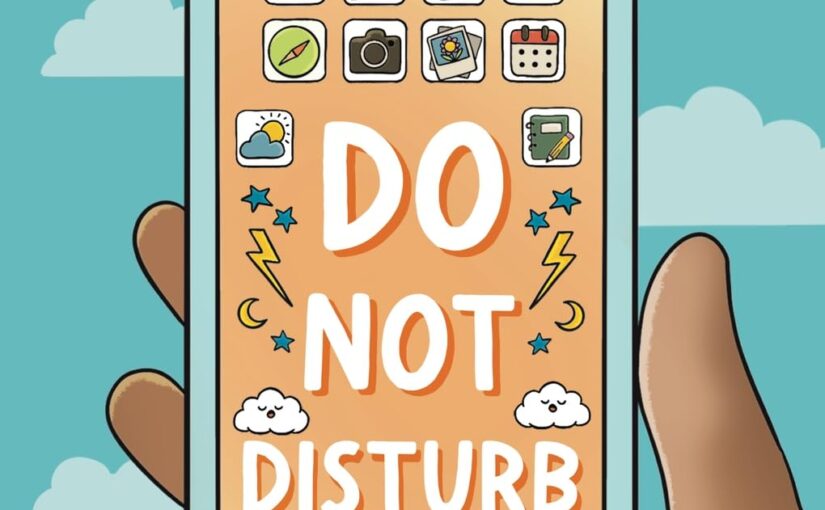
Stop me if you’ve heard this one, but my kid’s cell phone is driving me crazy. As a teacher I know the struggle. The answers seem easy. Take the phone away, but it’s how they socialize. Limit their cell phone time, but they might need it for school work. If they don’t learn how to deal with it now, then they’ll be even worse when they’re out of the house. The quandary of how to deal with it, simply from the perspective of an adult is challenging. Do Not Disturb: How to Say No to Your Phone is for middle or high school kids who want to know more about the problem. But, I don’t have a problem, and it’s entirely possible that you don’t, but just for the sake of discussing it, let’s kick the topic around.
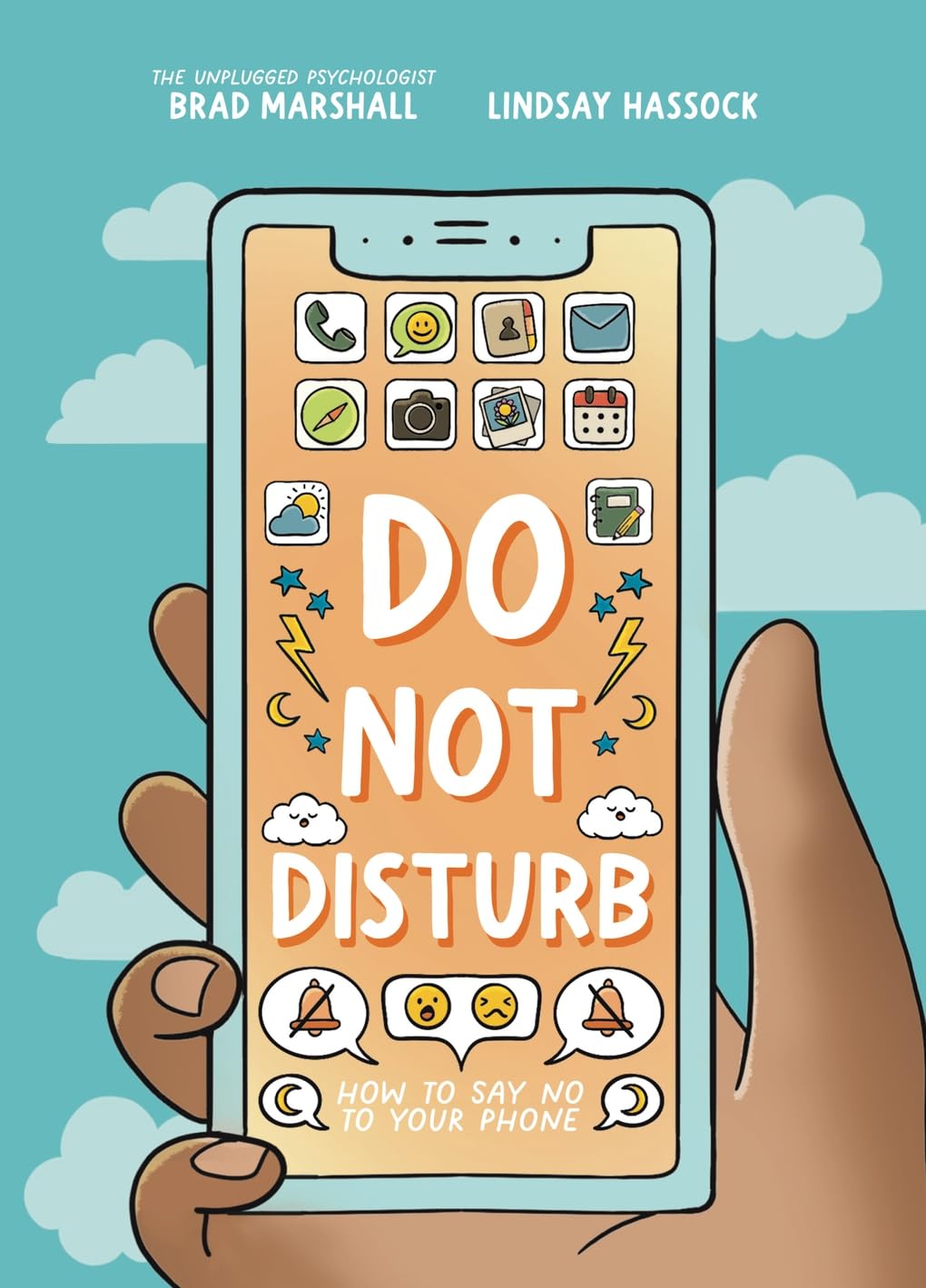
Our eighth grader thinks that he doesn’t have a cell phone problem, yet this book has his Rorschach test down to a T. Authors Brad Marshall: The Unplugged Psychologist and Lindsay Hassock have more than 20 years of experience in speaking with various audiences about addiction to technology. The book immediately lets you, the reader, know that your phone is not an evil device out to make you buy surplus cheap junk from sketchy websites. They have a positive purpose and can help us humans make life easier and more prosperous.
Hang on…I feel like I’m being sold a book here. On page 8, it clearly says, “Putting down your phone and picking up this book is a great step.” This book is trying to break up me and my phone. (It’s trying to limit the dopamine that my smartphone brings me.) I’m shutting down. Shoot, my cell phone battery is below 20% and my know-nothing teacher is asking me to put it on the phone carrier on the wall. I’ll put my junk cell phone in there while my smart one is charging in my backpack.
Is the above paragraph something that you thought or thought that it’s akin to what your child would say? If so, what would Jeff Foxworthy say, except take out ‘redneck’ and put in ‘have a smart phone addiction.’ Addiction has such negative connotations, and a trained psychologist certainly has a better way to phrase it. Ah, in the book it says, “for some people, this can lead to addiction”, so no, it is an addiction, but it’s not the guaranteed outcome.
But, I don’t have a problem.
Do you sometimes get accused of having a bad attitude? When asked to put your smartphone away does it take what seems like forever for that to happen? If you’re bored, does a doom scroll of nonsense occupy your thoughts? Is it challenging to speak with people IRL if your cell phone isn’t in your hands? Does your only career path consist of Twitch streamer or a YouTube celebrity?
Do Not Disturb is a book that you need to read. Unfortunately, herein lies the problem. “You” could be an adult with a youth with a smartphone problem. In that case it’s quite simple to read the book and you’ll kick yourself for not reading it sooner. If ‘you’ is a teen who uses the smartphone too much you like the way your friends act, don’t want to change anything, love brain-rotting video, can’t say low-key enough, and are intent on setting the next social media trend that will give you a massive, double-dose of dopamine.
TLDR. Do not Disturb has ten chapters. At the end of each chapter, there’s a toolkit with a simple set of questions. These questions (or tips, not that you need any tips..) will help you communicate better. If you’re using the smartphone as a way to validate emotions or feelings, it’ll give you alternatives. There are check-ins that help you check yourself before you wreck yourself.
This book is not judging you. Do Not Disturb has lots of allegories about student who have abused technology, realized it was a problem and recovered from it. The book also doesn’t squirm away from saying there’s a problem when there’s a problem. Oh snap, the quote from page eight rears its head again. If you’ve opened Do Not Disturb: How to Say No to Your Phone and started looking at the illustrations or reading it, that is the first step, now keep on walking and you’ll be better for it.
Do Not Disturb: How to Say No to Your Phone is by Brad Marshall and Lindsay Hassock with illustrations by Lauriane Bohemier and is available on Magic Cat Publishing, an imprint of Abrams Books.
There are affiliate links in this post.


 Facebook
 Twitter
 Youtube