
This past Christmas season I watched A Charlie Brown Christmas with our youngest child. I was hoping that the spirit of Linus Van Pelt would move him. After reading Dance in the Desert by Madeleine L’Engle, it could be more appropriate for him to be moved by that spirit. Dance in the Desert has been revised, abridged, and re-released after 55 years. Middle school readers will know L’Engle from A Winkle in Time, which is one of the first books they’re required to read. Dance in the Desert is from her early days as a writer, and displays a sense of wonder, optimism and joy, that’s tempered with the rough edges of life.
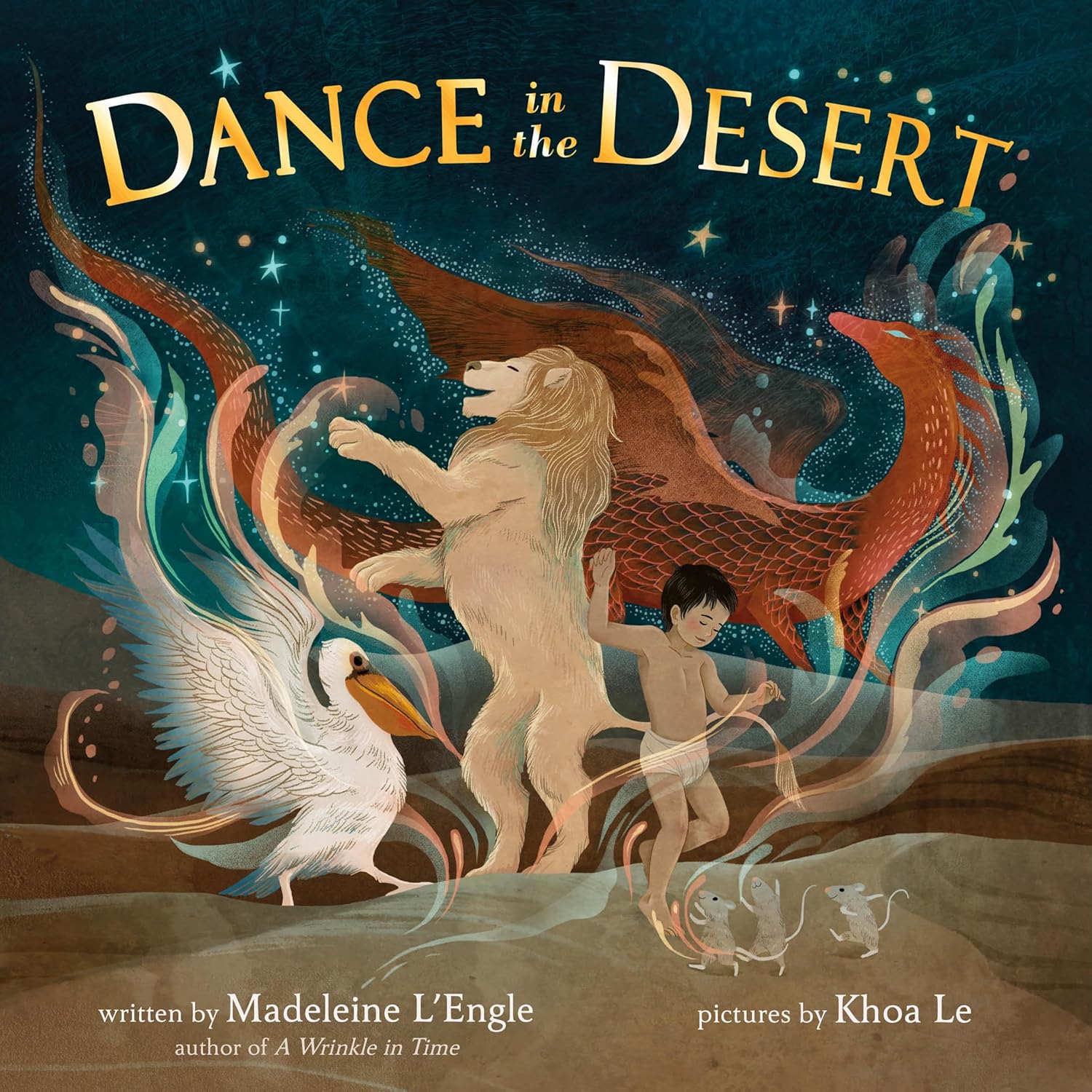
Dance in the Desert is also the most Christmas, non-Christmas book you’ll ever read. It channels the same energy that Linus was echoing in the 1965 television special, but without the scripture quote. The scene where he quotes a bible verse on stage caused quite the kafafufle back then, and still rears its head occasionally today. In a way, L’Engle’s book evokes more of a Christmas spirit, but mainly does so via allegory.
Dance in the Desert opens with a couple and a toddler seeking passage across the desert. The book is set thousands of years ago, the man has a full beard, is carrying a cane and both of them are wearing a cape that covers the top of their heads to protect them from the desert heat. They meet a wealthy merchant who is crossing the desert. While initially hesitant, he agrees to help them cross the desert. The merchant’s traveling party quickly discovers that the toddler is a joy. He’s curious, easily entertained, sleeps for hours on end and loves everyone.
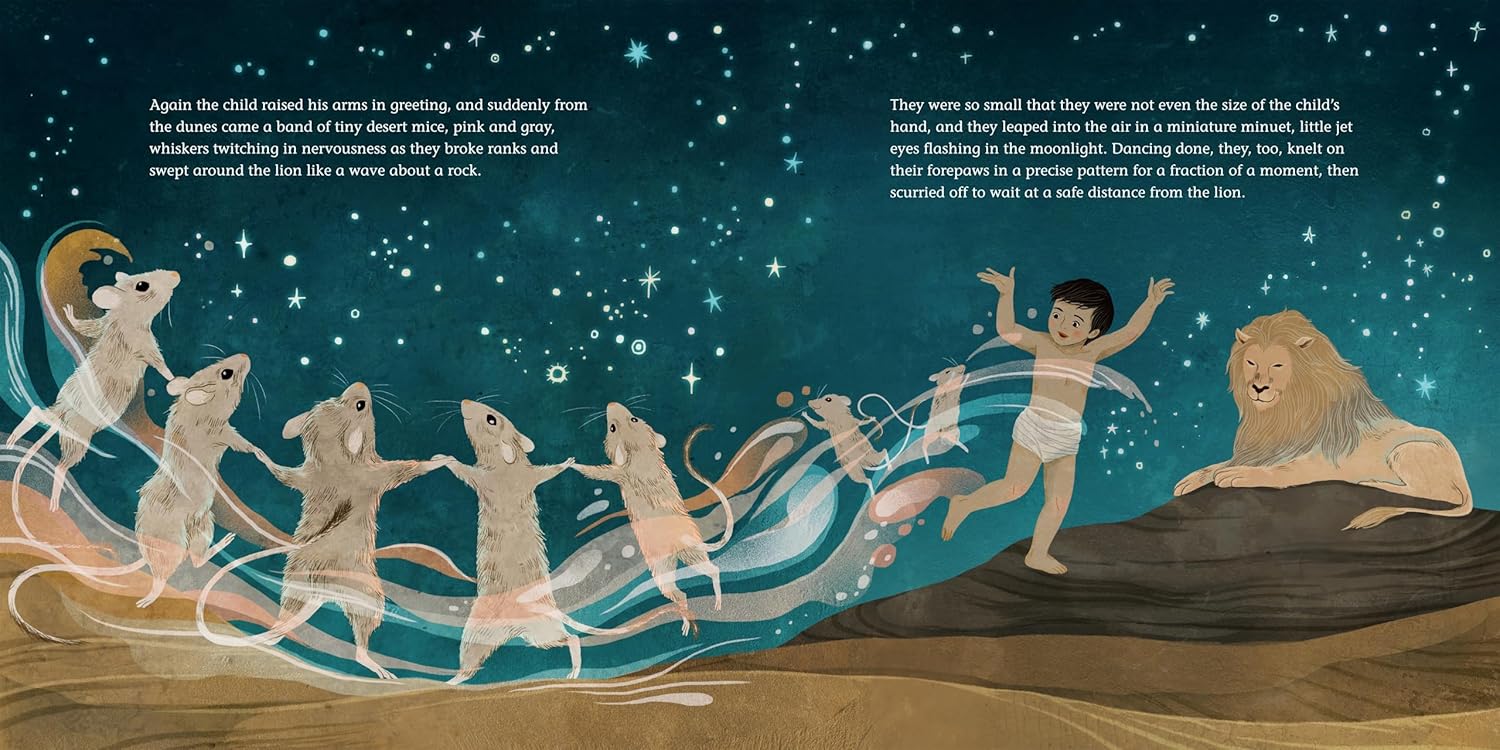
One night, the teen in the party is playing a musical instrument, with the toddler on his lap. Suddenly, everyone hears the roar of a lion and is very scared, except for the toddler. The lion, looking regal and ethereal, comes down from the top of a hill. The toddler stumbles up to the lion and the two start waving their arms (or front paws) and dancing. The humans are wary, but secure enough to sit at a distance and watch the two dance.
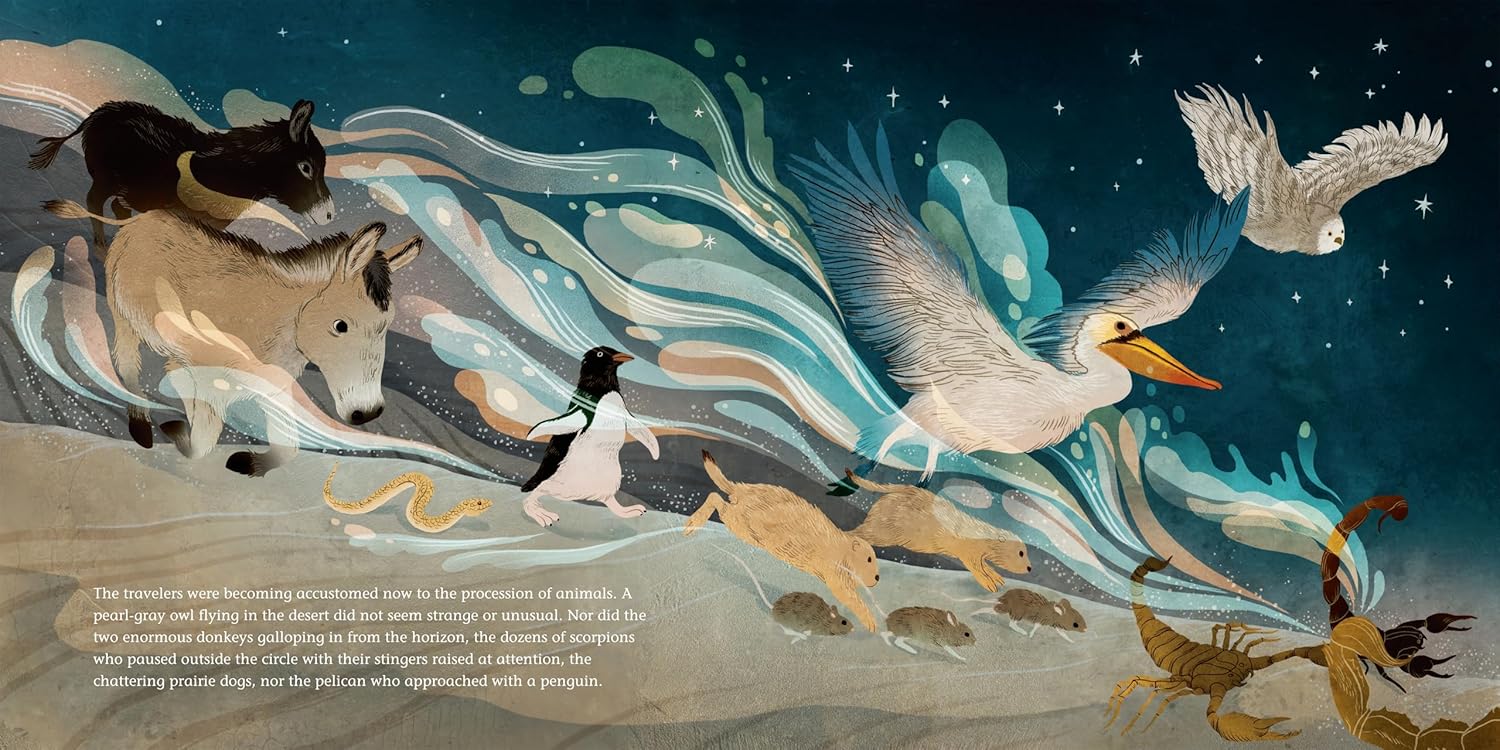
The lion goes back to the hill and sits down when a group of desert mice emerge from the darkness and performs a synchronized dance with the toddler. Three eagles swoop in from the distance and fly around the toddler before landing near the lion. A herd of ostriches gallop across the sands to the boy, a unicorn appears on a different vista and a snake even coils around the child before retreating back to the warm sands. The people grow accustomed to the cavalcade of animals approaching, but are truly taken aback when two dragons appear. The dragons lead all of the animals into a dance that surrounds the camp until the creatures fade into the sky or disappear into the desert.
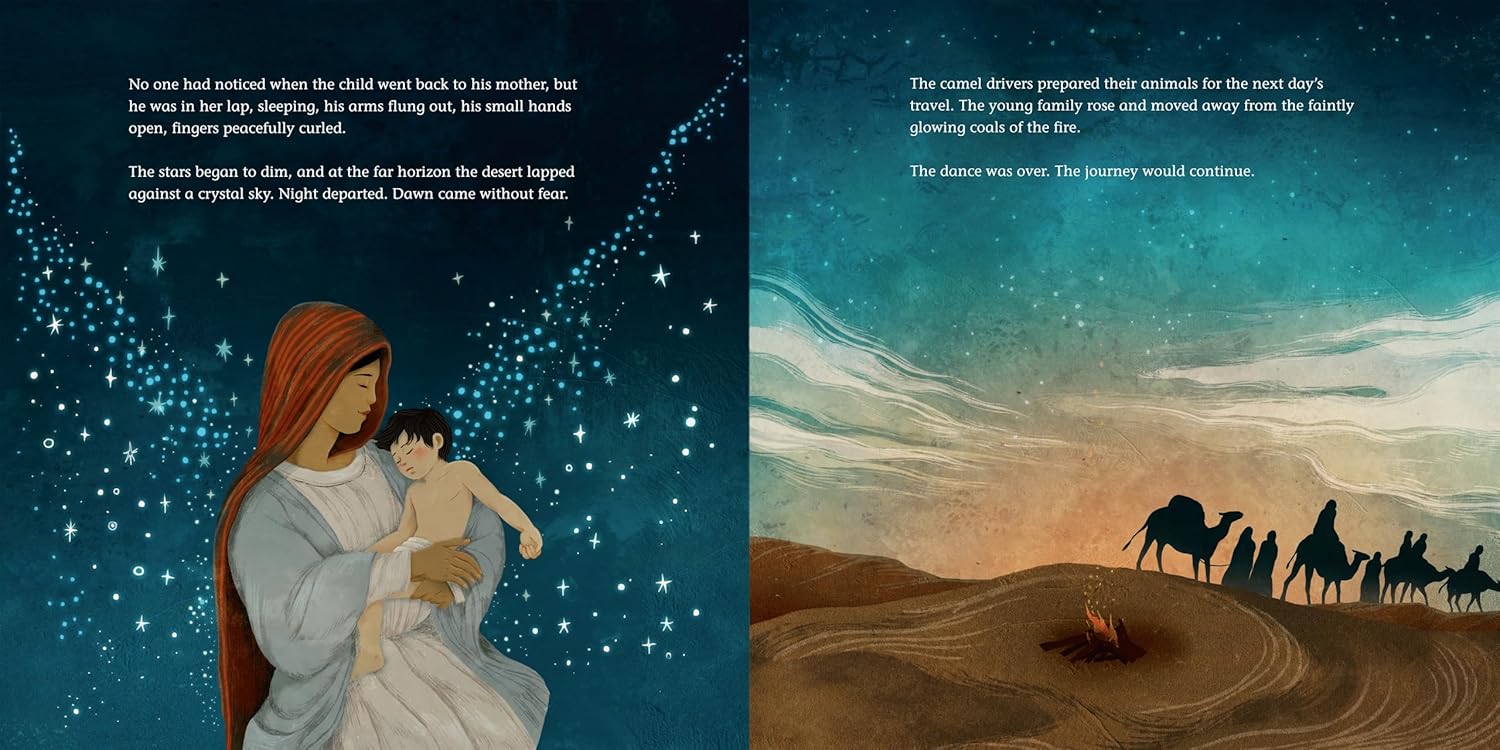
This cacophony has distracted the caravan from the toddler, who crept into his mother’s arms and promptly fell asleep. It’s also taken up a night’s worth of time, as the pending sunrise and movement across the desert resume.
It’s a beautiful, dreamy story that inspires wonder, mirth and fanciful thoughts. Comparing Dance in the Desert to The Lion, The Witch and The Wardrobe is obvious, is nothing else because of the fact that there’s a lion who is central to each story. They both also have that timeless quality. It’s not striving to be something classic, it just is. The story is smart and uses vocabulary that’s not normally encountered in illustrated books. But it’s an allegory for the story of Christmas, and I don’t want to expose my class or kids anything that’s not in my wheelhouse. I get that, but there’s nothing obvious in Dance in the Desert to any religion. It doesn’t mention any scripture, holy person or respected site.
The book does have allegorical things that the author certainly intended. However, aside from things that are known via pop culture or those believers in the faith, the book is A secular. Sure, it’s the story of the Holy Family’s exodus from Bethlehem to Egypt. But, if you’re like me, the odds are that you’ll only discover that fact from reading the book’s liner notes.
Dance in the Desert benefits from a very solid combination of detailed, yet abbreviated text, with just the right style of art. The illustrations by Khoa Le are realistic and detailed, but retaining warm feeling that makes the book fun and comforting to look at. Madeleine L’Engle’s text is supposedly abridged from its original version. I don’t know how much was edited or how long the original version was. This version works great in an illustrated book format and provides much more detailed text than others like it. Some adults who want to see things everywhere won’t enjoy Dance in the Desert because of its allusions to Christianity. Because of L’Engle’s beliefs and the content in the book, that is understandable.
That would be throwing the baby out with the bathwater. This is a great story with supernatural elements, dancing animals, family, and an open-ended quest. That’s the way I look at it. You’ll be charmed by the story, and young readers will effortlessly follow the art. They’ll even learn bigger words than their counterparts in school, like sustained, dignified, haunches, sinuous and others, which are always a great thing.
Dance in the Desert is by Madeleine L’Engle with illustrations by Khoa Le and is available on Farrar Straus Giroux Books for Young Readers, an imprint of Macmillan Publishing.
There are affiliate links in this post.


 Facebook
 Twitter
 Youtube