Oh dystopian mglit and YA, you vex me so. Burn the Water is by Billy Ray. He’s the Oscar-nominated writer of the screenplay for Captain Phillips. Ray has also had his screenwriter or writing fingerprints all over The Hunger Games, Richard Jewell, and The Hunger Games: Sunrise on the Reaping. Text is not a stranger to him. Ironically, Burn the Water is his first novel, but he’s obviously cut his teeth on tense projects that have a taut narrative. Even if you didn’t know his pedigree, you’d suspect that something was higher than usual within the first couple of pages of Burn the Water.
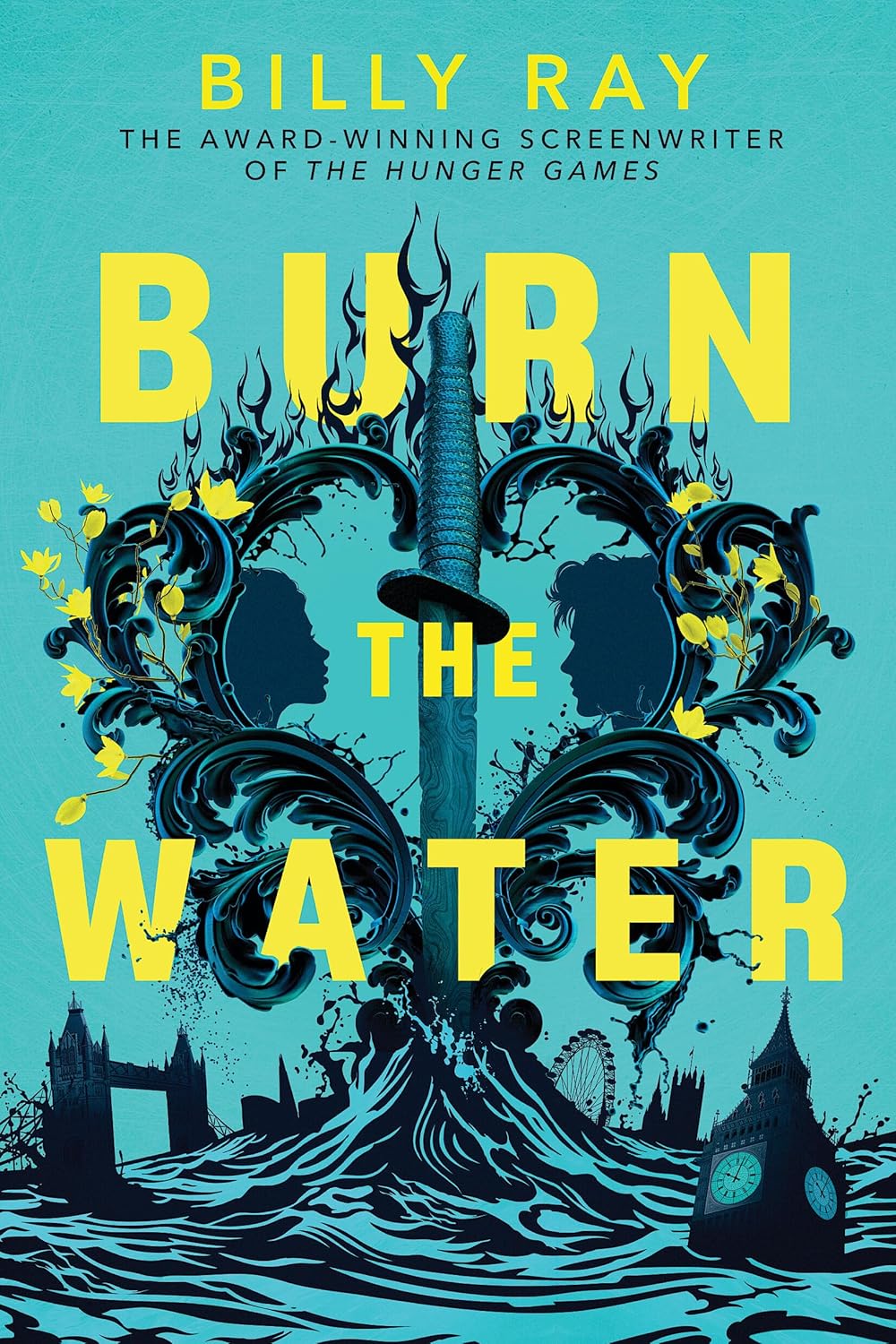
It paints a picture of England in the 25th century. Specifically, London, but the landscape is all water, all the time. The book is not a paranoid tale about global warming. Yeah, the oceans have risen, but the goal of the book isn’t to guilt climate change folks. Instead, the rising water is an afterthought in the rearview mirror. This leaves the warring, primitive tribes of people to battle it out over what few resources haven’t been flooded.
The first chapter of Burn the Water commands your attention. You want to read every word. You will read every word. This is what it’s like to read every word in a chapter, is what speed-reading people will say. At the end of the first chapter, you check your shoes to see if they’re damp. You want to take a shower to get the mud, filth, and campsite stench off your body. Thinking it’s a fluke, you’ll start reading the second chapter, but fall into the same groove.
Those chapters deftly introduce readers to the two main tribes that make the rest of a flooded London. Jule is a young Crown and Rafe is a dashing, young Rogue. Generations of their kind before them have instinctively learned to kill the other one whenever they get a chance. Jule is one of the best warriors on her side. Her aim is excellent. However, she doesn’t take the shot when she sees Rafe in the middle of the street. They both know their world is about to change.
It could be Ray’s screenwriting background, but Burn the Water feels like a movie. That is not a bad thing. The book quickly builds a world that’s not simple, not too complex, but is sufficiently populated with engaging characters who can alter the plot. There are twists and turns throughout the book. This happens on so many occasions it feels like it’s about to write itself into a corner, but it never does. There are near-fatal instances for the main characters in their Romeo & Juliet love affair. The two have duplicitous associates out for their own benefit, or are they simply being loyal to the people around them?
The story is punctuated by the paradigm-shifting entrance of something unexpected. It’s different, massive, and makes perfect sense when you expand the scope of the story. This entry puts both camps on notice. This bigger entity makes their tribal argument seem silly, trite, and petty. The smart people in the camps realize that things need to change, but do they carry enough sway to convince the masses?
That desire to read every word in Burn the Water is constant through most of the book. It’s a great novel that builds a world that you want to see more of. Ironically, its ending feels very finite, almost like Thelma & Louise. There is more of a postscript than that film. Burn the Water just didn’t end in a typical manner that I expected it to. However, do you dislike a book just because it doesn’t end in the way that you think it would?
Was I initially disappointed because I was led to expect Burn the Water to take the stereotypical ending? Am I conditioned to books and movies ending in a way that leads to an immediate sequel? When I started thinking those things, I looked at the spine of Burn the Water to see if there was a number on it. If there’s a One or “1” on the spine, then the book is setting itself up for more stories in this world. There is a “1” on the spine of Burn the Water. I was relieved.
The book ends in a way that respects the reader. It validates the stakes that the characters were fighting for throughout the book. It does this, yet it doesn’t make it seem like everything was for naught. At the same time, it moves on from the sacrifices certain characters made. It allows the story a glimmer of light that could lead to more stories in this world.
This is so much better than a cliffhanger. It’s not as expected, but it’s so much better. I suspect that most readers will enjoy Burn the Water without feeling that the ending betrays their emotions. Those younger readers, the intended audience, will more readily associate the young love aspect of the book and be able to roll with it. Burn the Water is mglit that ages ten and up will fall headlong into. They’ll love the action, think that they know what’s going to happen, and be surprised when it doesn’t follow the script they’ve been taught to follow.
Burn the Water is by Billy Ray and available on Scholastic Press, an imprint of Scholastic.
There are affiliate links in this post.


 Facebook
 Twitter
 Youtube