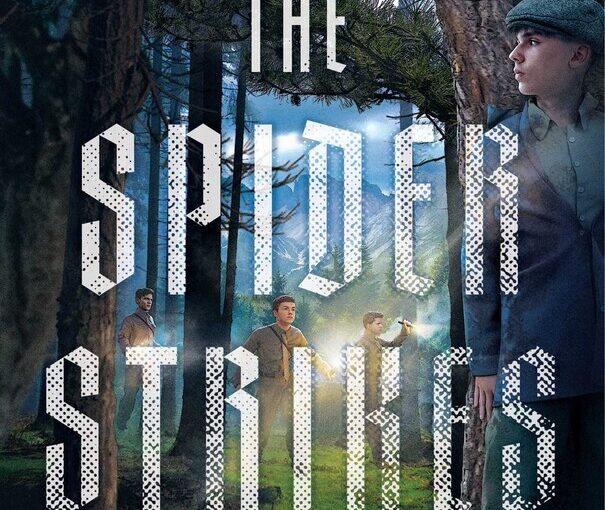
There’s an almost impossible point of believability to accomplish between Scooby-Doo, The Hardy Boys, the authentic enthusiasm of teens and realistic fiction. But wait, you want to successfully thread that needle through an opening further complicated by setting the book in 1930’s Germany? Somehow, The Spider Strikes, the third book in The Web of the Spider book series, navigates that 1%. It deftly tells an age-appropriate story about teenagers in 1931 Germany. I was skeptical too. However, during the book I was enthralled at the way it balanced everything. I was also bummed that the first two books in the series had slipped past my radar.
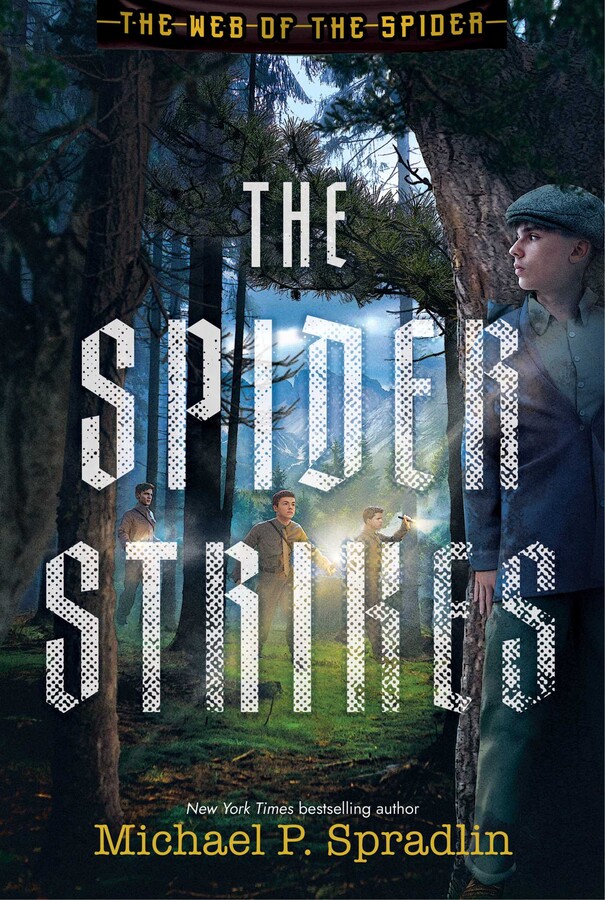
Again, the premise behind The Web of the Spider is an almost impossible one to see an entertaining outcome from. In no way can you view the Nazis as sympathetic. You know that terrible things will happen to many of the population in the next couple of years. The Spider Strikes weaves in the economic depression, realistic teen friendships and the group-think mentality occurring at the time in Germany. It does this without sugarcoating the way that a group of Nazi Youth would’ve acted or thought in 1931.
How did they let this happen? I remember thinking that as a child when we learned about World War II in middle school. As an adult I can relate it to the frog in a pot of water that’s slowly warming up to boiling point. The fact that The Web of the Spider takes place before World War II, when the Nazi party wasn’t officially in power, makes the series up to this point even more engaging. The series will have six books, each one set in a different year that leads up to 1934 when Hitler was named Chancellor of Germany. The series baits the curiosity hook even more by addressing each book through the perspective of a different character.
This series is made for the ten-year old reluctant reader. So, what if it’s made for them, will that demographic want to read it? Will they enjoy reading it? The story has a large Nazi component to it, is the book ok for schools or the classroom? This is the third book in the series, don’t I need to read the first two to understand what’s happening? I know, the series premise leads to many questions that middle school audiences, teachers and parents will have.
The Spider Strikes follows Joshua and his two friends. He’s Jewish, his two friends aren’t, and one of their brothers left the group the previous year to join the Hitler Youth. They live in Heroldsberg, Germany, and are going camping for the week in Salzburg, Austria. When they arrive in Salzburg they see a Nazi rally. The groups sees their Nazi-brother, mention that they’re going camping, and trouble ensues.
Trouble ensues is my description; it’s in the vernacular of Scooby-Doo and not reflective of the tone in The Spider Strikes. What follows is a blend of hazing, Scouting survival skills, adventure and soft-history in a palatable book that’s very hard to put down.
No book reads itself. The Spider Strikes is interspersed with faux, or fake-looking newspaper articles. There are two of them, and one of them is true, while the other one contains real people and is certainly plausible, but has information that I couldn’t verify online. However, the book does not present itself as non-fiction. It’s clearly historical fiction that mixes in real figures and context to ramps up the tension.
The chapters in The Spider Strikes vary in length from 11 to just three pages. Those shorter chapters happen towards the end of the book. This is when the “can’t-put-this-book-down” feeling will take effect. Our protagonist trio have a cat-and-mouse game that’s much more serious than the feline and rodent comparison. It’s a Jewish kid and a group of Hitler Youth in the Alps that takes place before the atrocities of the Nazis happened en masse.
The book and the series are meant for upper-elementary through middle school audiences. It doesn’t skimp on the action that those ages need from chapter books. The book aims high, asks those audiences to meet them there, and they will. Those readers who want a non-fiction timeline and glossary will find it in the back of the book.
There are some German words placed in conversations in The Spider Strikes. All readers will have to do is follow the context clues in order to understand what’s happening. It might momentarily confuse the younger audiences, but if they can read the book, they’ll be able to get through that bump.
As an older reader and educator, what’s great about The Spider Strikes is how respectful it is of its young readers. It doesn’t treat them like a history knucklehead. It also doesn’t delve into fantasy. Instead, it’s an age-appropriate, historical fiction, chapter book for ages eight and up, that they’ll utterly lose themselves in. Simply because the protagonists are boys, the book will speak to them more than it will to girls. However, any young reader who dig a great story will enjoy The Spider Strikes and immediately want to read the fourth book in The Web of the Spider book series.
The Spider Strikes, or The Web of the Spider 4 is in the Web of the Spider book series and by New York Times bestselling author Michael P. Spardlin and is available on Margaret K. McElderry Books, an imprint of Simon & Schuster Children’s Publishing.
There are affiliate links in this post.


 Facebook
 Twitter
 Youtube