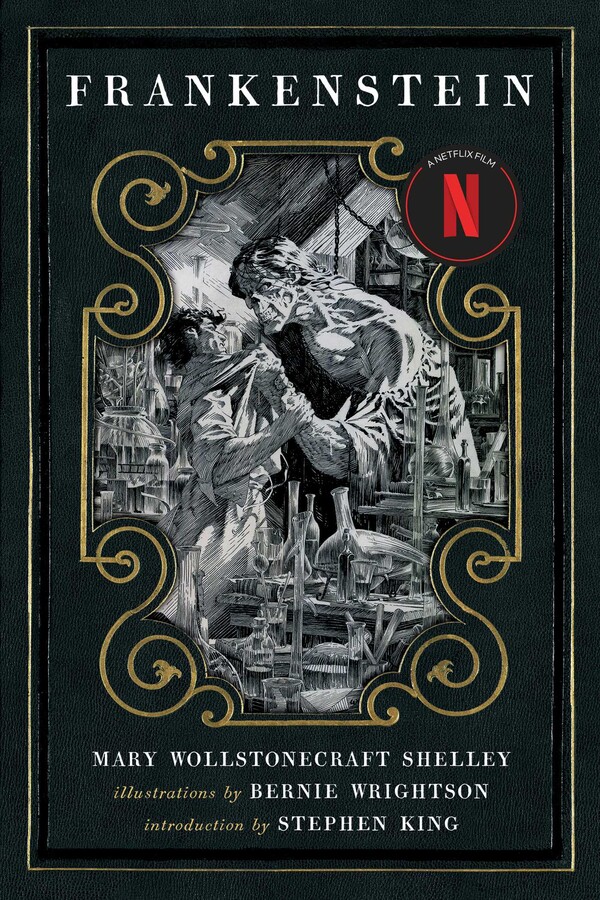
For the better part of a year I’ve been teaching high school literature. For non-teachers, people who teach literature have access to large closets of books from which to choose for their classes. Sometimes they can dig into engaging books of their choosing, and other times the departments might decide on The Crucible. It’s like the wardrobe from Narnia, but it leads to a kingdom of knowledge or pain, depending on your perspective. Frankenstein by Mary Shelley is in those closets. Realistically, it’s almost certainly reserved for the AP classes. However, somewhere I like to think there’s a rogue literature class, probably helmed by Mr. Escalante from Stand and Deliver. They’re being rewarded by the patient, well-told dread and gothic stench that also has romantic sensibilities.
The 1994 movie, Mary Shelley’s Frankenstein supposedly comes the closest to containing the spirit of the book. I saw the film the year it came out, but forgot everything except for the fact that Robert De Niro was the monster. The monster is, of course, a big, scenery-chewing creature who speaks, but is barely intelligible. This film version is, of course, a more pure and accurate take on the book because it’s called, Mary Shelley’s Frankenstein.
Frank Durabont, the screenwriter for that movie called it “the best script I ever wrote and the worst movie I’ve ever seen.” Reviews of that film claimed that the subtle, slow creeping dread and gothic nuances were put aside for a more kinetic, MTV-style. While I haven’t seen it, Guillermo Del Toro’s version of Frankenstein, is generating enormous buzz and is supposed to be quite excellent.
It was actually that drumbeat of apprehension, as well as, the stacks of Frankenstein books, that motivated me to read it. After reading the book I realized that it flies in the face of Flava Flav and begs you to disbelieve the mantra he’s repeated ad nauseum for decades. Frankenstein is a marvelous book. Literary critics have long sung the book’s praises for the complex narrative structure, poetic language and gothic elements, among other platitudes. However, as a book, Frankenstein, if you’re patient, is a book that encapsulates gothic literature better than any of the other texts you’ll encounter in school.
But, as a teacher who has the option to lead classes in that book, I understand why it’s not done more often. As a point of reference I’ll regale the deer and headlights that I encountered while leading a group of 11th graders in Anthem. In so far as Ayn Rand books go, Anthem is pretty easy to understand. It’s a dystopian time period that looks at a future dark age where individuals are erased and a collective society runs the show.
It’s a short book, which should lead itself to students liking it more. However, my students were profoundly and legitimately confused after the first 15 pages, which is just about where the first chapter ends. Who is this ‘we’? How many characters are there in this book? What does transgression mean? Follow the context clues and you’ll understand transgression. I did, what does vocations mean?
So, I pulled an all-stop with the classes and read it aloud with (to) them. They mildly understood it, but it was a light in a previously dark classroom, but a victory nonetheless. We were able to finish the book and had a semi-enjoyable Socratic Seminar at the end of it.
Anthem is a much easier book to read than Frankenstein. While I personally enjoyed reading both books, Frankenstein is an effort in monstrous futility for all but those A.P. high school classes, and that’s a pity. The changing perspectives, multiple narrators and olde English used will encourage young readers to give the book up quicker than their Captain Crunch vape pen. Mary Shelley was the age of these students when she wrote it.
My students today, who are the same age that she was, are struggling to finish a compelling five-paragraph essay. Just the other day I had to have a back-to-basics grammar mini-lesson, reminding them about proper nouns and complete sentences. The 11th graders I’m teaching are writing at an 8th or 9th grade level and the 12 graders are writing at just a year above them. Both grades are incapable of reading and understanding text unless there’s an audible version, with subtitles (!) that I can show them. For those ESL students, it’s understandable, but more often than not, a majority of the ESL students are out-performing native-English speakers on every test.
Blame COVID. Blame the schools. Blame the parents. Blame the teachers. Everyone has a piñata flavor of the month to blame. Frankenstein is a great book. I’ve heard that it’s Del Toro’s magnum opus. I would describe it to my classes using that phrase but they’d think I was talking about a condom, ice cream or television show from the 80s, rather than its intended meaning.


 Facebook
 Twitter
 Youtube