
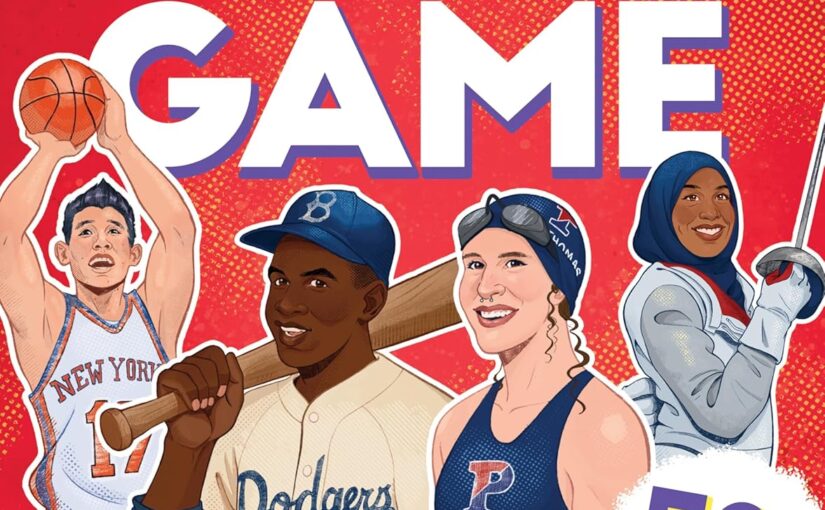
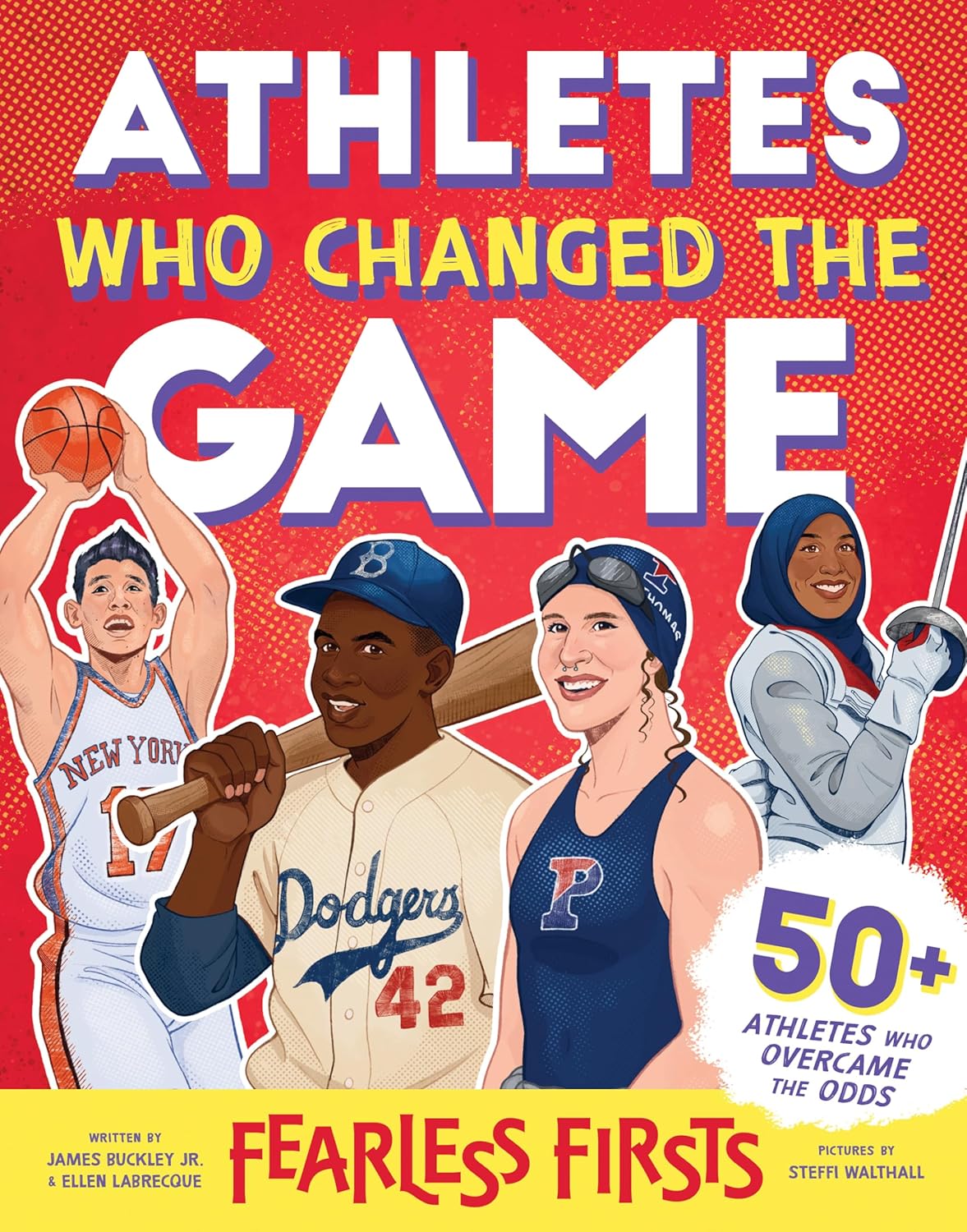
Fearless Firsts: Athletes Who Changed the Game is a book with a very narrow scope and interest level. The subject matter is mainly on par with those upper-elementary school students. These are those students in fifth grade who will have to do their first essays on inspirational people, careers or interesting animals. It’s quite the juxtaposition because it’s comparing athletes from somewhat different time periods, in different sports, yet their ‘firsts’ have a frustratingly high amount in common. Not surprisingly, the solution to their ‘firsts’ and the athletes’ reactions to them are the same too.
The table of contents does a great job of laying out the topics and introducing young readers to it. It lists about a dozen athletes into various rough categories like A Century of Firsts, An Important Law: Title IX, A Movement of Inclusivity: Paralympics and others. It’s rough because the athletes listed in them are exclusive to their description. There are two pages that discuss Title IX, Paralympics and others, but the people that follow them might not have anything to do with that title.
From there, Athletes Who Changed the Game falls into a predictable groove. First Woman to Manage a Pro Baseball Team: Rachel Balkovec. First Female Gymnast to Win Four Olympic Golds: Simon Biles. First Openly Gay Male Athlete in a Major American Sport: Jason Collins. First Black Olympic All-Around Champion: Gabby Douglas.
The chapter on Title IX breaks things up a bit. First Olympian with an Amputation: George Eyser, but then it’s back to the pattern. First Mexican American Super Bowl Coach: Tom Flores. First Woman to Race the Indy 500: Janet Guthrie. First Female Jockey to Win a Triple Crown Race: Julie Krone. First Muslim American Olympic Medalist to Wear a Hijab: Ibtihaj Muhammad. First Black Player in MLB: Jackie Robinson. First Transgender NCAA Champion: Lia Thomas.
These examples weren’t cherry picked. I simply thumbed forward a couple of pages at a time. Each of these athletes did change the game. They broke barriers, but the vast majority of them did it by doing well in their area. A quote by Marla Runyan, ironically the first legally blind Olympic runner, sums it up really well. “I never said I want to be the first legally blind runner to make the Olympics. I just wanted to be an Olympian,” she said.
There are lots of people in Athletes Who Changed the Game that kids will want to write about in their fifth-grade papers. The reading level of the book is geared at middle school audiences. Middle school audiences might read it, and kids reading anything is a great thing. The conspiracy side of me can easily see the book being pitched in 2020, when anything woke was getting greenlit.
The book would’ve also benefited by being organized according to sports or some other commonality. Nationality, race, economic background or gender; anything could’ve hindered people who simply wanted to play sports, but ended up breaking barriers and accomplishing more in the process. Instead, the clunky organization makes some of the people in the book look petty and included in the book as more of a virtue signal or token than the accomplishment that others did.
Athletes Who Changed the Game falls into our category of, there is no bad book. There are simply books whose audience is very focused. In this case the audience is middle school students who are doing a paper (whose topic can be any person or category in sports) and need a good source for primary information. Realistically, middle school students don’t create papers like that because it’s more of a format for elementary school. If it get kids reading, that’s awesome, but it’s a niche target this book is trying to hit.
Fearless Firsts: Athletes Who Changed the Game is by James Buckley Jr. and Ellen Labrecque with illustrations by Steffi Walthall and is available on Sourcebooks.
There are affiliate links in this post.


 Facebook
 Twitter
 Youtube