
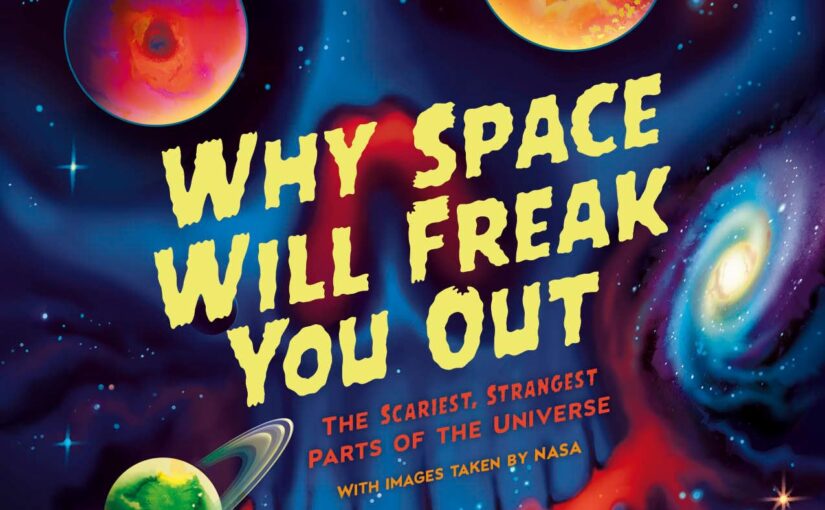
There’s a template that the irresistible non-fiction, reference books have. They cater to elementary school audiences. However, they’re enjoyable enough for older audiences to read them without being ashamed, as if they were caught reading Peppa Pig. They’re also smart enough to teach them facts they legitimately didn’t know. These are the cool facts they can share with family and friends like, “Did you know that the red spot on Jupiter is a massive storm that’s been happening for hundreds of years-at least?” Why Space Will Freak You Out got a copy of that template. It’s the planetary version of ‘things that go bump in the night’. This book baits the hook for science kids, as well as, reluctant STEM kids who avoid non-fiction, but love unusual or disgusting things.
I’m one of those who find space equal parts scary, fascinating and beautiful. I love taking photos of the night sky, but the thought of me traveling through it scares me stiff. The fact that I can see the moon in the daytime is amazing and I want to get closer to it, until I remember that I’m scared of going into space. My inner-fifth-grade self would’ve loved Why Space Will Freak You Out.
Why Space Will Freak You Out: The Scariest, Strangest Parts of the Universe got the memo on what makes a non-fiction book engaging for these ages. At times the book edges too far into educational territory for some audiences, but the scary, freaky aspects manages to always keep it (ironically…) grounded.
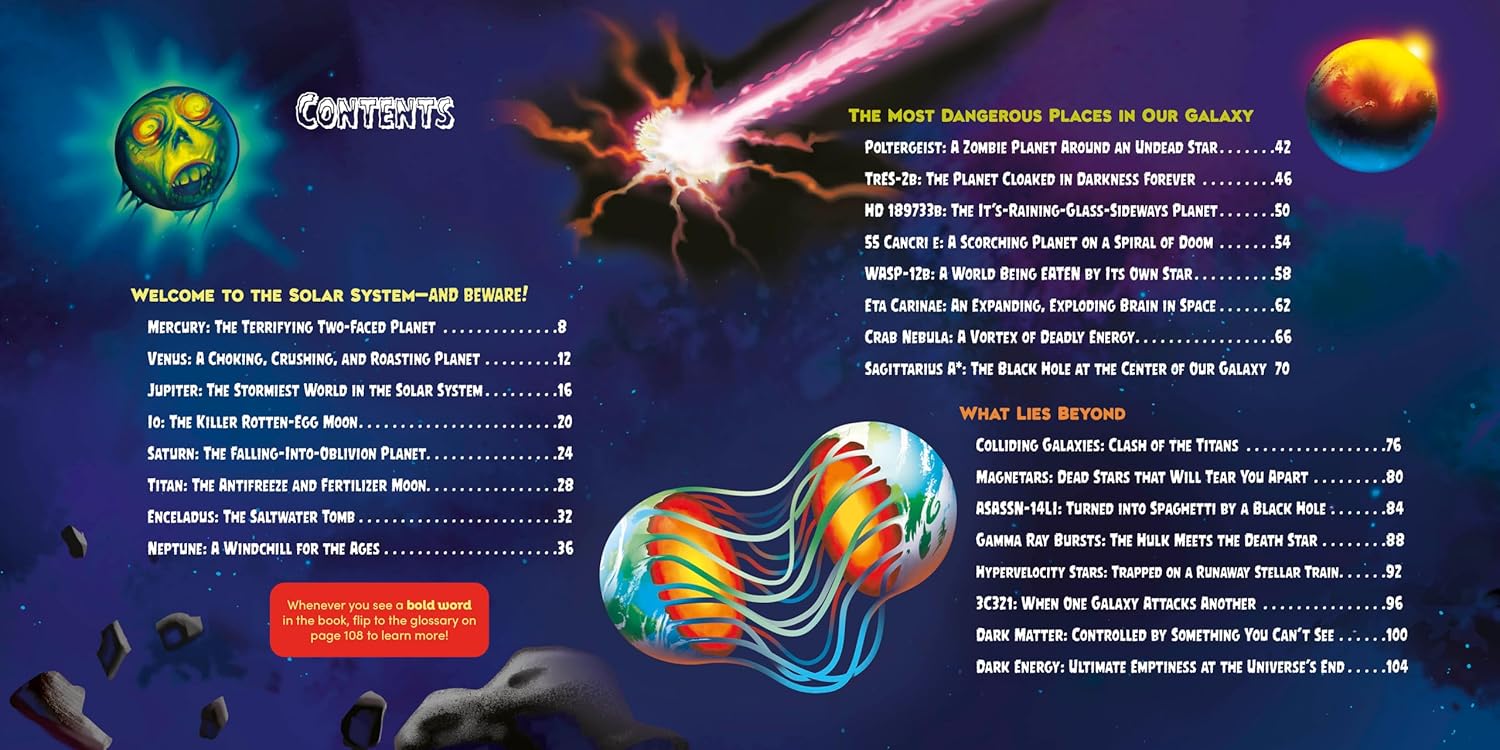
It does this by grouping the book into three categories and then further breaking those down into four-page chapters. Our solar system, the most dangerous places in our galaxy and what’s past our neighborhood are the three main categories. The individual chapters are given kid-friendly and curious names like Io: The Killer Rotten-Egg Moon or 3C321: When One Galaxy Attacks Another.
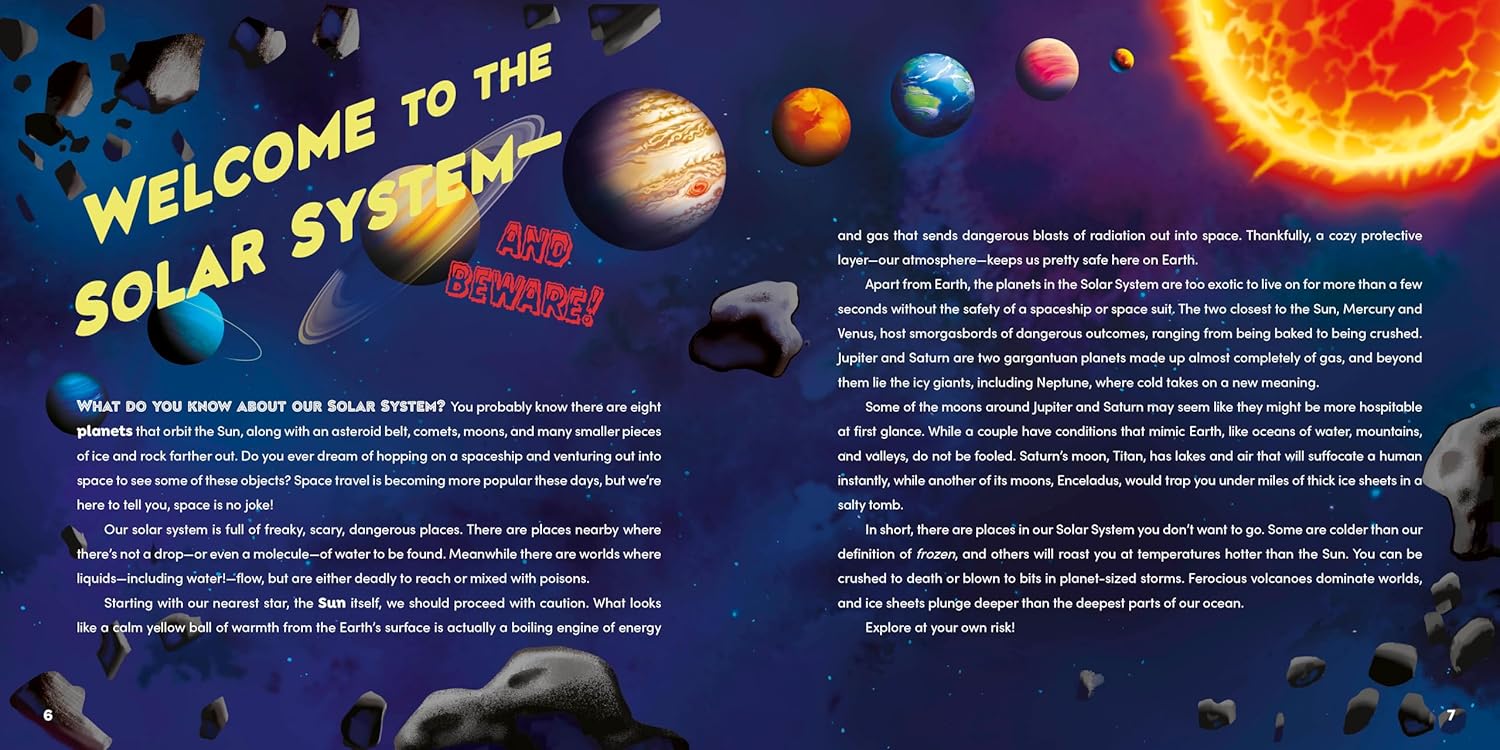
The chapters are written with a couple of sentences in each paragraph. This allows (young) readers a natural mental break to absorb what they’ve just read. The text is not written at a high level, but the concepts are not something that some (see: most) upper-elementary school readers could easily digest.
Let’s visit 3C321 as our example. Proving that scientists are just like us (only much smarter) they’ve nicknamed this the “death star galaxy.” Everyone knows that Rogue One is the second-best Star Wars movie, as well as, the purpose of the Death Star. A massive planet-sized entity that shoots out an energy ray is a scary, fascinating thing to imagine. This is happening a billion light-years away from Earth on a galactic scale. 3C321 has a supermassive black hole in its center. This is creating a ray of high energy radiation that’s being shot from it, to its smaller galaxy neighbor. And you thought the fact that your neighbor changed their car’s oil on the street was bad…
The smaller galaxy, the one that’s receiving the blast, has shifted, in what I presume to be a case of behavioral adaptation from Lord Dark Helmet. To confirm that the authors of the book didn’t just make something up I had to research 3C321 myself and it exists, but again, it’s really, really far away.
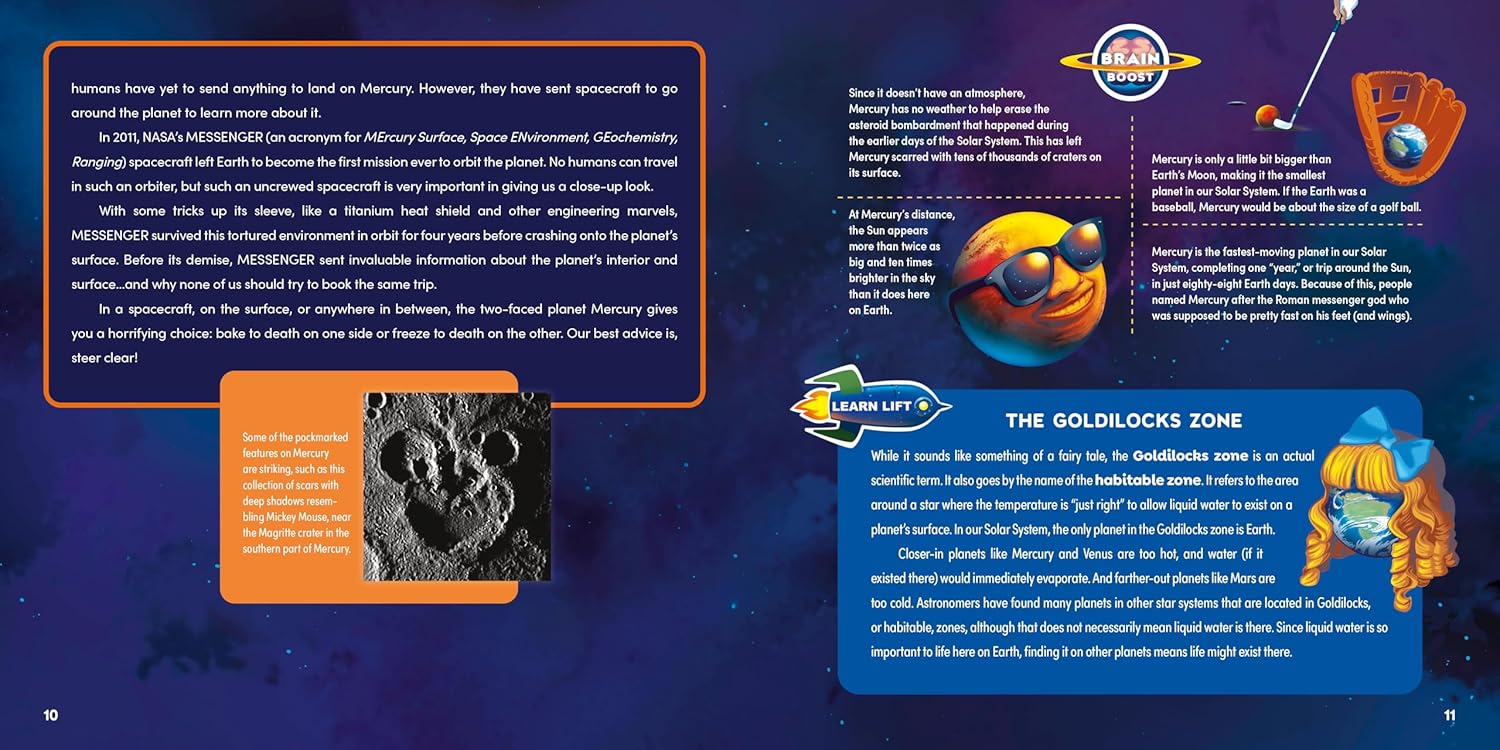
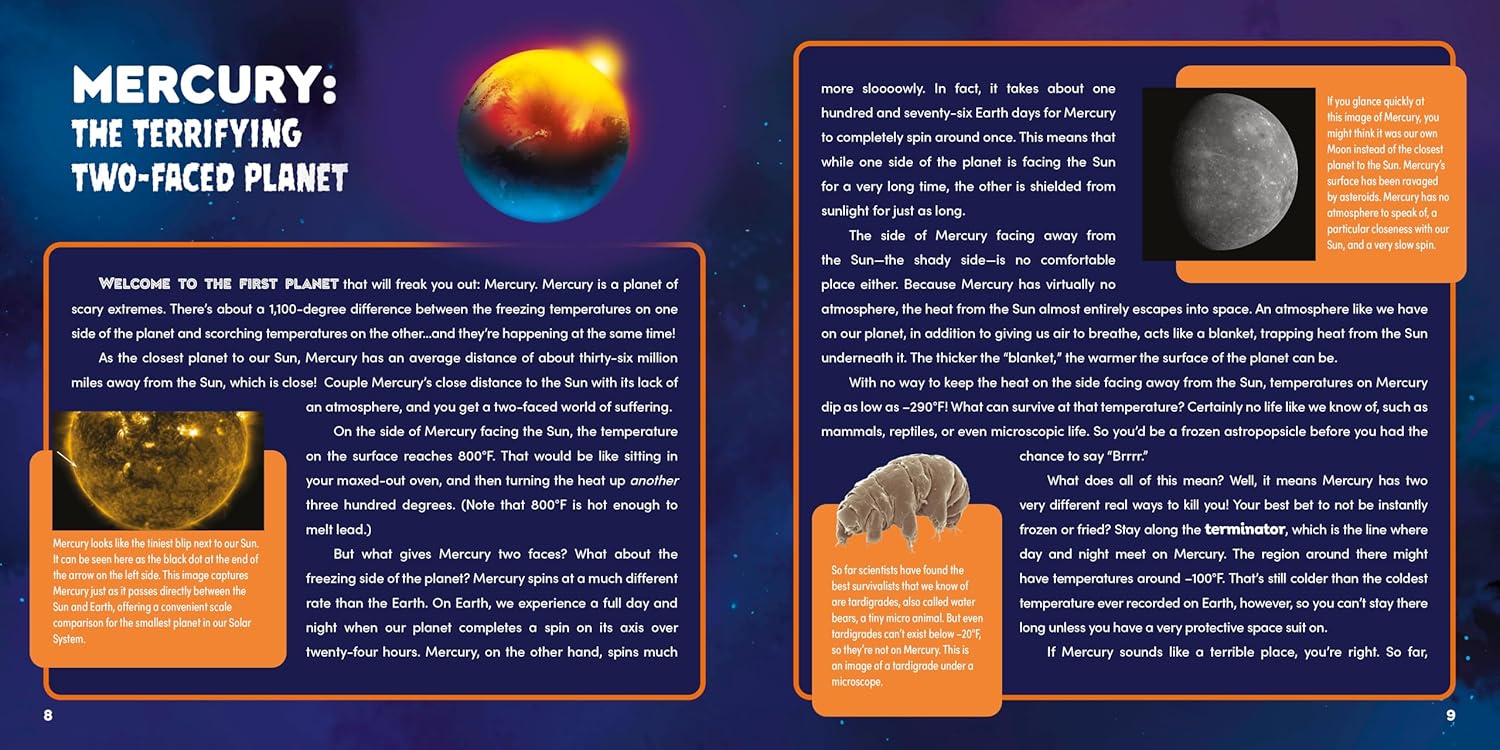
One thing that Why Space Will Freak You Out does a great job at is separating and labeling the photographs from the illustrations. The first third of the book, the one about our solar system, has the most photographs. The rest of the book has realistic illustrations that are clearly labeled as such. At the end of the book there’s a page dedicated the credits for all of the photos and illustrations. Throughout the book, the new, or overly scientific terms are bold, with a glossary at the end.
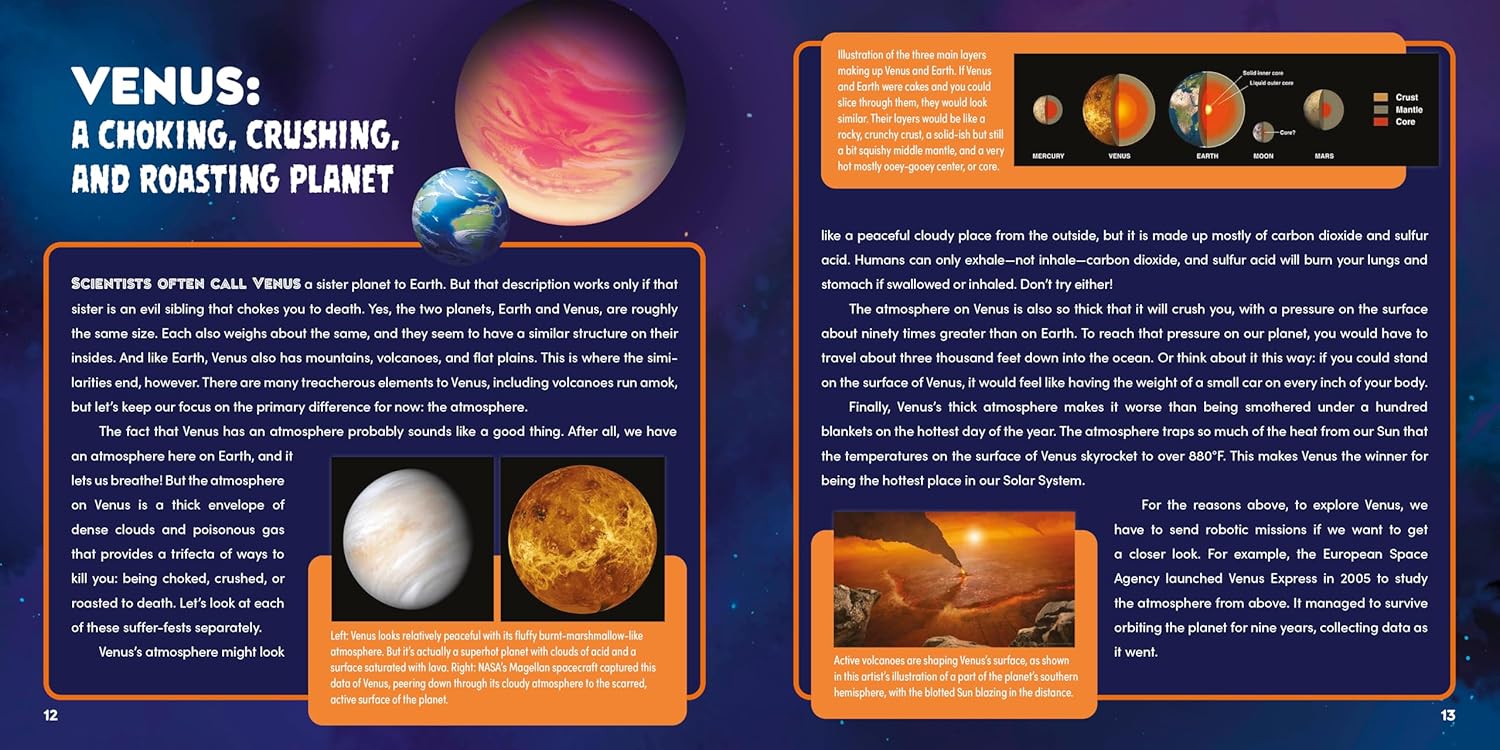
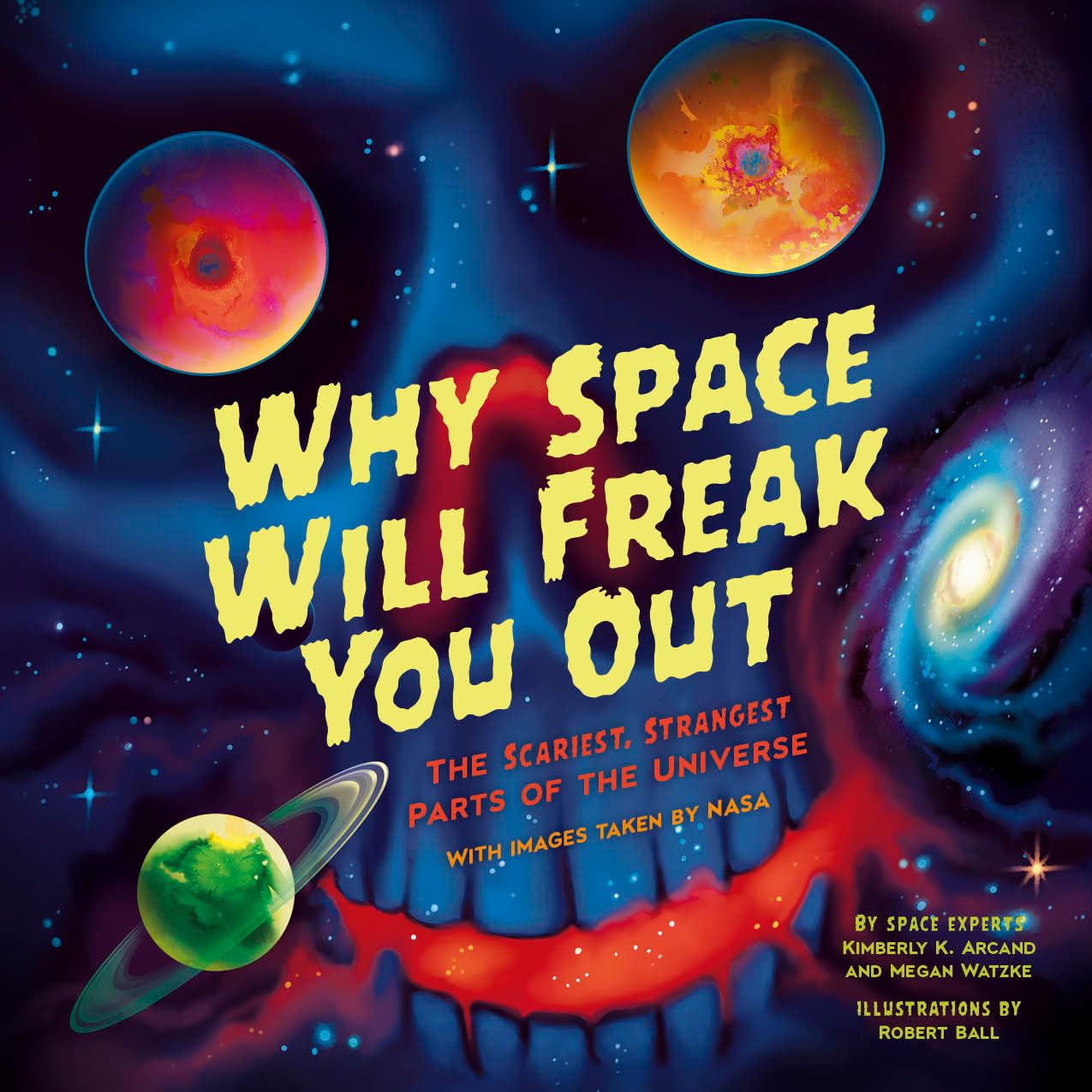
Will kids enjoy Why Space Will Freak You Out? Ages eight and up will be sucked into the book via its pareidolic cover. The skull that’s comprised of outer-space things is freaky, a little scary, and very curious. Once kids realize that it’s not a typical chapter book, and is organized like a Nat Geo Kids reference book, they’ll dig a little deeper. The blurbs are colored differently and there are factoid blocks that work in tandem with them. It’s a smart, approachable book that’s not too scary or intimidating to audiences of any age. Middle school kids, heck, even the high school kids I’m teaching now don’t know most of what’s in this book, and that’s ok. Adults who find themselves reading the book don’t need to be embarrassed either. Younger readers could start their space exploration path with this book. It could also provide the basic facts for an elementary student’s first research paper or maybe the go-to information that fill their middle school void.
Why Space Will Freak You Out: The Scariest, Strangest Parts of the Universe is by Dr. Kimberly K. Arcand and Megan Watzke, with illustrations by Robert Ball and is available on Sourcebooks Explore.
There are affiliate links in this post.


 Facebook
 Twitter
 Youtube