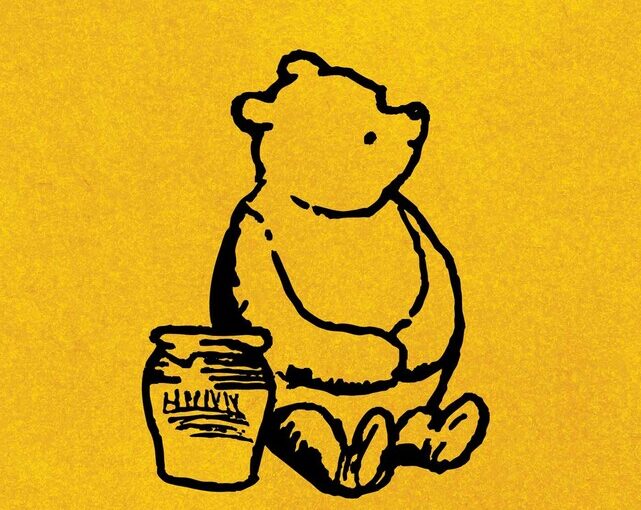
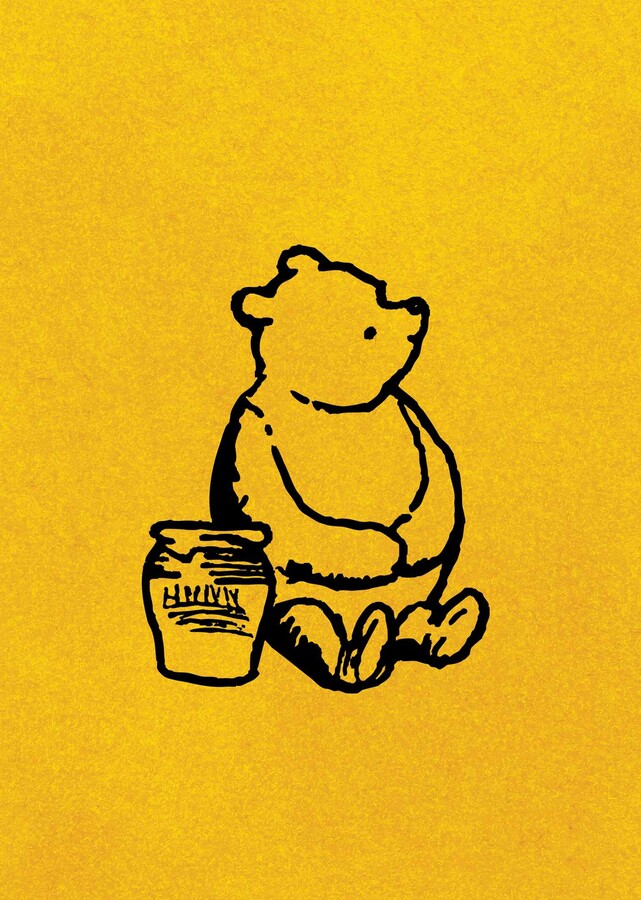
I thought it was a velvet cover. But no, the cover to Winnie-the-Pooh: 100th Anniversary (Winnie-the-Pooh; The House at Pooh Corner) (The Winnie-the-Pooh Collection) is a flocked cover. Flocking is a process where short fibers are glued to a surface and feels like velvet, but it is much cheaper. If the question was, how do make reading Winnie-the-Pooh more adorable, the answer would certainly be to provide it with a flocked cover.
Pooh is one of the strongest intellectual properties in the world and has been translated into more than 50 languages. Don’t go down the rabbit hole of exactly how many because you’ll incur the wrath of die-hard Pooh fans. The classic books that beget the character are over 100 years old and part of the public domain. The Walt Disney Company purchased merchandising rights to Winnie the Pooh in 1961, note there aren’t any hyphens. Disney gave Pooh a red shirt and proceeded to make new stories with the honey-loving bear and his Hundred Acre Wood friends.
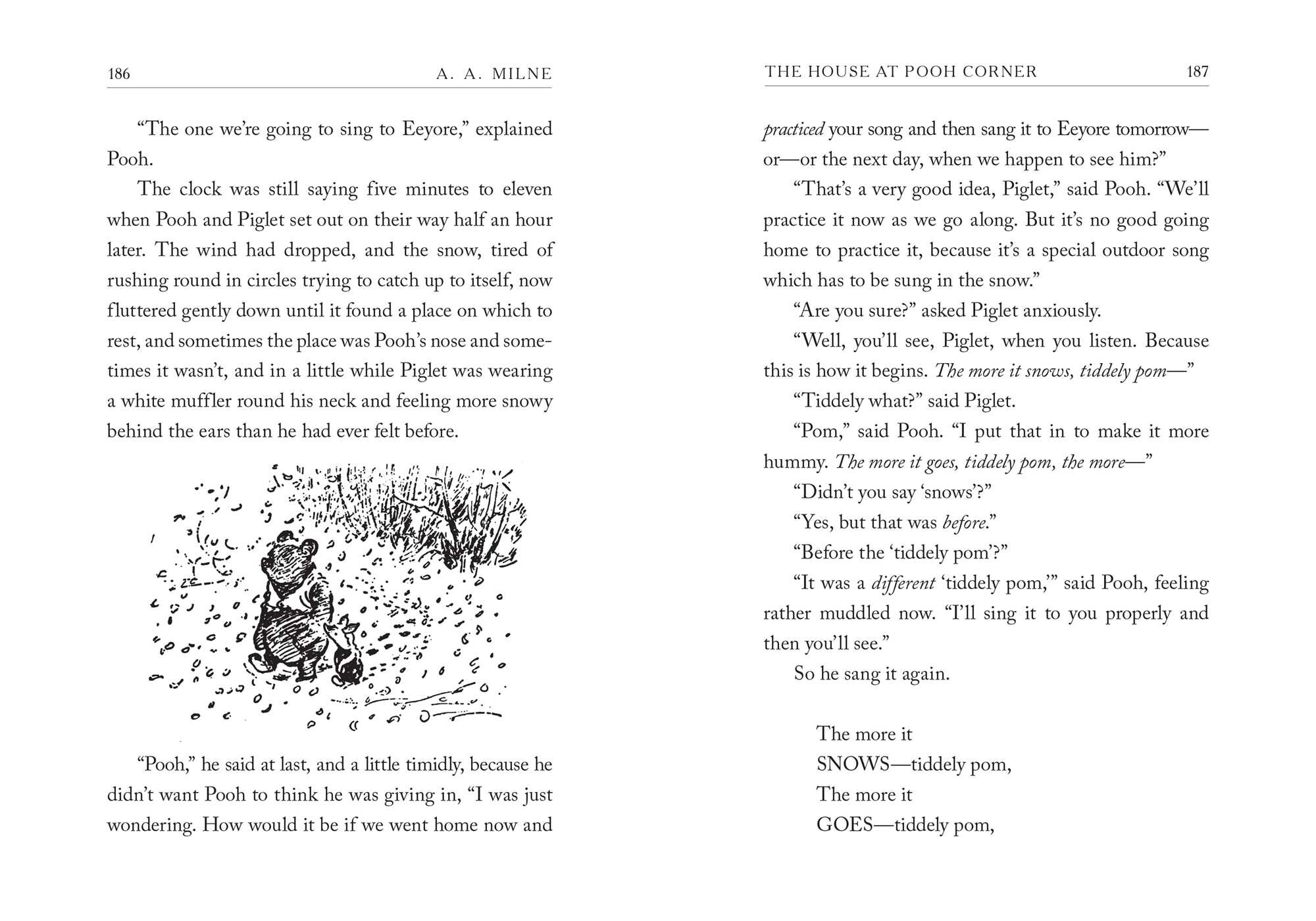
As a child, I must have had Winnie-the-Pooh and The House at Pooh Corner read to me. That’s because when I was reading this 100th Anniversary Edition, I knew what was coming next in the story. The subtle nuances in the text, comforting dialogue, and smile-evoking illustrations are a warm blanket on a chilly day. They produce a grin or even a wide, brimming smile because you know that everything is going to be alright.
Pooh 101. Winnie-the-Pooh’s story is established via something that’s being read aloud. It’s done so in a very curt, meta way because Christopher Robin asks to be read a story about Pooh. He wants to be read the story about Pooh, because, “he’s that sort of bear.”. In each short story Pooh finds some manner of comic misadventures. He might also stumble across one of his friends, who is having some sort of misunderstanding. Pooh could meet a new friend, because meeting new friends is a crucial thing that the ages who most enjoy Pooh would do.
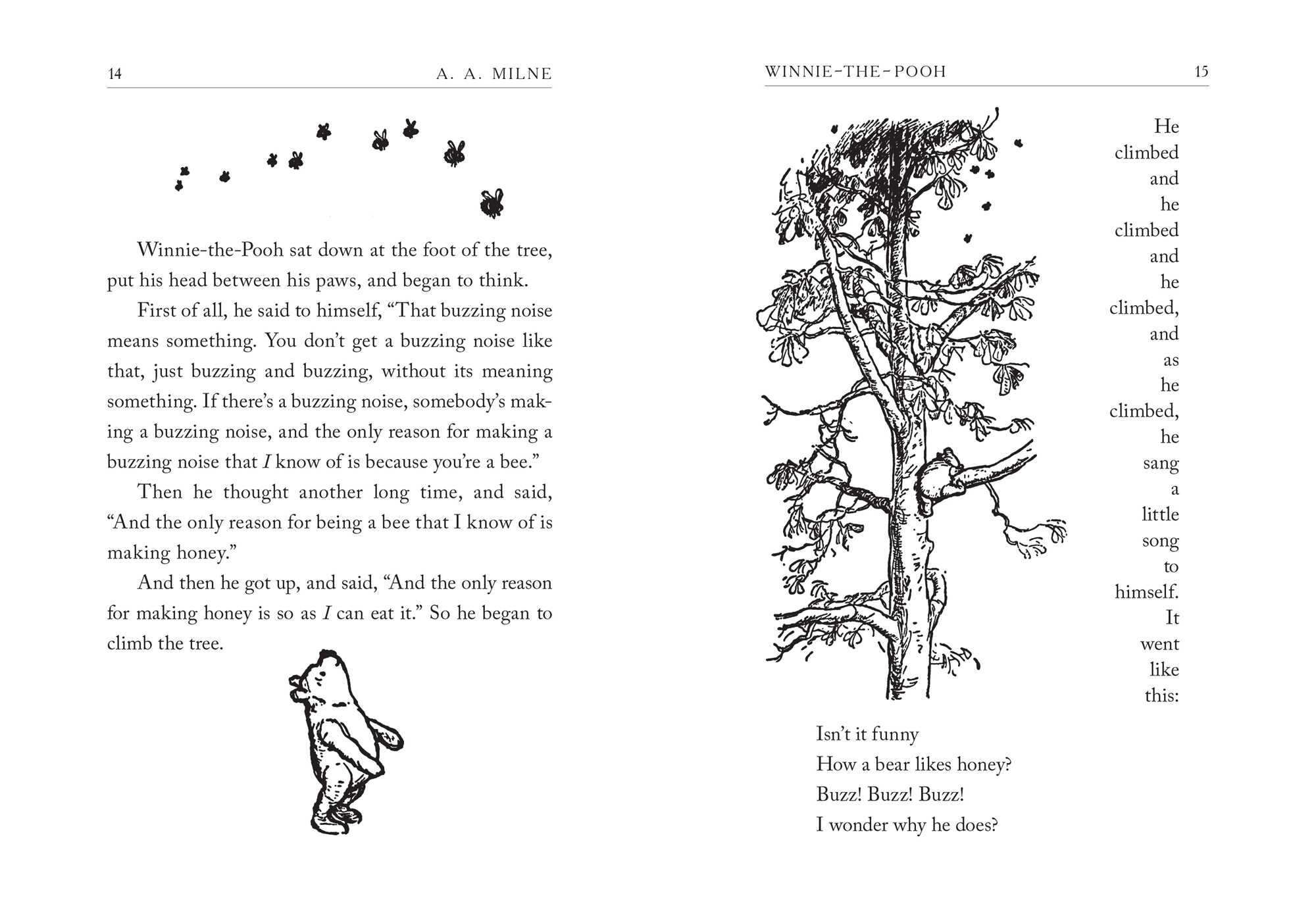
Each story stands alone, but builds to something greater as his number of friends increases. Their eccentricities show up, even given the minute amount of dialogue they have, or how infrequently they appear. When readers see Eeyore again they’re eager to engage more with the character. They don’t need to be reminded about anything, Eeyore because, he, and all of the characters are memorable. Readers know that Tigger is the way he is because of the patient storytelling and characterization that was used in making him. It is not a chore to read any part of Winnie-the-Pooh.
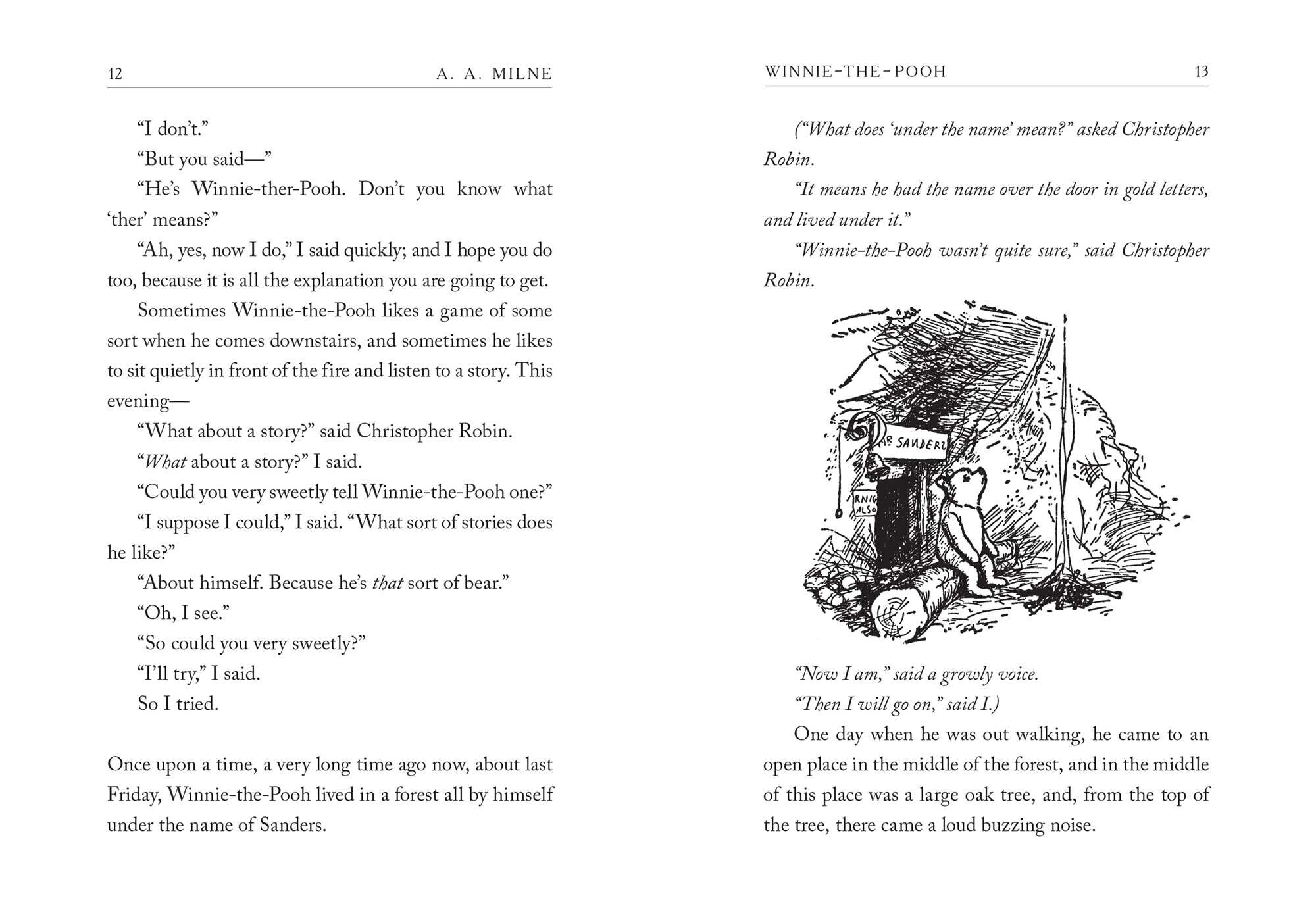
When you’re looking at a classic piece of literature like Winnie-the-Pooh it helps to be reminded of why it’s a classic. Originally published in 1925, its simple story about a bear and his friends could be seen as quaint and disposable, given today’s modern lens. Our problems are bigger, the options for children’s literature are more numerous and today’s complex children are impossibly more evolved than the simpletons who were the same age a century ago.
Children might think that way. As an adult you might be tempted to question if kids will still find Winnie-the-Pooh entertaining. That is logical, tastes are cyclical and some things will fall out of fashion and never return. Do we have Disney to thank for purchasing Pooh in 1961? When that transaction red-shirted bear got exposed to more people. All of that could’ve happened, but even if it didn’t, the books, and the original stories would turn 100 in 2026. They’d age and be just as entertaining. The young readers and young audiences hearing Winnie-the-Pooh and the House at Pooh Corner are perfectly aged to appreciate the fancy, wonder and imagination it offers. This created the Venn Diagram that Calvin & Hobbes frolic in so perfectly. The genial nature of Hundred Acre Wood and its inhabitants reminds people of how you can behave. Simple is not always better, difficult is not bad, but many times, not over-complicating things yields a better result.
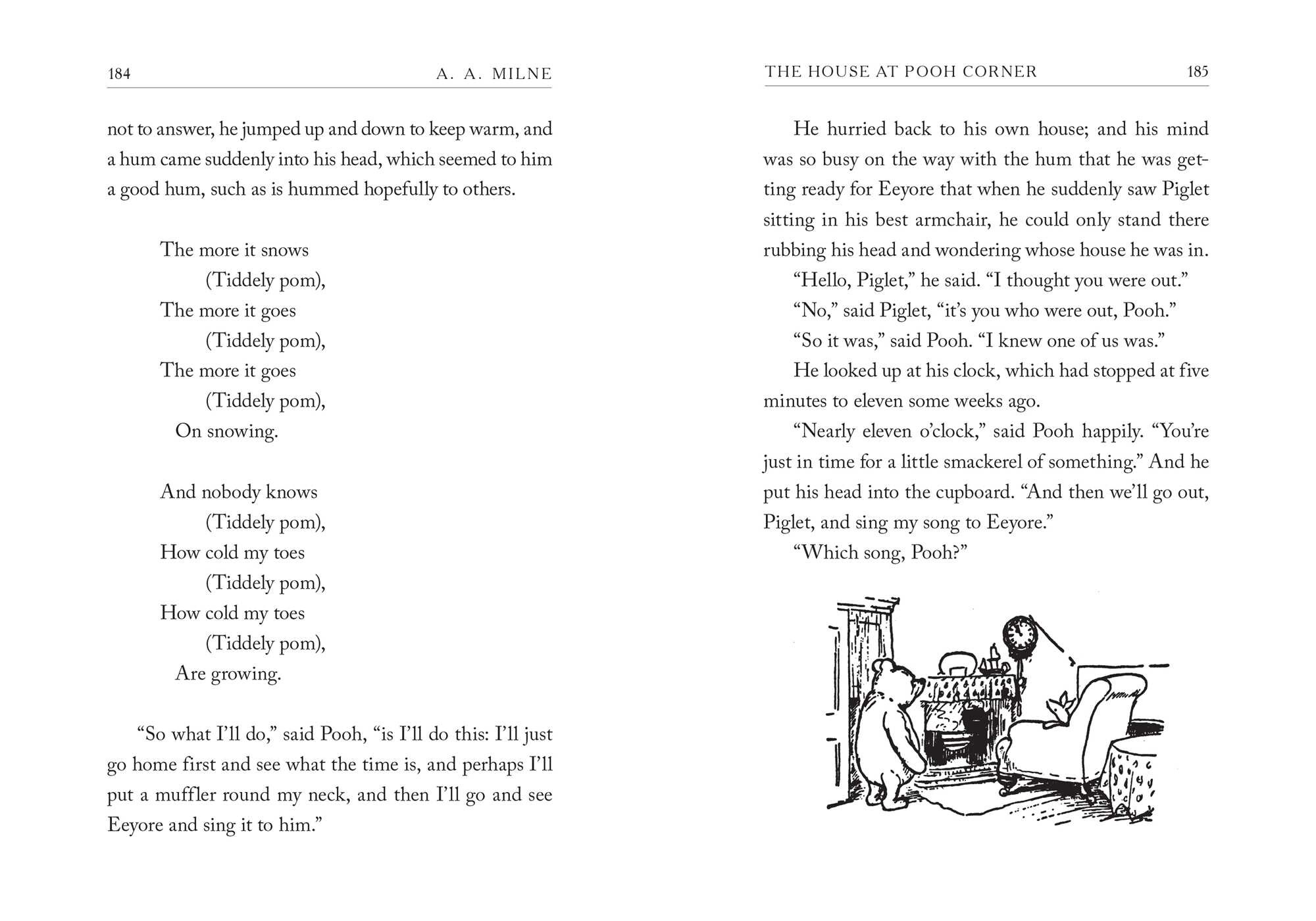
The Tao of Pooh is a great book for older readers. It hearkens back to classic situations in Winnie-the-Pooh and essentially asks WWPD, or WDPDT (why did Pooh do that?)? The first time we read that book it brought back memories of our childhood’s interaction with Winnie-the-Pooh. Reading, or re-reading Winnie-the-Pooh and The House at Pooh Corner, will provide that same sense of innocence. There are important things, but is the thing that you’re so preoccupied with one of them? You may not walk away from this 100th Anniversary Edition with deep thoughts. Young readers, the story time crowd, probably won’t, but they will have their sense of wonder and imagination stoke as thoroughly as it was when The Grand Ole Opry opened and the first television image was transmitted.
Winnie-the-Pooh: 100th Anniversary Edition (Winnie-the-Pooh; The House at Pooh Corner) is by A. A. Milne, with illustrations by Ernest H. Shepard and is avialble on Aladdin, an imprint of Simon & Schuster Children’s Publishing Division.
There are affiliate links in this post.


 Facebook
 Twitter
 Youtube