I had to re-read The Unfunny Bunny to see if my adult brain missed something. Ah, I did miss a small nuance. It happens on the first two pages. That fact was certainly comforting, to an extent. I was expecting great things from Unfunny Bunny. It’s from Kenan Thompson and Bryan Tucker, two SNL veterans. Thompson has been a face on SNL for decades, in addition to dozens of voice-over and movie roles, whereas Tucker is a 16-time Emmy-nominated writer for the show. Adults have seen Thompson in something that they’ve liked, and that fact will bring a large amount of goodwill towards the book.
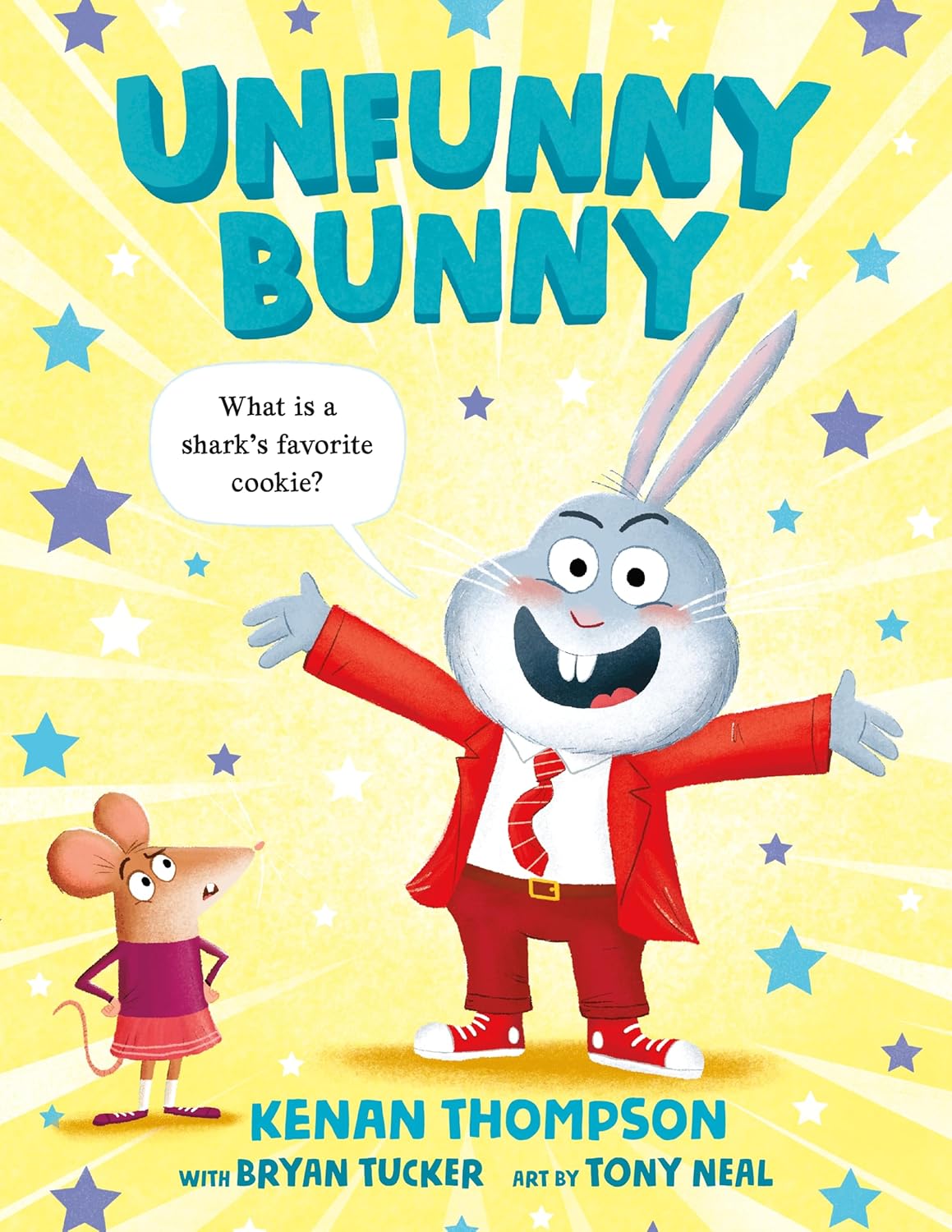
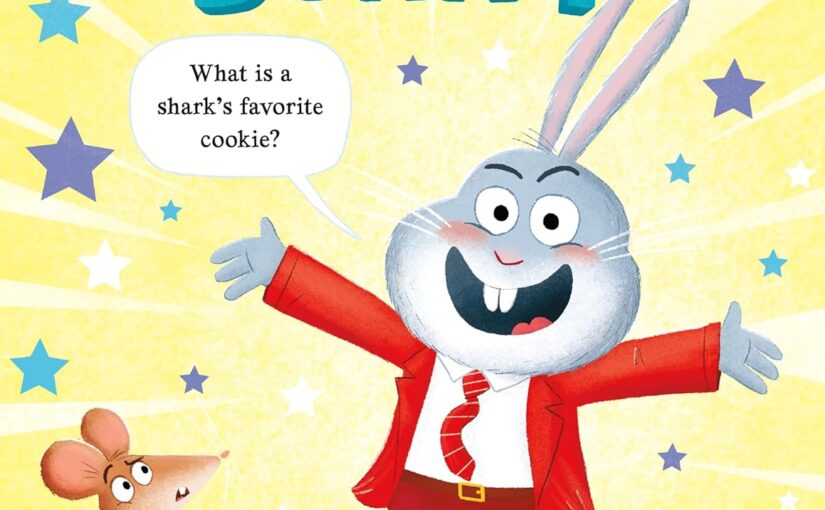
The title of the book, Unfunny Bunny, rhymes and will make elementary-age children smile. They love to tell jokes and, much to the chagrin of the teacher, enjoy being the class clown. The book’s cover has an enthusiastic bunny wearing a suit that a late-night talk show host would wear. His arms are spread open, and he’s telling a joke. A bemused mouse is looking at him in a way that says, “I expected more.” Turn the book to its back cover, and you see a gaggle of different animals with the same expression.
All of them but one have that expression. The hedgehog has a wry smirk on its face. It implies that it sees something in the bunny that others might not. The hedgehog is either a talent scout or the bunny’s friend.
As Unfunny Bunny starts, we see the bunny in bed the night before the first day of school. There are a series of different personalities that it tries on, like the cool bunny, and the athletic bunny before settling on the funny bunny. The first day of school has our bunny walking onto the playground. He’s spewing dad jokes like he’s dropping knowledge in the AP Literature class that I’ve heard about but haven’t taught.
When he enters the classroom, the jokes don’t let up. The classroom has the same reaction that they did on the book’s cover. After a disastrous attempt to be himself, a classmate comes up to him and simply tells him that he’s an unfunny bunny. The hedgehog consoles the bunny and tells him that he liked some of the jokes, but that he needs to work on it.
The two become friends, work on jokes together, and spend time after school with their families. Bunny’s confidence increase,s and he’s enjoying the new friendship. He realizes that a little confidence goes a long way, and that it’s ok not to be exclusively linked to one characteristic.
The lesson of never giving up is a solid one that every elementary school kid needs to experience. They need to hear it numerous times and in many different forms. The reason I was bemused after I read Unfunny Bunny was that I initially didn’t see the takeaway. Is the book meant to be a primer for elementary-aged comedians? Is it a vehicle for dad jokes that kids will repeat on the playground? Is it a soft story about one of the ways that friends behave towards one another? No, the book is about being your true self.
After re-reading Unfunny Bunny, it’s somewhere in between all of that. It’s a cute illustrated book that needs the assistance of adult read aloud action in order to get the most of it. The adult can pace the jokes out and deliver the punch line the first time. This will allow those erstwhile younger joke tellers plenty of opportunities to say them again. Most importantly, it lets the adults translate the lesson of never giving up to other areas of their lives.
Those ages don’t realize that creating and telling jokes takes effort and practice. They’re reticent to admit that they need to do things more than once or practice a skill they don’t get on the first try. At its core, most illustrated books are lesson books and any book that gets young ages to read or to enjoy picking it up is good.
Unfunny Bunny is just good enough. Younger ages will echo the jokes. They’ll grin at the illustrations and hopefully relate to the awkwardness that the bunny goes through. As a teacher, the last thing I need in class is another comedian. However, if it’s an illustrated book that’ll help young people through that period of figuring themselves out, that’s great.
Unfunny Bunny is by Kenan Thompson with Bryan Tucker, with illustrations by Tony Neal, and is available on Fiewel and Friends, an imprint of Macmillan Publishing Group.
There are affiliate links in this post.


 Facebook
 Twitter
 Youtube