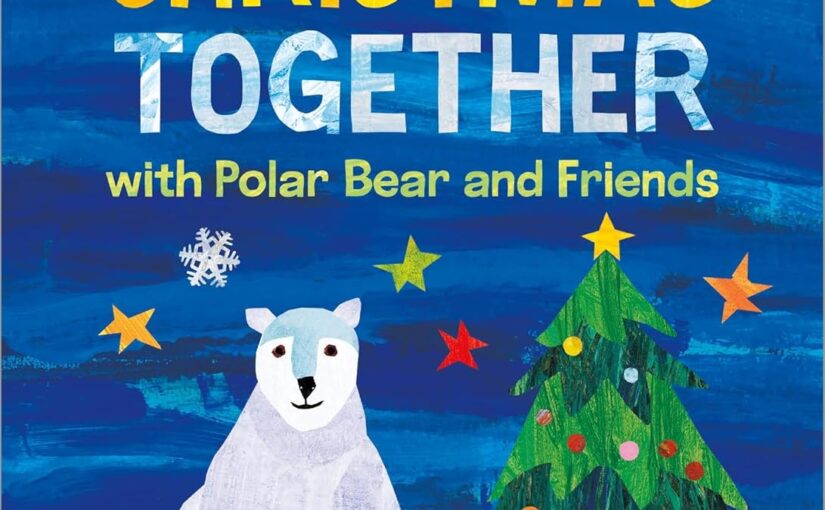
Christmas Together with Polar Bear and Friends, is scaled down Carle magic

When is a board book not a board book? When it turns into a store! I needed to twist that old joke from Bazooka Joe to illustrate the difference between Christmas Together with Polar Bear and Friends. It’s a picture book from The World of Eric Carle, which brings to mind visions of oversized glossy pages, or possibly thick board book pages of friendly, multi-hued animals asking simple questions or saying simple things.  Christmas Together with Polar Bear and Friends can frustratingly be both of those or neither of those. However, if you accept Christmas Together for what it is, it can be a happy, non-secular look at Charistmas via a classic name in children’s literature.
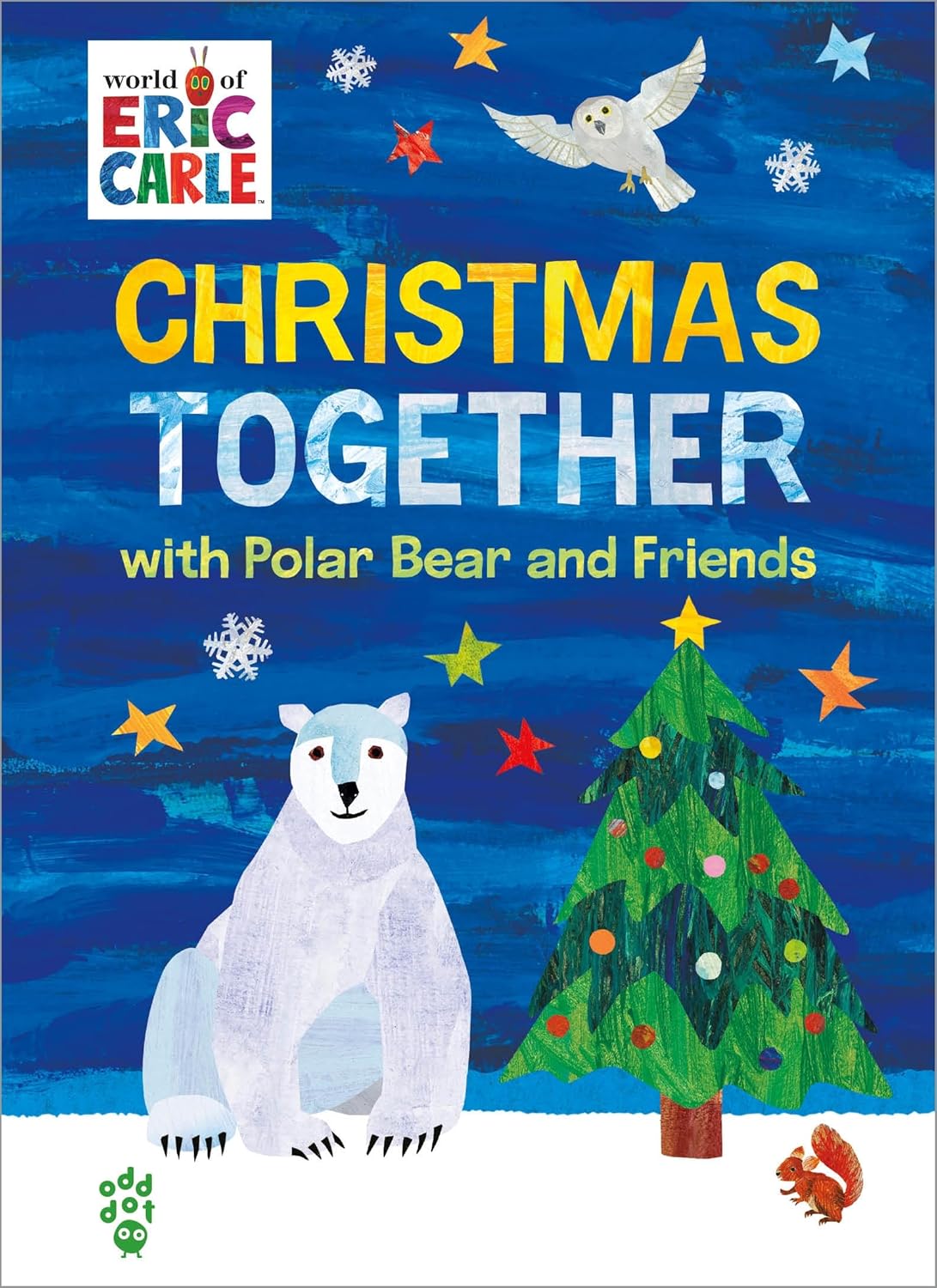
Christmas Together with Polar Bear and Friends is from the World of Eric Carle, but is presented in a scaled down size that will disappoint those familiar with his style.
I liked the 14″ pizza, not the individual size

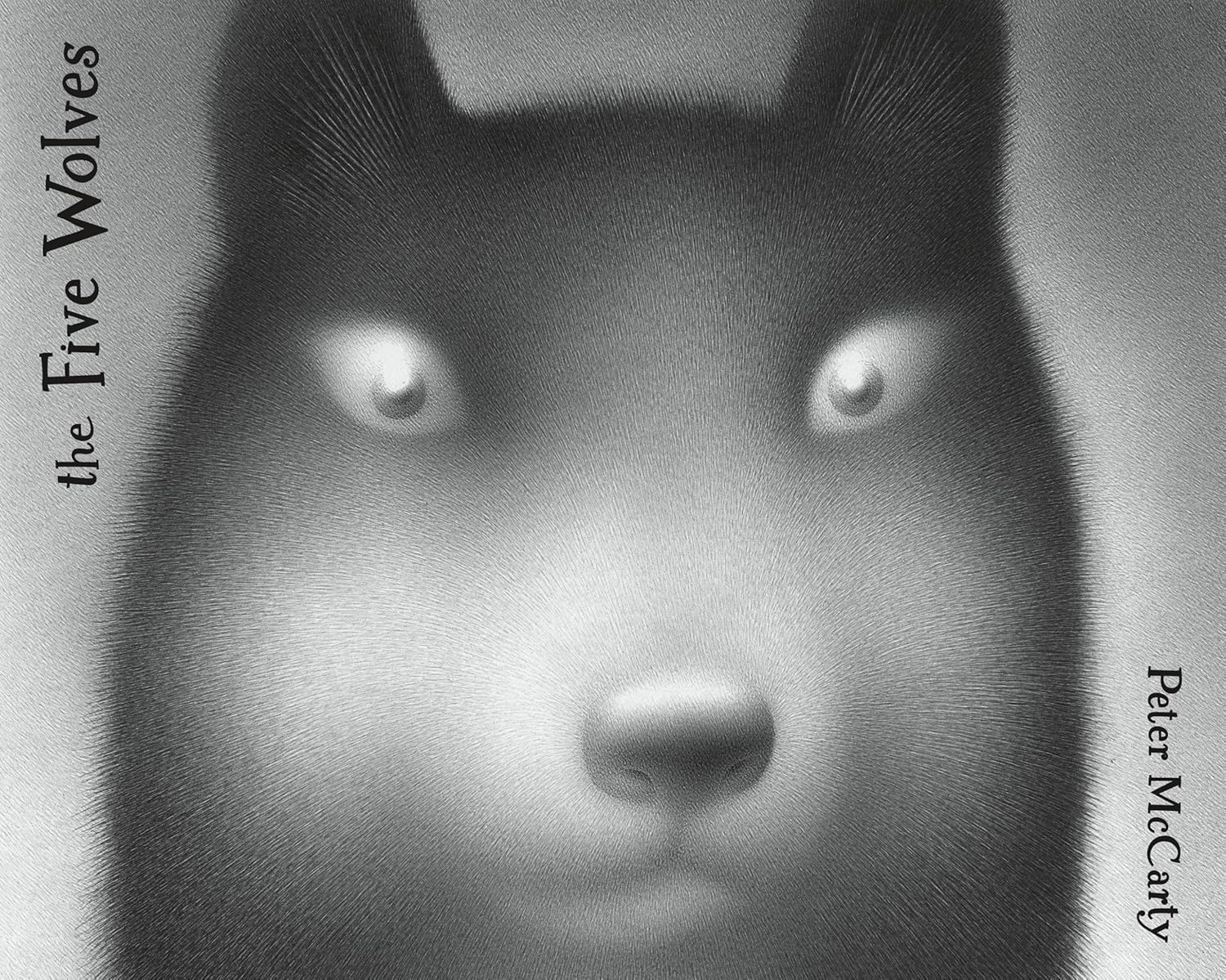
The Five Wolves, a graphic novel that you’ll love or won’t understand.

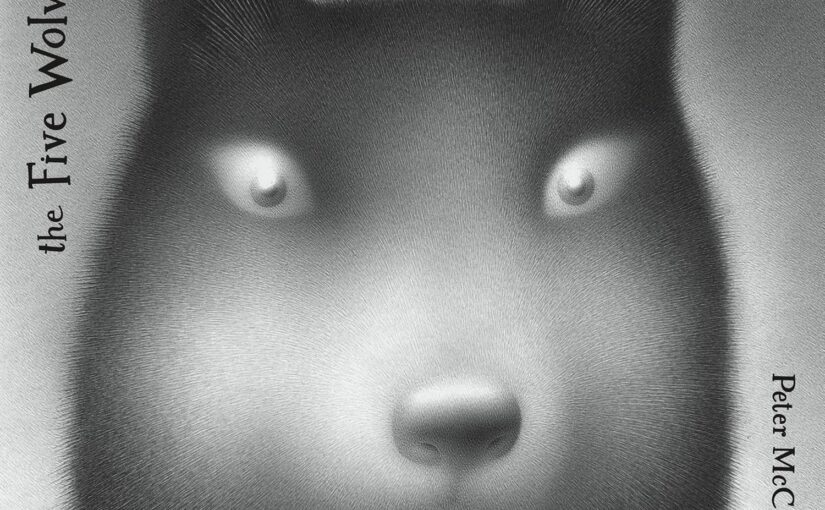
The Five Wolves by Peter McCarty is unlike any book we’ve seen before. It’s a wordless book, but presented at a very high level and is 285 pages long, so it’s not for the very young. The narrative is grand and has more in common with Beowulf or The Odyssey, than a graphic novel. However, one could categorize The Five Wolves as a graphic novel, albeit one that’s unlike anything they’ve ever seen. It’s also not entirely a wordless book. There are pages with words on them, but they’re pages with only words, hundreds of words, symbols or numbers with the phrases that are relevant to the story that are bolded. I tried to read The Five Wolves one time and got too frustrated with it. And while that’s not a good first impression for a book, I rebounded, took my time with The Five Wolves, looked over all of it and have a better impression.

The Five Wolves is a graphic novel that’s heavy on art an interpretation and very light on words.
You’ll love it/you’ll be confused by it

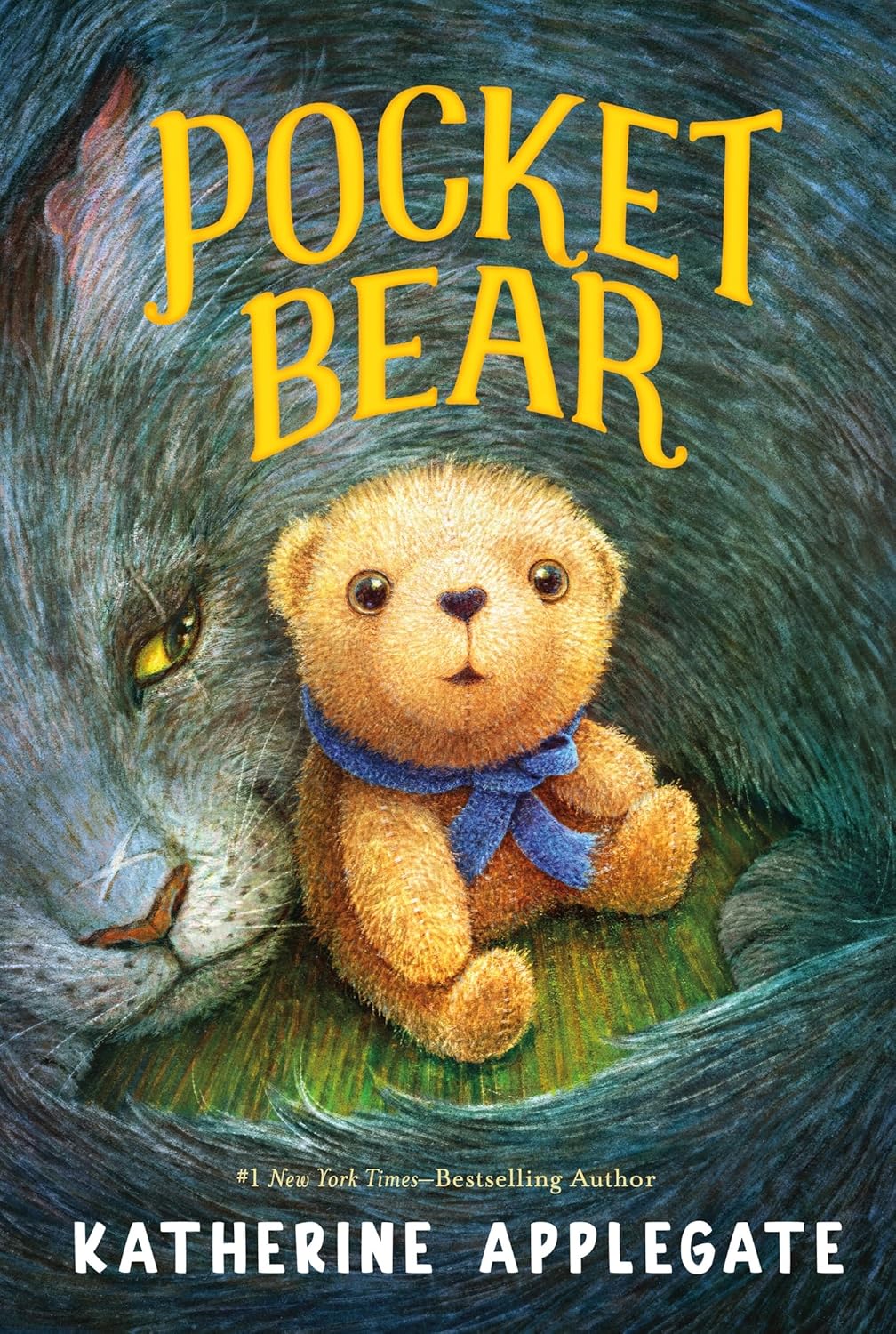
Pocket Bear is go-to, early-chapter book magic for ages 7-12

Pocket Bear has a style and spirit that will easily tap into kids in early elementary school. Those kids who are already reading will feel accomplished because of its short chapters. The slightly older kids, say those in third through fifth grade will feel encouraged that they’re able to read a real book. By ‘real book’ they’ll mean a chapter book with very few, if any, illustrations. Everyone, even you adults who might read Pocket Bear aloud to young audiences, will quickly fall prey to its cuteness and the age-appropriate action.

Pocket Bear is by Katherine Applegate, a go-to author who again is able to tap into a story that will charm elementary ages in the best of ways.
Resistance is futile to Pocket Bear

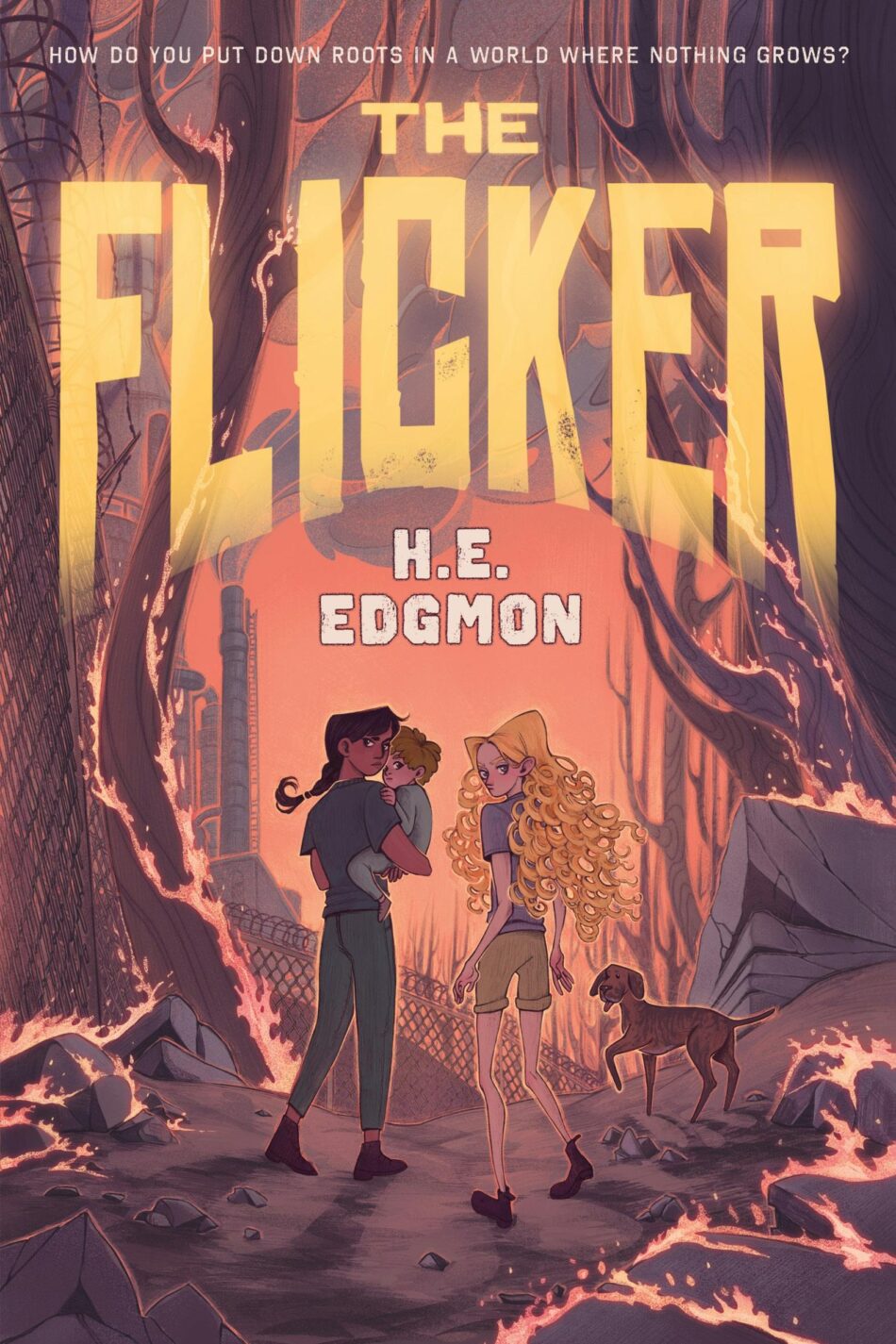
The Flicker, dystopian mglit with too much message and not enough fun

Seasons Change as the classic song from Expose goes.  And while some trends in mglit might ebb and flow, the dystopian, end-of-the-world novel with a plucky, female heroine will never die. The Flicker is an entry into that genre that wants to accomplish so much but ends up tripping over its intended inclusiveness. It’s challenging to find a sympathetic or interesting character in the first 85% of the book, and the lengths that it went to in order to check off virtue signal boxes has us recalling that classic Keanu Reeves scene from Always Be My Maybe.  

The Flicker wants to be your favorite new dystopian mglit series, but its slow, preachy, whiny delivery will do all that it can to dissuade all but the most diehard readers.
Kids, there are better books out there than this.

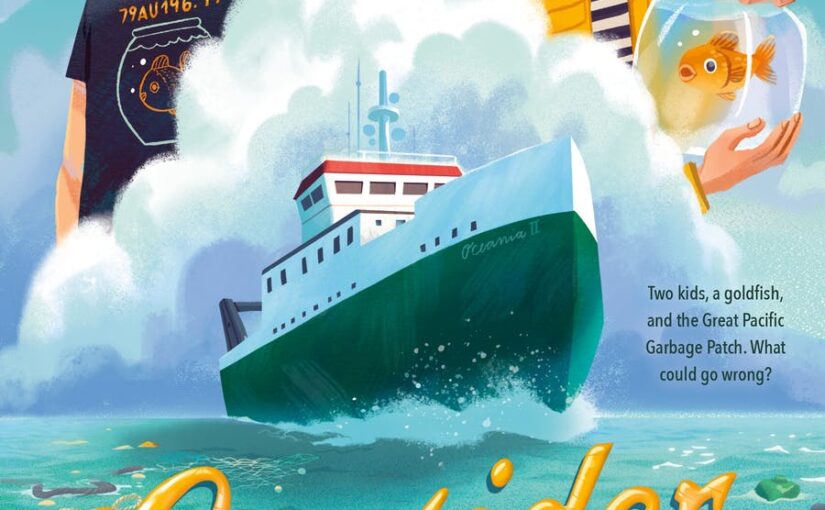
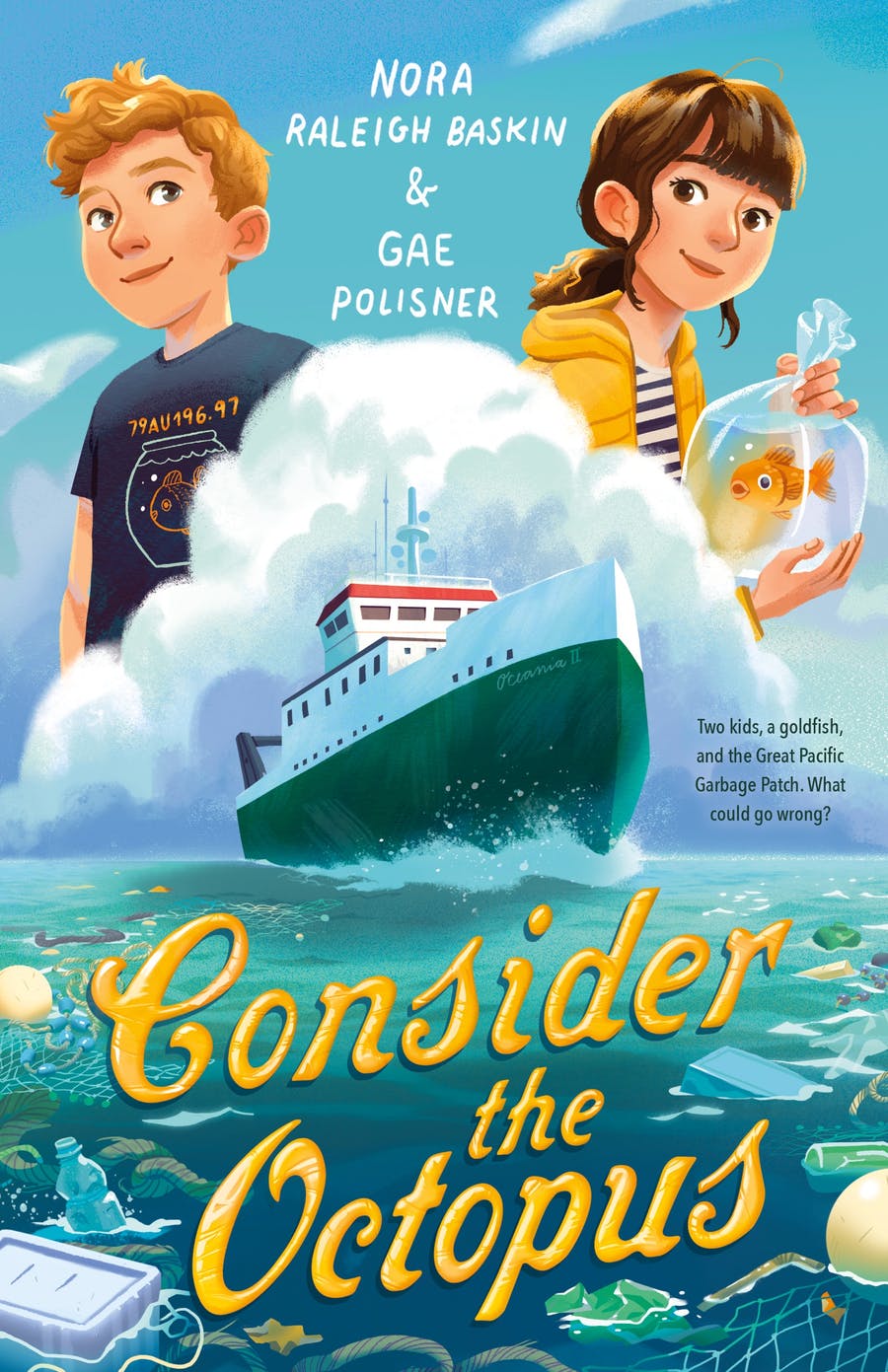
Consider the Octopus, silly nautical fun with an eco-twist  

Consider the Octopus was such a wonderful surprise to read. Having finished the book the clues to what adds up to make it fun are shown on the cover. A casual glance at Consider the Octopus has a teen girl and boy on the cover, while a mid-size ship is cruising through an area of the ocean that’s covered with plastic. The book has elements of all of those things, but its result is far more entertaining and fun, than you’re prepared for.

Consider the Octopus is an upper elementary book that puts the fun in fiction, as well as, a side of STEM, crushing and lots of laughs.
A message book that uses comedy and timing to deliver the (fun) punch

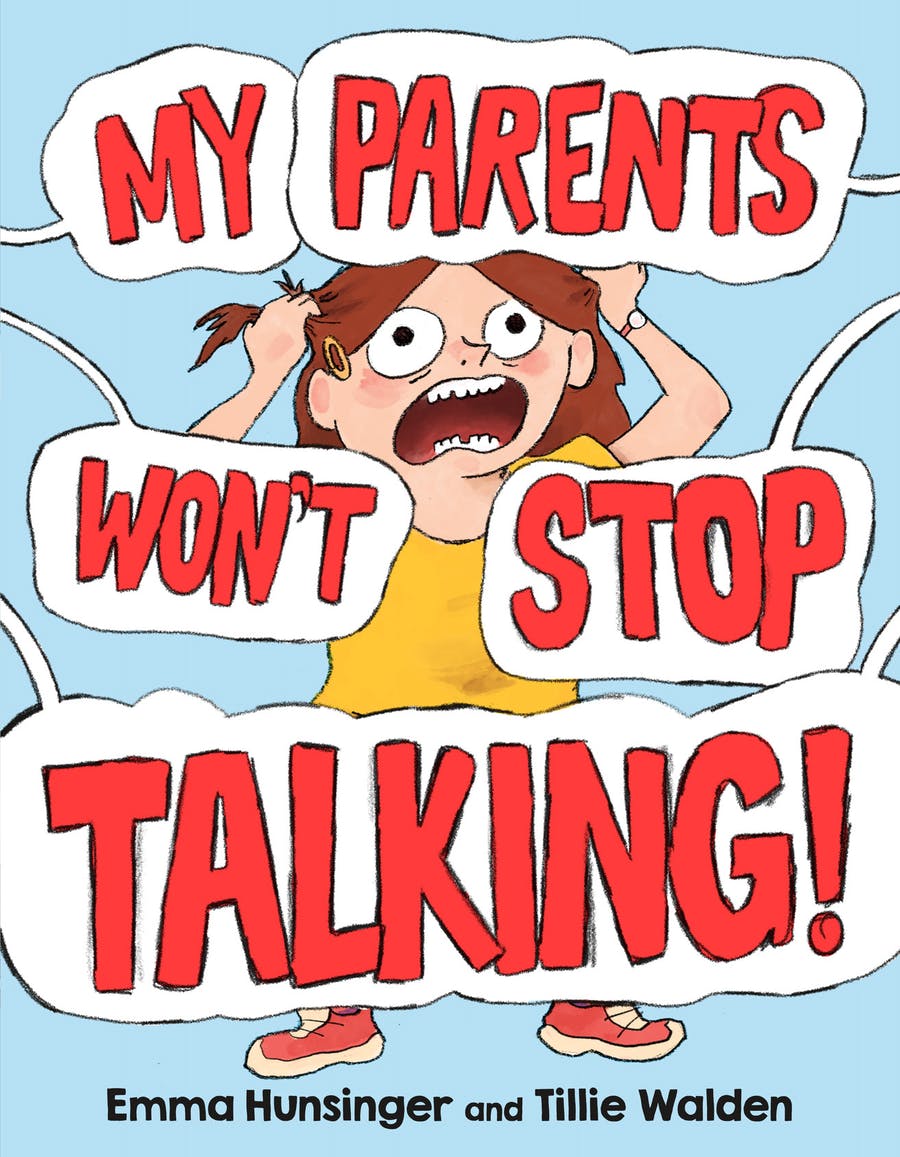
My Parents Won’t Stop Talking! will be on your forever bookshelf

The cover of this book is annoying, and that is the point. My Parents Won’t Stop Talking! Is an illustrated book that channels the impatience, imagination, panicked exaggeration, and manic mood swings that kids can have like few books before it. When you read it you’ll remember when you were a kid and your parents would not stop talking. The family was out for a walk, they’d see somehow they know and talk for what seemed like hours. My Parents Won’t Stop Talking! is from the viewpoint of a possibly impatient child as that exact thing happens.

My Parents Won’t Stop Talking! is the perfect intersection of art and story in a picture book about patience, perception, and creativity.
Embrace the choas and go down the rabbit hole

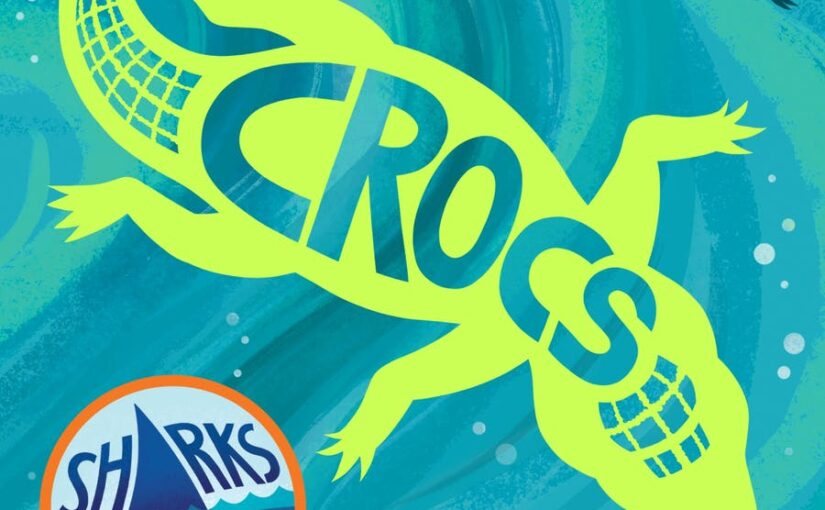
Crocs, a Sharks Inc. book that effortlessly hooks readers 9 and up

Upper elementary school readers and older want to be respected, and-to an extent, challenged when they read for fun. There comes a point when elementary and middle school readers become aware of the fact that the books that they read are a direct reflection of who they are. They’ve got the staples that most of them are reading in fourth and fifth, with a few brave souls venturing out to discover something unique. That funnel opens up much more in middle school. Crocs is our first encounter with a book in the Sharks Inc. book series by New York Times-Bestselling author Randy Wayne White. It checks off so many columns in what ages nine through 15 are looking for in a great fiction book that it resembles a dog’s shopping list at the meat market.

Crocs is realistic fiction that’s loaded with action and smarts that very few in this genre can match. It’s also jammed with STEM and real-world Florida vibes.
If you love to read, you’ll love this book

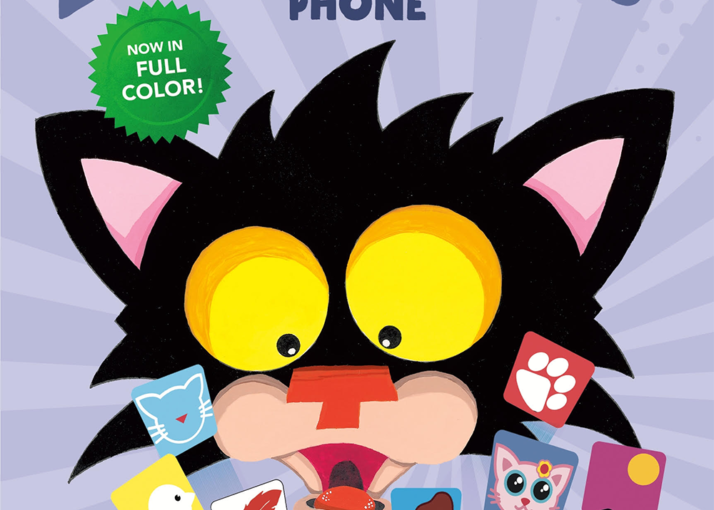
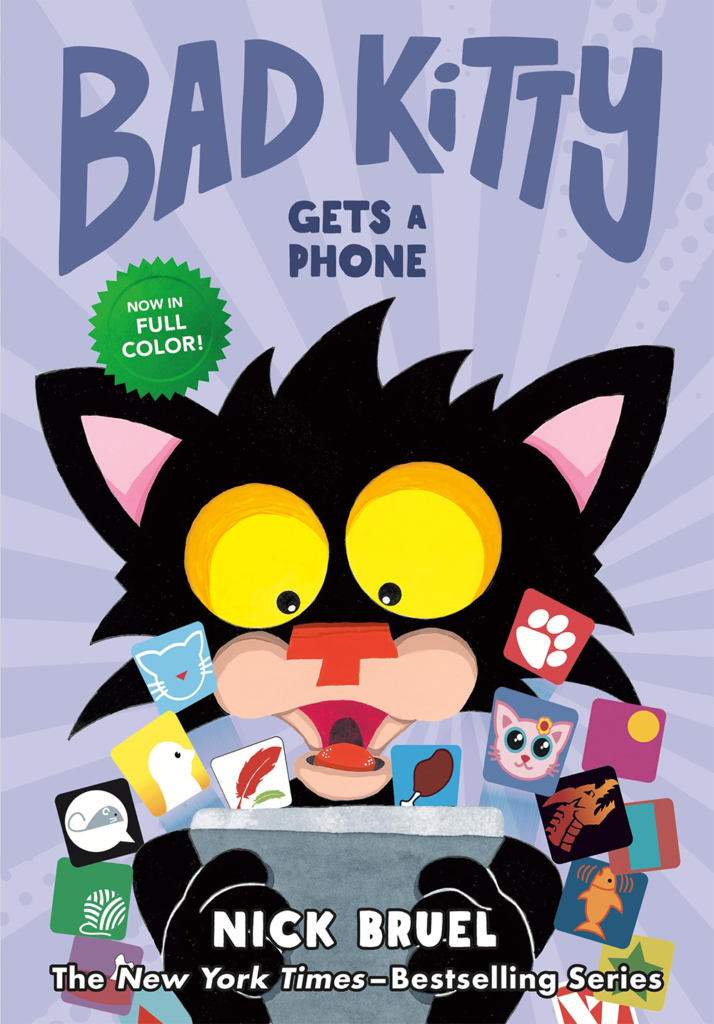
14 questions from elementary students to Bad Kitty creator, Nick Bruel

It’s great to be teaching in elementary schools. I get to see what they’re learning and hopefully add to that in a manner that makes some kids get it, or further their knowledge. I also get to see what they’re reading and in every ELA classroom, there’s at least one Bad Kitty book. Author and illustrator Nick Bruel’s latest installment is Bad Kitty Gets a Phone and he was kind enough to answer 14 questions from some of my ELA students.

Rodrigo – Why is Bad Kitty the only bad cat in the book?

Find out the answer to this and other kitty-inspring qustions after the jump
Copy Protected by Chetan's WP-Copyprotect.