

Even before this generation became addicted to Youtube Shorts they were becoming a less intelligent demographic than the one that preceded them. If our students or children were watching possibly anything other than the lowest common denominator nonsense I see them on I’d think otherwise. Don’t get me wrong my generation rotted their brains with I Love New York, Rock of Love and Cheaters, but at least that was long-form stupid entertainment. It’s possible that the de-evolution of mankind started when the average person could no longer navigate by the stars or point out the constellations. I never truly understood the constellations. I can see the great shapes that they purport to be (once they’re pointed out..), but they also look like a Rorschach Test of random dots. A Kid’s Guide to the Night Sky is by John A. Read, who lives in the smart side of YouTube. His channel, Learn to Stargaze, is smart, presented from a common sense perspective and gives off the vibe that anyone is able to stargaze regardless of their age or equipment level.
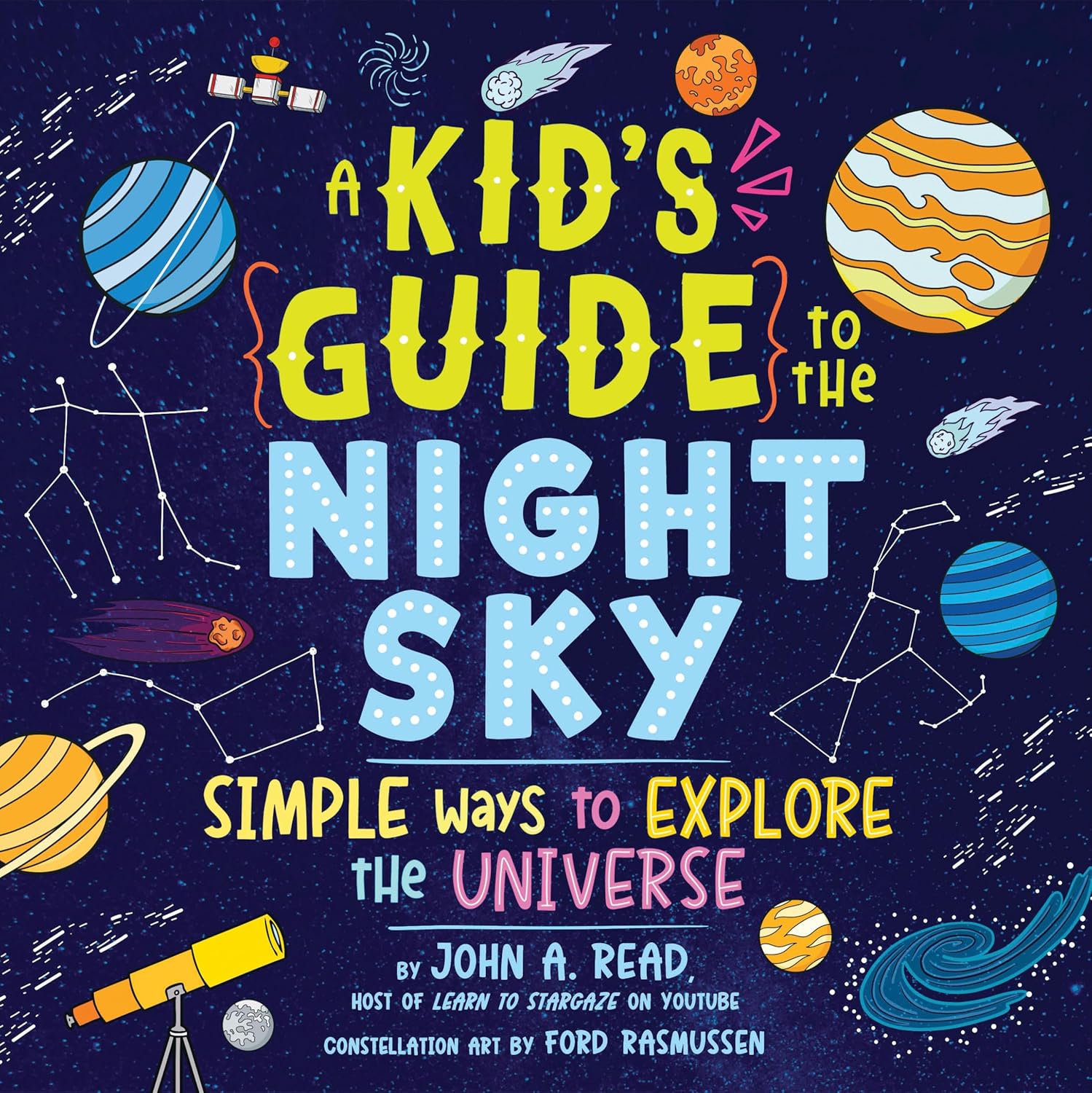
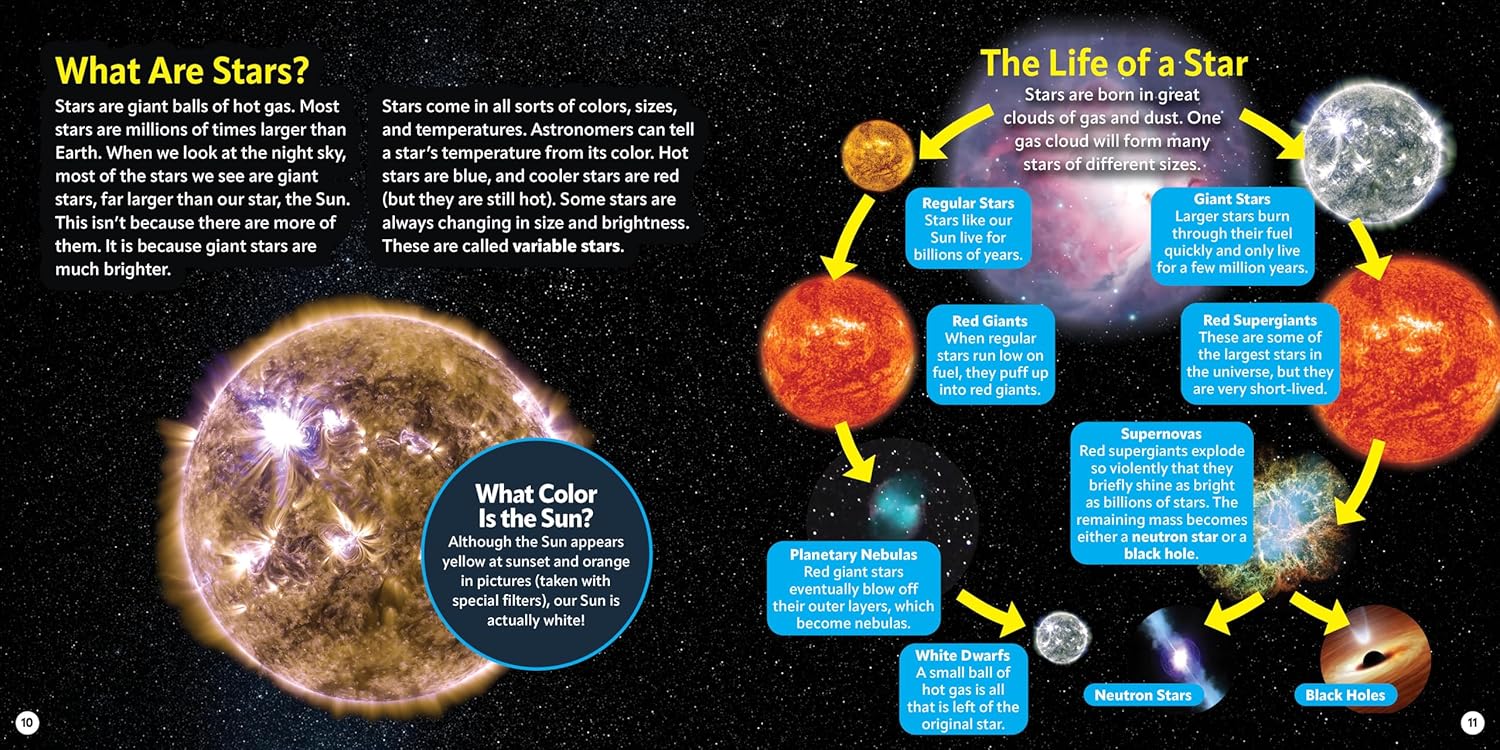
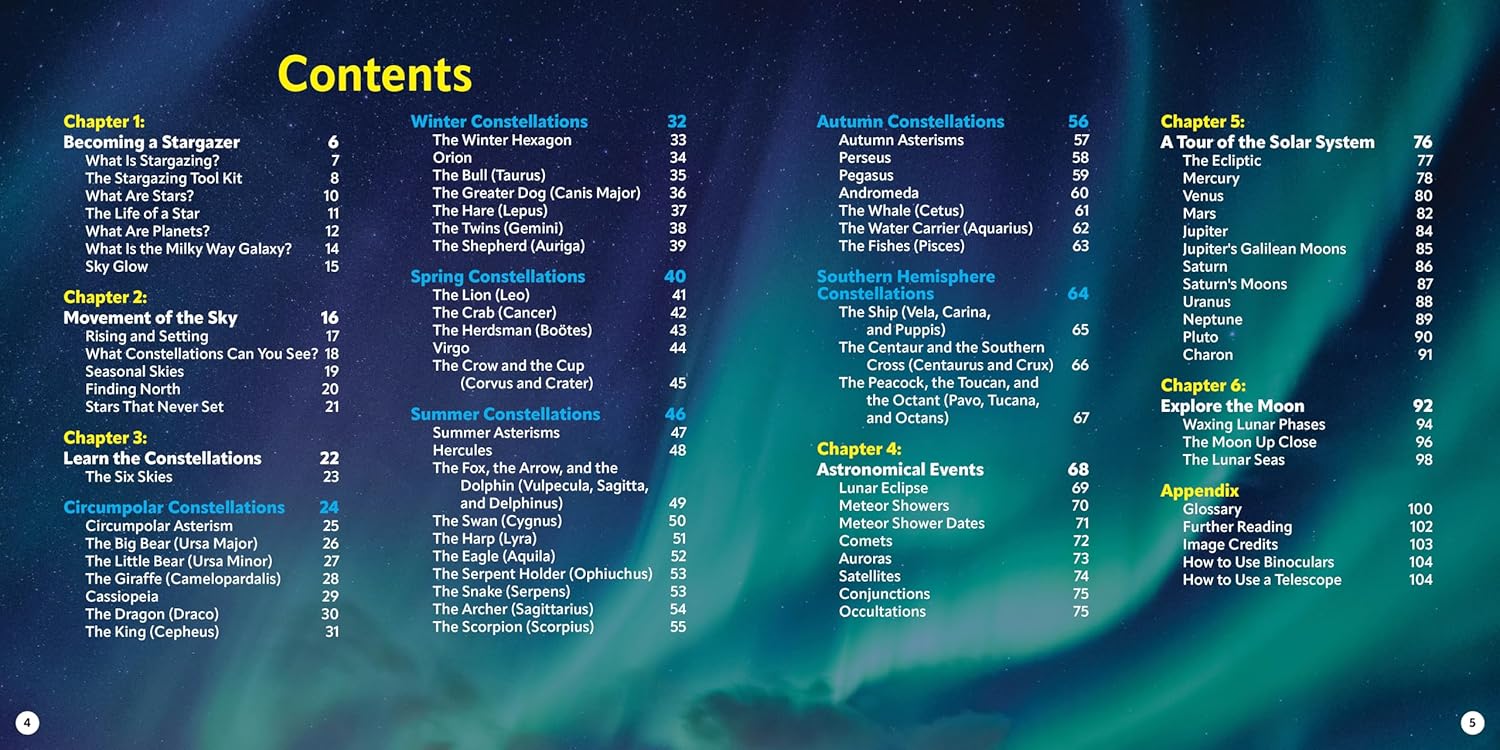
A Kid’s Guide to the Night Sky: Simple Ways to Explore the Universe is very kid-friendly. The book got the Nat Geo Kids playbook and has connected the dots. It’s based and compartmentalizes aspects of stargazing into categories, like astronomical events, learning the constellations, movement of the sky and others. As a young reader, this allows them not to get overwhelmed by the material in the book or the amount of information. Even within the chapters, each page has big, bright yellow print that demarks the subject title. Much like the chapters, this makes the bigger aspect of something that could be intimidating, much more palatable.
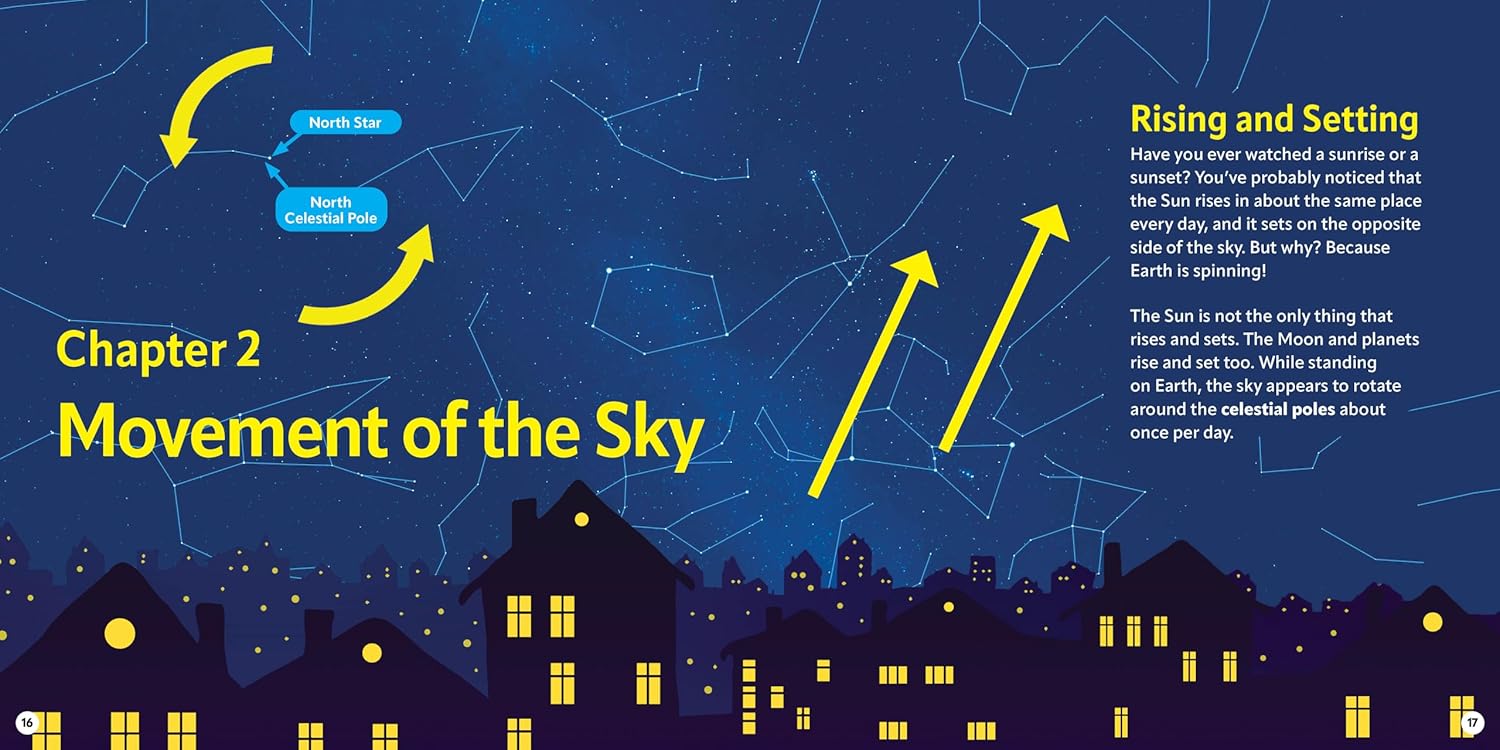
The sheer number of stars, never mind trying to find the constellations, freak me out when I look up at the night sky. It’s reasonable for young minds to think that way. Heck, it’s sensible for adults who have been frustrated with trying to stargaze to get flummoxed. The book is approachable and gives you the information in bite-sized nuggets. The skies are seasonal. However, there are some stars that never dip below the horizon in the circumpolar region. The one that we can always seem to locate in the sky is the Big Dipper. It flips around with the seasons due to where you may be on the Earth’s axis, but it’s always there. It’s also not a constellation. The Big Dipper is an asterism, which is a group of stars that are in a pattern, but not officially recognized as a constellation. The outermost stars in its ‘pan’ are Merak and Dubhe, which point to Polaris, the North Star that you might’ve heard so much in navigation circles.
Initially when I dug into A Kid’s Guide to the Night Sky, I reverted back to my teenage self, frustrated with my inability to ‘see’ Hercules. This where the simple text and detailed illustrations bring the constellations to life to where you can ‘see’ them without needing said Rorschach test. The pages give you the real view from where you’d be standing in a park, beach, or backyard. They tell young readers what they’ll see if they’re looking south or looking north. The pages also have tabs to distinguish constellations and how they’ll be seen in the northern and southern hemisphere. But wait, the book also lists them by what can be seen in the different seasons, because we can’t forget that the Earth rotates and is on an axis.
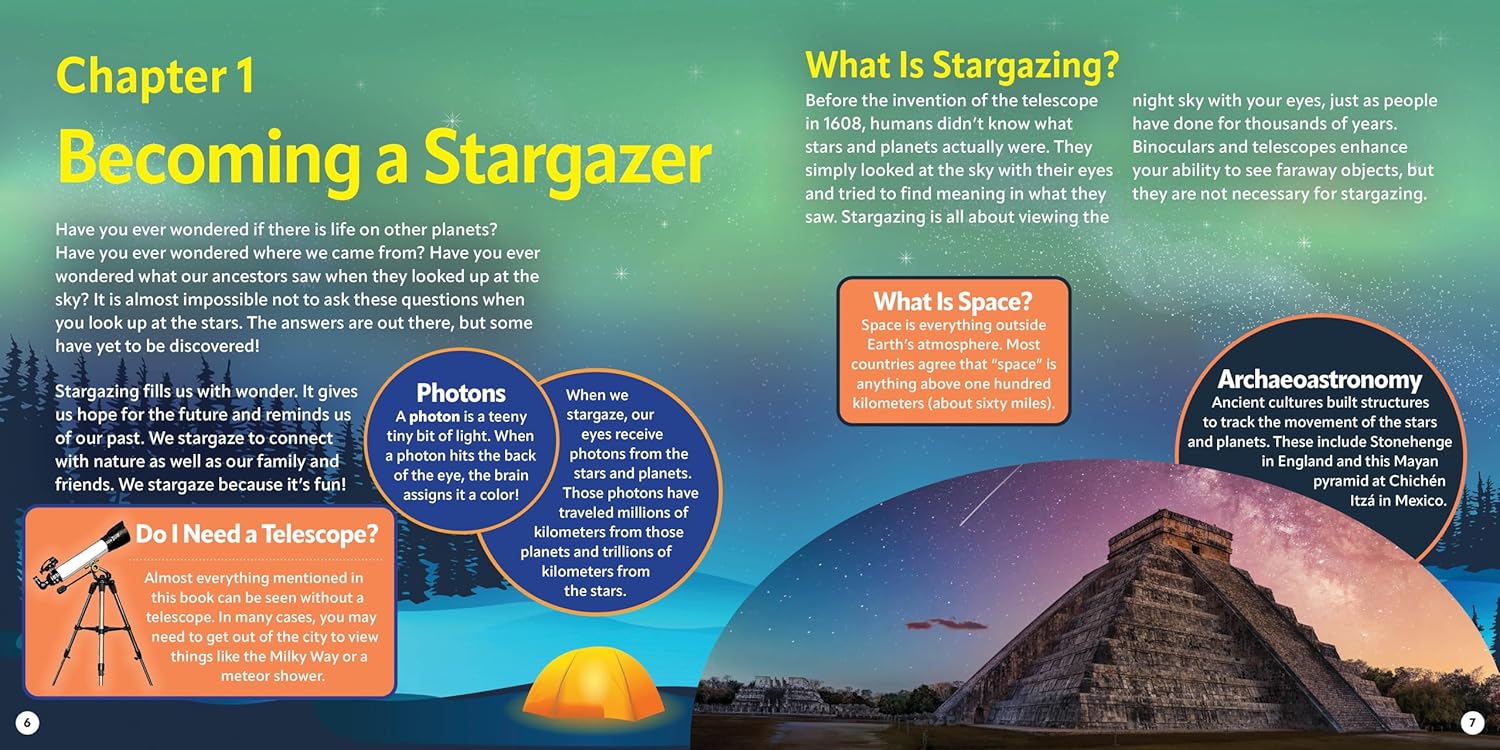
There are some photographs of the constellations at night. The table of contents spells things out to where readers can pinpoint things more quickly, like just before they’re leaving the house to go stargazing. The chapter on the moon is vivid, provides a detailed look at the names and locations of features you didn’t know were there and more. Why does the moon look so big? It only appears large because it’s seen with something we’re used to seeing, like a house or that Oak tree in the backyard. In reality, the moon is as big as a pea that’s being held in your hand if you stretch it out. Stop the witchcraft.
A Kid’s Guide to the Night Sky: Simple Ways to Explore the Universe is as easy as it gets when it comes to a vehicle that can educate kids about this aspect of constellations. It will still require some effort for kids to learn the stars, but anything worthwhile will. The book just makes it fun to look at and by doing so, allows kids the confidence to realize that they can do it, despite the initial thoughts of it being impossible.
A Kids Guide to the Night Sky: Simple Ways to Explore the Universe is by John A. Read with illustrations by Ford Rasmussen and is available on Sourcebooks Explore.
There are affiliate links in this post.


 Facebook
 Twitter
 Youtube