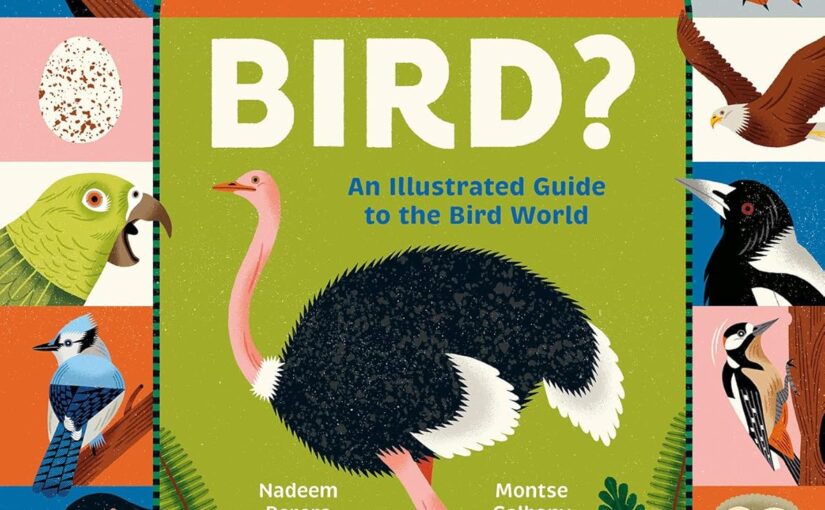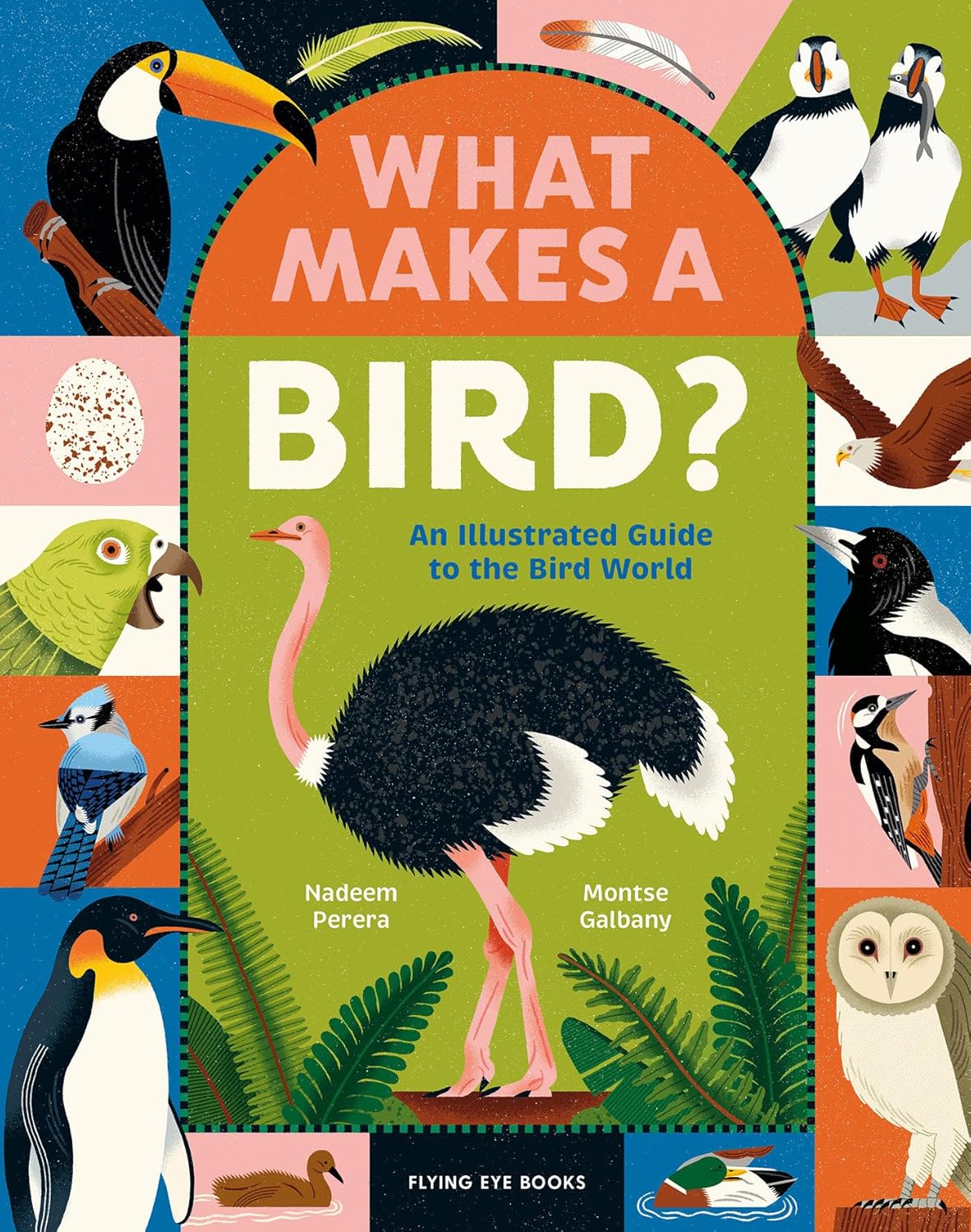
What Makes A Bird?, timeless STEM that crosses into enjoyment 

Quite often, we’ll talk about all-age comic books. These are comic books that can be enjoyed by any age; but have the ability to serve as entertainment for young ages. Is there such a thing as an all-age reference book? There is, but to call them a ‘reference book’ could be a disservice to how entertaining some of them are. What Makes A Bird? An Illustrated Guide to the Bird World is a fun, entertaining ‘reference book’ that belies the dreaded boring label young ages might apply to something that’s not brain rot. The book has a classic, timeless vibe that can be attributed to its illustrations and presentation.

What Makes A Bird? is effortlessly enjoyable STEM on the ancestors of dinosaurs and their habitats and characteristics today.
Resistance (and ignorance) is futile

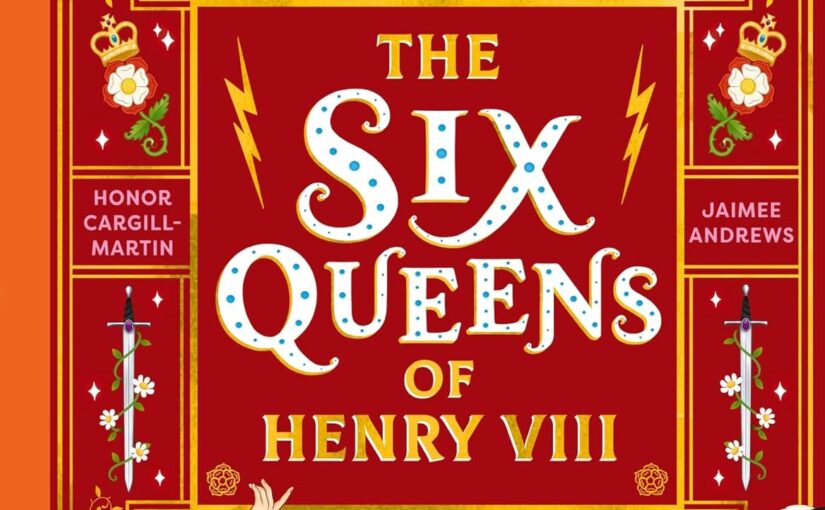
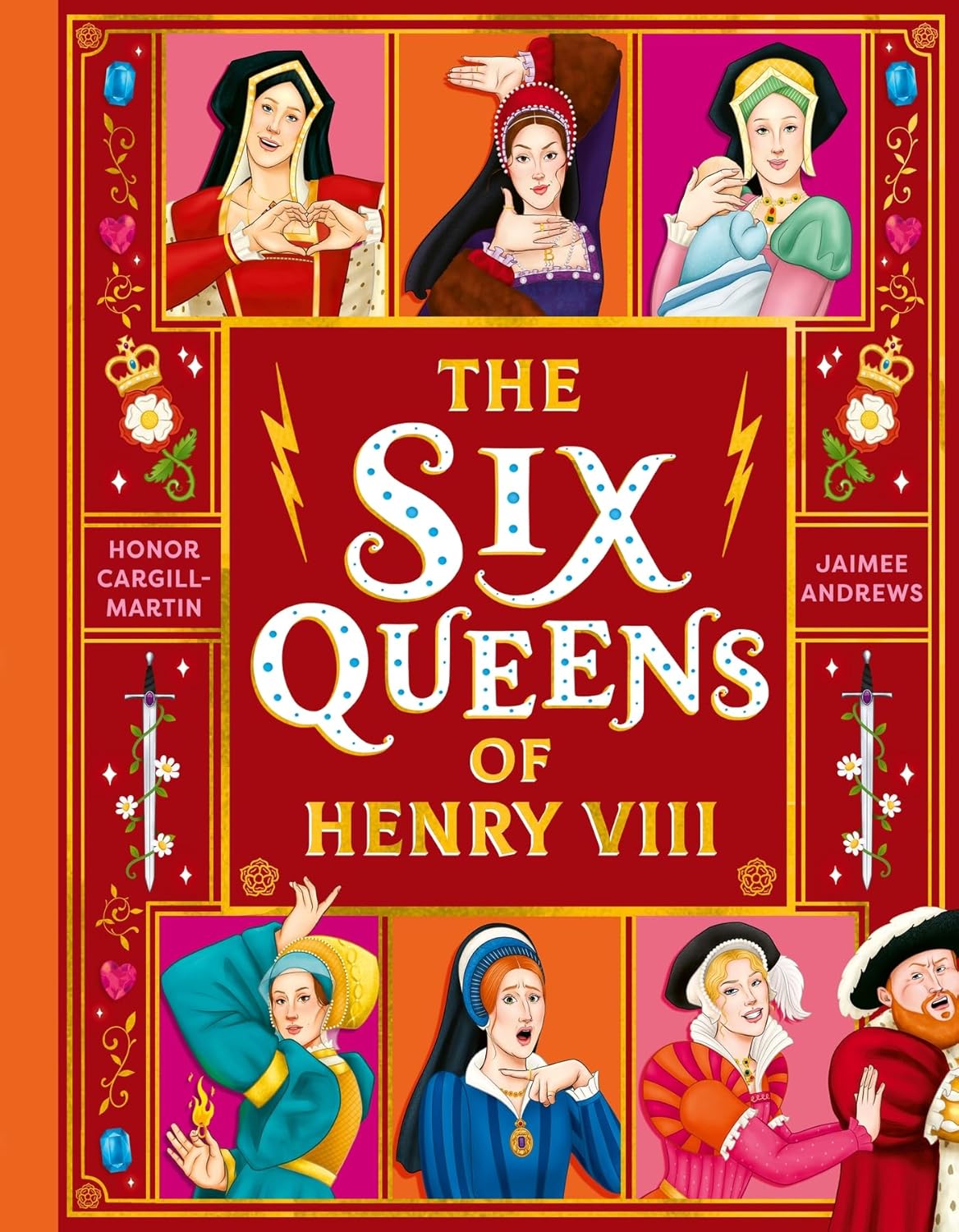
The Six Queens of Henry VIII, non-fiction content that sticks in your head

Herman’s Hermits did more for Henry VIII than most North American schools. I just asked a group of 25 high school juniors if they knew who Henry VII was, and two students raised their hands. They knew that he had many wives, but incorrectly said that he killed all of them. To be fair, when I was a child, if a teacher had said Henry VIII we would’ve echoed it with, Herery the eighth I am, I am. Set against this backdrop is what makes The Six Queens of Henry VIII all the more remarkable. It’s an illustrated book with graphic novel element that manages to entertain audiences in equal measure to its education.

The Six Queens of Henry VIII uses varied art and succinct text to make a non-fiction book on British royalty that’s effortless to enjoy.
hIS WIVES AND hENRY vii MEET STORYTELLING TARGETED AT MIDDLE SCHOOL AND UP

Ma: The Japanese Secret to Contemplation and Calm, 18 essays on pausing life

Tsundoku is the Japanese word for buying or collecting books, intending to read them later. In the meantime, they form paper based, scaled down mountains that range in colors and thickness. I use that word as more of an activity, or something I do, rather than an affliction. Ma is a much more subtle Japanese word. It can mean ‘negative space’, untapped potential, or any pause in life that you intentionally do.  Ma: The Japanese Secret to Contemplation and Calm is a collection of 18 essays and photographs about the concept of what isn’t there.

Ma: The Japanese Secret to Contemplation and Calm: An Invitation to Awareness is 18 essays on intentional pauses, negative space, and stillness to makes action more powerful.
Essays that will help you see what isn’t there

Night Night Tyrannosaurus, board book cutes with big-kid STEM

Back in my day board books were just about caterpillars, shapes and colors. Babies, crawlers and toddlers have it so good today. Night Night Tyrannosaurus and Night Night Ladybug are board books that swim with today’s books for young demographics. Tyrannosaurus and Ladybug each have a different focus, with one being on shapes and the other on colors. It has the mandatory aspects of education, but wraps it in the pleasantries of dinosaurs or insects. My four-year-old self describes this as a win/win when it comes to board books.  

Night Night Tyrannosaurus is a board book that uses some go-to elements for toddlers and crawlers, but adds a little STEM.
Night night toddlers, hello Stem curiosity

Rebels, Robbers, and Radicals makes the Bill of Rights interesting, for real

I just had an Arsenio Hall moment. During his talk show, he had a catch phrase where he’d say “Things that make you go hmmmm.” As best I can remember, Hall would pause his monologue or joke and say his phrase. He wouldn’t directly state the implication that he was going for, because that’s to be determined by the audience. In my “hmmm” moment, I was reading about the Dred Scott decision. It’s just one of the multiple dozens of court decisions that are discussed in a common-sense manner in Rebels, Robbers, and Radicals: The Story of the Bill of Rights.

Rebels, Robbers, and Radicals looks at one of the simplest, yet confusing documents in United States history and makes in interesting for ages ten and up.
The nat geo effect, but with government for middle school

Our Cosmos, an approachable big-picture space book for elementary ages

A reference book is too wonky. A book with illustrations can be too kid-ish. If it looks too much like a Nat Geo books those who are immune to its charms will run like a vampire nearing daylight. Is there a cartoon in it? The middle school kids who see anything remotely associated with elementary school will tune out.  Our Cosmos: The Complete Guide to Space for Kids is built for some of those upper-elementary ages. Those who will get the most out of the book are middle school kids who are curious about space, but might just be a little reluctant in learning about it.

Our Cosmos: The Complete Guide for Space to Kids is big-picture thinking presented in nuggets of information for elementary ages.
Space, the cosmos by another name, can be fun to learn about

A Kid’s Guide to the Night Sky is (somewhat) easy astronomy

Even before this generation became addicted to Youtube Shorts they were becoming a less intelligent demographic than the one that preceded them. If our students or children were watching possibly anything other than the lowest common denominator nonsense I see them on I’d think otherwise. Don’t get me wrong my generation rotted their brains with I Love New York, Rock of Love and Cheaters, but at least that was long-form stupid entertainment. It’s possible that the de-evolution of mankind started when the average person could no longer navigate by the stars or point out the constellations. I never truly understood the constellations. I can see the great shapes that they purport to be (once they’re pointed out..), but they also look like a Rorschach Test of random dots. A Kid’s Guide to the Night Sky is by John A. Read, who lives in the smart side of YouTube. His channel, Learn to Stargaze, is smart, presented from a common sense perspective and gives off the vibe that anyone is able to stargaze regardless of their age or equipment level.

A Kid’s Guide to the Night Sky: Simple Ways to Explore the Universe makes the cosmos approachable for elementary school ages.
Don’t be intimidated, it’s just a bunch of space rocks

Dying to Ask: 38 Questions From Kids About Death delivers the dead goods

Death happens. It’s a scary, unknown thing that is an absolute final, unless you see a ghost, then that’s scarier. Kids have many questions about death and that can be frustrating because nobody really has the answers. Adults try to avoid the topic. Kids can become frustrated because they’ve had contact with it through a family member. Dying to Ask: 38 Questions From Kids About Death is exactly what its name entails and is so much more than you think it is. It accomplishes this through a combination of the questions, the illustrations that accompany each question, and the tone in which they’re answered.

Dying to Ask: 38 Questions About Death From Kids manages to be respectful, funny, insightful and heartfelt on this sometimes taboo subject that touches everyone.
Let’s talk about death, no really
Copy Protected by Chetan's WP-Copyprotect.