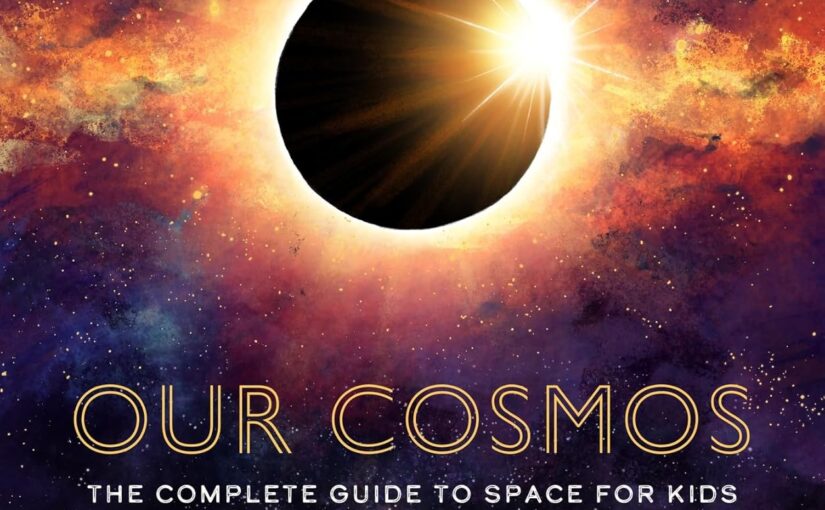
A reference book is too wonky. A book with illustrations can be too kid-ish. If it looks too much like a Nat Geo books those who are immune to its charms will run like a vampire nearing daylight. Is there a cartoon in it? The middle school kids who see anything remotely associated with elementary school will tune out. Our Cosmos: The Complete Guide to Space for Kids is built for some of those upper-elementary ages. Those who will get the most out of the book are middle school kids who are curious about space, but might just be a little reluctant in learning about it.
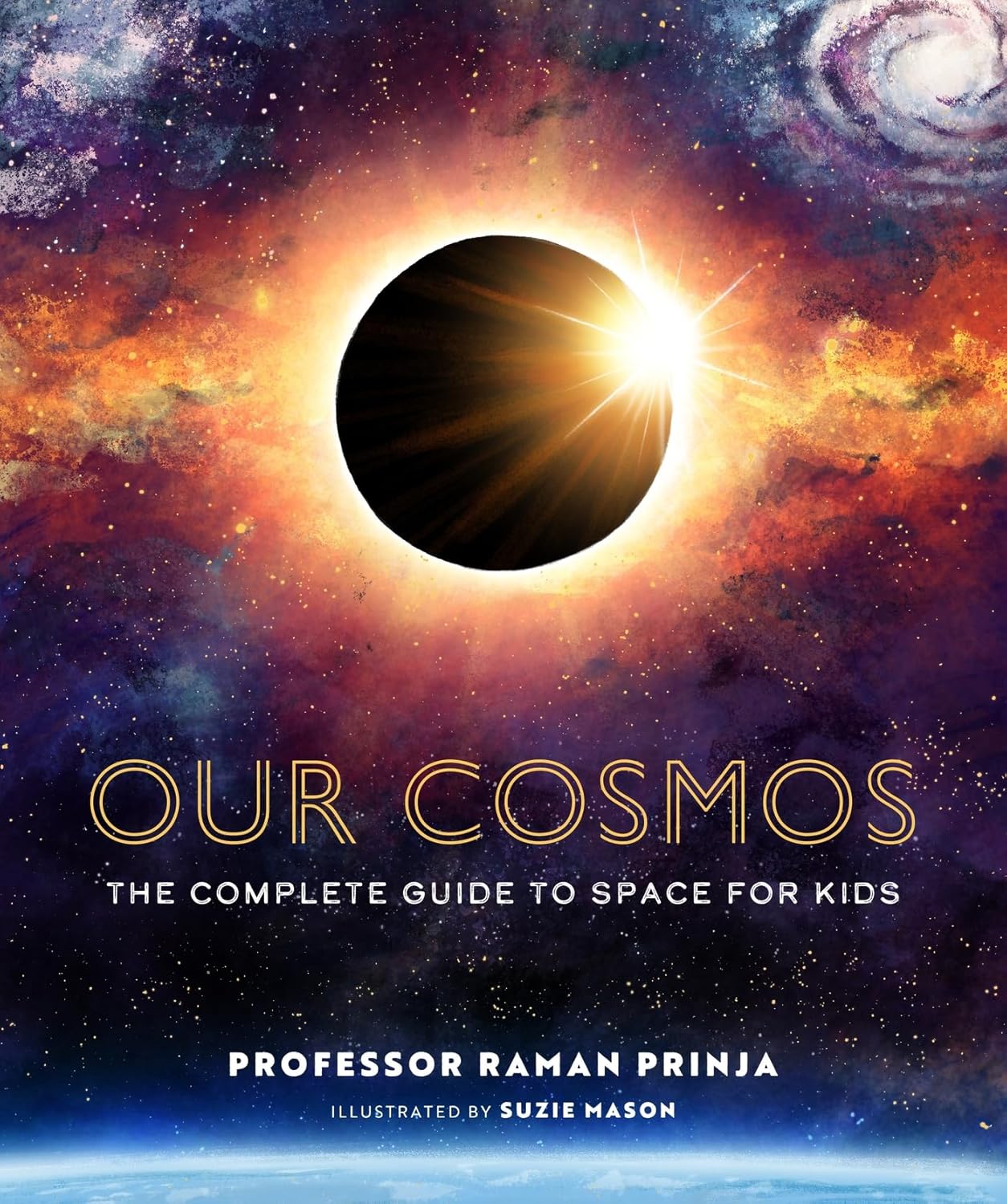
The special sauce in the book lies within its title and sticks to that game plan. Cosmos is defined as the universe seen as a well-ordered whole. This is a big-picture view of the things around our planet. Our Cosmos breaks the neighborhood down in the contents and lets readers know it’s unlike other outer space books they’ve seen. It looks at the black spaces between everything, the required technology to get there, dark energy, moons, missions, stars and more that kids don’t know that they don’t know.
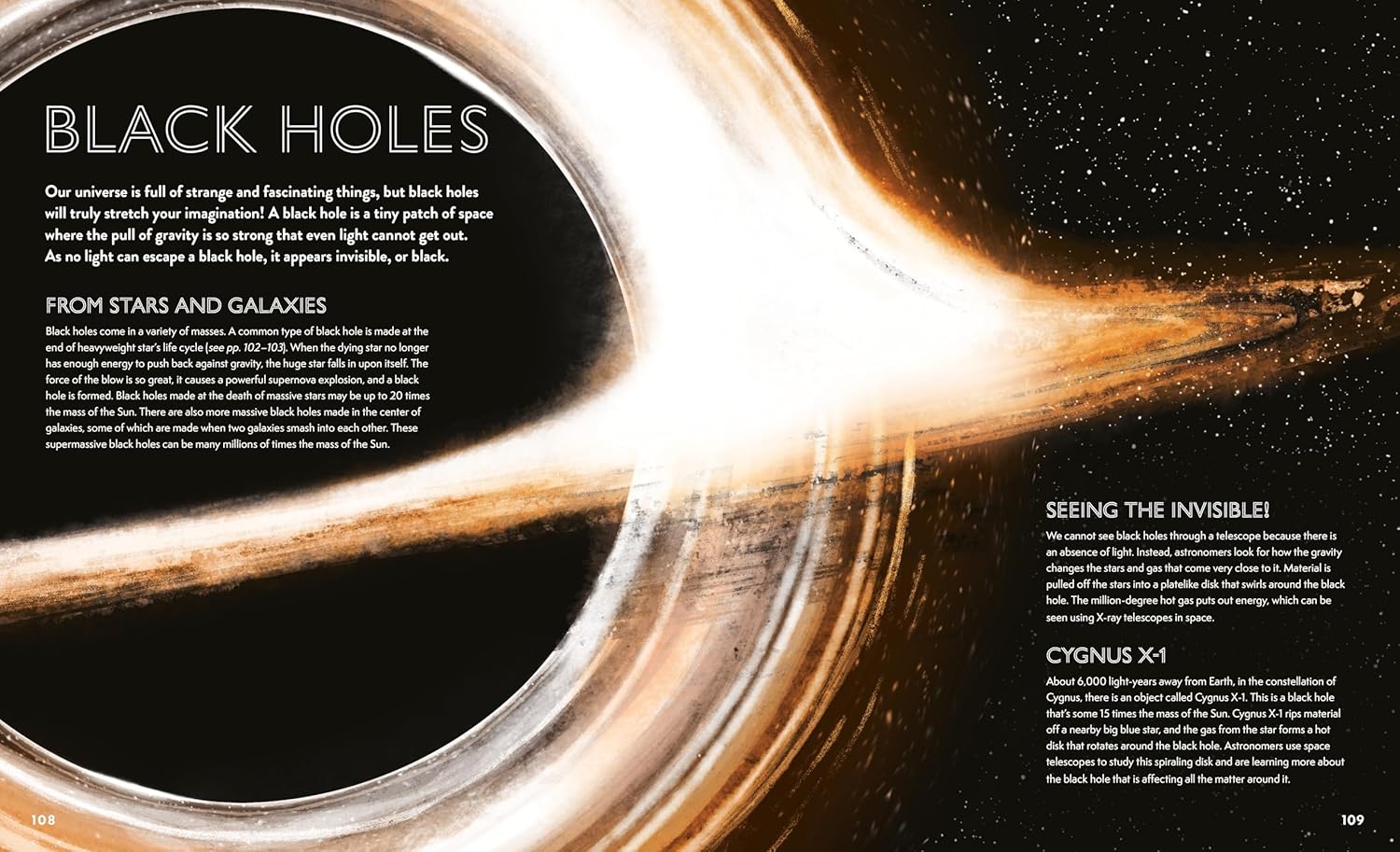
Our Cosmos has text that speaks to kids in a common sense manner that allows them to understand it, while allowing their imagination to do some exercise too. When the book starts, it explains, in kid-friendly text, why light-years are used to measure distances in space. When it comes to celestial facts, that aspect of space, distance and time still fascinates me. Light travels 186,400 miles in one second in an empty space. When I was a kid I struggled trying to rectify that six-digit number with the fact that my idiot buddy and the light switch. They could flick the switch and I could run a fraction of the way across the room before the room went from dark to light. This fact meant that I could run almost as fast as the speed of light, which meant that I was almost as fast as The Flash, which meant that I was almost a superhero and didn’t have to do my homework.
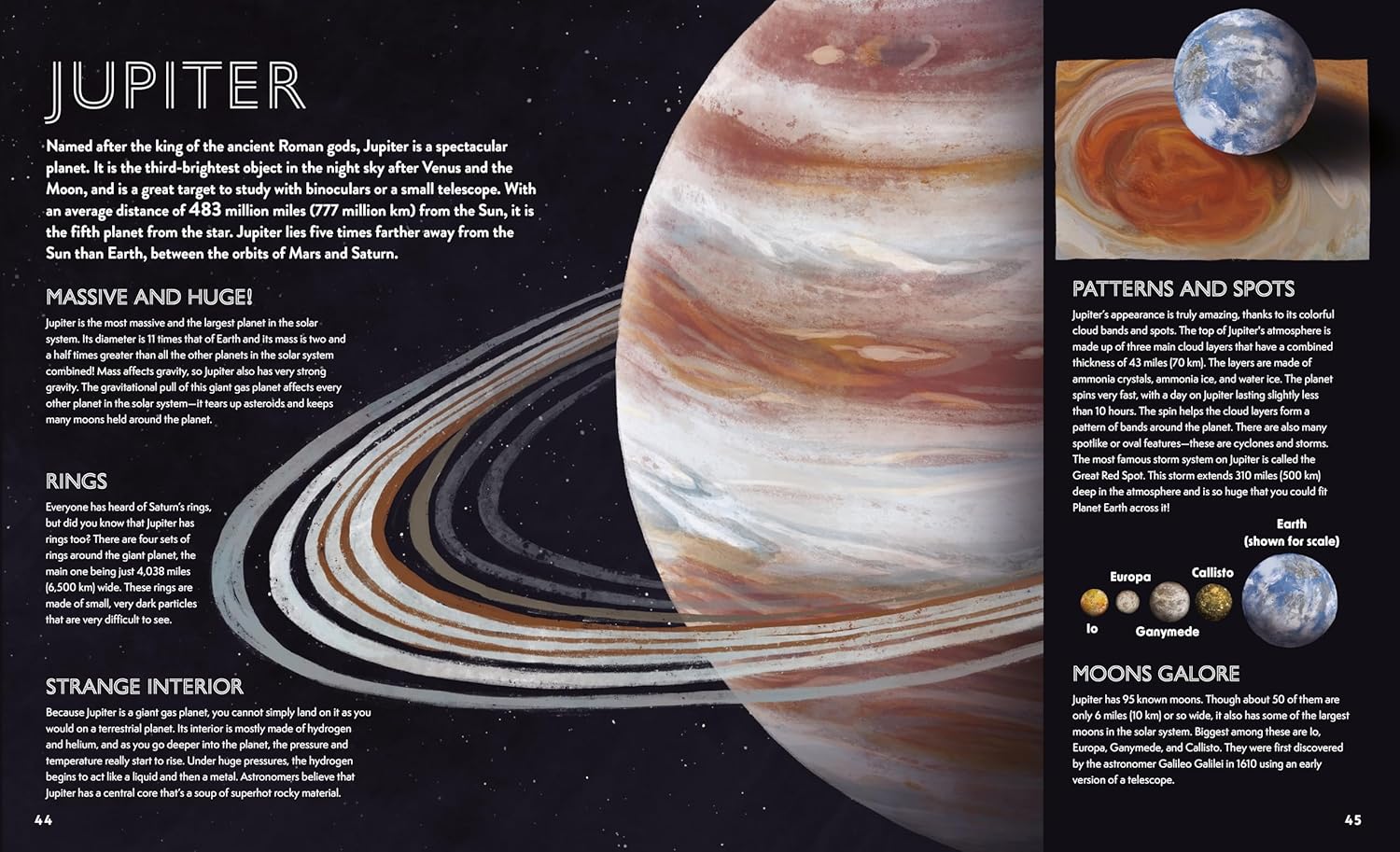
The fact that we know exactly how fast light travels in space is still a miracle in my primitive mind. This book addresses people who think like me through the text and lets us know that it’s ok not to understand it the first time that they encounter it. It takes eight minutes for the light from our sun to reach Earth. This fact is told a couple of different ways on the page that explains this, but ends it on a bigger note by saying that the light from galaxy NGC 4845 is 65 million light-years away. Go back in your time machine to when that light started its journey and you wouldn’t last long before a dinosaur of some sort ate you in one bite for a snack.
The text is in paragraph blurbs that are placed around the realistic illustrations that drive home the point. I think they’re illustrations. The book’s cover says that the illustrations are by Suzie Mason, but some of them are so realistic you’ll think that she’s an alien who simply took these photographs as she was coming back to Earth after visiting her family in TON 618. TON 618 is a galaxy that’s believed to contain a supermassive black hole that is 70 billion times the mass of our sun.
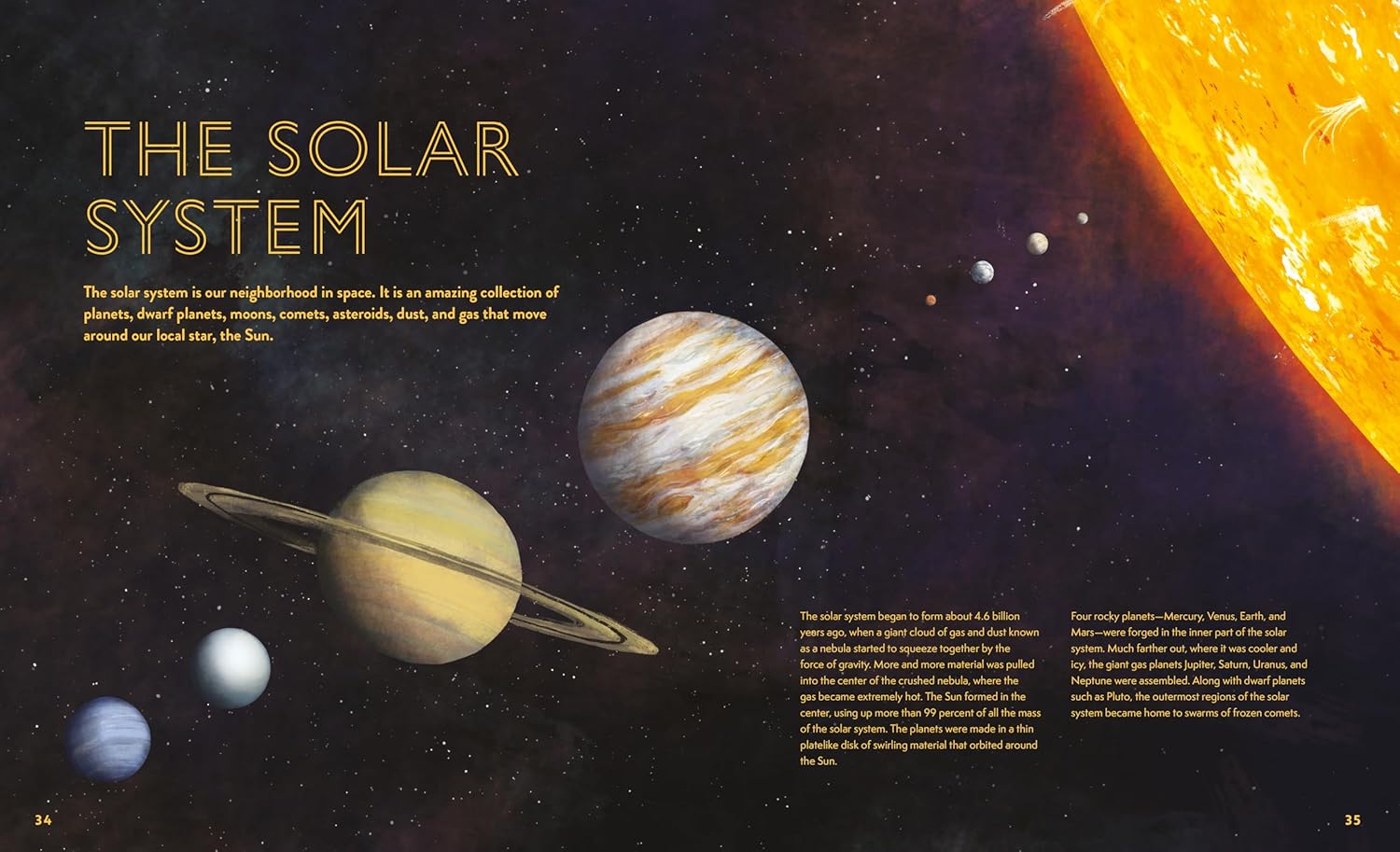
It’s the little facts that that one that make the book consumable, and they are everywhere. Our sun will eventually die, granted that’s in about five billion years, but we’ll die then if we’re still on this planet. Saturn has many moons, one of which has ice volcanoes. An ice volcano twists my mind in the same way as the light-year conundrum when I was a kid. Ice is a solid; if it spews a solid thing, can it really be a volcano? In this case, the Cassini spacecraft flew 15 miles over Saturn’s sixth-largest moon, realized that it’s spewing massive plumes of water vapor into its atmosphere, some of which falls back to its surface, covering its desolate surface. The rest of the water vapor gets sucked into Saturn’s second outermost ring.
See? You can turn to any page in Our Cosmos: The Complete Guide to Space for Kids and be ridiculously entertained. You do have to be mildly curious and interested in that space above our heads to get the most from the book. It can’t make the reluctant reader read it or the non-STEM student suddenly realize that life is better when you’re curious and want to learn. Think of Our Cosmos as that water refuge that’s giving out something to drink when it’s hot and you’re really thirsty, but left your water bottle at home. It won’t judge you for things that you don’t have or know, it’ll just share it’s knowledge in a way that will make kids know a little, and wonder a lot.
Our Cosmos: The Complete Guide to Space for Kids is by Professor Raman Prinja with illustrations by Suzie Mason and is available on Welbeck Editions, an imprint of Hachette Children’s Books.
There are affiliate links in this post.


 Facebook
 Twitter
 Youtube