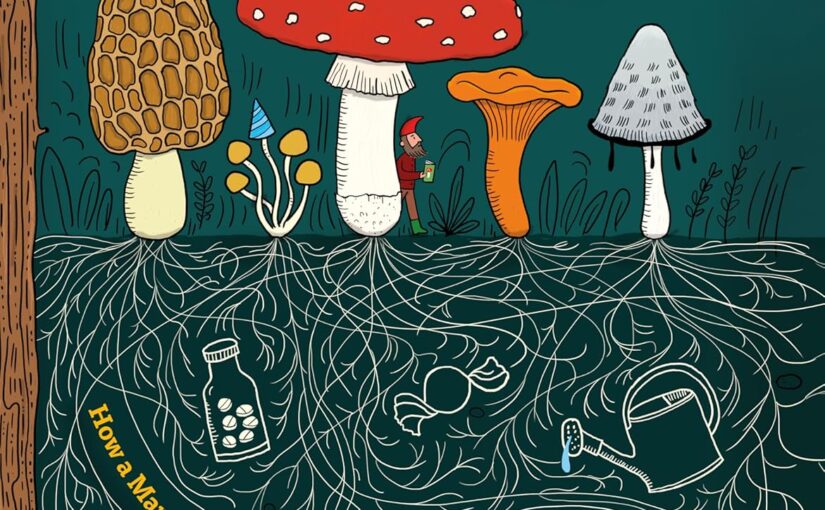
My pseudo-critical thinking lessons to high school students sometimes challenge them. I do provide answers, but I prefer to have students find the path or the solution, themselves. Jokes, stories and raw enthusiasm can lead people to learn in a manner where they want to, as opposed to they have to. Mushrooms and Company takes the former road. Educators, parents and some students will recognize the look of Mushrooms and Company.
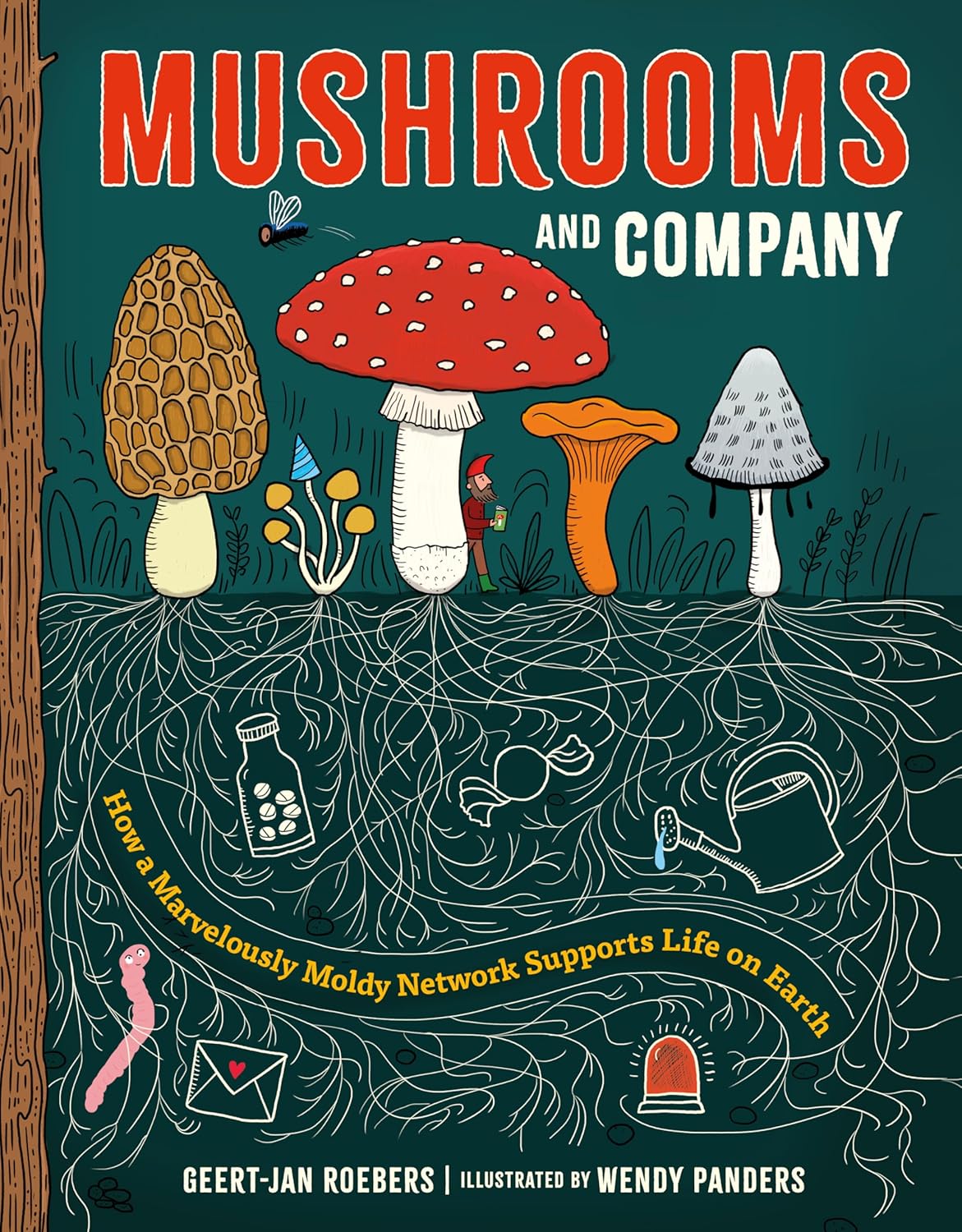
The illustrations are by Wendy Panders. Her unique style is perfectly suited towards curious readers who want to learn. However, the art is fascinating enough to drag in young audiences who simply want a laugh. Come for the STEM, stay for the giggles. Whichever way you enter Mushrooms and Company, you’ll willingly circle the information drain.
The book is divided into seven chapters, with each of them consisting of two to six relevant subcategories. They have catchy titles: Dead Matter, Strange Shapes Funny Names, Helping or Harming? and Fungus as Prey. The Table of Contents is made interactive by its illustration of a garden gnome who is leading the way like a tour guide. Because this is a reference book, of sorts, the more technical or STEM vocabulary are in bold and defined in the glossary at the end of it.
Of sorts because the book is entertaining, but its main focus is education. Mushrooms and Company is educational and fun in a different vein than the 500-pound gorilla. Nat Geo Kids normally package their reference books in a photographic-heavy manner. The text is made up of short blurbs. They also rarely have more than three sentences and are written at a low to mid-elementary level.
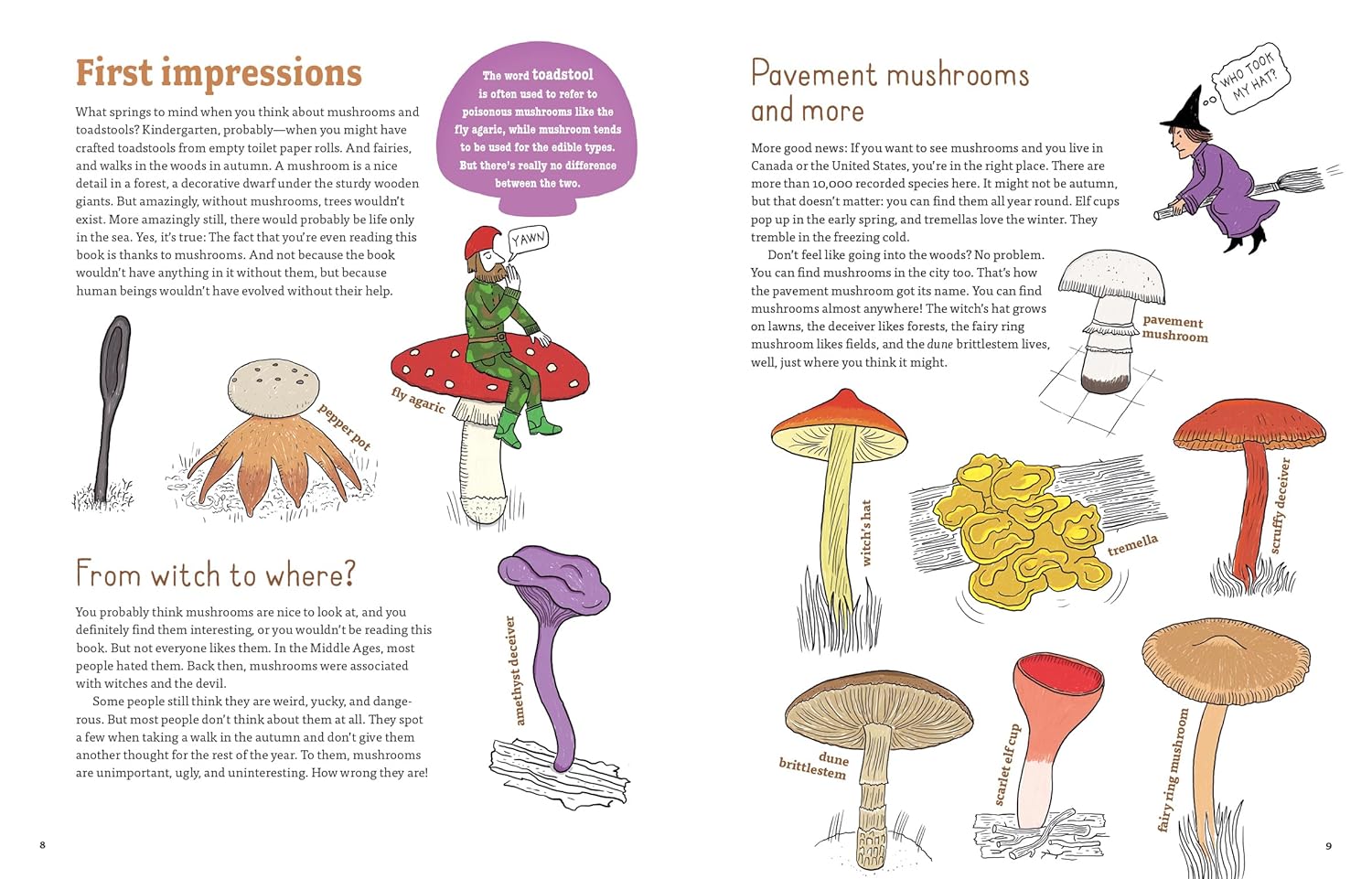
Mushrooms and Company is smarter than that. It’s written at an upper-elementary level and older audience. Older is relative, because the book is very smart and will teach anybody who reads it something. Teach, educate, read, blah, blah, some kids just want to have fun when they engage in a book. This is a fun book, but it’s not as immediately fun as other reference books.
Yes middle school students, education or learning about something can be fun. It’s especially fun when compared with the options of not doing it; and then dealing with the repercussions of being ignorant of it. I’m teaching high school now and am dealing with a vast majority of young adults who are falling in the latter category.
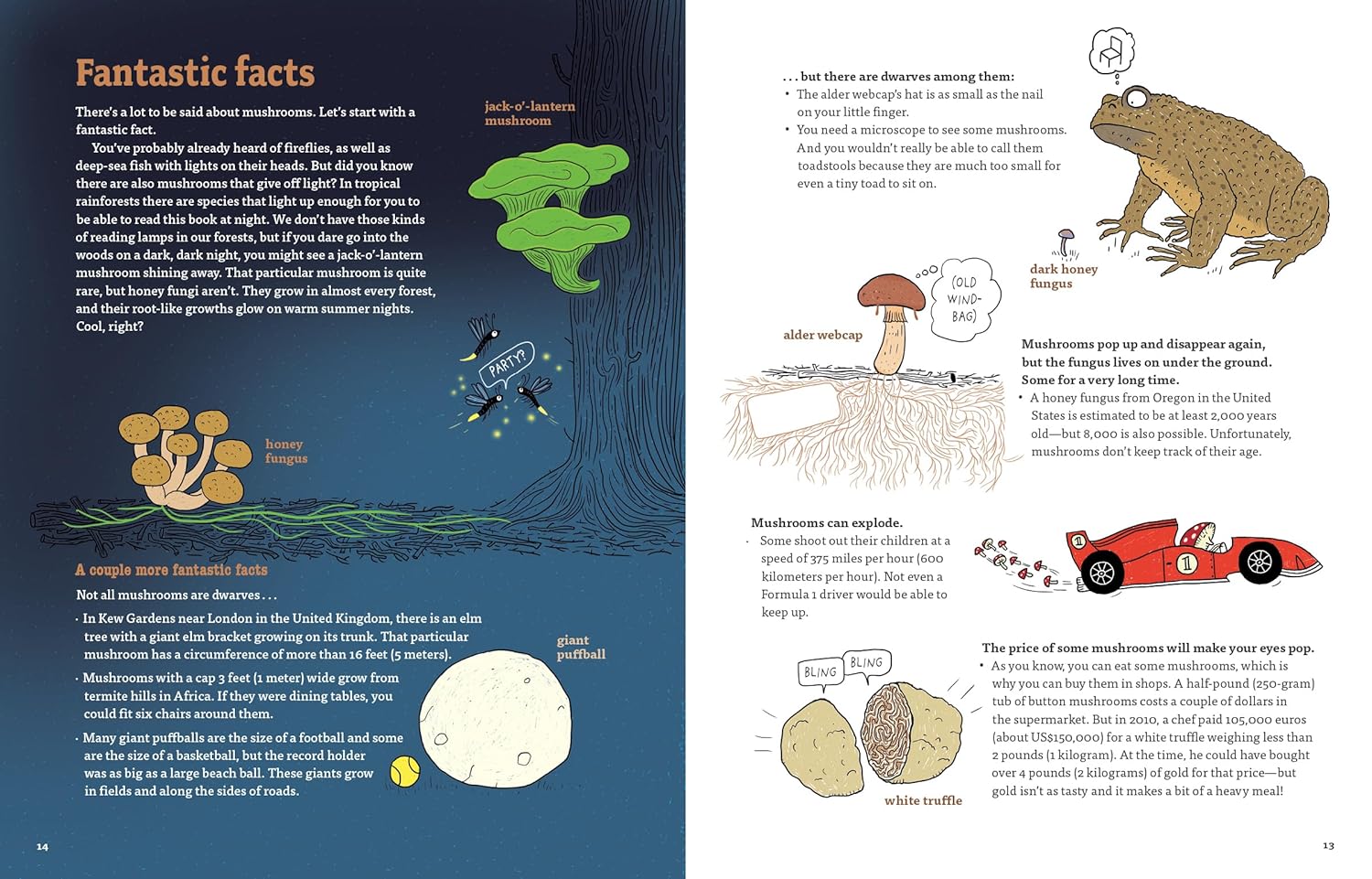
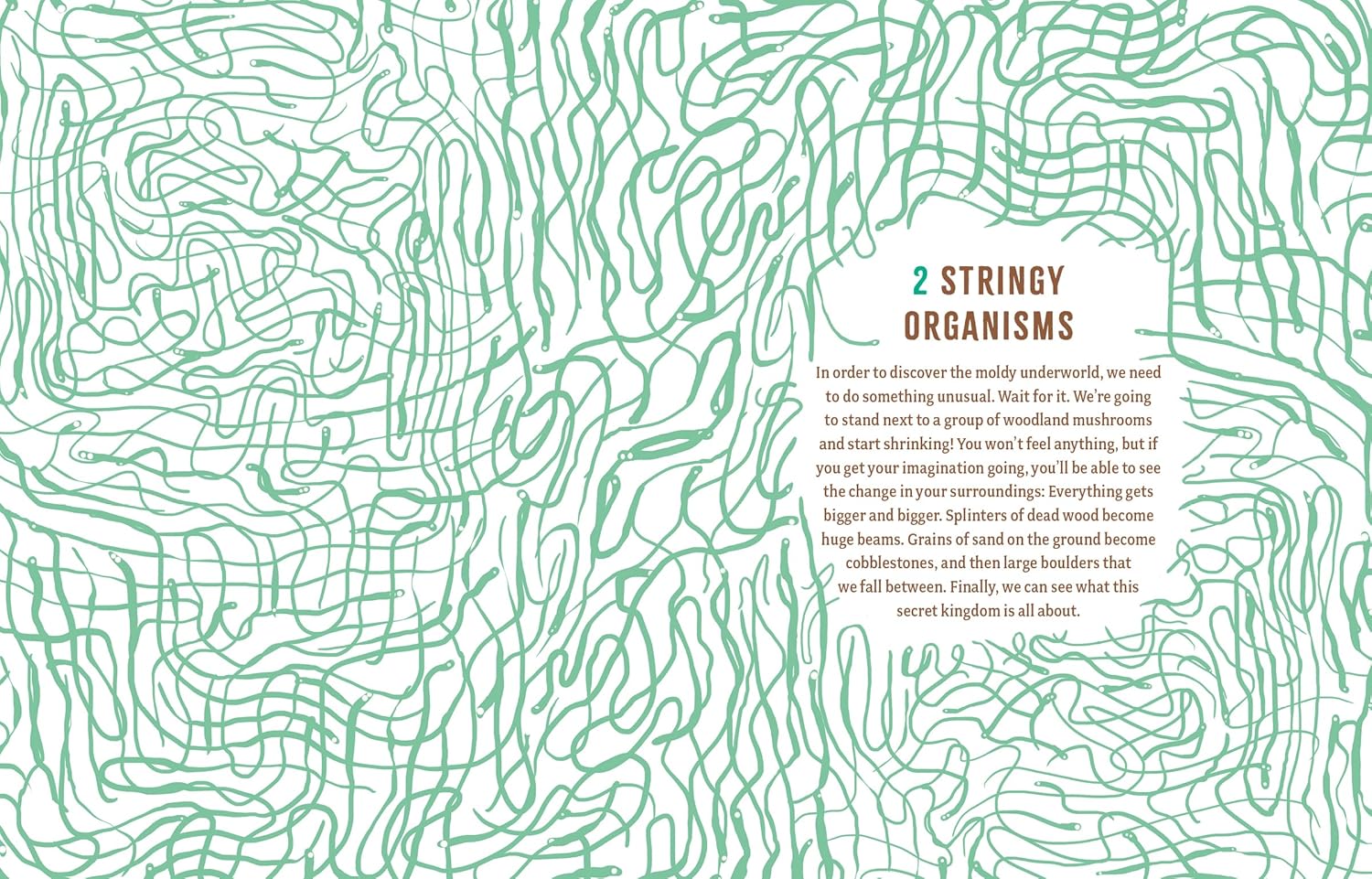
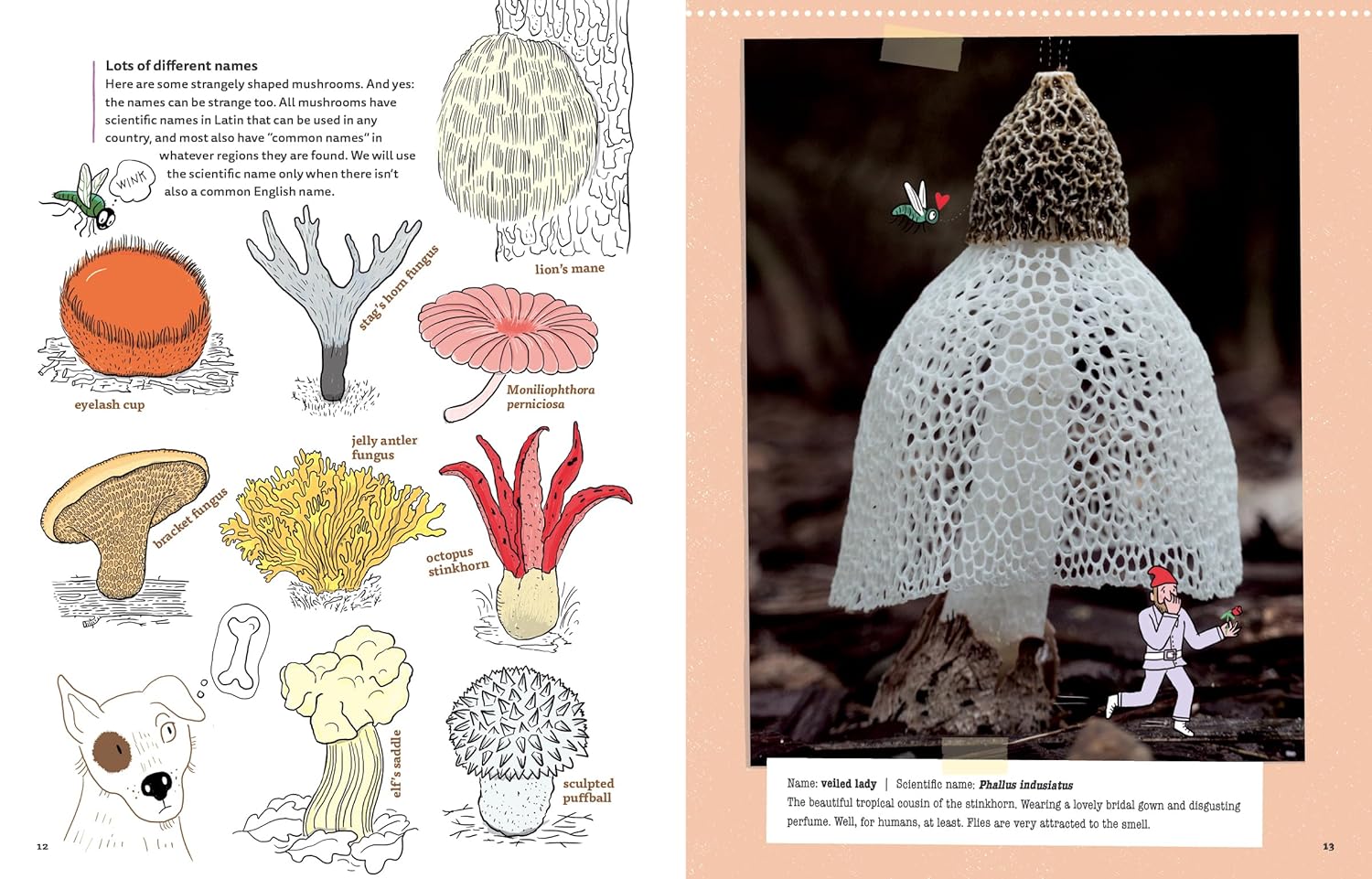
There are hundreds of illustrations in the book. The illustrations are whimsical, educational, funny, detailed and add to the understanding of the book’s content. There are also dozens of full-page photographs. These are mainly the photos of the freak mushrooms you’ll never see, like the common morel, or Morchella esculenta. This mushroom grows in the spring and looks like it was designed by M.C Escher. Imagine a cylindrical human brain and this mushroom resembles that.
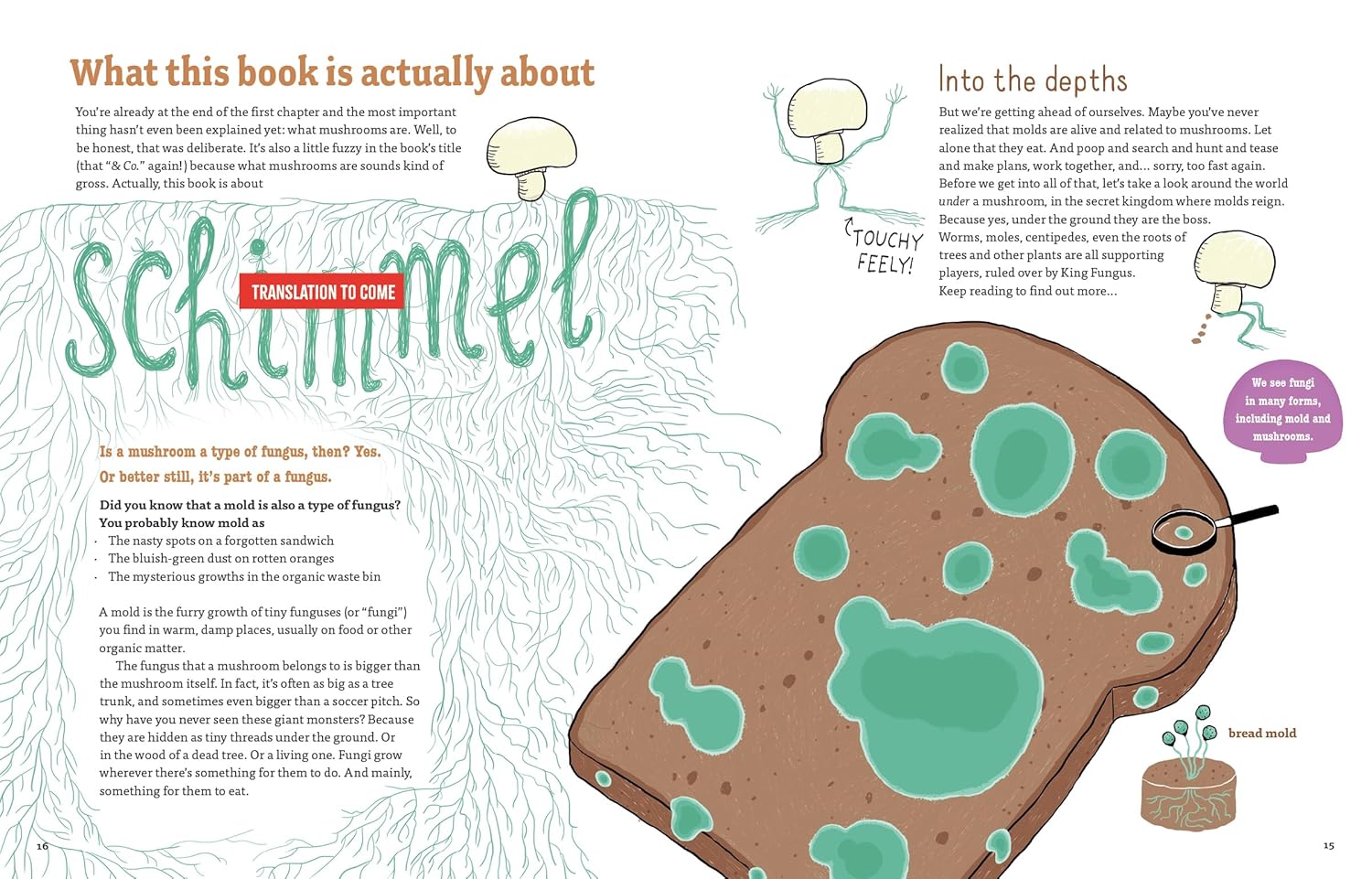
Some of the paragraphs in Mushrooms and Company are longer than elementary school are accustomed to. They might have lots of three-syllable words in them. The sentences aren’t always simple, and some paragraphs might have seven of them in it. But kids don’t always want to watch simple shows on television, do they? At some point they demo up, challenge themselves and genuinely want to operate at a higher level. Shoot, there’s that italics again, that must mean something on two or more levels.
This is a book that will make those elementary school research papers great and uncommon. Teachers get bored with the same stuff. The text in Mushrooms and Company is on par with upper-elementary students. Those middle school students should be able to read it easily.
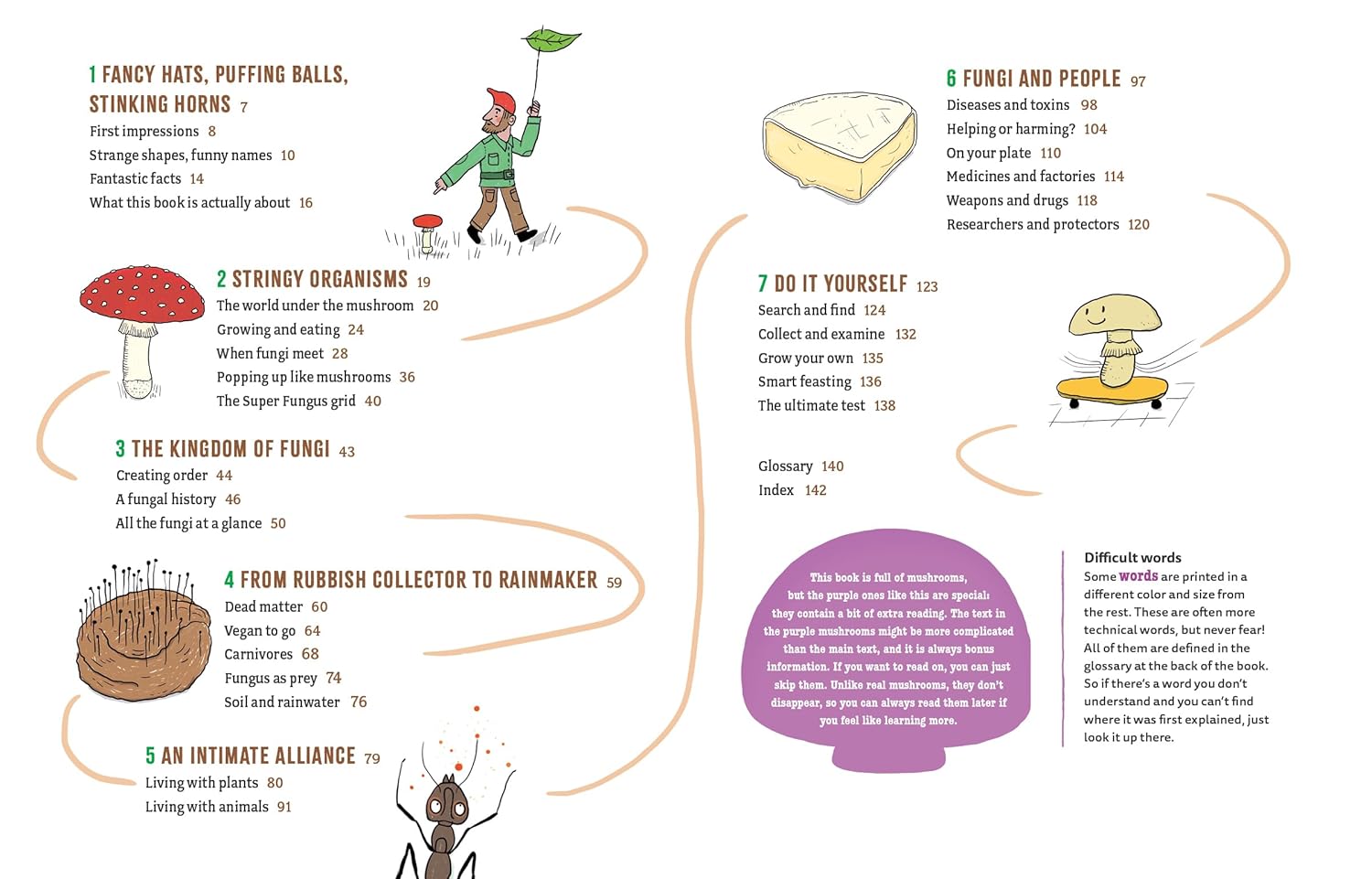
Just because the book is OK for elementary school does not mean that it’s relegated to only that audience. The information in Mushrooms and Company: How a Marvelously Moldy Network Supports Life on Earth is smart. It’s intelligent enough to feed research papers for any grade, yet interesting and approachable enough to demo young. Middle school students can easily find nuggets in this book to include their papers. High school students can too. The 85% that do their own work will benefit from the book. The remaining 15% could also, but they’re too insistent that they can create an AI essay that won’t get caught. They’re wrong. And I love treating their piñata of an ‘original project’ as target practice for my erstwhile pen/light saber.
Mushrooms and Company is smart, approachable, and timeless. Those libraries that get the book will see research papers on fungi, its efforts and by products for 20 years and longer. Each year kids will discover it, laugh at the jokes and never once realize that the book doesn’t go low to the ‘fun guy’ zone.
Mushrooms and Company: How a Marvelously Moldy Network Supports Life on Earth is by Geert-Jan Roebers with illustrations by Wendy Panders and is available on Greystone Kids.
There are affiliate links in this post.


 Facebook
 Twitter
 Youtube