
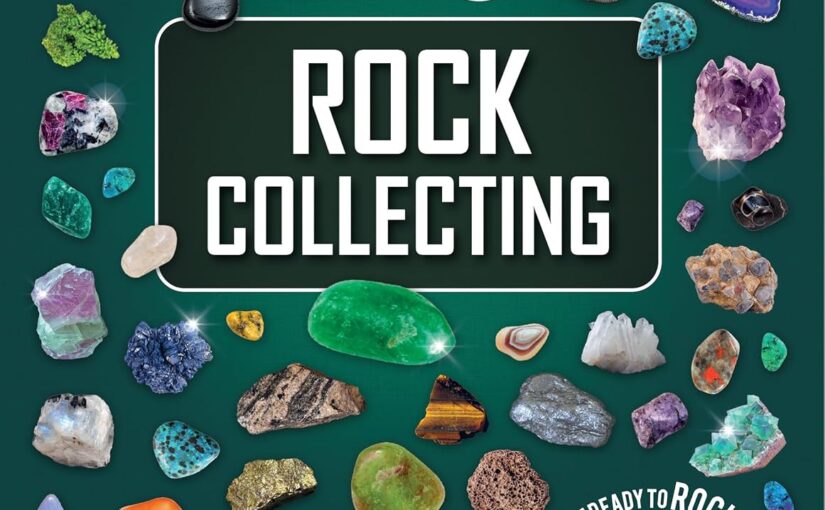
The rabbit hole is a metaphor that I use in class a lot. It’s really fun explaining that to a group of elementary school students. The older students more readily understand it, but are less likely to enjoy the thrill of following it. Lonely Planet Kids Let’s Go Rock Collecting is the best kind of rabbit hole for mid-elementary through mid-middle school ages. The content, as well as, the enjoyment in Rock Collecting can demo much higher, but that’s if audiences are able to look past its young-skewing illustrations.
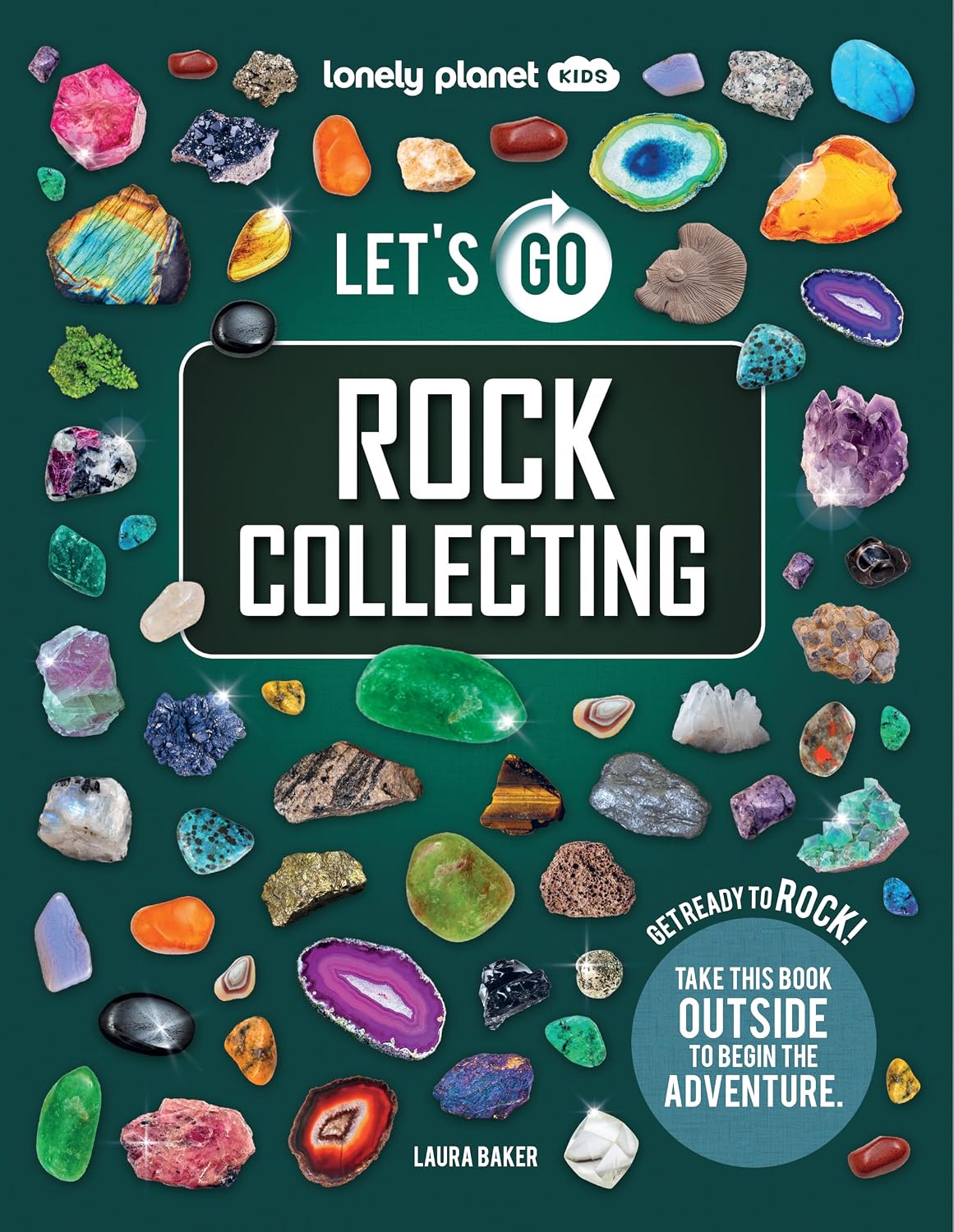
The first thing that audiences will notice about Lonely Planet Kids Let’s Go Rock Collecting is its format. It has a thick, pliable cover that won’t rip. This immediately gives the impression that the book is used as a guidebook that’s meant to be used in the wild. Kids will imagine themselves in the mountains of Greece, looking for metamorphic rocks or discovering tuff on the outskirts of a volcanic eruption. They will see examples of hundreds of rocks in the book and swear ten ways from Sunday that they have an example of each one in their backyard or nearby park.
Its shape is also very conducive towards kids embracing it and the content within. Kids can bend the book and imagine it being used in the way that an erstwhile geologist, like Indiana Jones, would. It’s not too thick. It also won’t intimidate young readers from its size. Some readers might be put off by the fact that there are non-fiction things on its cover. However, the combination of the photographs, illustrations, graphics and text signals to potential readers that its target audience is young, but not too young.
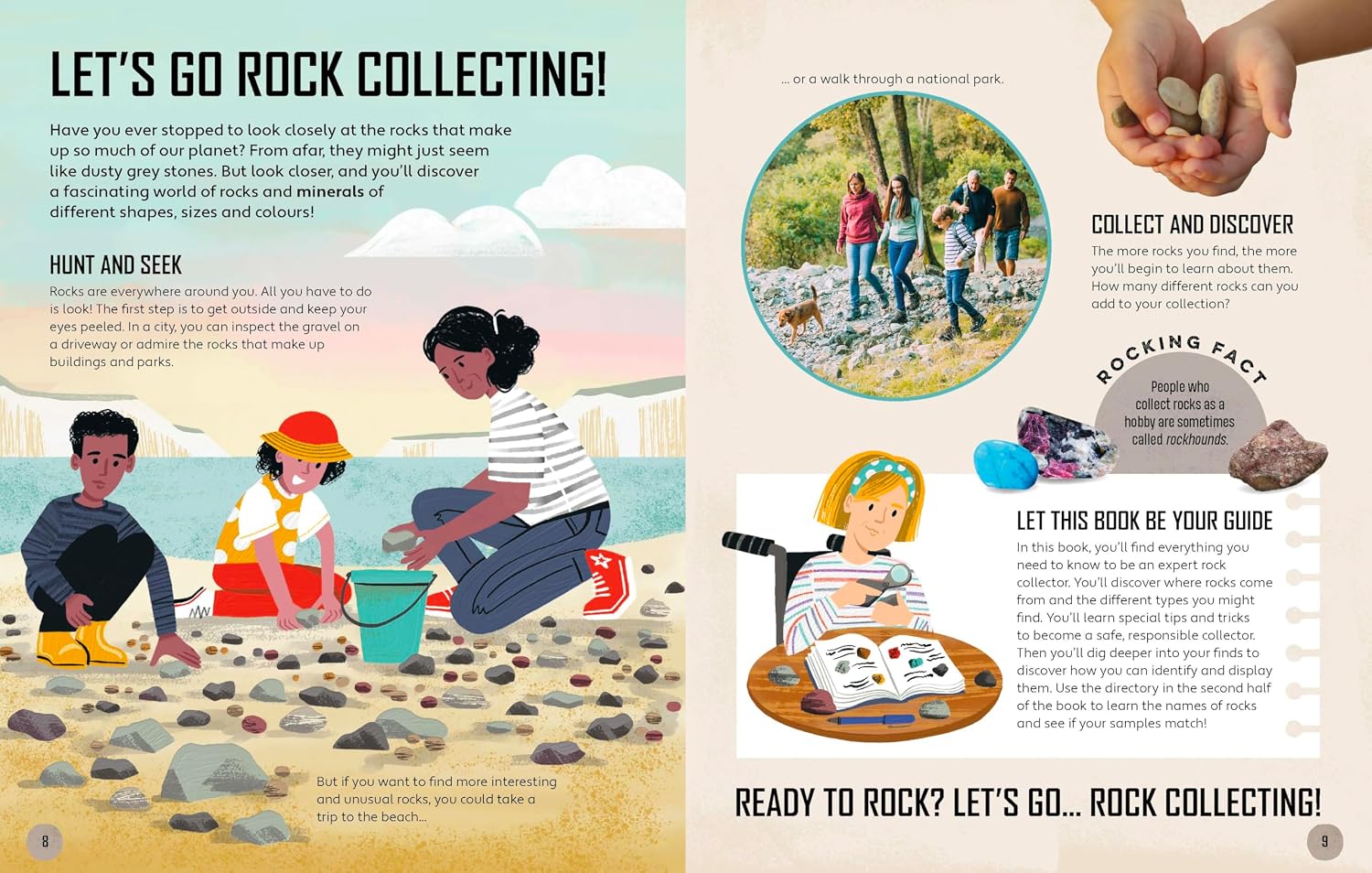
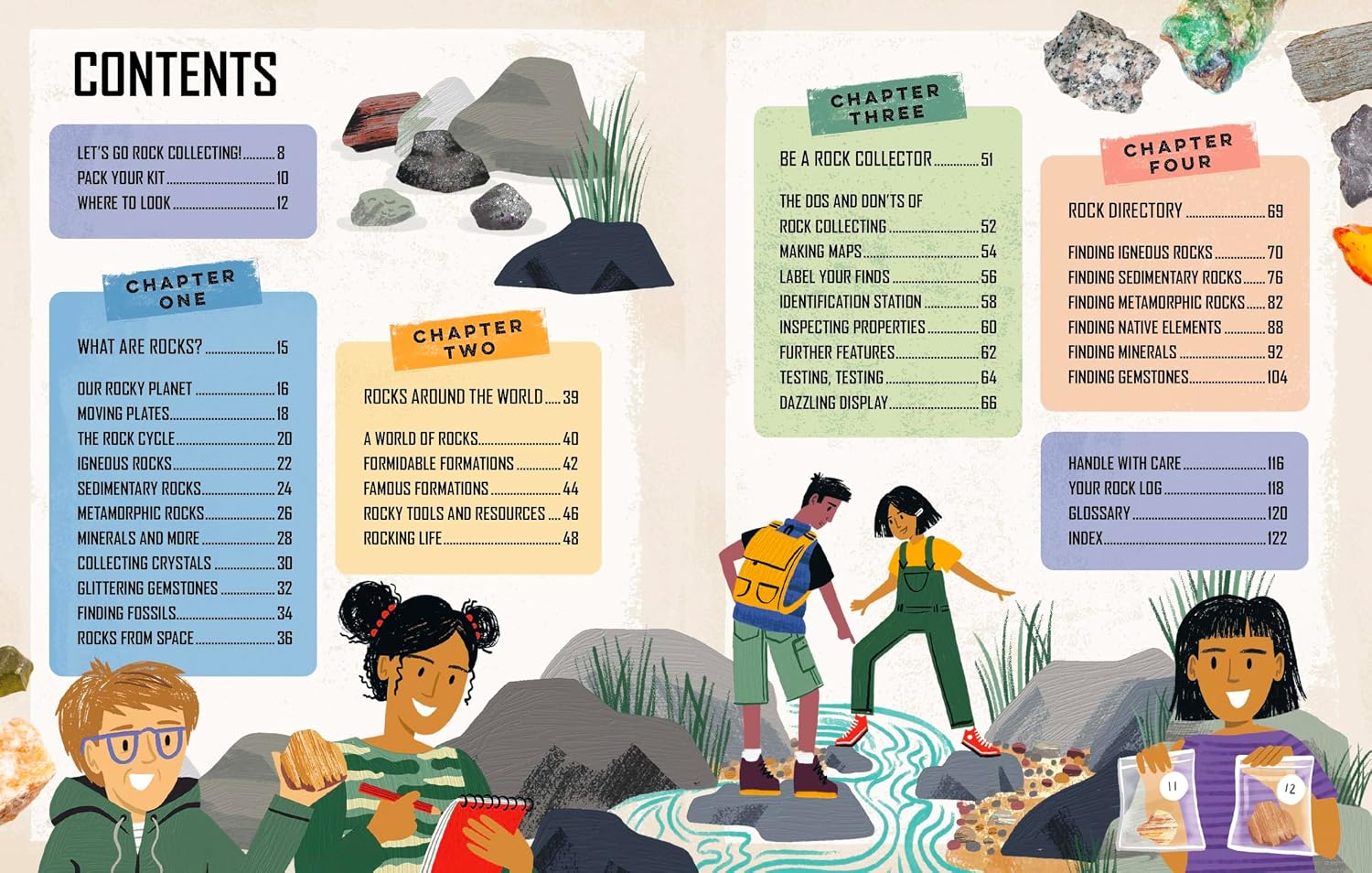
Elementary ages will be aware of the three main types of rocks, but Rock Collecting digs much deeper than that. The book doesn’t merely cover the characteristics of what makes up a sedimentary rock, although it does do that on pages 24 and 25. It goes further by highlighting about a dozen different rocks and blurbs of information about them. Breccia is similar to conglomerate, but its pieces are more angular. Readers will see exotic rock formations in faraway places, like the Rainbow Mountains, the impossibly colored hills in China that were molded by sand, water and wind.
It’s not a travel book, per se, but Lonely Planet Kids definitely put their wanderlust to good use in this book. But again, it’s a big and small-scale outlook. Kids can find something from this book in their local park or backyard. When they travel, they can find some rock that they think is more exotic in their eyes, because it’s away from home.
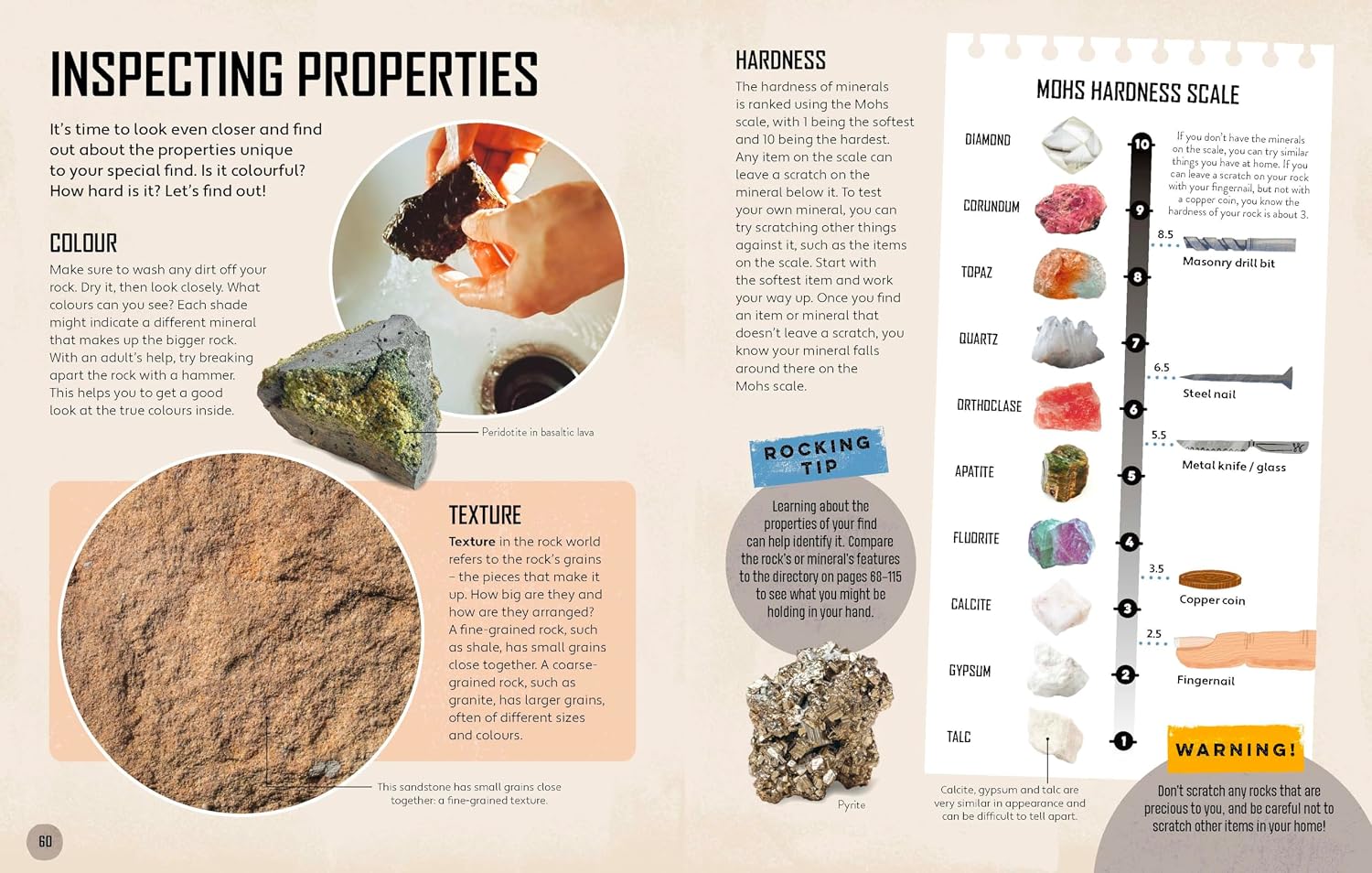
Rare is the children’s book that’s meant to be used. I mean used in the ‘carry it around’ sense. With Lonely Planet Kids Let’s Go Rock Collecting, you want kids to take the book outdoors with them. When they get the gist of the book they’ll indeed be motivated to take the book to the creek. Granted, it’s probably mostly sedimentary rocks there, but there are bound to be a couple of metamorphic rocks too. Have kids embrace the STEM inside the book. Create a sorting system and fill it out, in including Mohrs Hardness Scale, and rank the rocks that you find. This book is as great as you want it to be, if a kid is tacitly intro rock this will push them over the edge. It’s fun, engaging and sets up emerging readers for success via things that they already want to see.
There are affiliate links in this post.


 Facebook
 Twitter
 Youtube