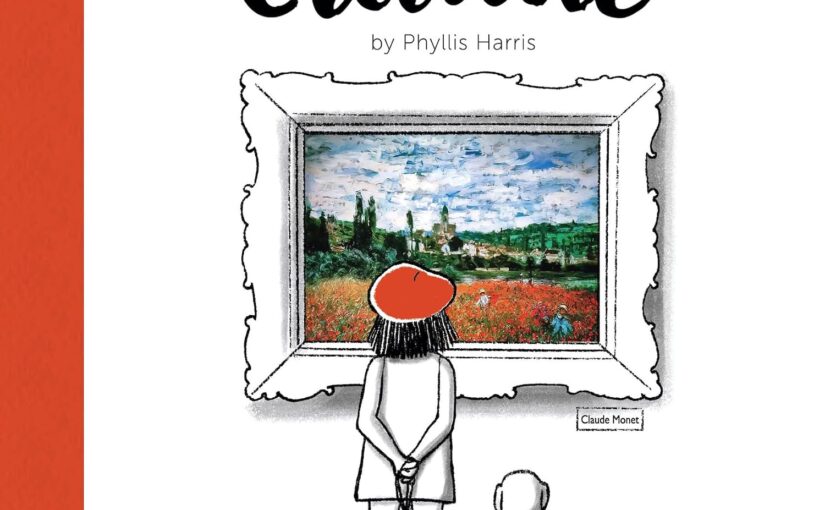
Young audiences love chaos and dogs. In real life, chaos isn’t something we want. It’s not something that anybody encourages from young children. Adults want kids to have the illusion of control, but without the inherent threat of physical danger or damaging material goods. Claude is a lovely, almost wordless book about three things that kids love. Dogs. Chaos. Unpredictability. It could certainly be argued that those final two go together, but let’s deal with why kids will dig Claude.
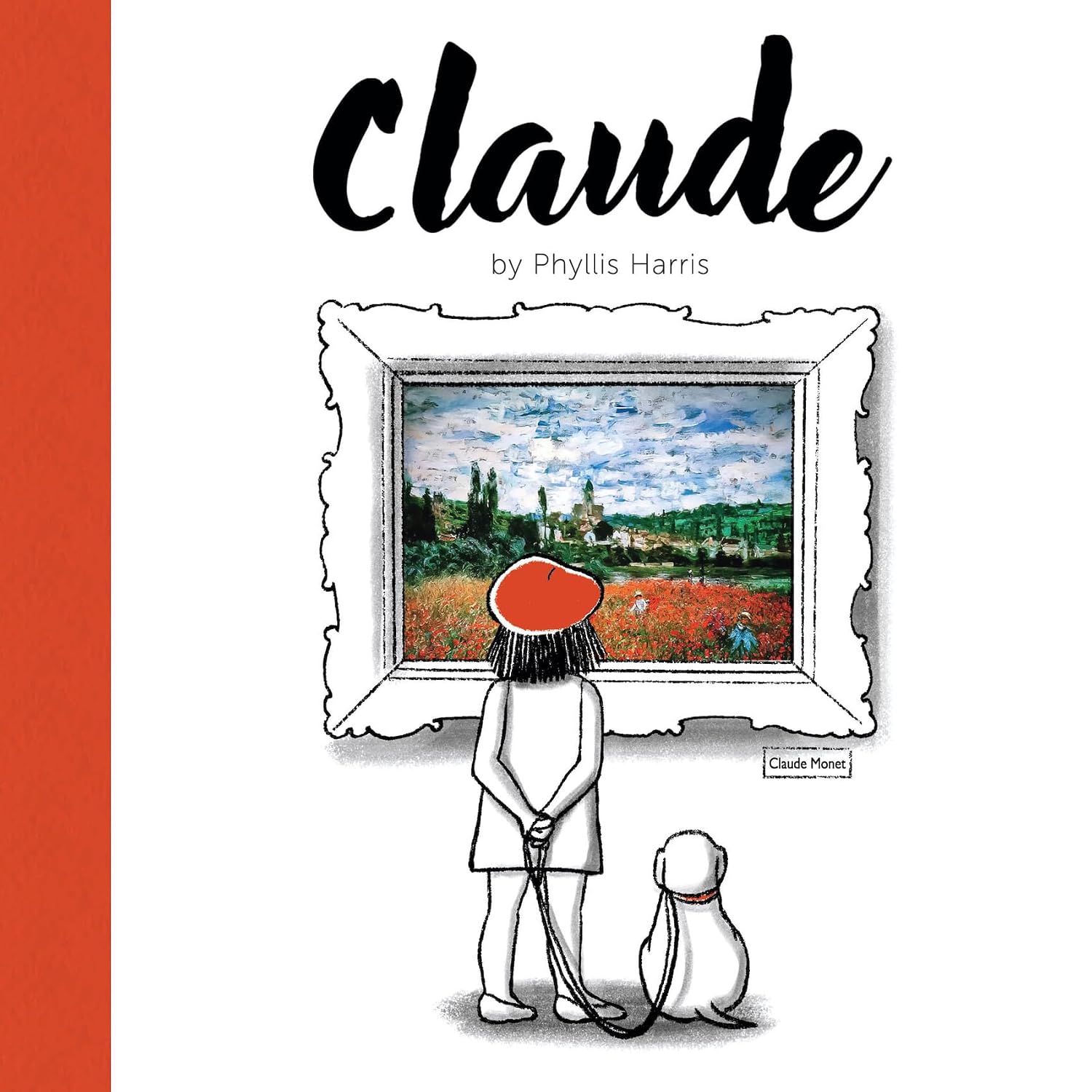
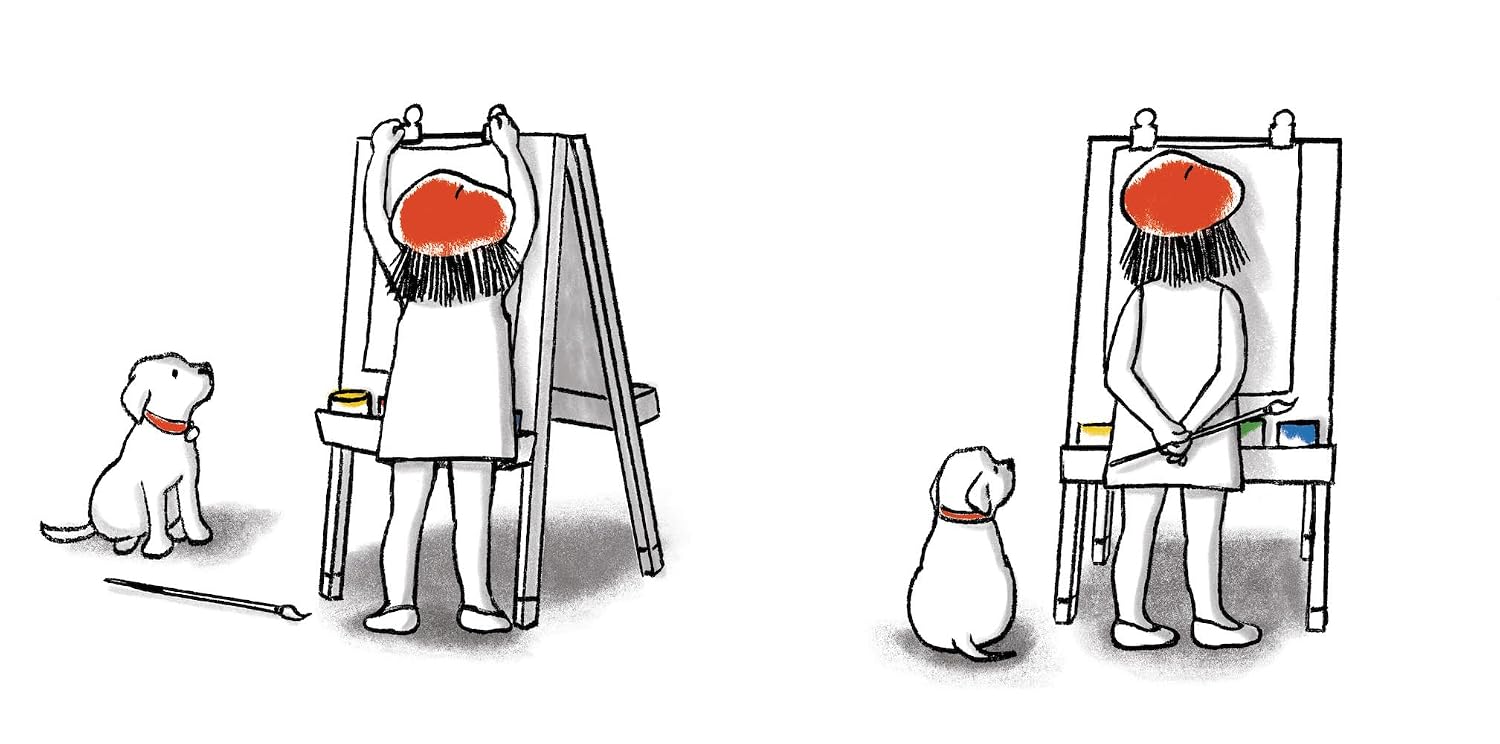
Claude starts with a young girl wearing a red beret walking up to her easel, being followed by her dog, wearing the same colored collar. Her paint brush is patiently in her hand. She hangs up the blank canvas, holds the brush behind her back and thinks about what she’ll create. The thought bubble over her head shows that she’s thinking about Poppy Field near Vetheuil. Adults may not know the name of this painting, but they’ll recognize it once they see it. They also may not know the artist of said painting, but just say the title of the book and then think of a painter who is more well known by his surname.
That’s the painting the young girl sees in her mind’s eye. She starts by painting a wispy, blue sky punctuated by fluffy white clouds. As she’s contemplating this, her dog walks off of the page. The front half of its body isn’t shown. When readers turn the page they’ll see its front half, with a leash in its mouth. The dog patiently sits, with the leash in its mouth. The dog drops the leash and longingly looks at it. As the readers are focused on the dog, the girl is still looking at her painting, trying to figure out what to do next.
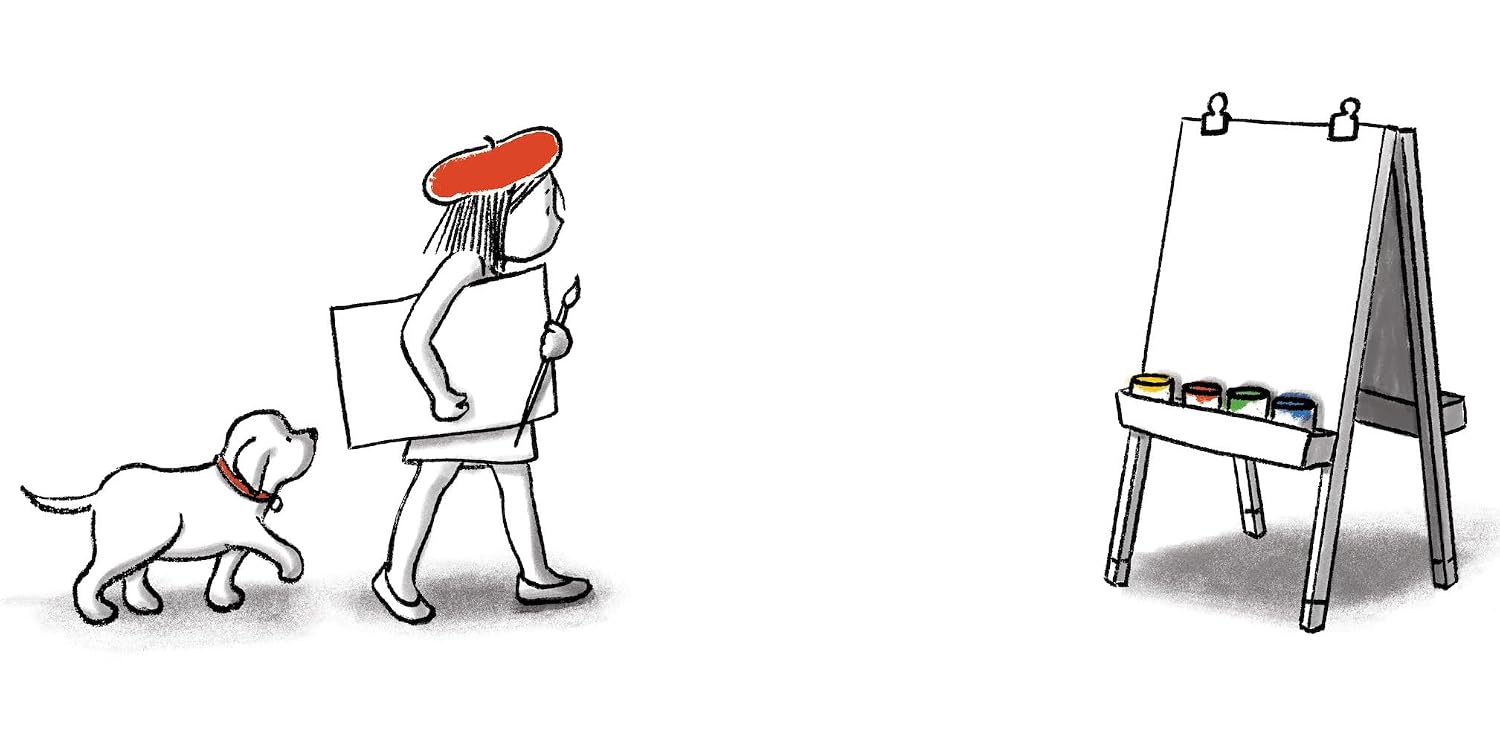
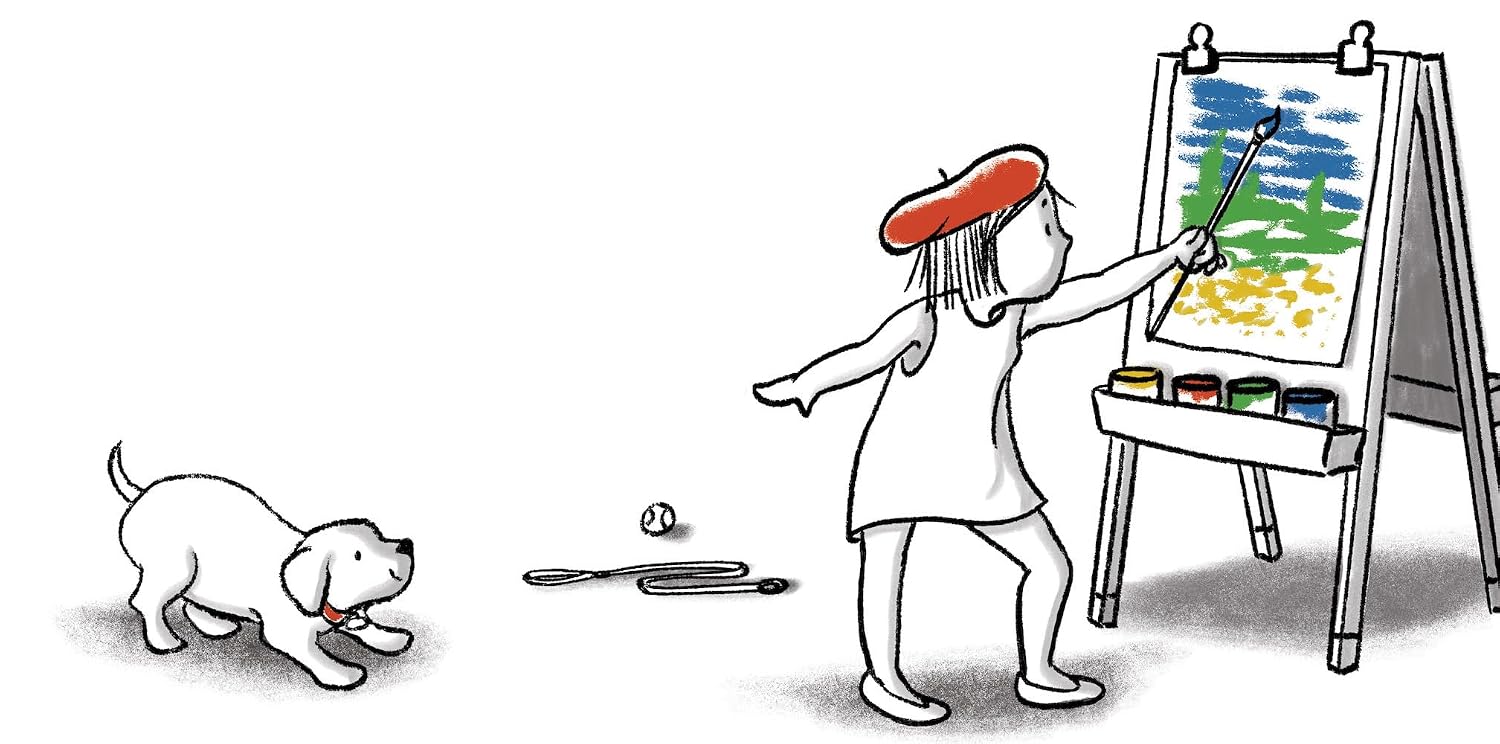
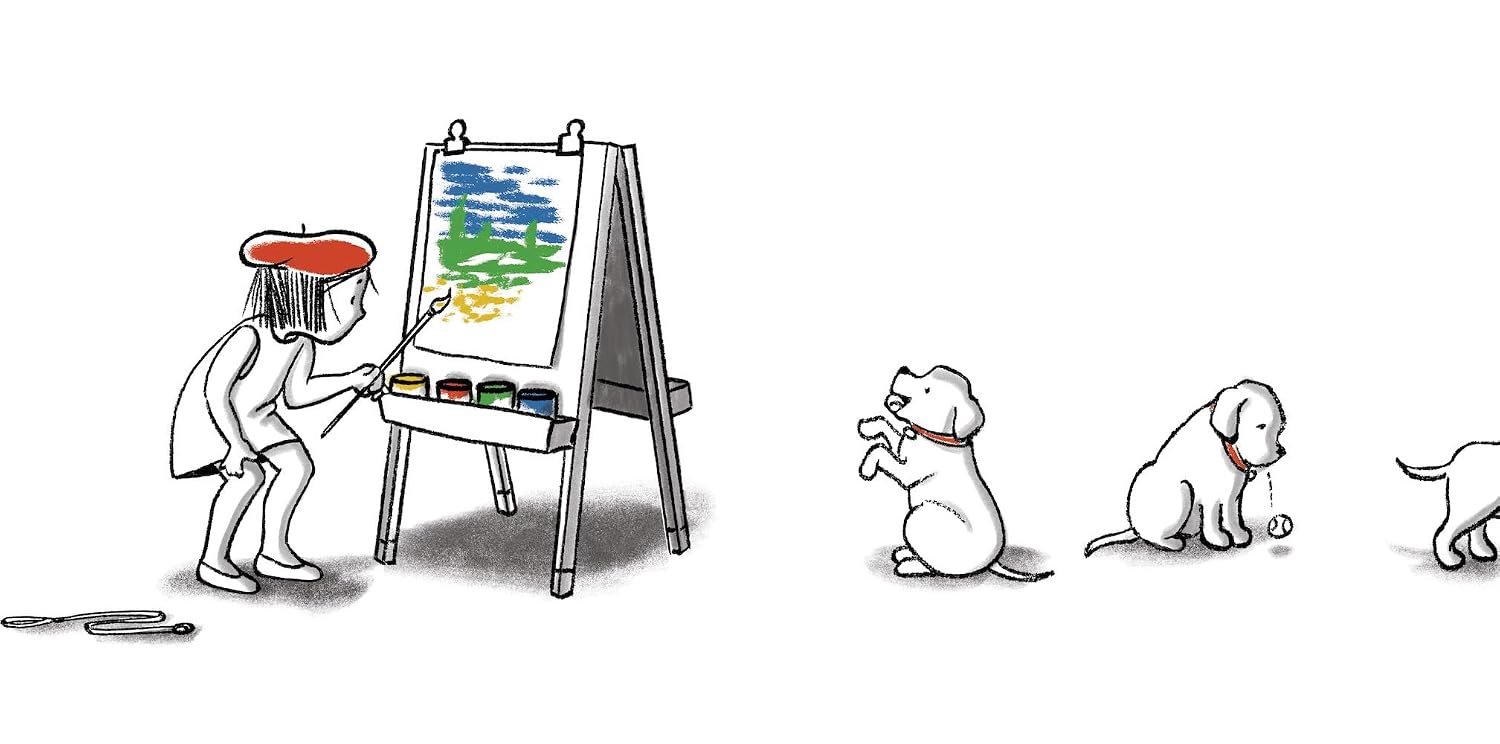
Meanwhile, the dog exits this scene, much like it did in the first couple of pages, with the front part of its torso walking off of the page. It comes back with a ball in its mouth and tries to bait the girl into playing. When this doesn’t work, the dog rears back on its haunches and proceeds to chase its own tail. The dog whips itself into such frenzy that it collides with the girl’s legs, the easel and sends the various paint colors flying. One can imagine that the girl wants to stop the chaos, but all the readers can see is a flurry of dog torso, human feet, dots of color and paw prints of paint.
Once the paint chaos subsides, the two look at the canvas and color carnage. They are initially disappointed. After they take a moment to really look at the painting, they both grin. She goes to pick up the painting and then turns it around so that the readers can see it. It’s placed on the easel so that Claude, the dog, and her can take their time and view the one-of-a-kind artwork they’ve created. Their artwork, if you squint your eyes just a little bit, resembles Poppy Field by Monet.
It has that vague, splotchy characteristic that many impressionist painters have. The art is detailed, but also spontaneous and seems like it was done in a stream of consciousness, rather than by some pedantic painter. That is also the point of the Claude. There’s an author/illustrator note in the back that lets readers know that Harris has struggled with perfectionism. Everyone raise your hand who hasn’t struggled with something you’ve created because it wasn’t ‘perfect’. I see that hesitation in class every day. Last year I had a student who never turned in any projects because they said that “they wanted them to be perfect”.
I don’t know if they were just lazy or indeed had the perfectionist soul of a high school freshman. Claude is a wordless book that leaves young audiences with a giggle and a side order of realizing that it’s ok to not be perfect. More often than not, it’s better to try to do something, and see what the results are, than to simply sit on the sidelines. Life is not a spectator sport. Gary flippantly said that recently in one of his vocabulary videos. Claude says the same thing, albeit in a wordless, easy to understand-and fully way that kids in pre-k and up will comprehend, with a side lesson in one of the impressionist masters.
Claude is by Phyllis Harris and is available on Familius and distributed by Abrams Books.
There are affiliate links in this post.


 Facebook
 Twitter
 Youtube