Children are not stupid. When they see illustrated books they’re able to tell the simpler ones from those that entertain at a more cerebral level. And just because something is not at a stupid level doesn’t mean that it’s relegated to the tucked-away lands of fancy pants books. There’s a place where clever, sublime illustrated books live. Those who have an old-soul, new-world sensibilities, intelligence and a timeless characteristic that allows the book to feel ‘new’, regardless of when it comes out. Matthew Forsythe lives there and turns out hauntingly charming illustrated books that are as endearing as they are creepy and weird. Aggie and the Ghost joins Pokko and the Drum, and Mina for a hat trick of illustrated book storytelling magic.
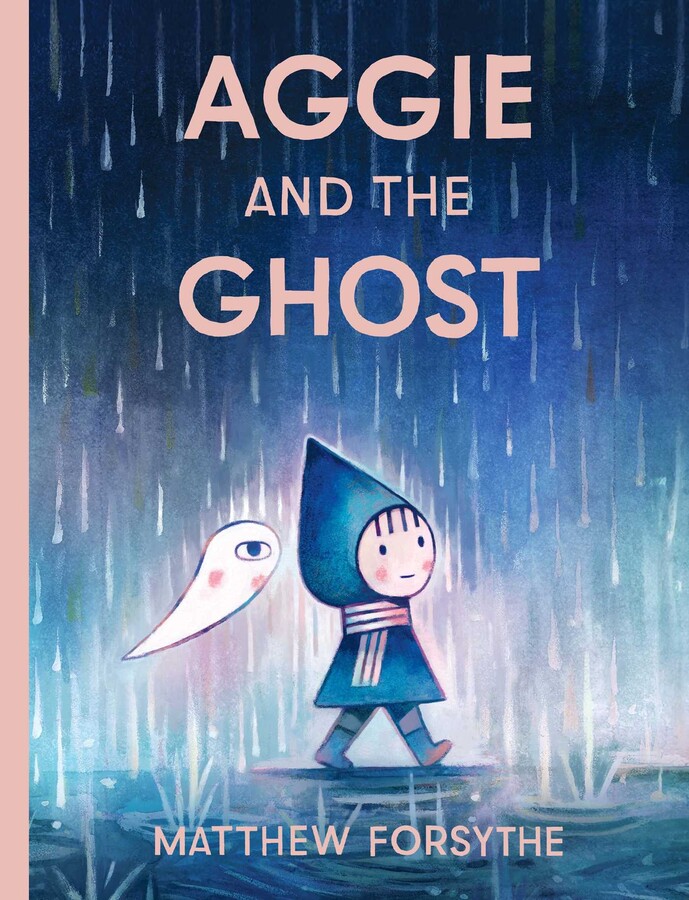
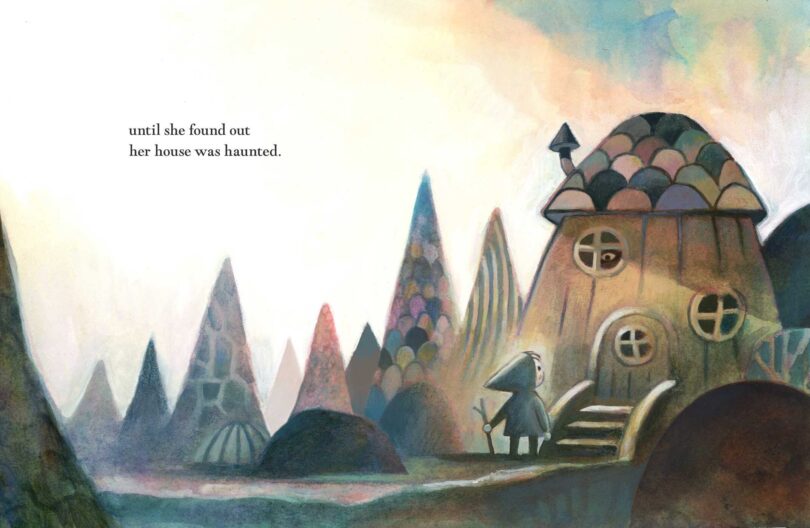
Aggie and the Ghost has the most straight forward title of Forythe’s books, in that you can deduce the basic plot from its title. It is the story about a ghost and Aggie. Aggie is a little girl who is very excited to have found a house that she loves; unfortunately, it’s haunted. Thankfully, she quickly makes peace with the ghost and lays down a couple of basic rules. Don’t steal my stuff. Don’t scare me at night and other go-to examples that anyone would craft with a friendly, but potentially mischievous ghost.
Unfortunately, the ghost is not so good at following rules, and all of these rules has the ghost going batty. Aggie has to take a break in the forest to spend some time alone, but the ghost follows her. The two decide to play a game of tic-tac-toe, because ghosts are very good at that game, apparently. All of the ghosts in the forest gather in the trees to watch, with Aggie’s ghost eventually giving her a piggyback ride home.
She tries to make more rules, but he continually breaks them. The two have a falling out and the ghost finds other places to haunt that are so stringent with its rules. Aggie likes the silence, but misses her friend. One rainy night she ventures out with one more rule that the ghost will almost certainly break, but will allow the two friends to spend some time together.
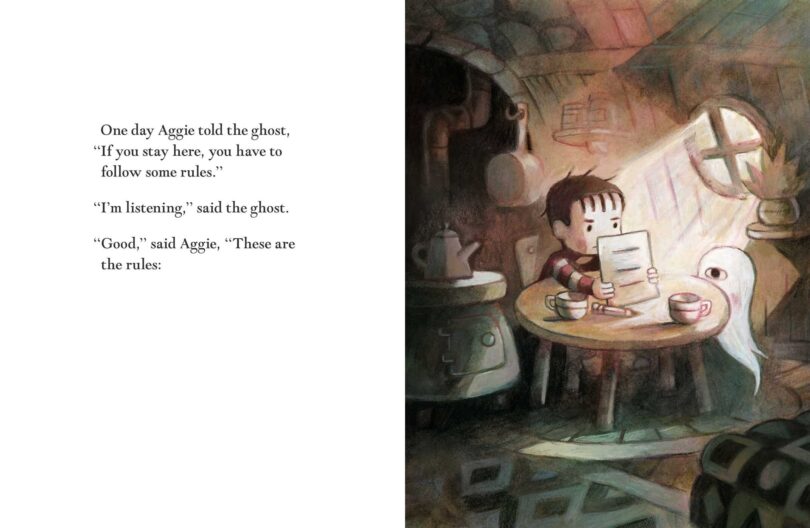
Much like his other two illustrated books; the reason that Aggie and the Ghost works so well is a combination of pacing, layout and illustrations. Some spreads have brief text on the top, bottom or on the illustrations. The text is curt. It uses brevity of words to tell a story far greater than what’s printed on the pages. The illustrations have a childlike quality to them. They’re presented in a classic manner like you’re momentarily thinking that this is the best children’s book from your childhood that you forgot about.
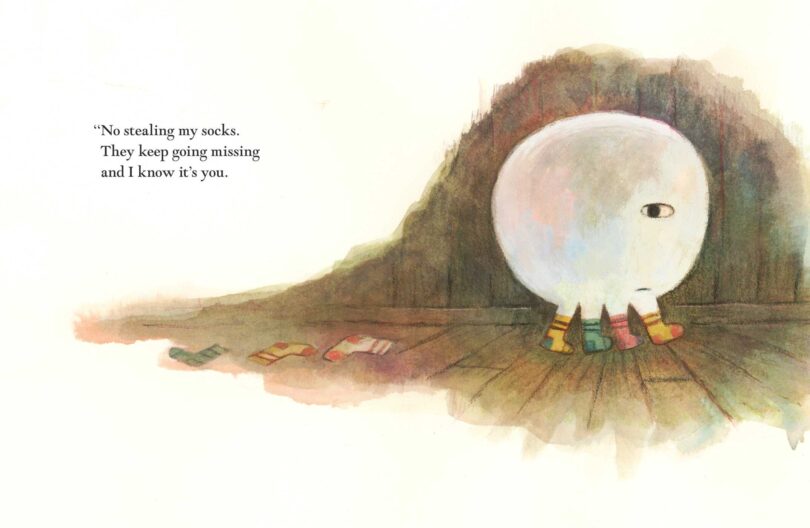
The illustrations play out like a series of scenes from a movie that could grab the attention of any moviegoer. The distant illustrations set up the scene. There are individual illustrations that demonstrate how the two are bonding, like in an 80’s style montage. At certain areas where the story is climaxing the illustrations zoom in to where all you can see are the top half of their heads, concentrating on their eyes that show the tension or the humor. Readers of any age will agree that the illustrations don’t look like the sort that they see in other illustrated books. They look like they were hand-drawn, then painted, or however artists go about making art that feels real.
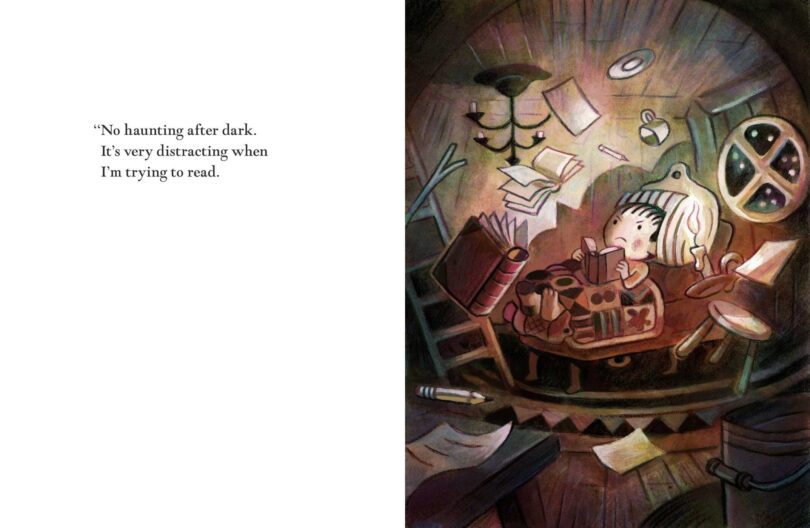
Aggie and the Ghost feels real, and it surprisingly segues from silly to thoughtful. The two friends have disagreements. They fight, need some time apart and then reconcile, a little bit. This is a story about life-with a ghost, that kids can understand and adults can relate to. It’s a story about relationships and two friends that start out strong, despite being very different. The two grow apart, but they never fully separate, like most of the friends adults have in life. They might think it’s a little weird and raise the corners of their mouth in a subtle grin. Then they’ll go back look at the art and marvel at the details of the story that aren’t presented. Aggie and the Ghost is an illustrated book that tells a large story on a small canvas. It uses a brevity of words and big, timeless art to present it in a manner that today’s kids will recall the book in 30 or so years when they have kids.
Aggie and the Ghost is by Matthew Forsythe and is A Paula Wiseman Book, an imprint of Simon & Schuster Books for Young Readers.
There are affiliate links in this post.


 Facebook
 Twitter
 Youtube