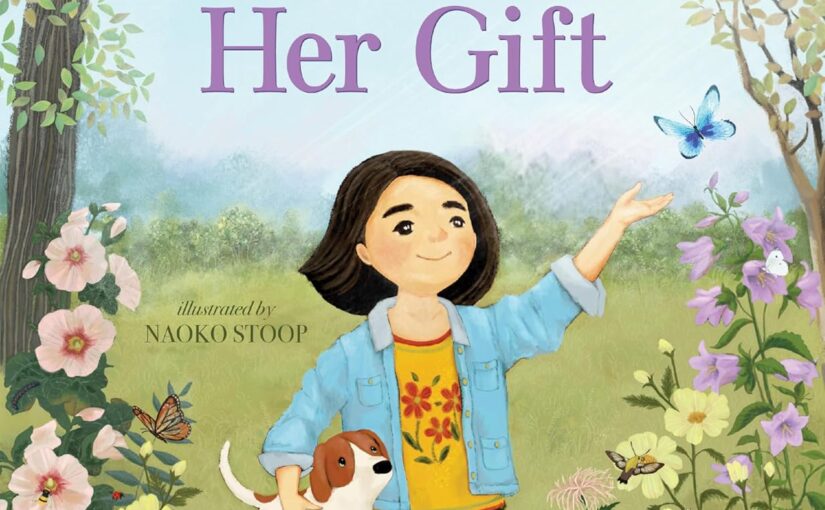
The intersection of picture and illustration book is a tricky one that only publishing executives know how to successfully navigate 100% of the time. Bud Finds Her Gift is a lovely book that could be seen in either one of those categories by some people. Does the text do more of the heavy lifting or it that left up to the illustrations? The answer to that question determines if it would be classed as an illustrated book or a picture book. Granted, as the end of the day, other than the author, illustrator, and publisher, who really cares? It’s when you trip over a book like Bud Finds Her Gift that you want to describe it accurately.
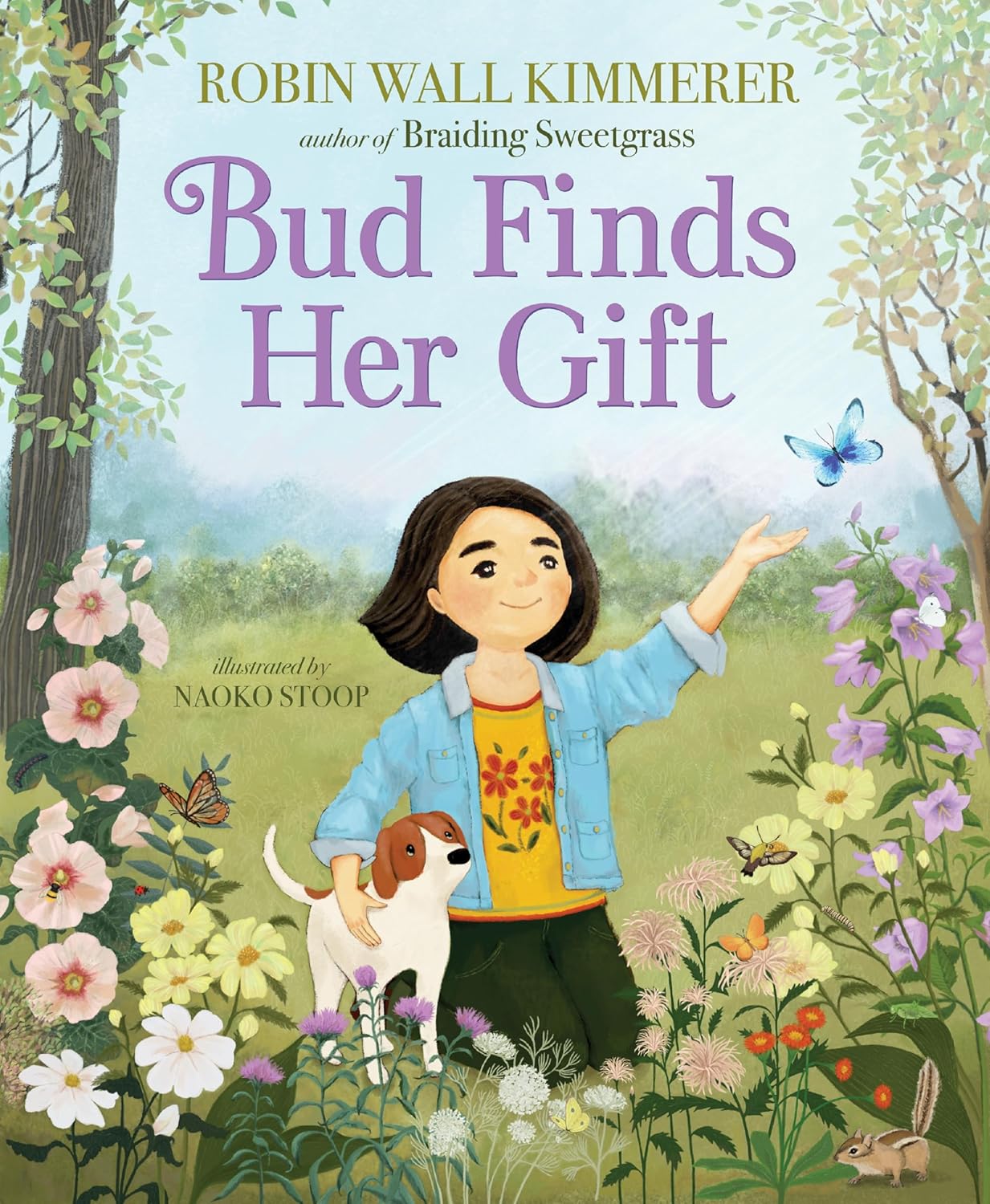
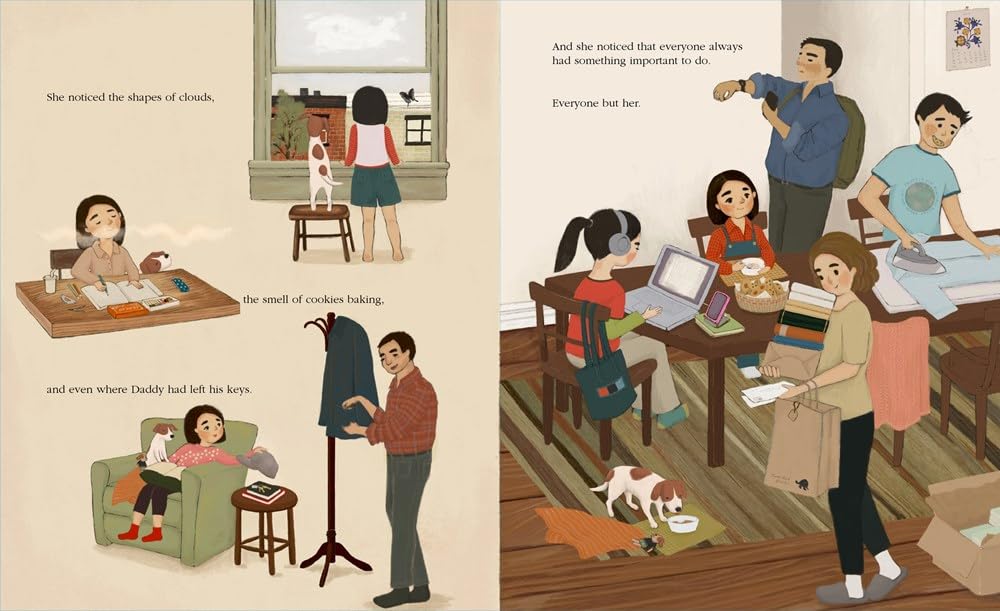
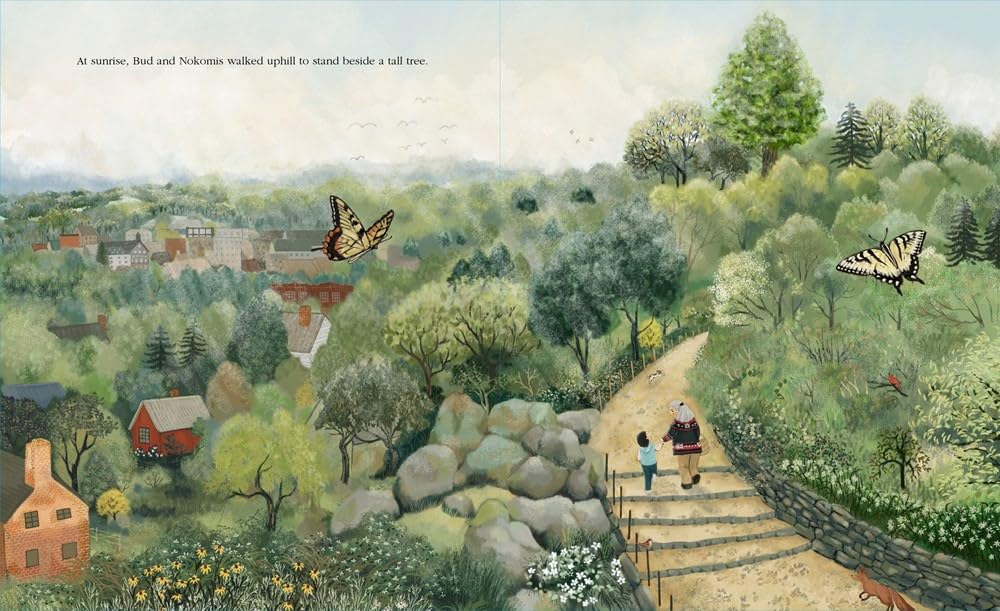
Bud Finds Her Gift is a book whose illustrations are impossibly detailed, yet atmospheric and lush at the same time. There are some distant objects in the horizon, like a house, butterfly, field mouse or tree. However, on the way to those far-off things, there might be hazy fields of lilacs, trees in the forest or patches of dirt with varying levels of clarity. Illustrator Naoko Stoop creates a 2D space that’s firmly on the pages, but, at times becomes something that young readers will step into.
The text is from Robin Wall Kimmerer and tells the story of a tween girl who is looking for her jam. It’s that awkward period where a kid doesn’t know what they want to do. They can’t do most things well enough without adult guidance, yet they want to see anything that is the fruits of their labor. Bud’s family members all know their jam. She goes to her Nokomis, the Potawatomi word for grandmother, to talk to her about the desire to do something that matters. As all Nokomis do, she knew how to make her granddaughter feel empowered realistically.
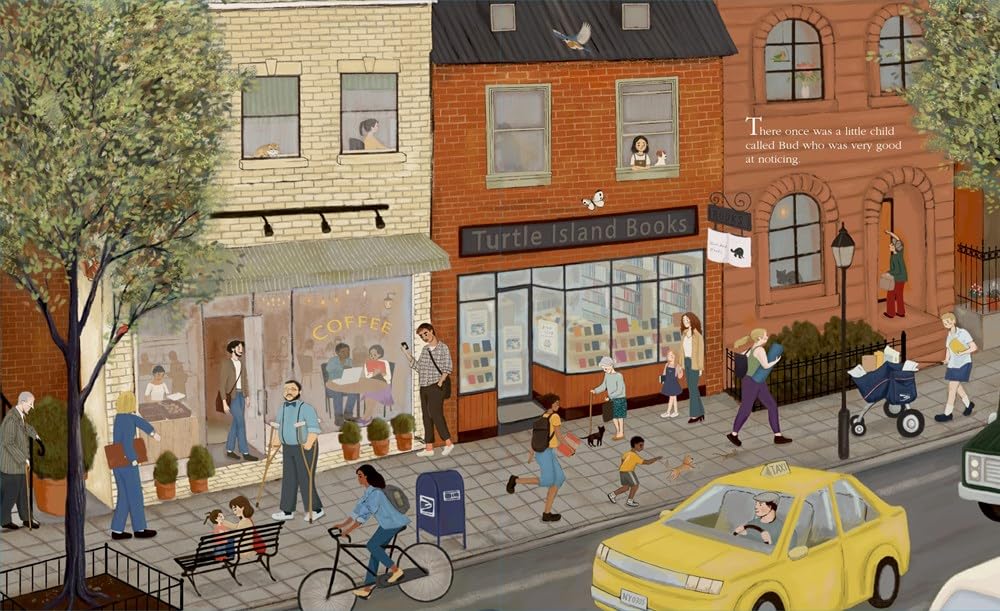
The pair walk out to a park in the city and her Nokomis waves her hands in a grandiose manner and says “thank you.” Bud is confused and not sure what, or who, her grandmother is thanking or being thankful for. Bud has always been great at observing things, so she is encouraged to come back to the spot and use all of her senses. She notices the songs that the robin brings. She sees the seeds that are in the strawberries. She thanks the robin for the soil-enriching poop that they excrement and the way that it feeds the plants. She also giggles at the poop because… it’s a children’s book, and poop.
Nokomis clarifies her observation by reminding Bud that what she’s seen in the great outdoors are the gifts from nature that she’s receiving. If Bud wants to find her gift, then she needs to think about what she can do. This leads Bud to start a community garden where her whole family can pitch in and do something together while add up to something bigger.
I knew it was an eco-book! Well…it’s kind of an eco-book, but not entirely because only two-pages are devoted to the garden. You’re thinking that it’s a spiritual book, because of the nature, holistic and self-improvement aspect. It’s not that kind of book either because those tend to be preachy and judgmental, but could just be consumer-driven guilt that’s not responding to its stimuli.
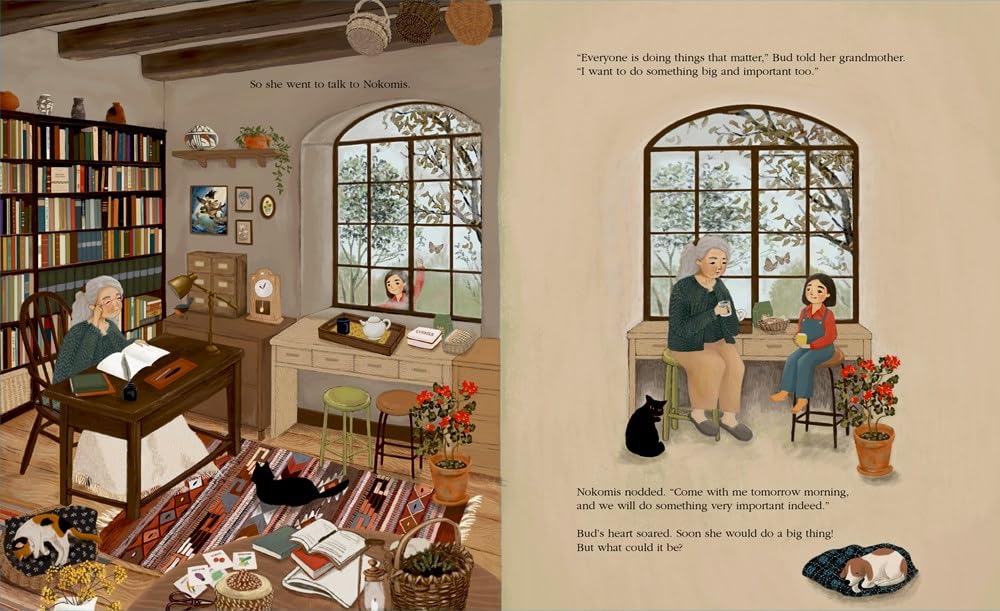
Instead, Bud Finds Her Gift is the story about a young girl, who has the same thoughts as every other kid the same age. It’s her frustration at not knowing her purpose. It’s the fact that she wants to do something that matters, something that makes a difference. Every kid in elementary and middle school has this feeling and the vast majority of them can’t articulate the problem. They just think they’re moody, grumpy or having an off day. Kids, it’s tough to find your jam.
Bud Finds Her Gift succeeds, ironically, because it feels truncated. The book could’ve been longer, but then it risked wearing out its welcome. This is a beautifully illustrated book that uses its brevity, open-minded nature and art to be a conversation starter for the carpet time crowd. It organically leads to conversations about what kids do well. What is their gift? The side conversations about the time they went to the park with their abuela or their dog will occur, but it’s a start. Kids won’t realize what the book is lacking, which the overt guilt or subtle finger pointing that some adults are expecting. You adults who read Bud Finds Her Gift will be pleasantly surprised by this, which will yield better post-book conversations. Its core audience won’t consciously be thankful for it, but they’ll want to spend time with the book alone, which is a happy by-product of learning to love to read.
Bud Finds Her Gift is by Robin Wall Kimmerer with illustrations by Naoko Stoop and is available on Allida, an imprint of HarperCollins Publishers.
There are affiliate links in this post.


 Facebook
 Twitter
 Youtube