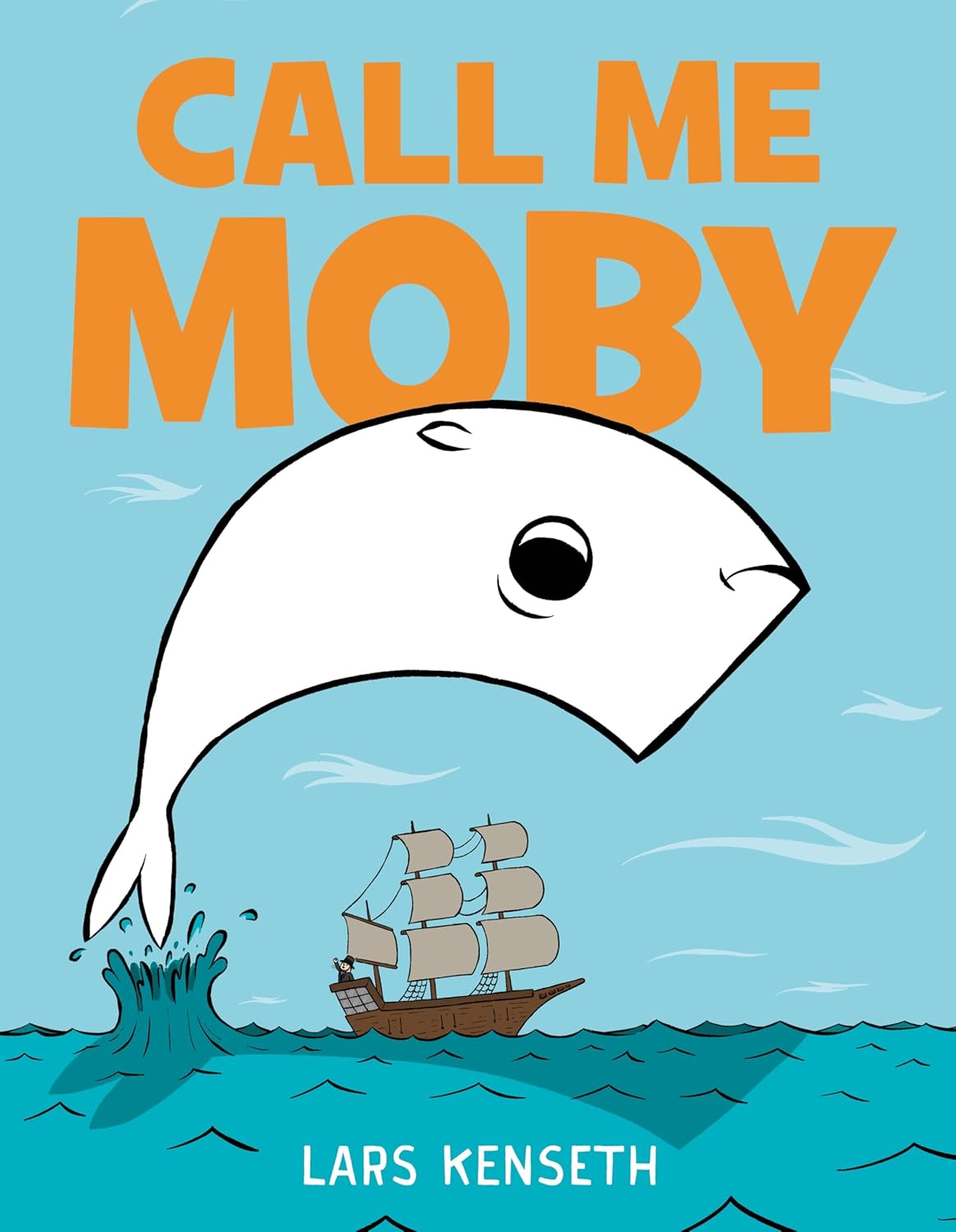
Call Me Moby was entirely unexpected. It has allusions to a story that most high school students won’t read, yet its inspiration is from a classic book. The illustrations in Call Me Moby don’t care about any of that. Its playful cover, with a massive, friendly white whale jumping over a tiny ship, will bring in young audiences as if they were a hungry bass looking at a bloodworm dangling from a hook.
This is an illustrated book that punches above its weight class. The brevity in its text, combined with the frisky art and its scale, add up to a book that will make kids (and adults) grin. Audiences will also think about where they are (and should be) in the social ecosystem. It’s tough for kids to find their true selves, that nugget of their personality that’s really them. Adults will realize their social ‘masks’ that they use during different situations, but the lesson in Call Me Moby is a fine starting point.
Moby introduces himself at the start of the book. He’s a friendly, big whale who just wants to make some friends. Moby sees a ship, and he attempts to play with it. The ship doesn’t appreciate the game of tag, its splashing or the way that his large, tooth-filled grin is perceived by the humans. When the humans don’t reciprocate his attention, Moby retreats to the bottom of the ocean to rethink its approach.
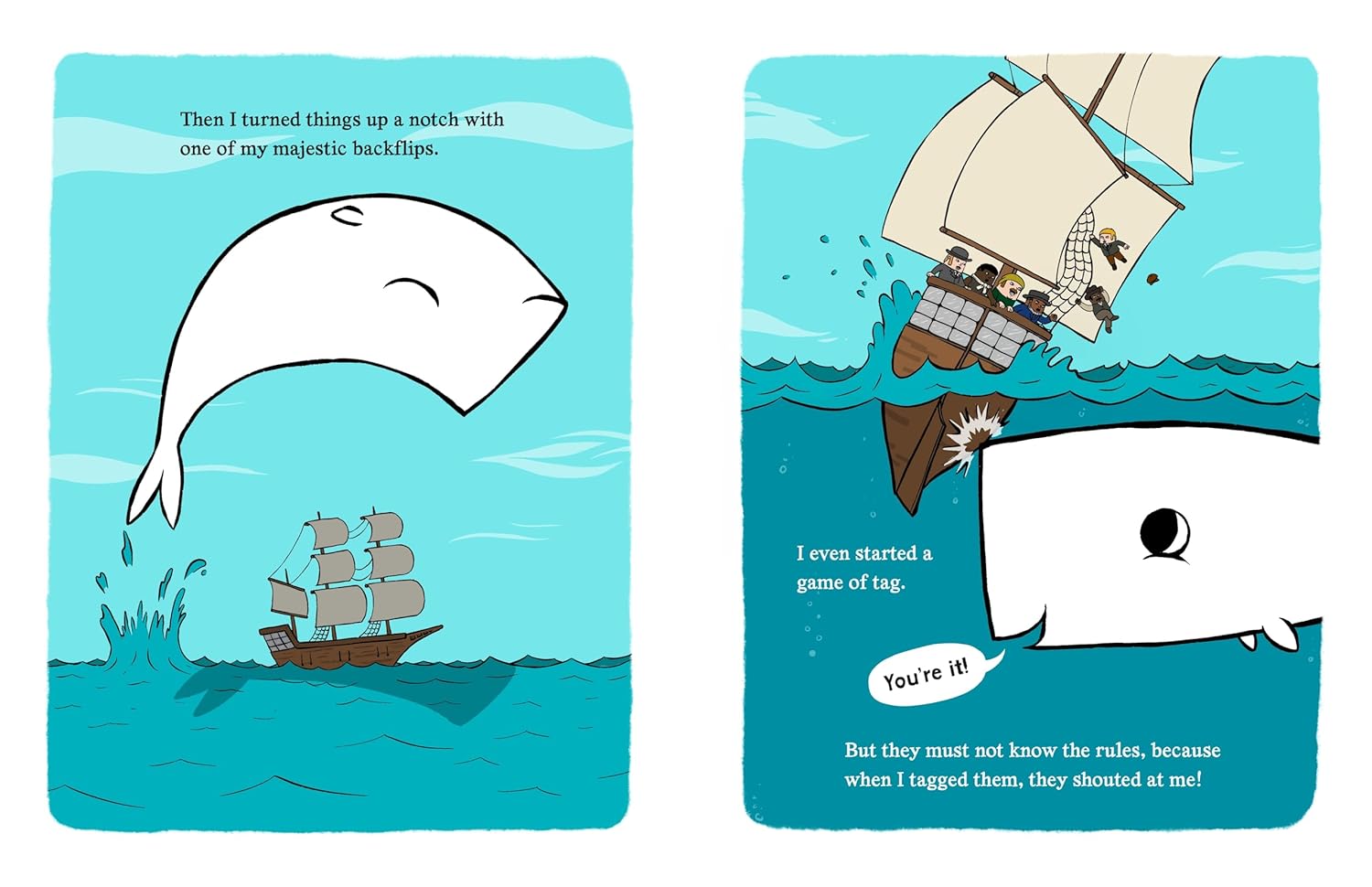
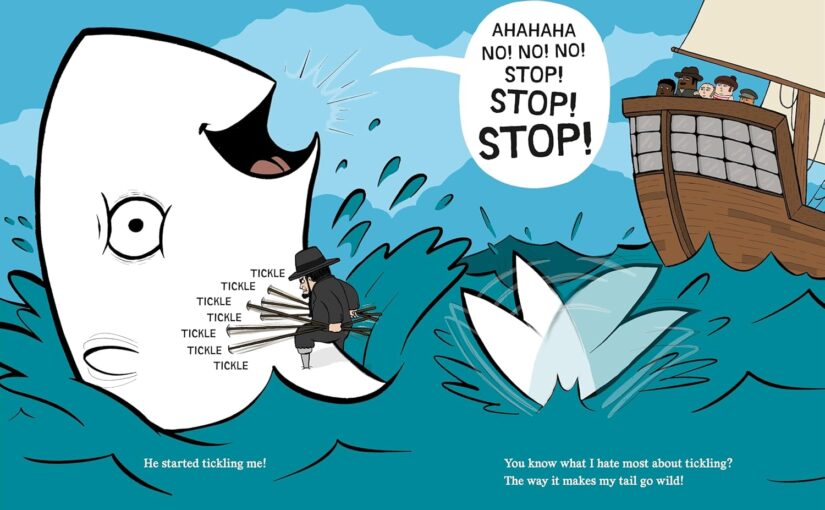
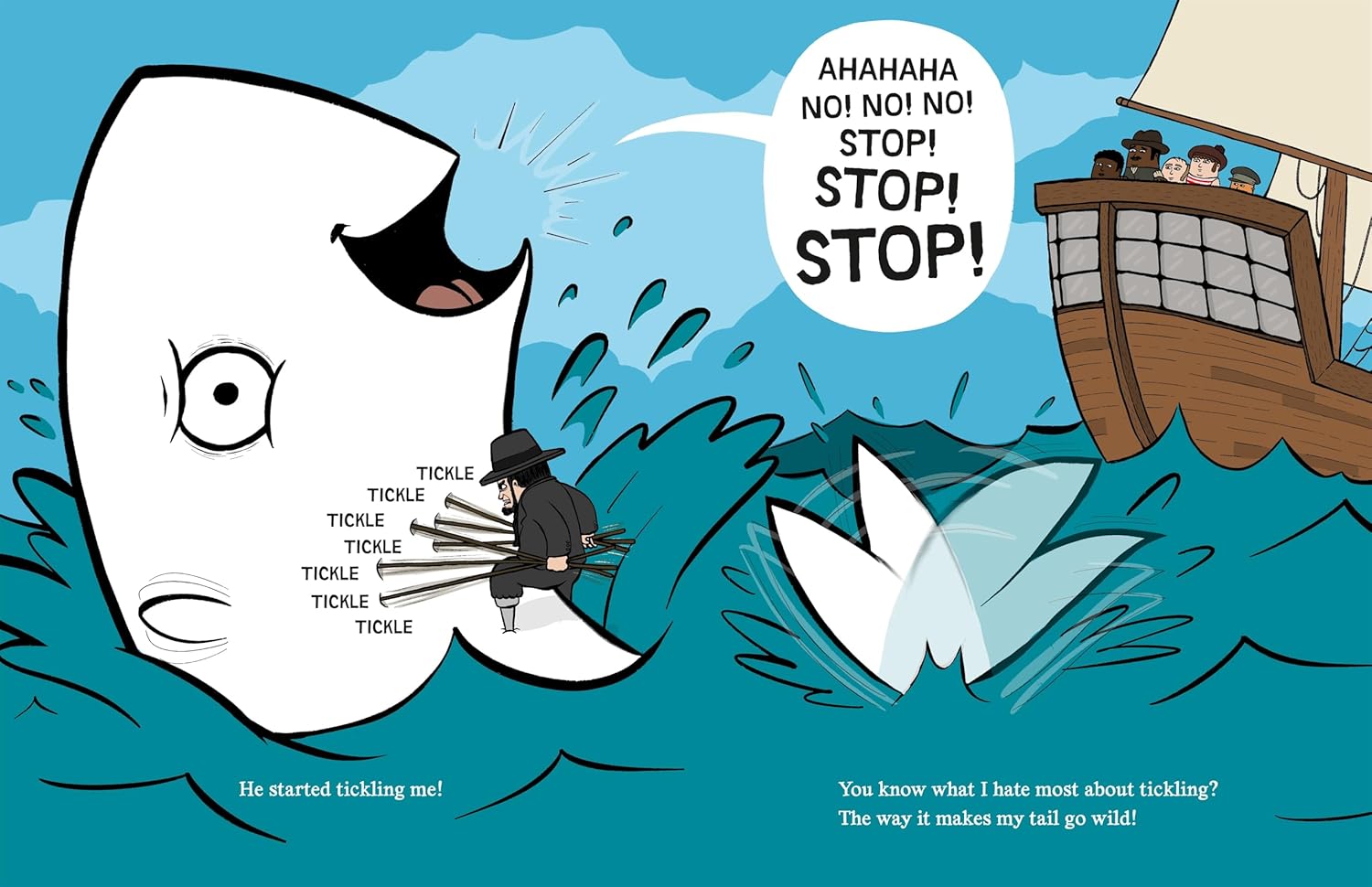
With new ideas in tow, he goes to the surface, makes some small talk, and asks them if they want to grab a bite to eat. One of the people on the ship, Ahab, is especially grumpy. Moby isn’t sure what he did to make the man so angry, so he apologizes to him, to no avail. Ahab jumps onto Moby, which tickles him, causing his tail to flail in the water. With this second attempt at making friends not working out, Moby goes back to the ocean floor.
On that page, Moby sees the giant squid, who was going to be the aforementioned snack, and asks the one-eyed creature if it wants to be friends. The text on that page is the kicker. It basically says that everyone won’t get you, that’s fine, but to be consistent in who you are and how youact. The two new friends start to play tag, far below the surface where the grumpy and unpredictable humans live.
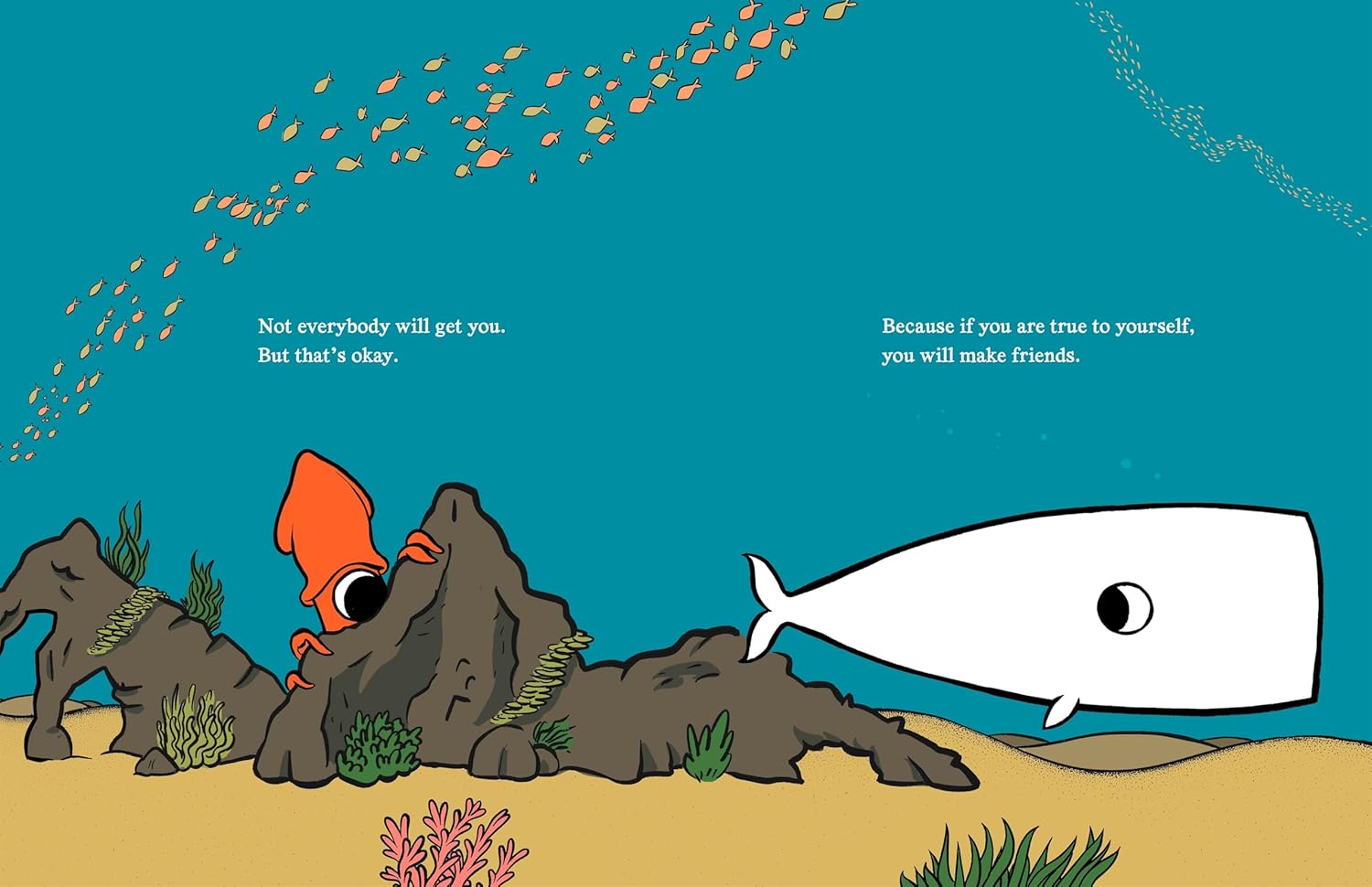
Call Me Moby works as an illustrated book because of its brevity and big, simple art. The story time crowd in pre-k through first grade will love the full page illustrations. They say much more than the text, which, for this age is a must-have characteristic. The art is also funny. It parries back and forth with the text, making audiences laugh at one or the other. If, and this is a big if, if young audiences know the classic Moby Dick story they’ll grin even more. They don’t need to know that story to enjoy this book. That characteristic is more of an inside joke that works on those levels, but isn’t necessary to know in order to enjoy the book.
The punch line at the end, about everyone not getting you and to be happy with who you are, is why parents or educators will like reading it. It’s not preachy. The book doesn’t harp on the subject and audiences have not idea that it’s coming until the very last page. It’s that soft, sideways walk towards the subject that will allow young minds or conversations to effortlessly segue into the ‘be yourself’ prompts. The takeaway from that won’t be immediate. It just leaves that young crowd with a smile and a reminder about the whale who tried to play, but was rebuked. If Moby rebounded, then so can I, is what those smart kids will deduce-now who would’ve expected that metaphor from an illustrated book entitled Call Me Moby.?
Call me Moby is by Lars Kenseth and available on Balzer + Blay, an imprint of Macmillan.
There are affiliate links in this post.


 Facebook
 Twitter
 Youtube