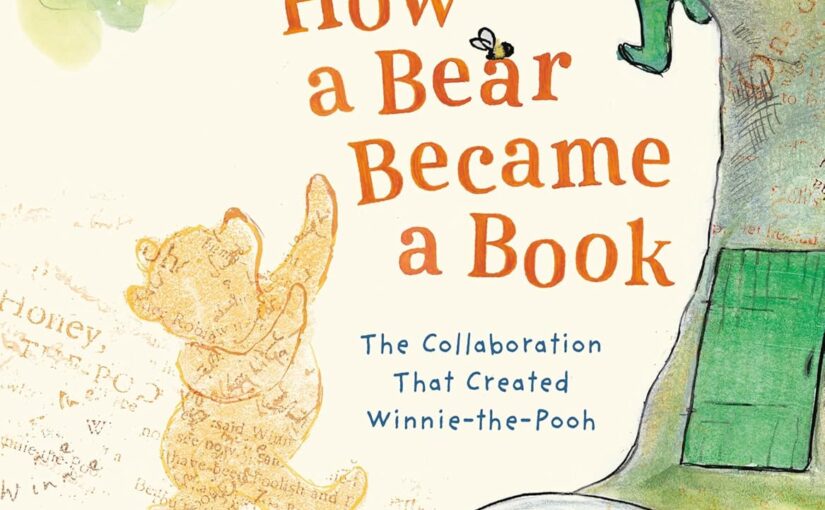
A book doesn’t have arms. It can’t hug you. How a Bear Became a Book: The Collaborations That Created Winnie-the-Pooh does have the aura of a comforting hug. It’s the smell of a kitchen after Snickerdoodles have just been made. The very subtle off-kilter letters in the book’s title evoke a playful nature. This aspect is magnified by the translucent bear running across the pages of a book, whose words are jumbled, incomplete, and utterly Pooh-esque.
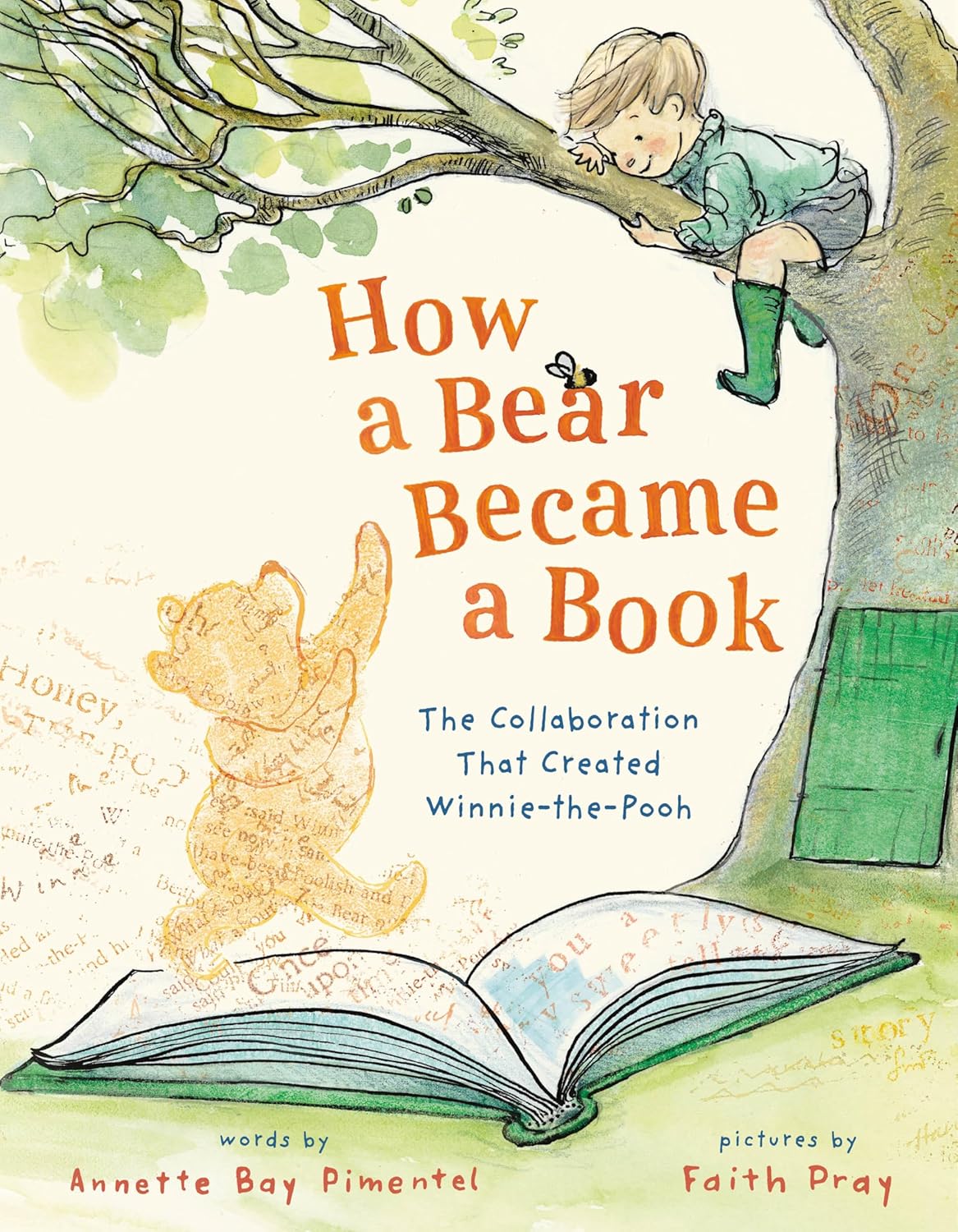
It’s all that with just a bit of How It’s Made, sprinkled throughout its DNA. How a Bear Became a Book starts with that helix. An almost ghostly outline of a bear greets a young boy wearing green rain boots. The boy tells the outline of a bear that it started as an idea, then became words and pictures. He invites the bear to follow him as he heads into his tree house. It’s then that the book has its copyright and title page. Have you ever read an illustrated book that started off like that?
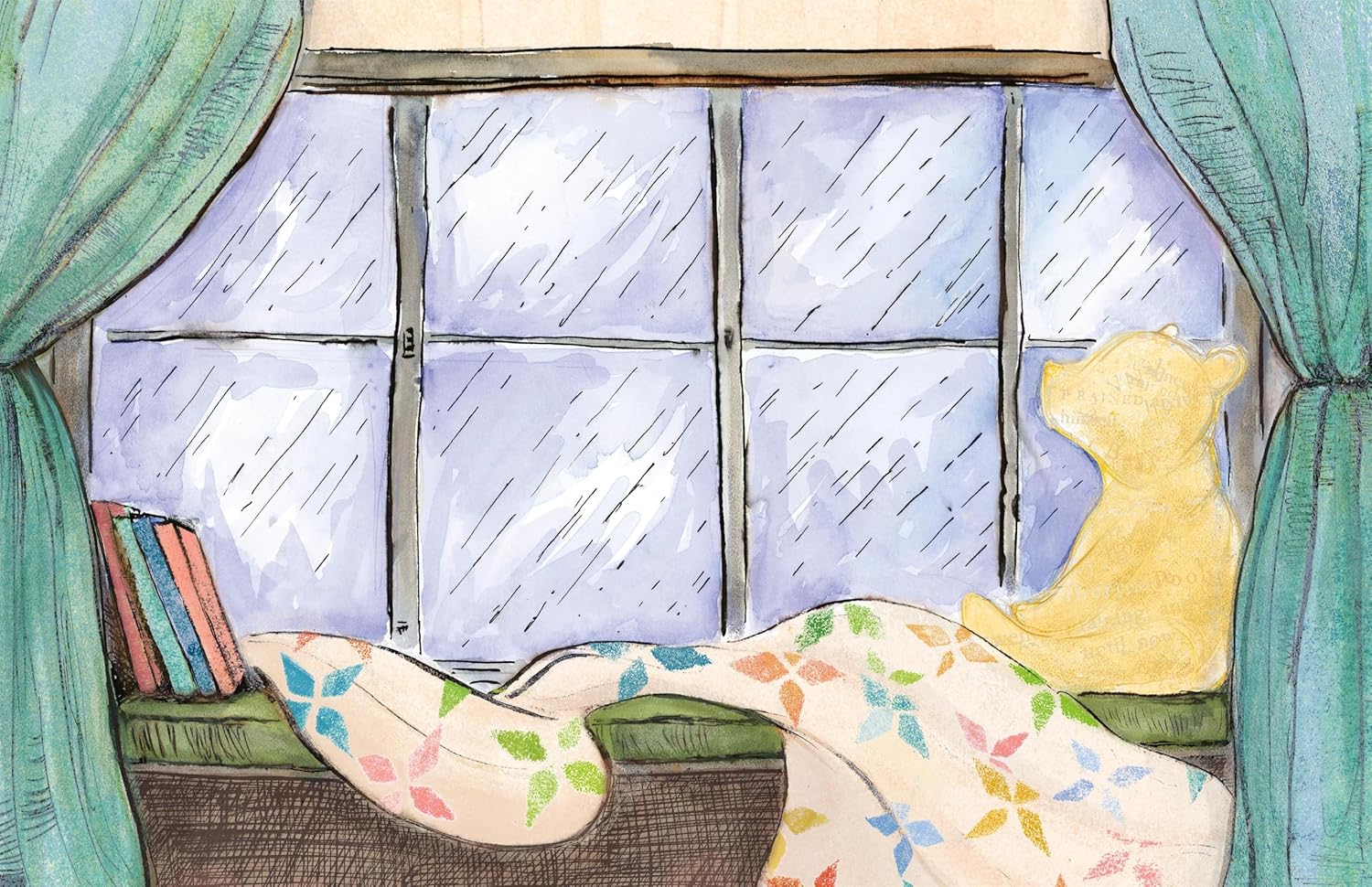
I’ve never seen an illustrated book that has done this before. I have seen illustrated books that have that information on the back inside cover. It’s usually when you open the cover, and readers have been conditioned to expect that. How a Bear Became a Book flips the script. The result is that the first three pages is a preview. It’s the opening sequence of a James Bond movie. This is the car chase through the Italian Alps that whets your appetite for what’s to come.
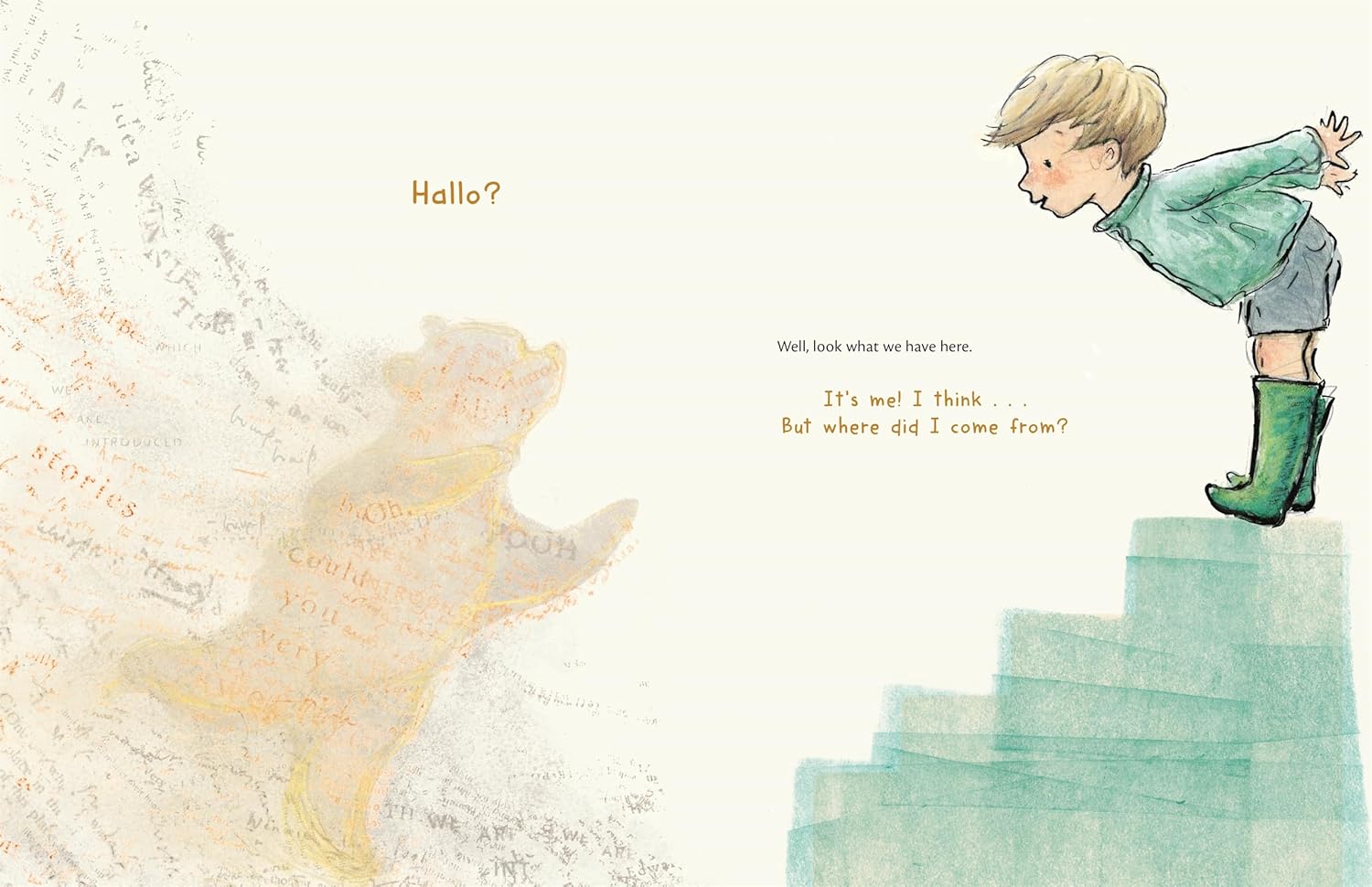
And it works spectacularly in How a Bear Became a Book. It’s a ‘meta’ illustrated book whose pacing, layout, succinct words, muted colors, and layered education, entertain and plant seeds of curiosity. Audiences don’t need to know anything about Winnie-the-Pooh, A.A. Milne, or Ernest Howard Shepard to enjoy the book. When they dig into it they’ll grin at the illustrations, wonder at the colors or think about how it was done. How a Bear Became a Book works on such a meta level that the character who inspired it all is not even directly mentioned by name.
Milne was already an author when he wrote Winnie-the-Pooh. An editor had the grand idea of putting some pictures to Milne’s whimsical bear tale. They immediately thought of Ernest Shepard. Milne knew of Shepard’s work, but wasn’t a fan of his style, so the editor shopped around other illustrators. Much like the taste or temperature of porridge, they just didn’t fit Milne’s story. One day the editor arranged for Shepard to visit Milne’s cottage estate. He brought his sketchbook and doodled a curious, friendly bear who was just a bit portly.
Shepard took the illustrations back to his studio and mapped out a world, specifically, a Hundred Acre Wood. Once the text met the illustrations the two creators had a very unique vision for the result. They didn’t want the words to coldly butt up against the pages that have illustrations. Back then, page design was a burgeoning art form in publishing by a new technology called offset printing. This meant that the illustrations could sit beside the words. The illustration of the character going to bed could be under the text that says “…and then he went to bed.” It’s such a simple thing now, but back before Winnie-the-Pooh was initially published all of the illustrations had to be on dedicated pages.
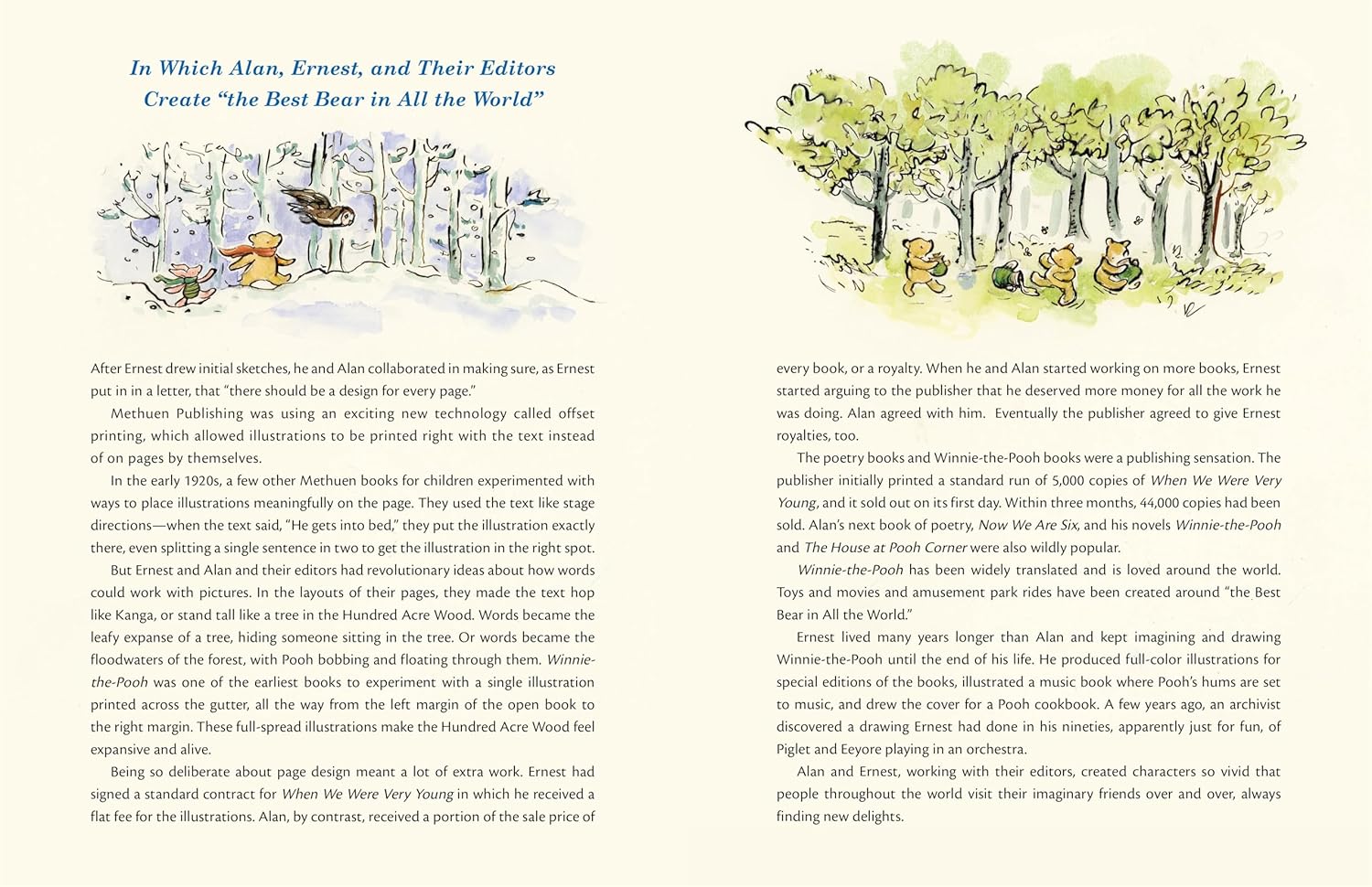
With all of that in mind, now look at some of the pages from the original Winnie-the-Pooh books. The words sneak vertically up, they weave down a hill or they float just a little off each other’s center, like the letters on the book’s cover.
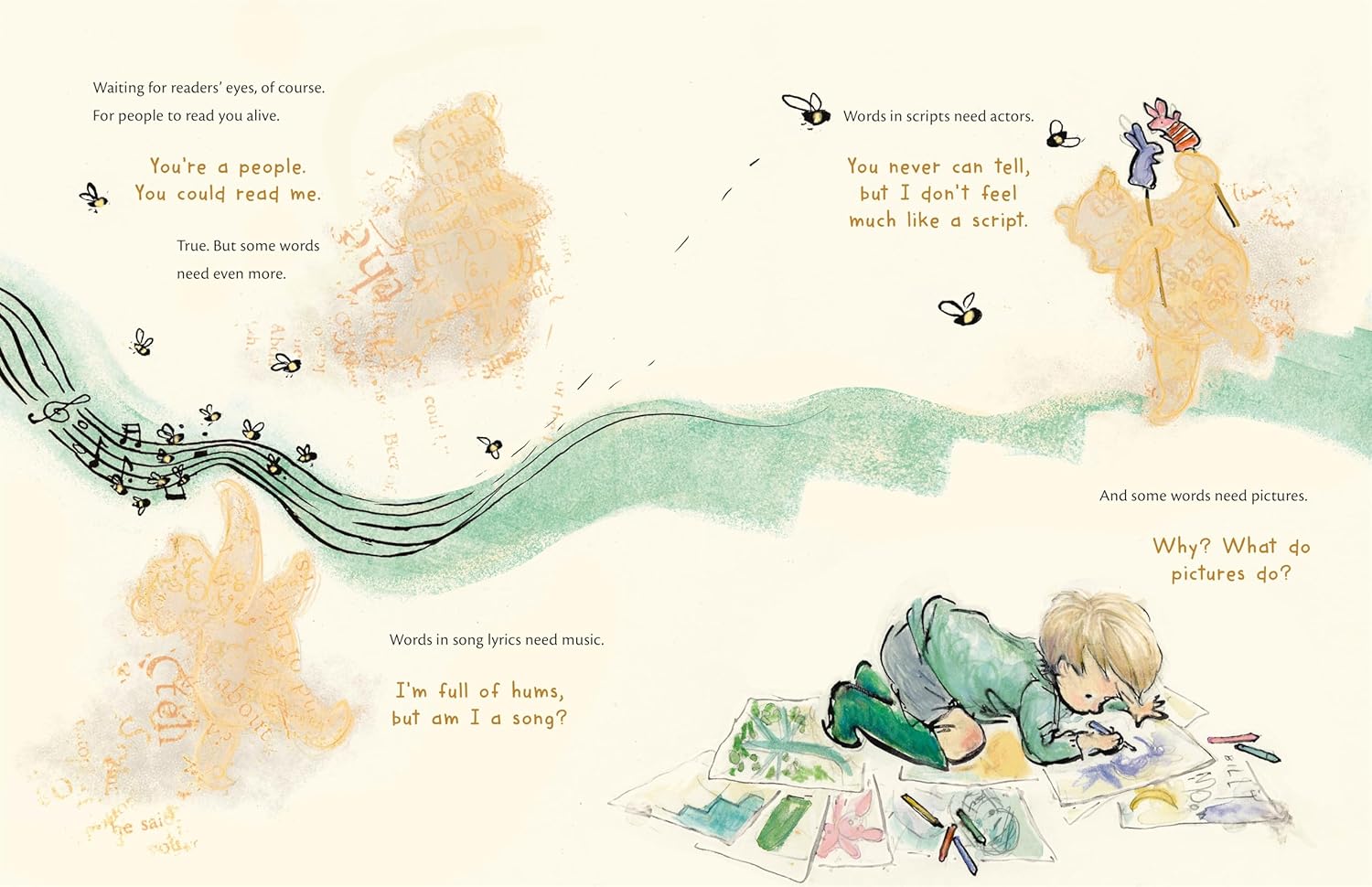
The story and text in How a Bear Became a Book is like that. It’s telling a story and concurrently having a conversation between Pooh (whose name is never even mentioned) and the readers. As the narrative story is evolving, Pooh is speaking to audiences in his voice, and a golden brown hue. As the story continues, Pooh’s figure gets firmer and becomes more solid. All the while, his body has characteristics, or things that Pooh would say, in text, all over his bear self.
Towards the end of the book, the bear is 100% Winnie-the-Pooh. It has evolved and the story of how the words met the illustrations entertains in a calm, crowd-pleasing way. You’ll love looking at the art and be fascinated by the story. When you think about the story, you’ll look at other books differently to see if you can imagine them through a slightly different lens.
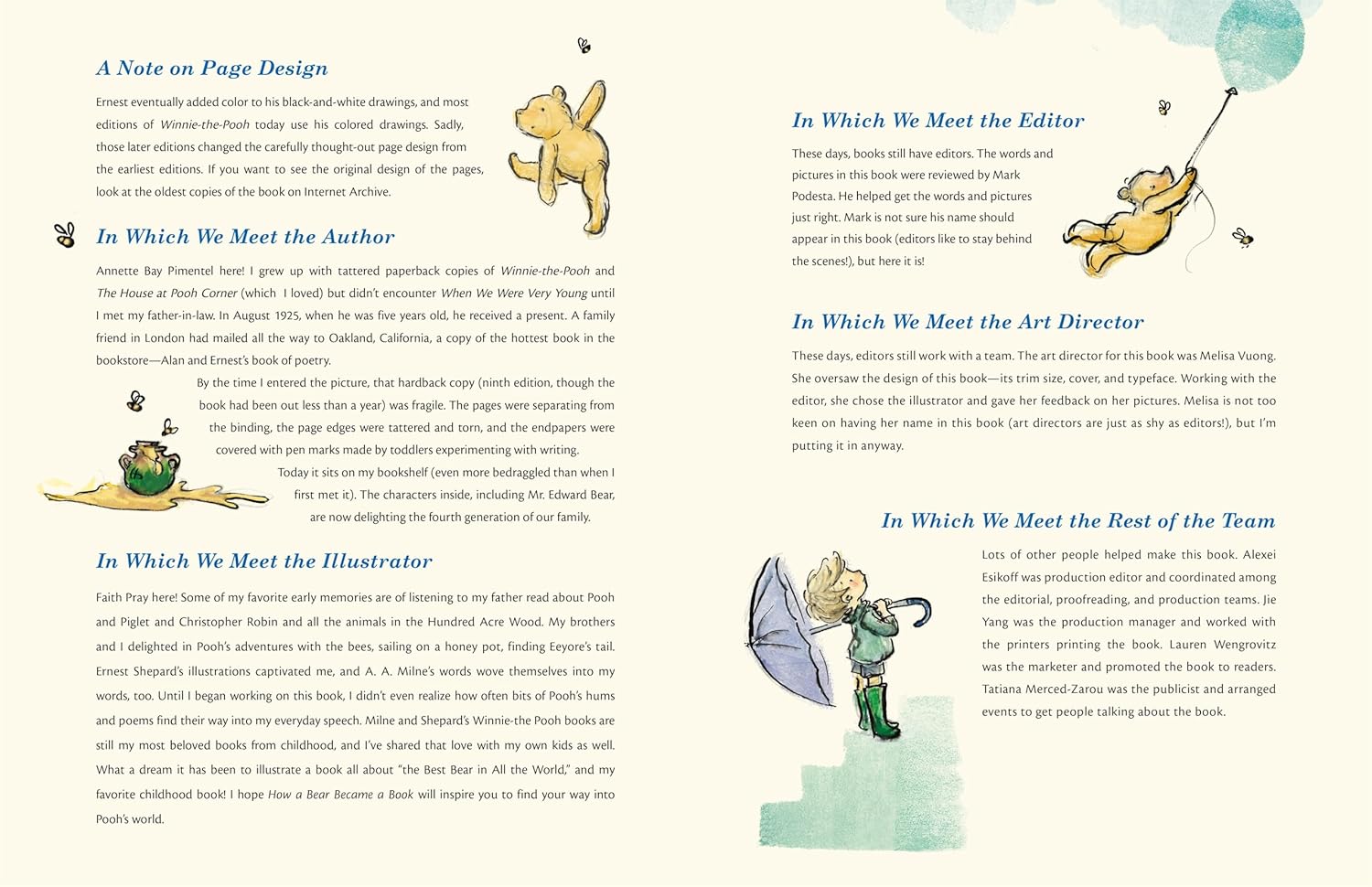
The final eight pages of the book are jammed with content kids will want to read, but it’s written at a middle school level. It has a brief biography of the editors, two pages dedicated to more details about its publication, and two pages about this book’s author, illustrator, editor, other players, and a bibliography for the quotes from the book.
You won’t eat a cookie when you look through How a Bear Became a Book: The Collaboration That Created Winnie-the-Pooh, but it’s comforting. It’s an illustrated book that’s easy to get lost in. You could also learn a lot about partnering, figuring out things by trial and error, hard work, persistence and simple enjoyment. This is an unlikely book that will end up in your forever bookshelf due to its creativity, timeless characters, and design.
How a Bear Became a Book: The Collaboration That Created Winnie-the-Pooh is by Annette Bay Pimentel with illustrations by Faith Pray and is available on Henry Holt and Company, an imprint of Macmillan.
There are affiliate links in this post.


 Facebook
 Twitter
 Youtube