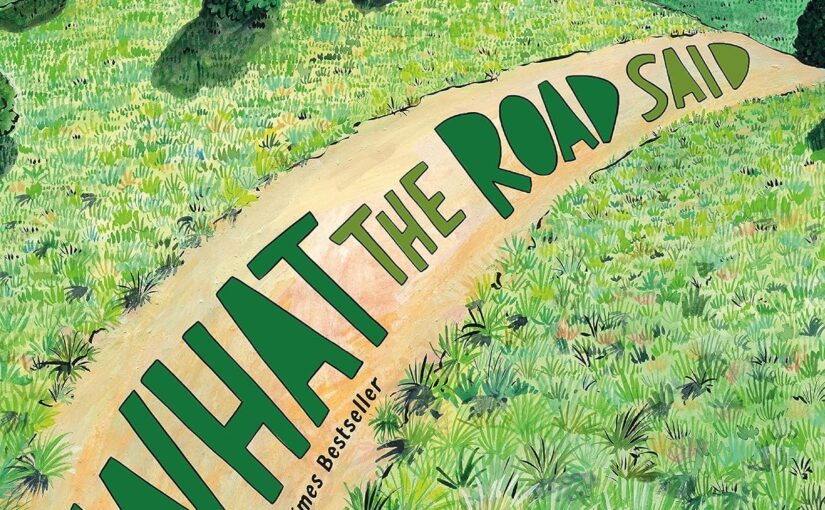
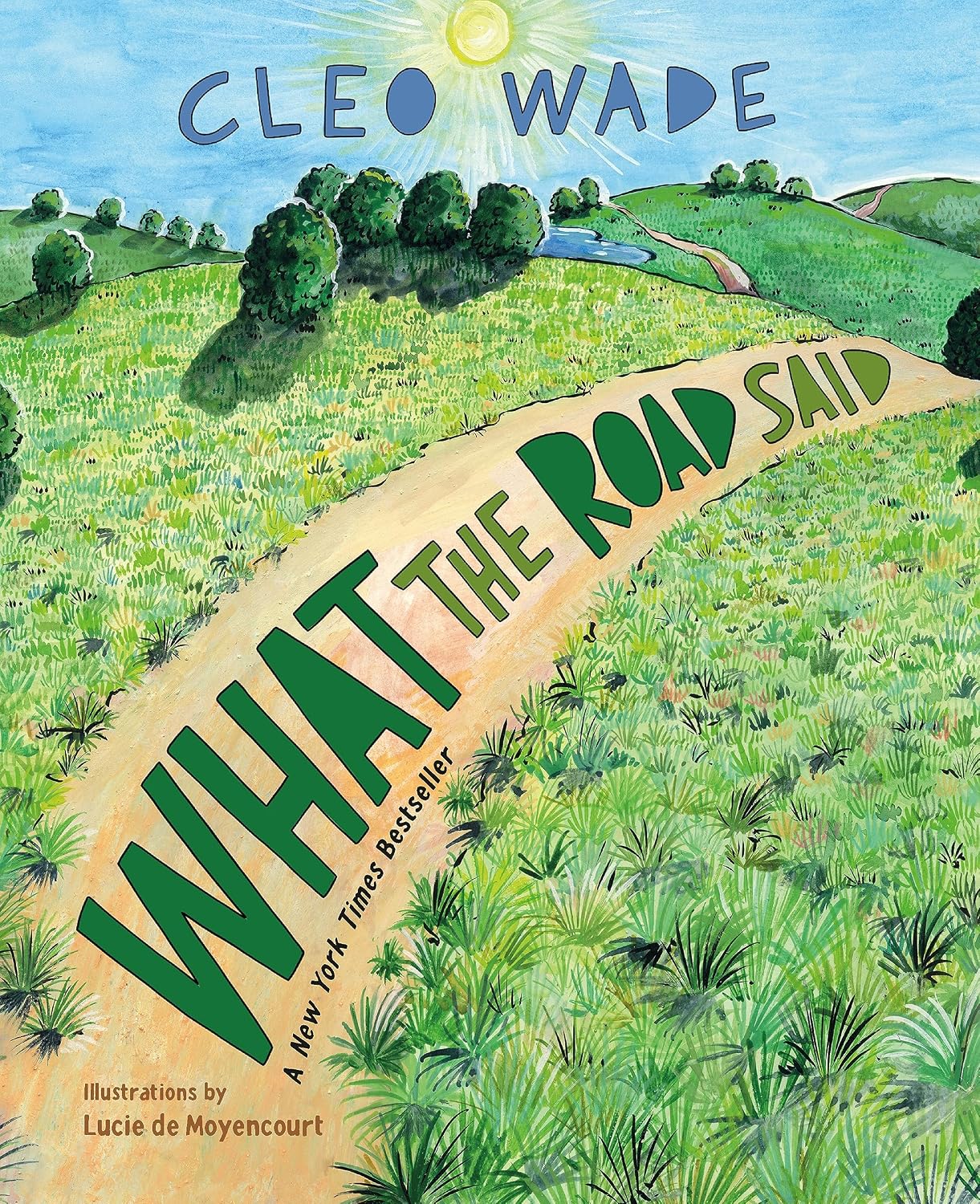
One of the popular tropes for parents of high school seniors is to purchase a copy of Oh, the Places You’ll Go. Many of their influential teachers will sign the book. It’s meant to be a look back at what they’ve accomplished, and a glance forward to their post-high school life. What the Road Said, by Cleo Wade, with illustrations by Lucie de Moyencourt, channels the same vibe. It does that, but it’s also a read-aloud parable about the situations and challenges young people will encounter. The book asks realistic, yet vague enough questions that allow any kid to realistically see them asking it. They’re the things that kids secretly fear or openly wonder if they’re weird for thinking about it.
What the Road Said immediately gives a vague enough answer to any questions that’s posed, and keeps going down the road of life. The text in the book sets up the situation by asking kids if they’ve ever wanted to go in a different direction. There’s something else, something more, something different or just a different direction that you can go where you can find your people or your raison d’être.
Our freshman in high school is looking for that. What the Road Said is not intended for 14-year-old audience. The succinct, dreamy, lyrical text combined with the corner-to-corner illustrations make it clear that this illustrated book’s core audience is pre-k through mid-elementary school. This is where What the Road Said punches far past its intended audience. It becomes a book that surpasses the one that teachers sign at the end of each school year.
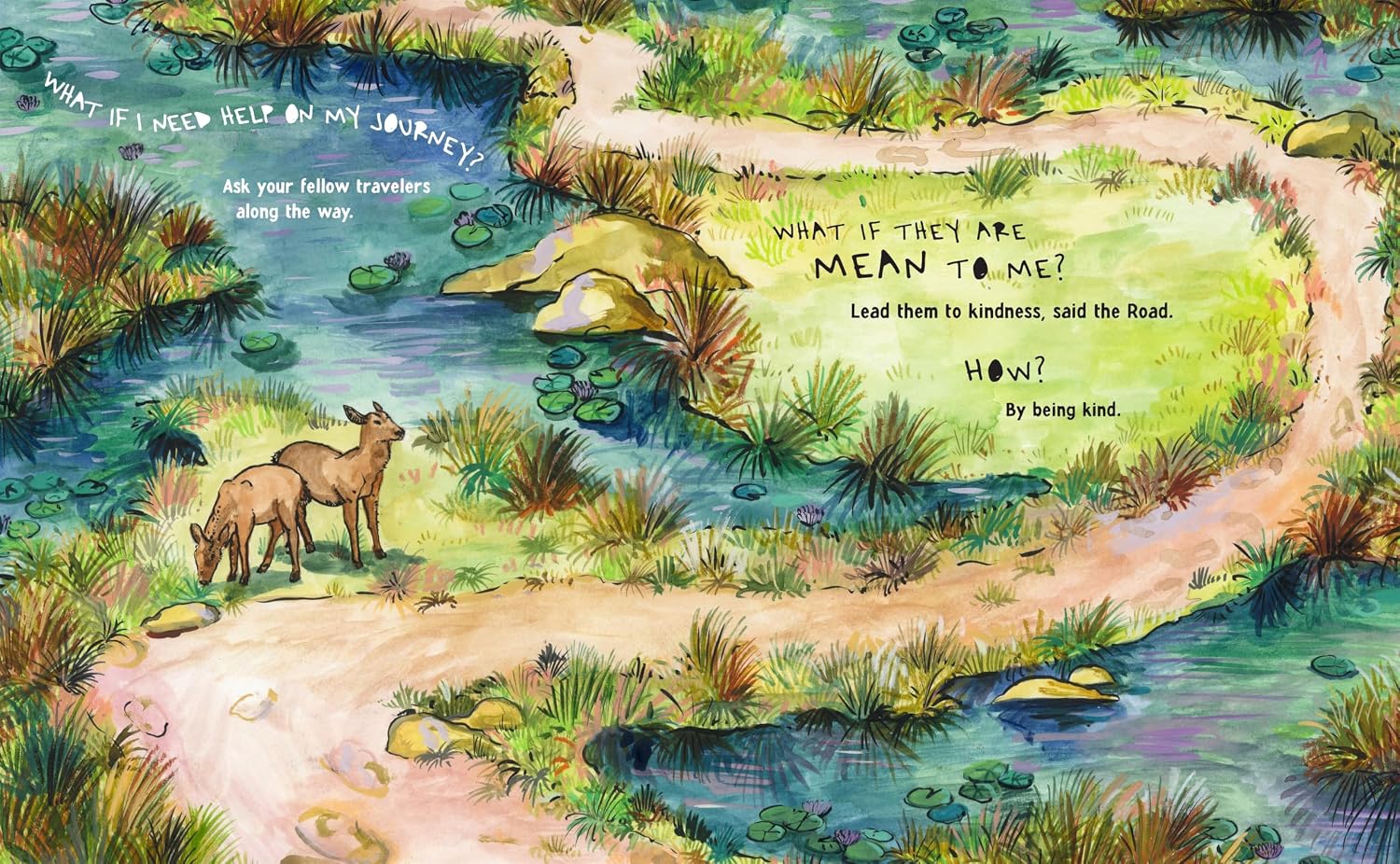
Is the goal of the book to be a keepsake with cute memories that previous teachers wrote down, or is a subversive self-help manual for life? A subversive self-help book sound like it’s trying to be preachy or tricky, and What the Road Said is not trying to do that. It does ask lots of simple, yet big questions about life, like, “what if I need help on my journey?” “what if I feel stuck?” or “what if I change?”? The book answers them in common sense language that elementary school students can understand.
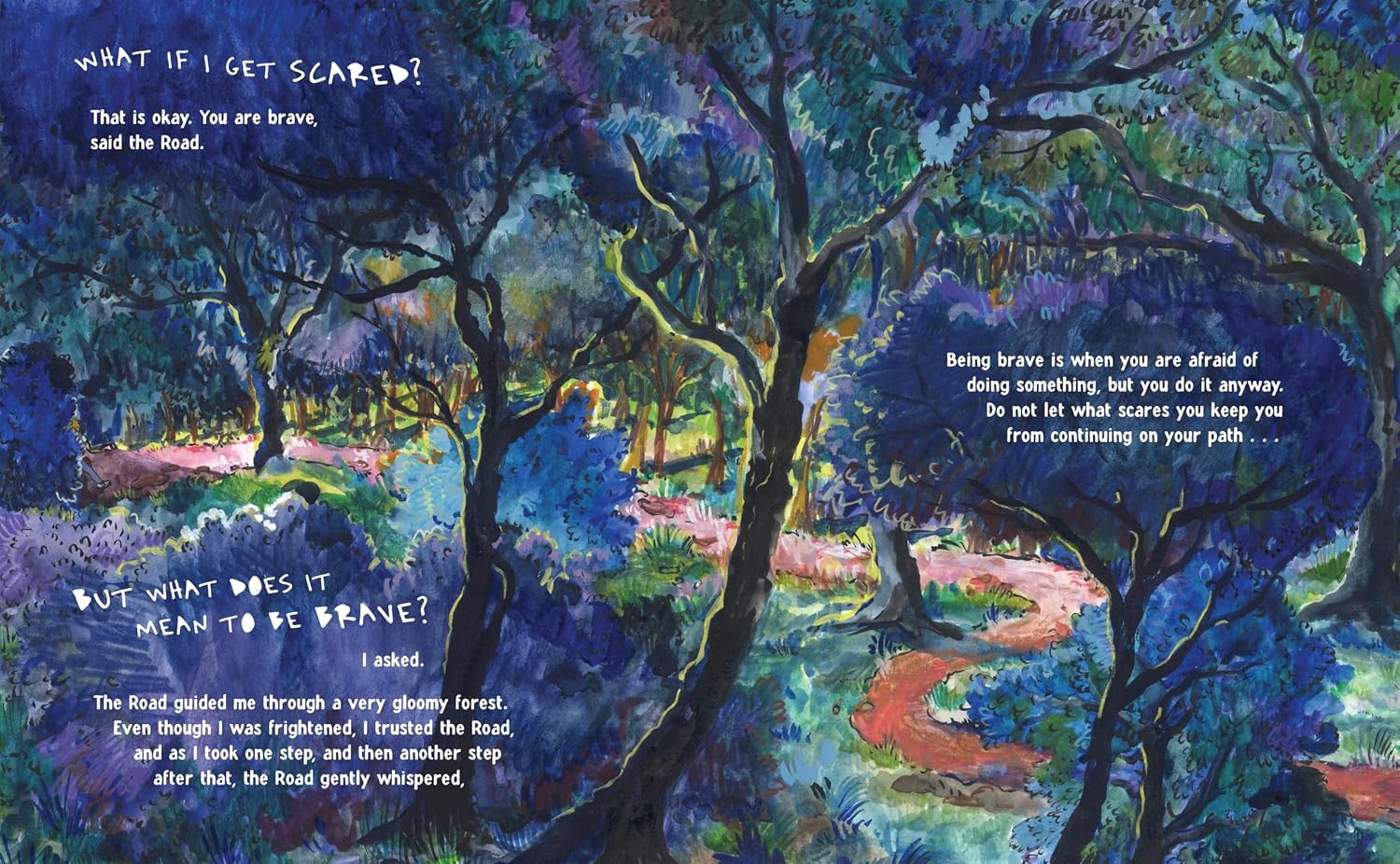
Those younger ages may not get complete resolution about the questions. However, the manner in which they are answered, in addition to the illustrations, will assuage audiences who give the book a chance.
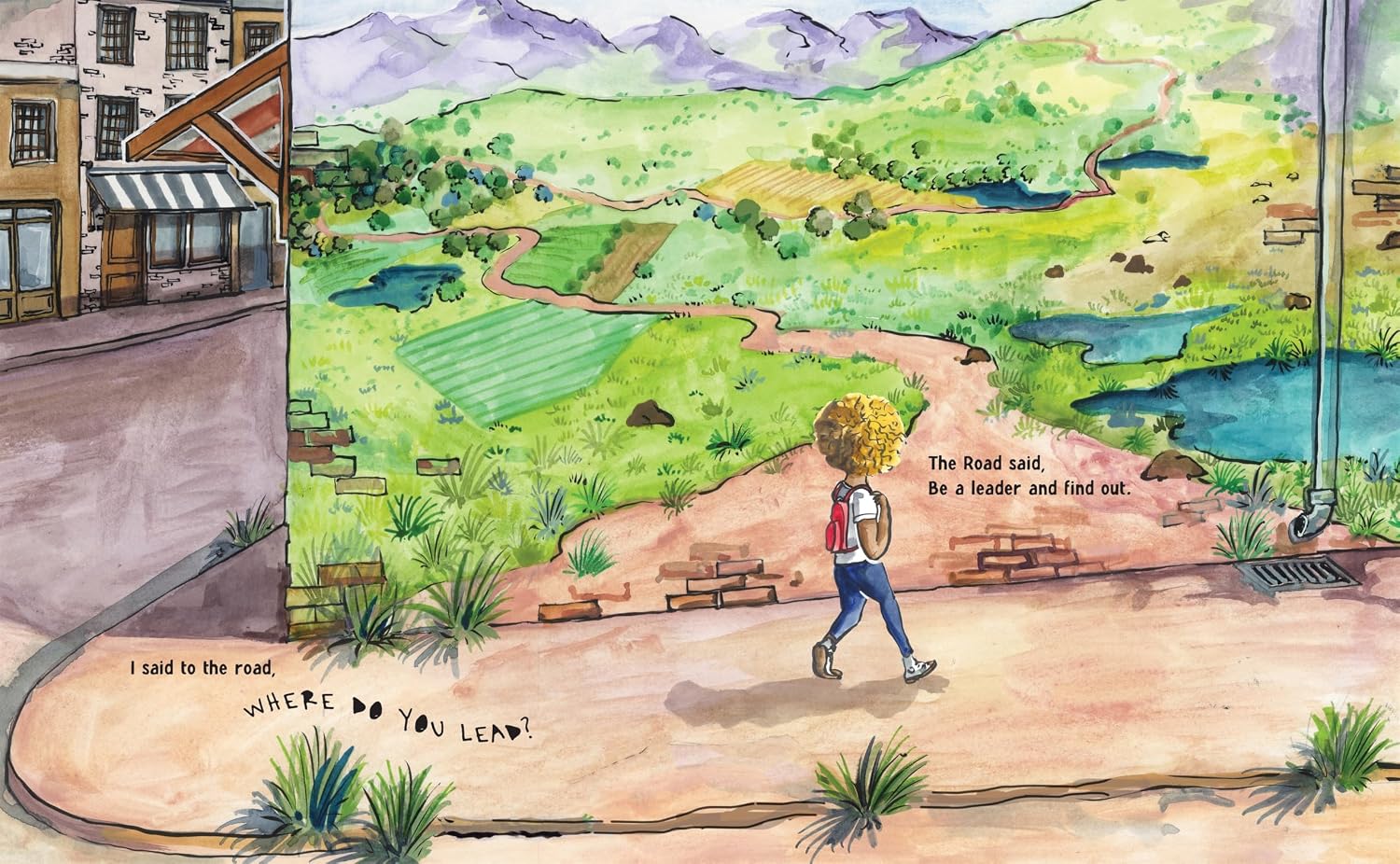
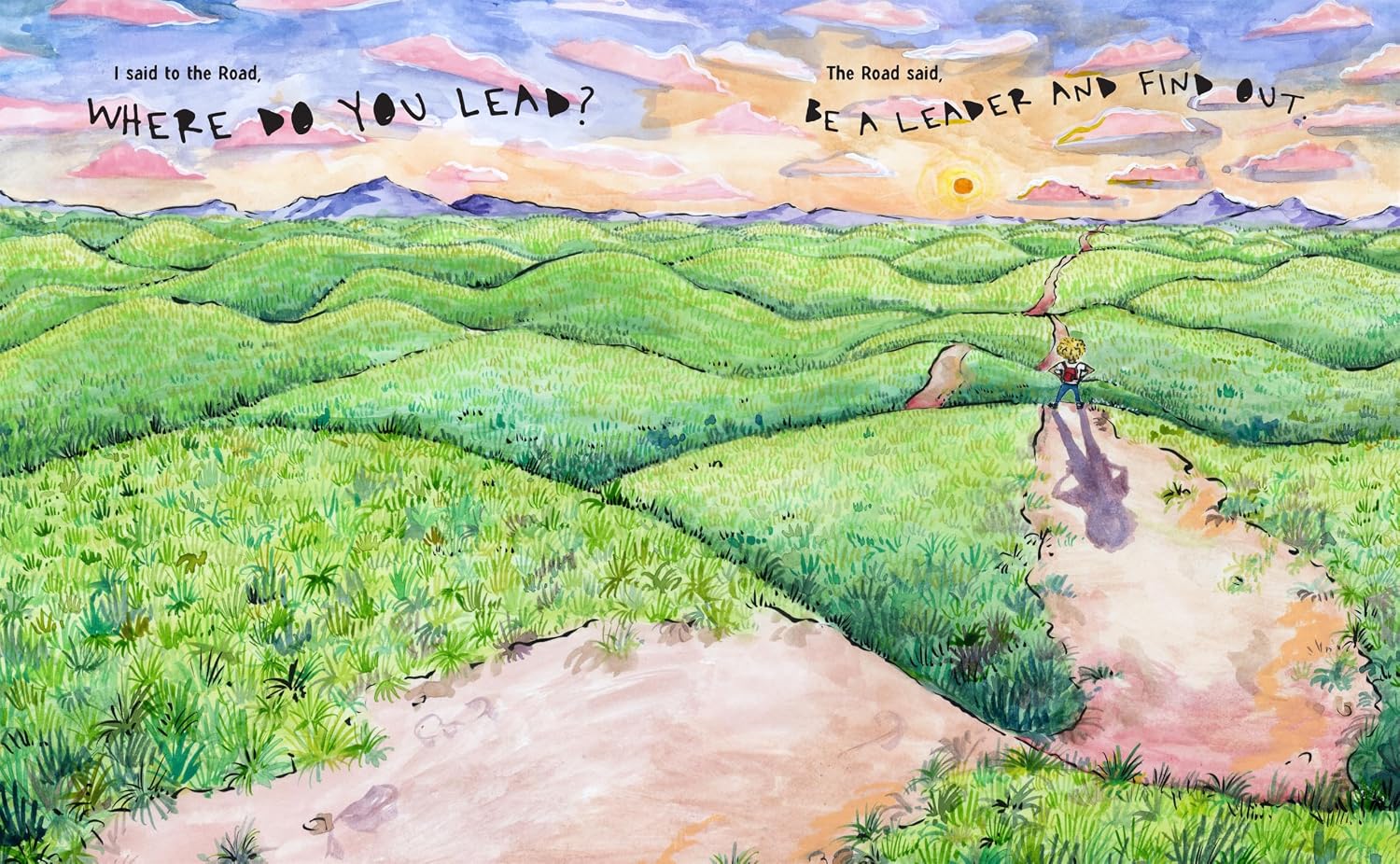
The titular character, a teenage kid, starts out in a typical small town. They ask the road, “Where do you lead?”, to which the road responds, “Be a leader and find out.” It’s on this page where the illustration is a country road, painted on the side of a building. As the pages continue, the country scene transitions to forests, the beach, a night in the valley, steep mountains, the peak of a mountain and on the top of the world, before returning to a plateau that looks like the field where it all started.
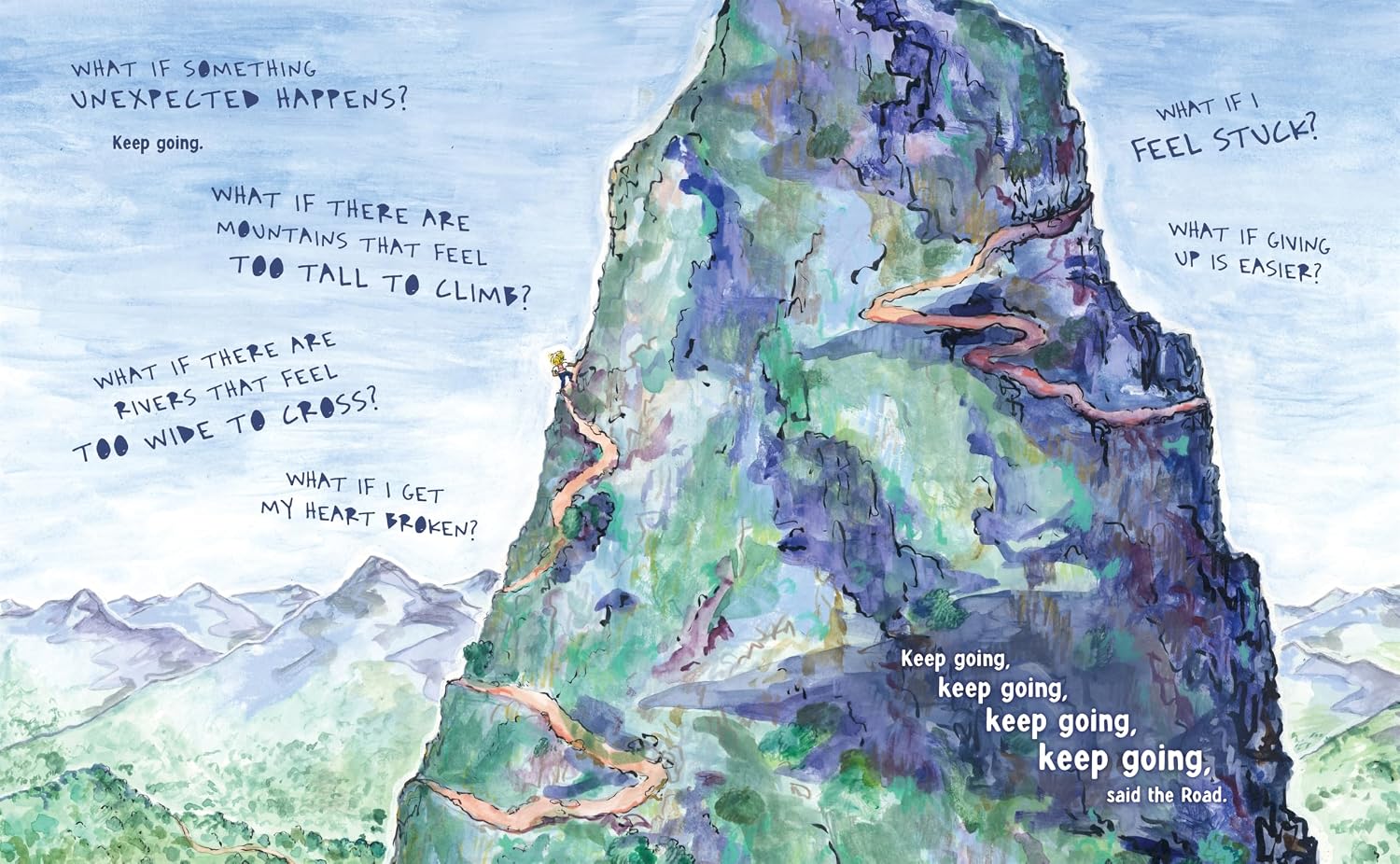
All the while the youth is asking the questions, they’re getting answers and continuing to move along the road. At the end of the book, the youth returns to the plateau where the book ends with the exact same words it started with: Be a Leader and Find Out. But wait, there’s more. Turn the page, and there’s a note from Cleo Wade, the author. This note explains that the book is indeed a metaphor for life and that it’s not designed to be a straight path. There will be curves, moments of confusion and holes that you’ll fall into.
But hold on, there’s more. Turn the page to the back of the final page and the back cover and you’ll see the stereotypical small town again. It has buildings painted the way that the ones look in your town, but some are painted like the natural landscapes our character encountered. This is like Contact, isn’t it? The story has a huge roadmap, with the characters traversing long distances, but they’re really in their backyard. It’s all a metaphor, a grand lesson about not worrying so much about the things that are beyond your control.
This book is great. The other day I asked a 14-year-old to dig a hole in the garden. After removing 1” of topsoil they put the shovel down and said “I’m hitting a root, this is too hard”. Having just dug eight of these holes, I knew that it wasn’t “too hard” and that they simply had to pivot.
Being ‘coachable’ is one of the most important soft skills that young people can build. Ironically, being ‘coachable’ goes hand-in-hand with being a leader, a quality that some young people stray away from because their peers incorrectly call it bossy. To my adult brain, being a leader involves asking the right questions and having the mental fortitude to take that first step in executing its direction. I see loads of high school kids on a daily basis who are neither ‘coachable’ nor a leader. That’s one reason why group projects, especially in 9th grade are so important. Those ages need to address those two issues and realize that cute is not a currency that will carry them through life.
It’s not too late for those ages to learn the lesson of What the Road Said. This could be the graduation gift their parents give them, with a handful of their teachers’ notes in it. This could be a book that makes its way through a generation or two of elementary school students. This could be a book that eases the worries of an entrepreneur whose latest effort isn’t happening as quickly as they want it to. This is that book, with some really cool illustrations that help make this that book.
What the Road Said is by Cleo Wade with illustrations by Lucie de Moyencourt and is available on Fiewel and Friends, an imprint of Macmillan Publishing Group.
There are affiliate links in this post.


 Facebook
 Twitter
 Youtube