Why Kids Love Dinosaurs in Space: A Book Review

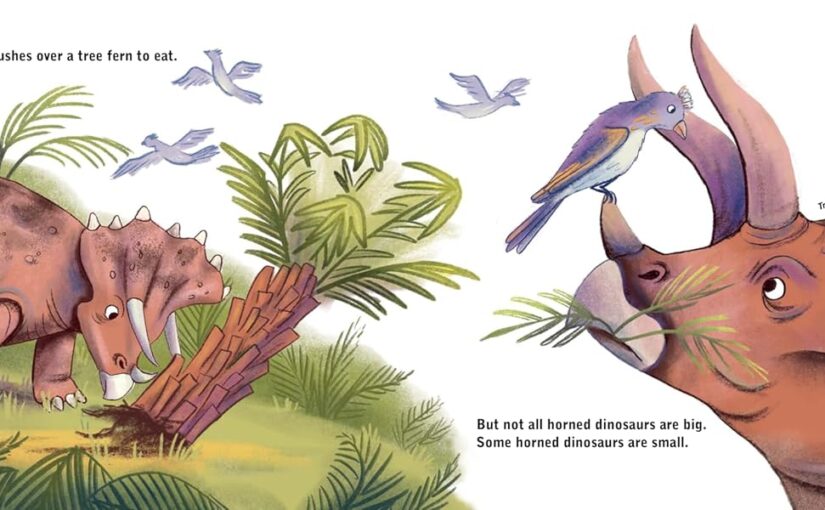
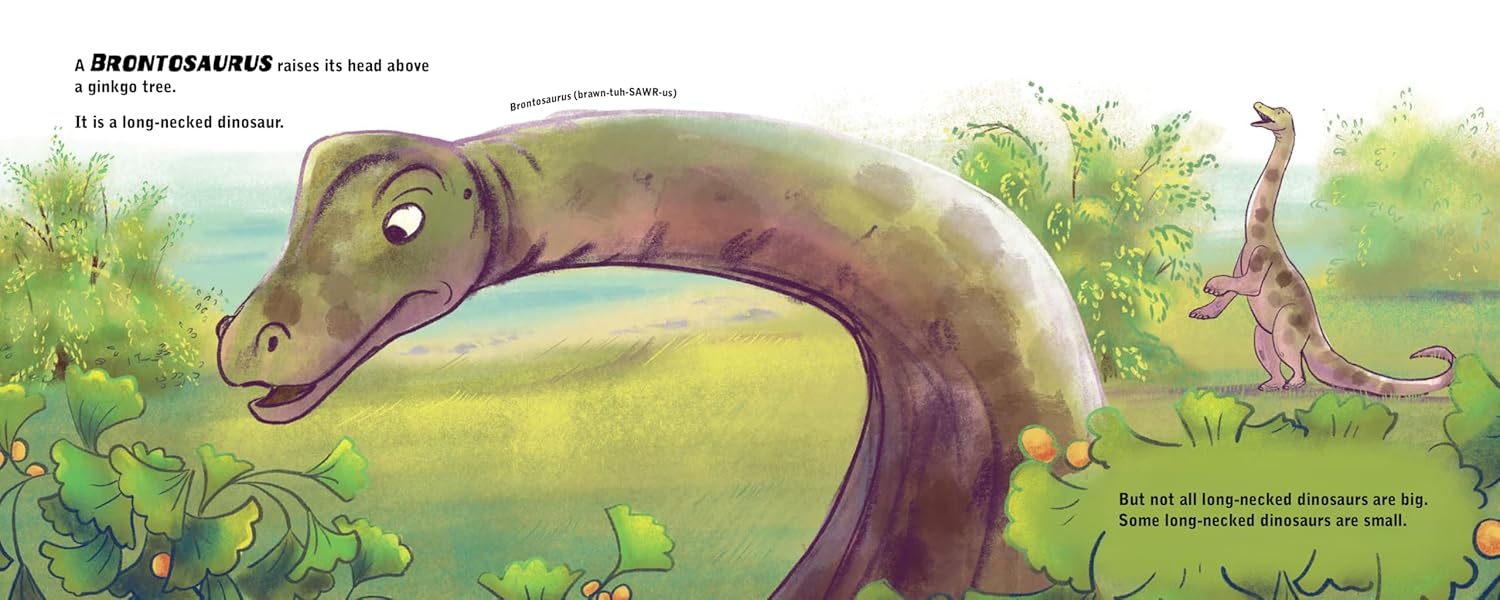
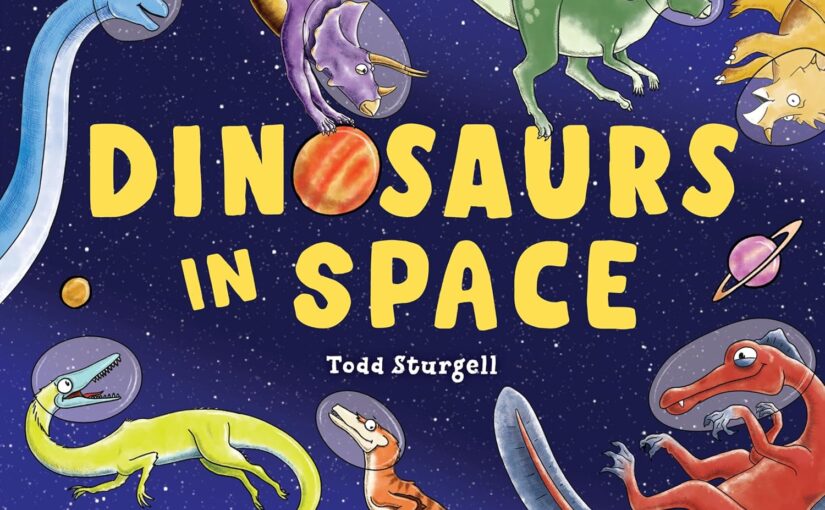
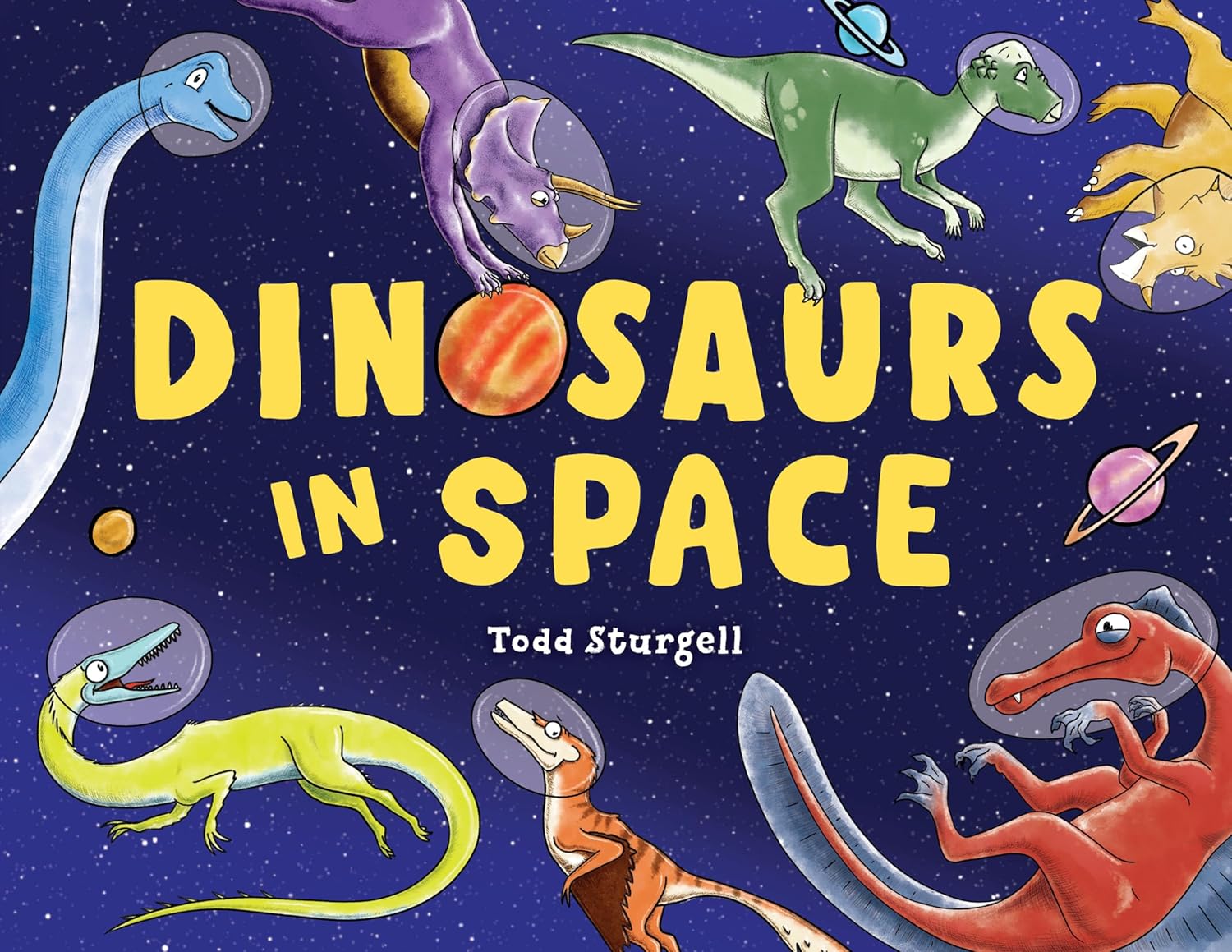
There is room in science for abject, over-the-top silliness. Young audiences, the kinds that embrace illustrated books like a cat to a laser pointer need the silly, but sometimes yearn for the science. Dinosaurs In Space hammers into that void with the subtlety of your neighbor’s use of the leaf blower at 7:30 on Saturday morning. This is an illustrated book that asks a question without directly posing it, allows kids to imagine the impossible, but tells them that it just might be probable. It breaks the fourth wall, weaves in non-fiction STEM, makes readers laugh and achieves the very difficult task of making a page-turner book for the illustrated audience.

Dinosaurs In Space asks the question you never pondered, but can’t get out your head once it enters. It’s funny, smart, makes kids laugh and want to read.
Pigs, Dinosaurs, they’ve both wicked funny in space

My Dear Sea: A Magical Illustrated Adventure

There’s a two-page spread in My Dear Sea that perfectly encapsulates the imagination of a child and how they see things. It’s just halfway through the book and shows a young girl running on the shore parallel to the sea. There are outcrops of sand dunes that poke out from the sea, towering above her, set against an impossibly ocean that’s a black as a thousand midnights at the bottom; but becomes that gorgeous light azul you only see in the Caribbean or near Lake Ohrid. The disparate chasm between shallow and deep probably doesn’t occur quickly, but kids imagine it to be that deep. My Dear Sea is an illustrated book about a young girl’s conversation with the sea, how she imagines it appear in its depths and the creatures that live there in her mind’s eye.

My Dear Sea is an immediate classic illustrated book about a girl and her trip to the sea that’s laden with illustrations that hook you.
What makes an illustrated book timeless and classic?

Pablo and Splash: Frozen In Time, early elementary graphic novel greatness

Oh to be young, carefree and to enjoy things without being judged. Pablo and Splash: Frozen In Time take me away. This is a graphic novel whose core audience will know when it’s speaking to them and precisely when it’s not. It’s that narrow group of students in middle-elementary school who like to look at early reader graphic novels because of the illustrations, say they don’t like to read, but secretly don’t mind it if they’re left to their own devices. The go-to graphic novel in this class is commonly known as Dog Man, but Investigators is funnier (and has a wider audience), plus there many other examples that cross over into this Venn diagram.

Pablo and Splash don’t need no stinking laugh track

Bad Badger: A Unique Friendship Story for Young Readers

It’s easy to misinterpret a book; these are interesting times aren’t they? Bad Badger: A Love Story is the sort of emerging reader chapter book that has the potential to be loved, but can also struggle to find its people. At its core, Bad Badger is a sweet story about friendship, but tells the story through a very smart lens with a bigger vocabulary and a more mature, nuanced setting that will reward those who have the patience for it.

Bad Badger: A Love Story is actually one of deep friendship, replete with old-school charm, loving details and chapters for ages 8 and up.
Don’t look for hidden inferences, this is straight up charming

Teaching Resilience: Life Lessons from ‘The Girl Who Figured It Out’

When I teach middle school or high school I sometimes use the phrase “I don’t care” to reply to some students who are making excuses for them or someone else. They don’t speak. I/They never do their work. I/they am not/aren’t smart. After the student is done watering down my expectations I’ll tell them that “I don’t care…about that unrelated issue they were trying to distract me with and that they are capable of doing the simple, age-appropriate task that I’ve asked them to do. There are some students who get momentarily put-off by what they deem as a rude comment, but then they’ll think about it and hopefully internalize that they need to raise the bar of what they can do. The Girl Who Figured It Out got that message, albeit in a kinder, elementary-age package with colorful illustrations and a can-do message about overcoming obstacles that life throws your way.

The Girl Who Figured It Out is inspiring non-fiction that relates to any audience ages six and up.
More youth would benefit from adopting her manta

Like No Other, illustrated animal book magic for elementary school

Ask an upper-elementary student to do a report on something and they’ll pick the strangest, creepiest, most uncommon one in the book. They might determine who they’ll research by how gross their name is, how ugly they are or how remote their habitat is, thus Brazilian Spitting Death Spider Monkeys of the word unite. Like No Other: Earth’s Coolest One-Of-A-Kind Creatures is an illustrated book for middle-elementary ages through lower-middle school that’s mostly creepy and not too much common.

Like No Other, an illustrated book on strange animals who are the last ones in their family tree uses art and oddity to succeed.
The power of strange animals…..for the win!

Nothing: The Illustrated Take on John Cage’s Silent Composition

Prior to Nothing I had not heard of it. The concept of doing nothing, like laying on the sofa watching sub-par movies of listlessly waiting for something to do has long passed us by, having coincidentally happened when we had our first child 15 years ago. In this case, Nothing: John Cage and 4’33” is an illustrated book about a composer and one of his most unique pieces. It was a composition that lasted for four minutes and thirty-three seconds and was completely silent.

Nothing: John Cage and 4’33” is an illustrated book about an avant guarde composition that, given the chance, makes young readers think.
Nothing, and everything

Grown With Love: A Delightfully Strange Children’s Book Review

There is a balance in illustrated books between being sufficiently weird, but endearing enough to be of merit to adults, educators and parents. Of course there are some books that are straight up gonzo strange, sappy to the point of Hallmark or unicorn happiness to the max. For the most part, those mass-appeal illustrated books that have legs need to be slightly grounded. However, children need them to be a little odd in order to rope in readers and audiences who might otherwise gravitate towards anything else. Grown With Love is just left-of-center enough to bring in aspects any Tim Burton movie, but has the Earthy tones of Up or other entertaining vehicles that subvert a tug at your emotions.

Grown With Love is a lovely combination of sincere, odd and creepy about a kid scientist who uses botany to help people.
It’s love and company, in an odd package that works
Copy Protected by Chetan's WP-Copyprotect.