As kids get halfway through middle school they could lose their ability to use adjectives. I’m normally a glass-half-full kind of a guy. However, the essays that I see in 9th grade have a majority of students who need a map, compass and guide dog in order to find adjectives. They’d be overly excited if they came up with two ways to describe the weather in July and then ask for a waiver on future assignments. A Tale of Plagues and Perfumes is one of the more original middle-grade releases you’ll read this year. It does that by delving into a world that mglit readers know as familiar, but not too familiar, and exploring a realm that other books haven’t had the scents to do.
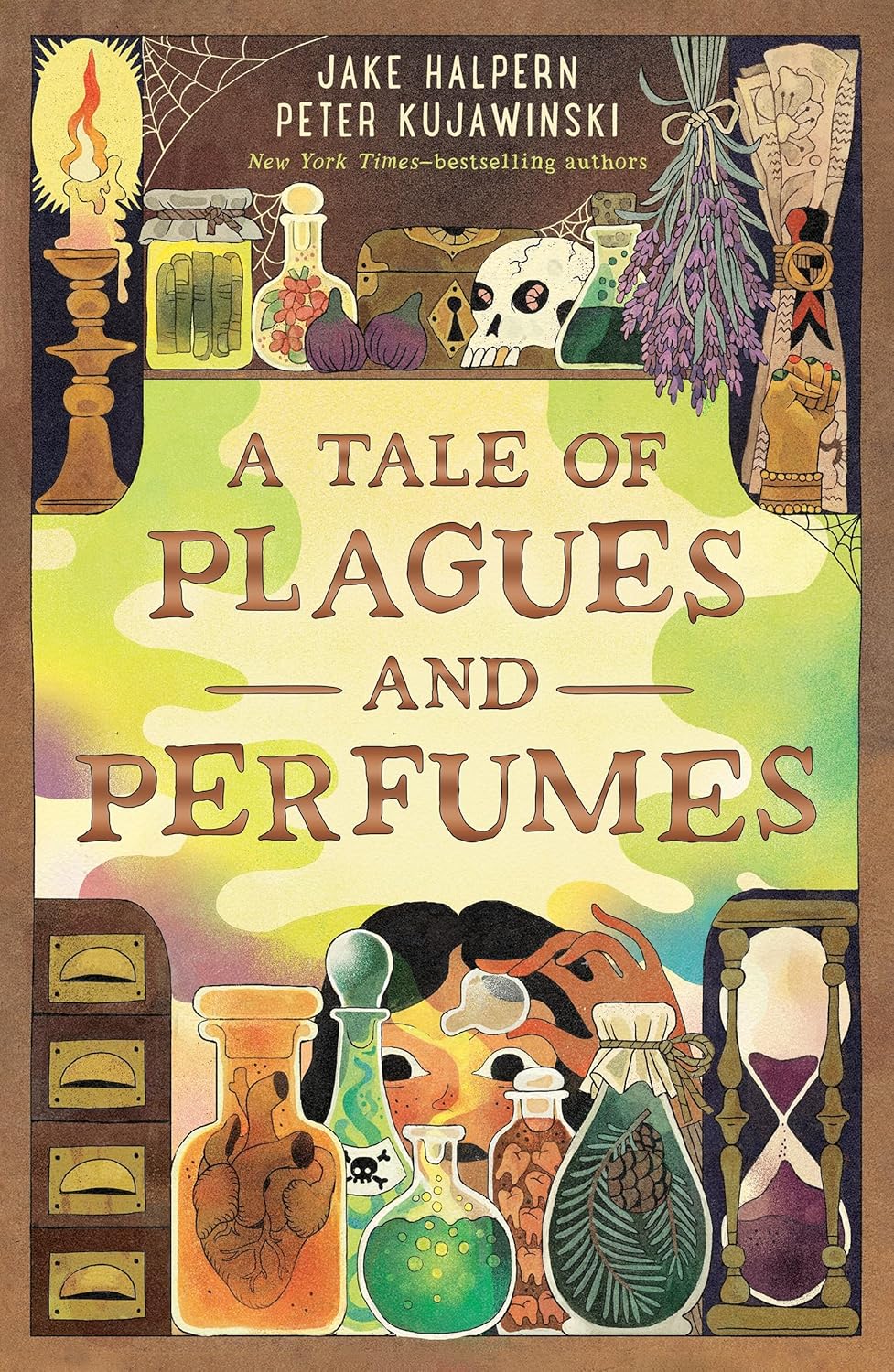
Sense and scents are homophones. In that case I was misusing scents instead of sense as a synonym for perception. I promise, this will all make sense. A Tale of Plagues and Perfumes has a great title. Its title makes young readers curious. The illustration on the cover has a freckle-faced girl, carefully placing drops of liquid into a vial. That vial is gurgling lime-colored which is eventually escaping via a dirt yellow mist at its top. Around the youth are spider webs, other vials with a heart, a pine comb, fingers, a filing card system and other archaic and mysterious objects kids will associate with creepy and fascinating.
Open the book and they’ll see a map of Yerat, the fictional small town and its surroundings. On the book’s jacket, readers will see a telling short sentence that sums up the book. Every scent tells a story. This is a land where certain people are born with astounding powers that exist in everyday. Mia has always had an awesome sense of smell, but she certainly doesn’t want to be a Sinsory. Her aunt and best friend know that she can sniff out trace elements of particles on people’s clothing. It’s only when a massive plague takes root in the area that her talents come into play.
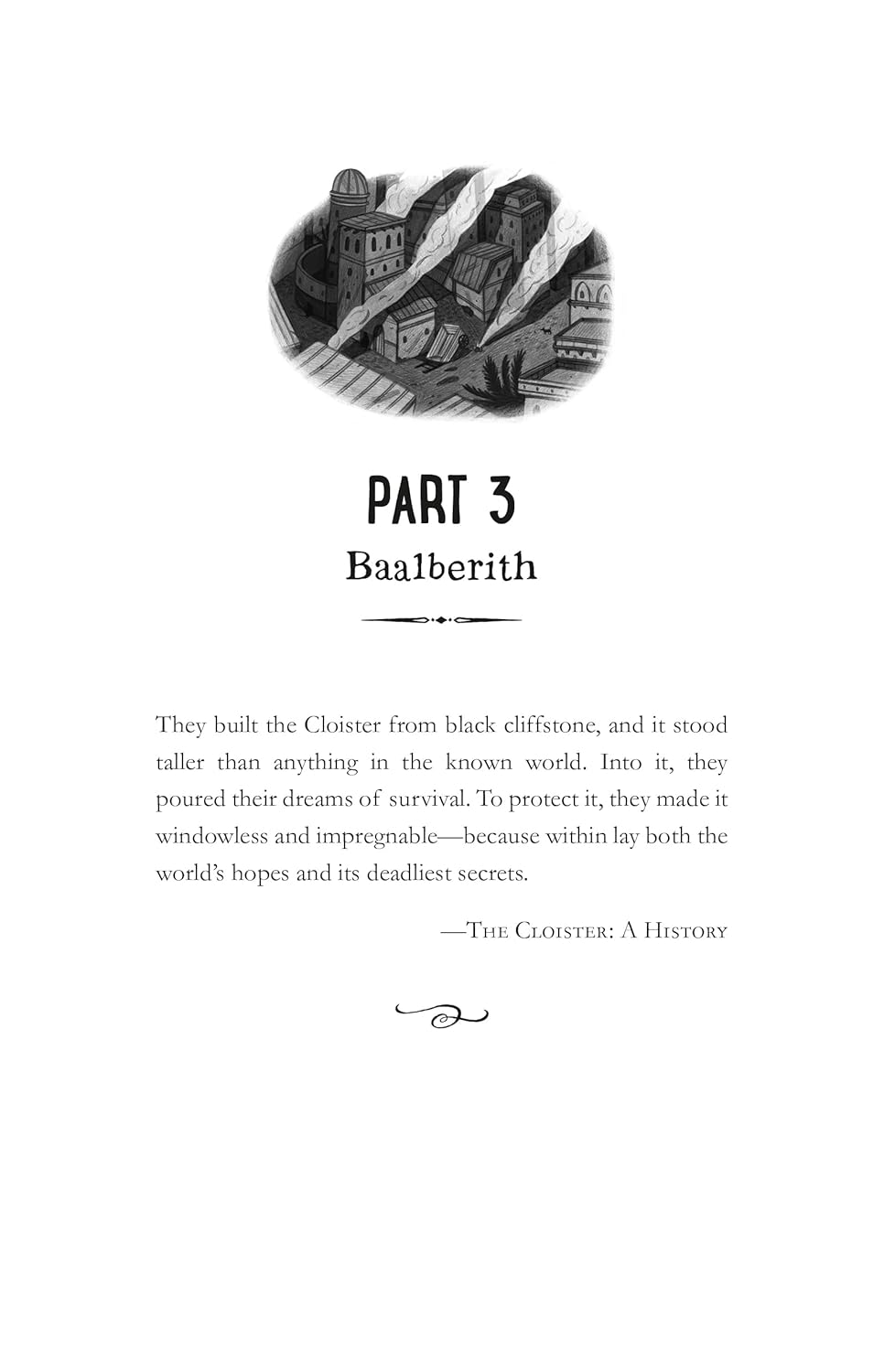
Those with special abilities are taught in an exclusive school. The Cloister is the envy of any young adult who yearns to hone an already heightened sense. The professors who teach there are famous and treated as celebrities in the region. When Nia receives her invitation to the Cloister, in the form of a jar of blackcurrant jam, she’s honored. It’s an invitation, but also a puzzle as she’s asked to discern its ingredients. If the area’s most famous Scentier is in your home, inviting you to study in their lab, there’s going to be a test.
Wait, wait, wait, a school with talented children sure sounds a lot other books I’ve read. You are correct, young reader, but the school aspect of A Tale of Plagues and Perfumes is the only thing that’s familiar. That’s the commonality that grounds the book for any reader. Does the book lean too heavily into the fact that a favorite few can access their sensory powers? Well, if it did that then their unreal abilities would be the main story in A Tale of Plagues and Perfumes.
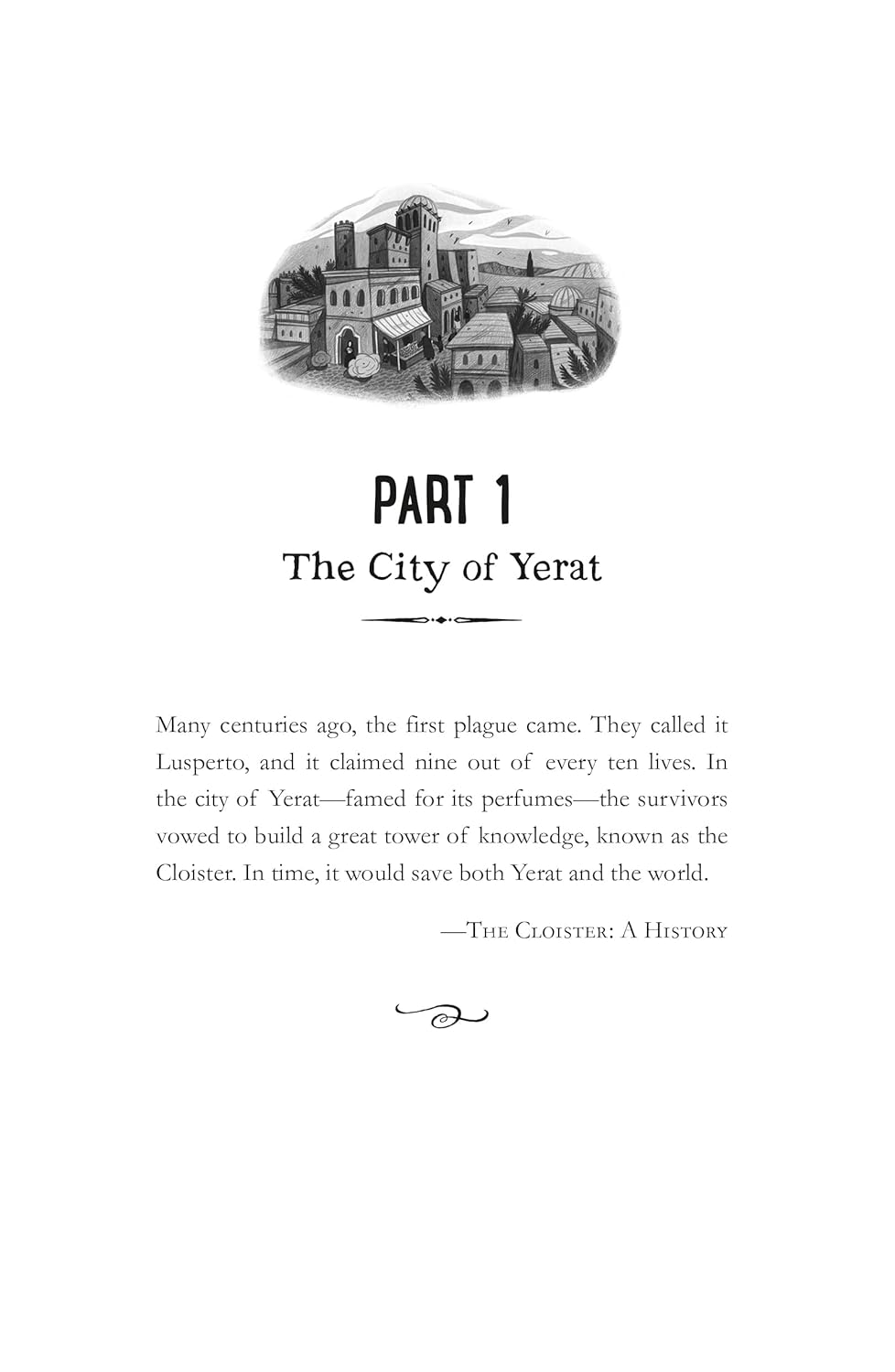
What makes A Tale of Plagues and Perfumes fresh and fun to read for mglit audiences is its newness. Their abilities are rarely, if ever written about, yet they’re not unfamiliar. The actions in the book are big and not immediately erased. It is a plague, and plagues kill large numbers of people. Once the plague starts the action remains locked in The Cloister. Nia and a couple of her friends must rely on her sense of smell in order to fully reverse engineer a solution. However, as they get closer to a cure, the people in the ivory tower might not be all that they’re cracked up to be.
A Tale of Plagues and Perfumes is a very satisfying book. It cuts its own cloth, uses it for a sail and takes mglit readers for an entertaining trip. The book stands alone, but also encourages the thought of how would the other senses do with a book that celebrates them?
A Tale of Plagues and Perfumes is by Jake Halpern and Peter Kujawinski and is available on Roaring Brook Press, an imprint of Macmillan Publishing.
There are affiliate links in this post.


 Facebook
 Twitter
 Youtube