
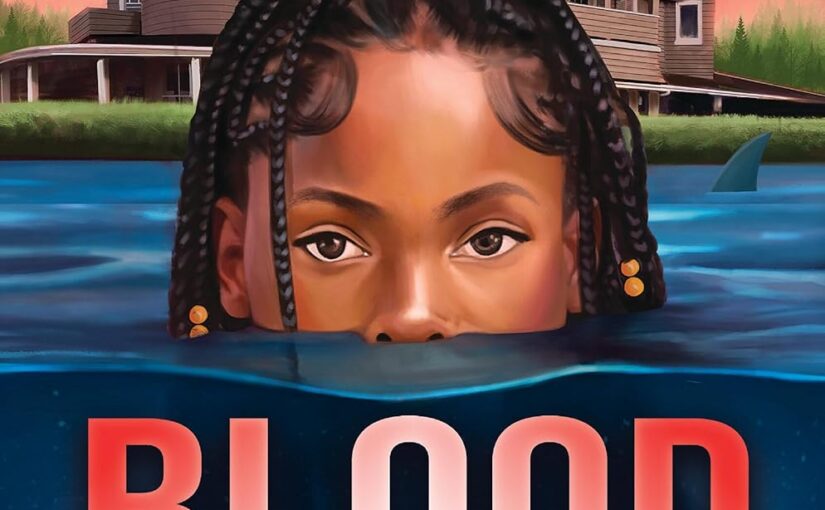
Blood in the Water has a nice, bubbling sense of tension. Creating a book for mid-elementary school through mid-middle school can’t be easy. That age is learning to read chapter books, reluctant to read anything, or too ensconced in fart-borne books to care about anything else. Young readers in that eight through 14 demographic want to read something with bite and suspense. Throw in the caveat that said book needs to be age-appropriate, and you’ve got a bit of a challenge on your hands.
But wait, the characters need to have elements that you can relate to, familiar situations, but also has elements of surprise and suspense. Blood in the Water manages to have all of those things in a semi-realistic, younger-skewing mglit release.
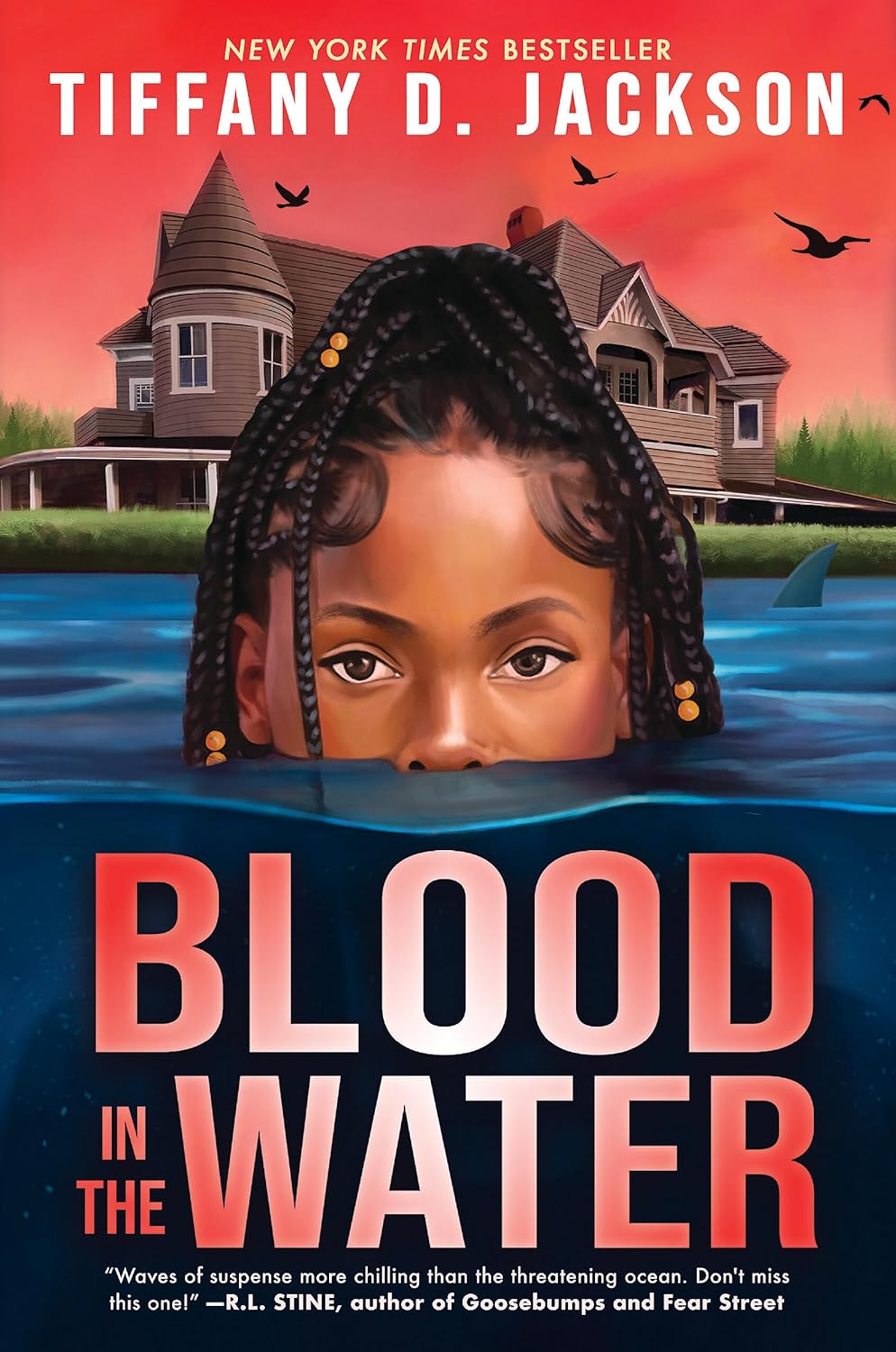
The blurb on Blood in the Water’s cover set my expectations up for a scary book that’s in the vein of Goosebumps. This is not a supernatural book that builds suspense in that manner. Kaylani is our heroine, a kid from Brooklyn who will spend the summer with family friends in Martha’s Vineyard. She’s a literal fish out of water from a familial, as well as an economic, perspective.
The aspect of Black history on Martha’s Vineyard is a major character in the plot to Blood in the Water. It’s a figurative one that sees Kaylani staying in a historic house on the island that has quite the history. Her family friends are nice enough, with one daughter being slightly older than her, and the other being her age. They’re friendly, but the two peers quickly come to a mutually beneficial conclusion. The two agree that they should say they spent the day together, but in reality, do their own thing, and then reconvene before going into the house for dinner.
However, kids will be kids and there’s a beach party one night that many of the older ones are attending. The younger ones sneak out after going to bed. Nothing of an adult nature happens that night, but one of the local kids who showed up late never goes home. After missing for a while, his body is found, and it’s got a nasty tear in it that resembles a bite mark.
Martha’s Vineyard did serve as the location for Jaws. There are plenty of sharks in the waters, but are they that aggressive? The youth did go missing at night, and sharks are more prone to attack at night. This leads to an extended series of acts where the kids in town do their own investigation to see what happened to the kid. Blood in the Water knows its audience and paces it in their way very well. It builds the plot in accordance with the tension and will satisfy the difficult demographic of mid-elementary through lower middle school readers. The older readers will know what to expect, but stay engaged due to its timing and plausibility.
This can be a difficult demographic to target, mainly because there are lots of books aimed at them. Girls read more than boys, especially at that age, so it takes a special nugget to stand out in an already crowded field. Blood in the Water does so by keeping the characters real, with just enough history and kid drama/action to have them hooked. The converse effect is that older readers will immediately realize that Blood in the Water is not their jam. However, for those upper-elementary readers (mainly girls) who want a realistic fiction break from the dystopian stuff that their peers are reading, Blood In the Water will foot the bill nicely.
Blood in the Water is by Tiffany D. Jackson and is available on Scholastic Press.
There are affiliate links in this post.


 Facebook
 Twitter
 Youtube