
The Declaration Decoded: A Guide to the Document that Inspired Our Nation implies that everyone who reads it will be a citizen of the United States. Imply and infer are tricky concepts to master, aren’t they? We’ve read other books that explained the Declaration of Independence, but those books are aimed at young audiences. This is all a bit ironic because the shape of The Declaration Decoded is smaller and more rectangular. Its more compact, hand-held package that seemingly aims at a younger demographic. Young and younger are all relative, aren’t they?
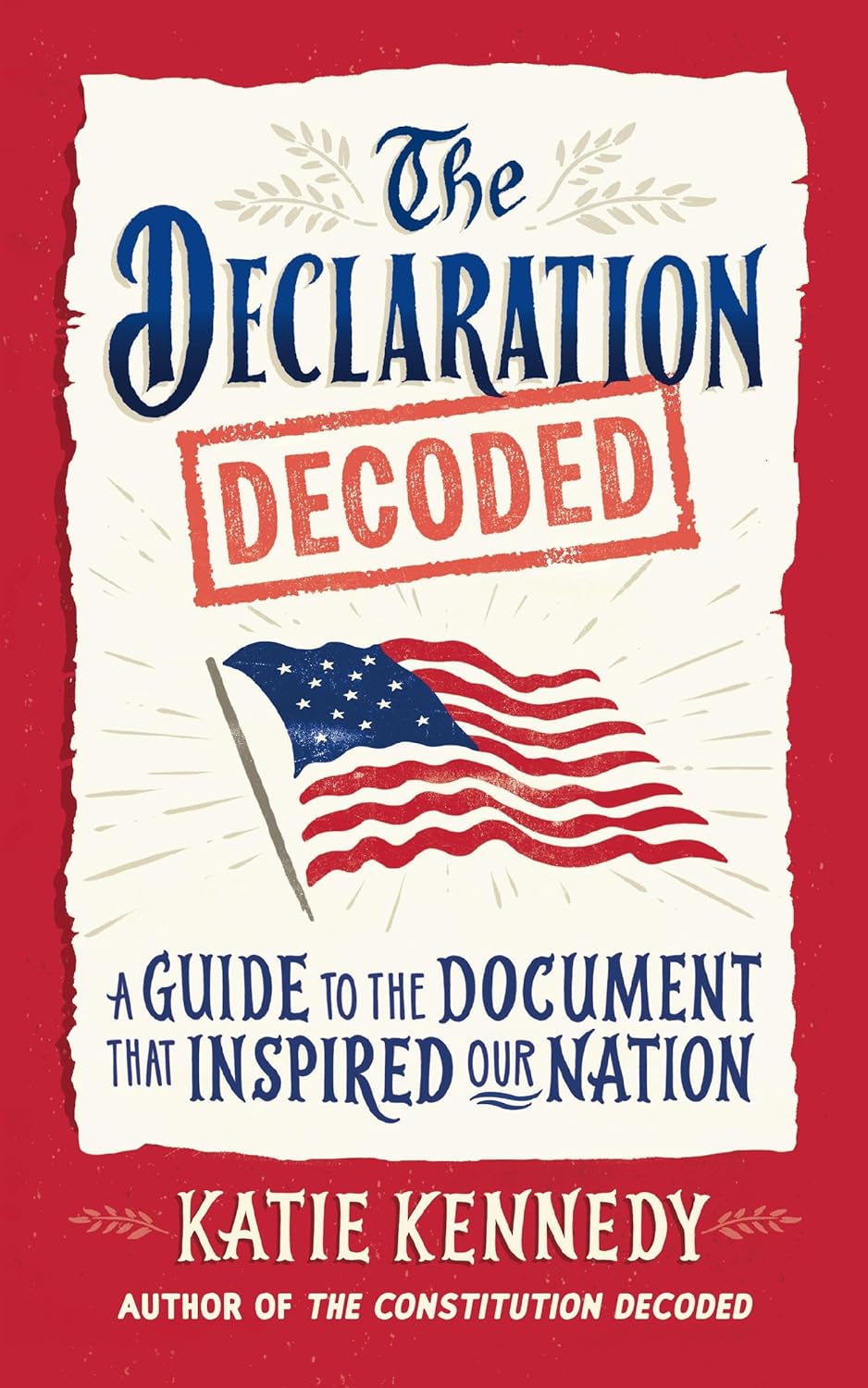
Either way, it’s a win/win because the smaller, hand-held rectangular shape makes it less intimidating. If I can easily carry it, then I can read and understand it. That’s what younger readers might think. This book has the same shape of some pamphlets, so reading it won’t be a chore. This is what some older readers might say. All of this is somewhat ironic because Katie Kennedy’s other book on the founding document, The Constitution Decoded, is specifically aimed at younger readers.
I taught an English Literature class this past year, and in it, there was a one-week segment devoted to the Declaration of Independence. It had been ages since I read the document, and even then, I read it to placate a teacher. Similar to Shakespeare, the Declaration of Independence can be wonky and circular to some audiences. If you’re not genuinely curious about the document or want to discover the wit and sarcasm in a 450-year-old story, you could find reading either of these challenging. The Declaration isn’t as archaic, but picking up a reproduction copy and reading it for leisure is tough without the context.
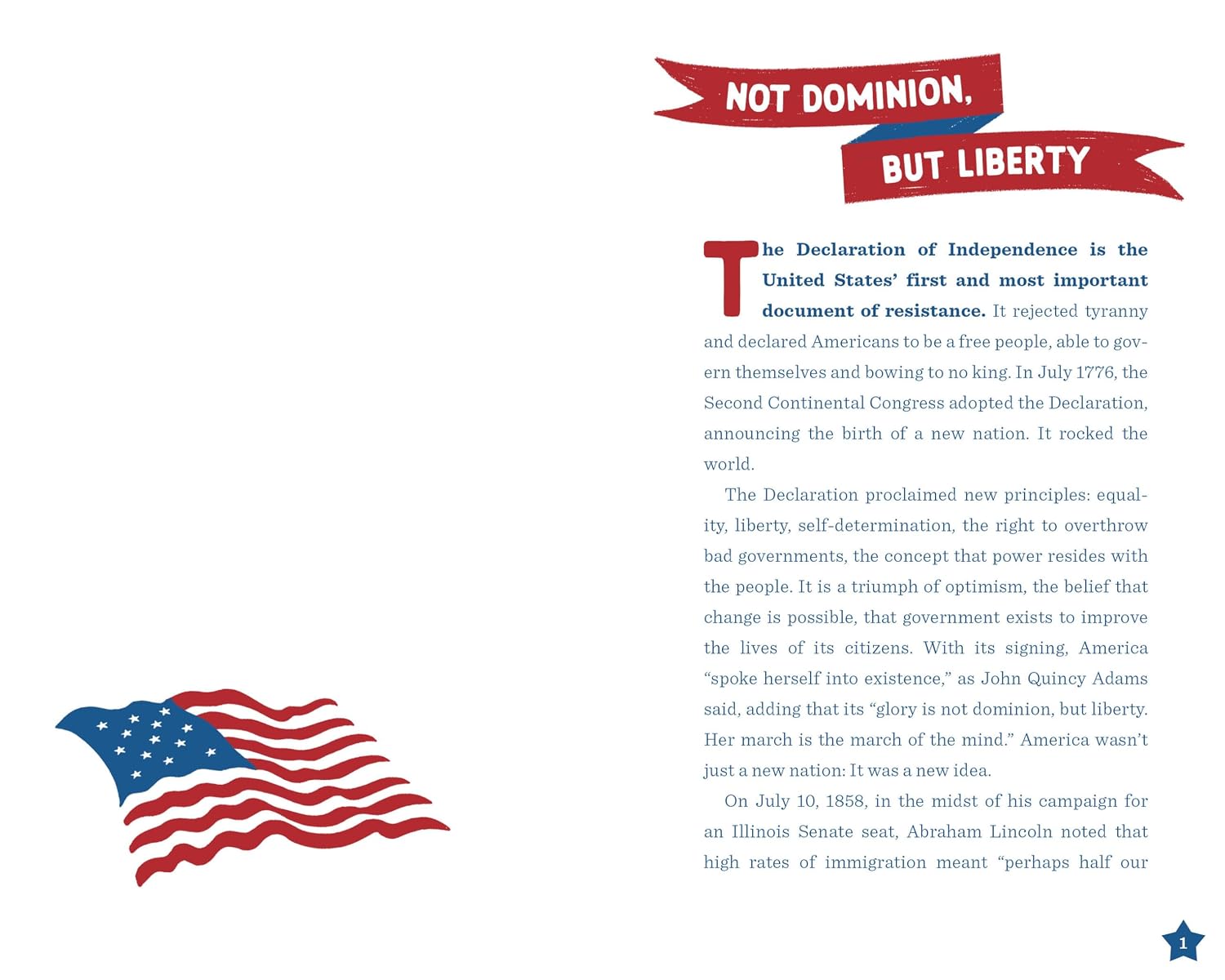
It’s the context that makes The Declaration Decoded shine. If you don’t know the reason why something happened, or the sublime machinations that precipitated it, then the solution, in this case, the Declaration of Independence, isn’t a strong payoff.
The Declaration Decoded reads like a story. Yeah, it is a story, but because some audiences will think of the document as history, or something educational, they might lose track of the bigger story that was happening. My wife and I are watching The American Experiment, which could almost be thought of as the television version of the Declaration Decoded. During parts of the show, I knew what was going to happen or knew why something had just happened.
The book spends the first 20 pages reviewing the history that led to the Second Continental Congress and 1776. The Declaration Decoded then takes the Declaration of Independence and lists the grievances. The grievances, all 27 of them, were the specific reasons why the colonies were seeking independence. It’s because they taxed the tea. That’s what most middle school students think, but that was a minor reason, and there’s so much more to it than that.
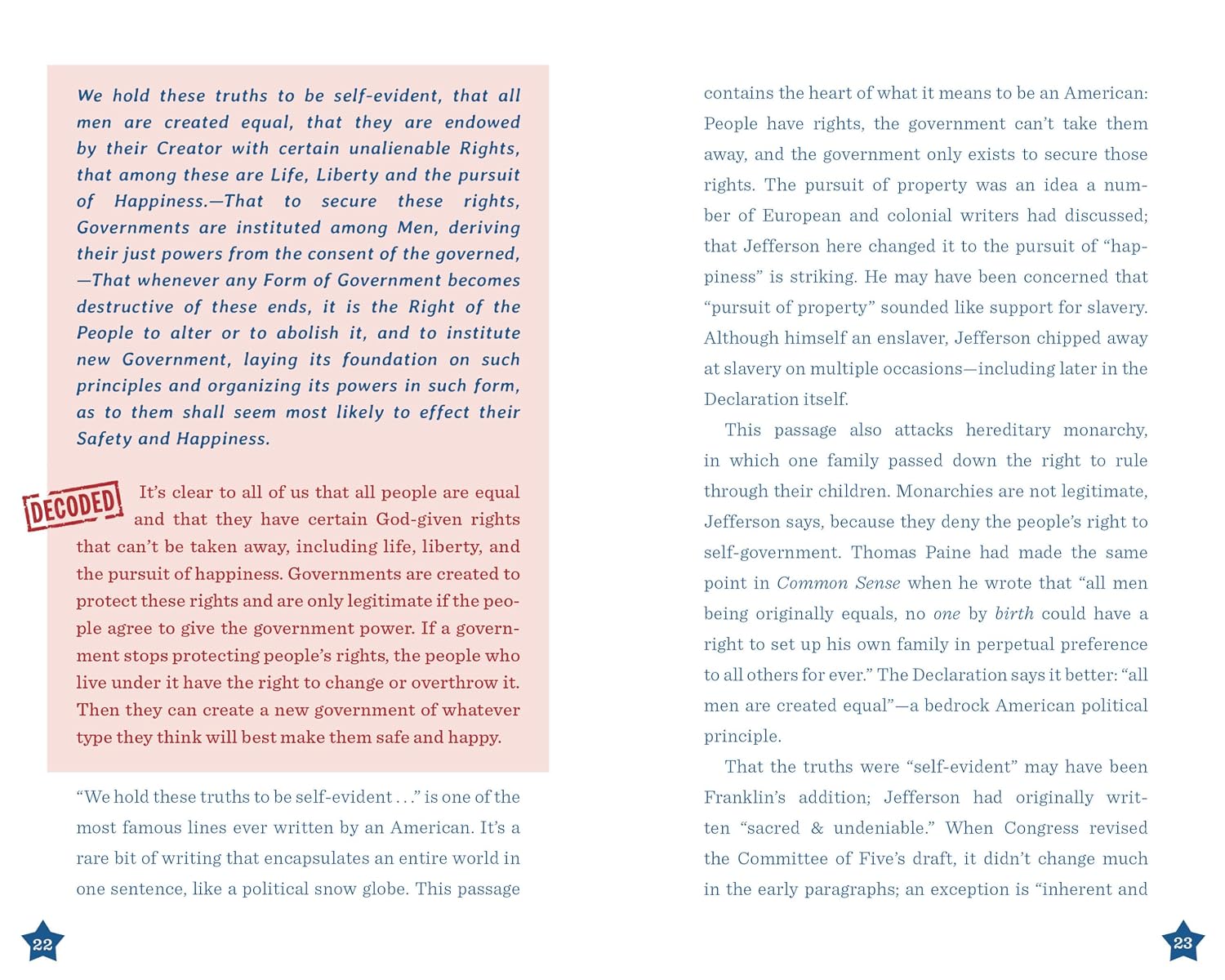
Most of the grievances in the original document are very short, only a sentence, albeit a complex sentence that might broach several points. The Declaration Decoded lists the grievances in pink block verbatim. Immediately after that block, there’s another pink one with “Decoded” in the upper left corner. In a sentence or two, this block provides the modern-day definition about the grievance in front of it.
After that second pink block are paragraphs of varying length that go in-depth about why the grievances matter. Why did it matter that Parliament revoked the Massachusetts’s 1691 charter? What was the impact of the colonies being cut off from trading with other nations? Did the English Army need a presence in the colonies for that long, and how did that impact the colony’s relationships with the indigenous people or the French?
In The Declaration Decoded it’s the grievances that truly make the book run. When it hits those 27 points the book locks in and dares mid-middle school readers and up to become curious. Because the grievances are short, those pages build on one another very quickly. As a result of that, readers will understand the five W’s relating to The Declaration of Independence in the most effortless package that we’ve seen.
Just now I found myself effortlessly re-telling various grievances to my wife. I had become that annoying guy who force-feeds information to their loved ones. This is non-fiction reading, but it’s non-fiction from an entertaining and concise perspective. The text is very common sense based and you don’t need to know various minutias of historical facts in order to understand why the document matters.
The Declaration Decoded: A Guide to the Document that Inspired our Nation is by Katie Kennedy and is available on Workman Kids.
There are affiliate links in this post.


 Facebook
 Twitter
 Youtube