
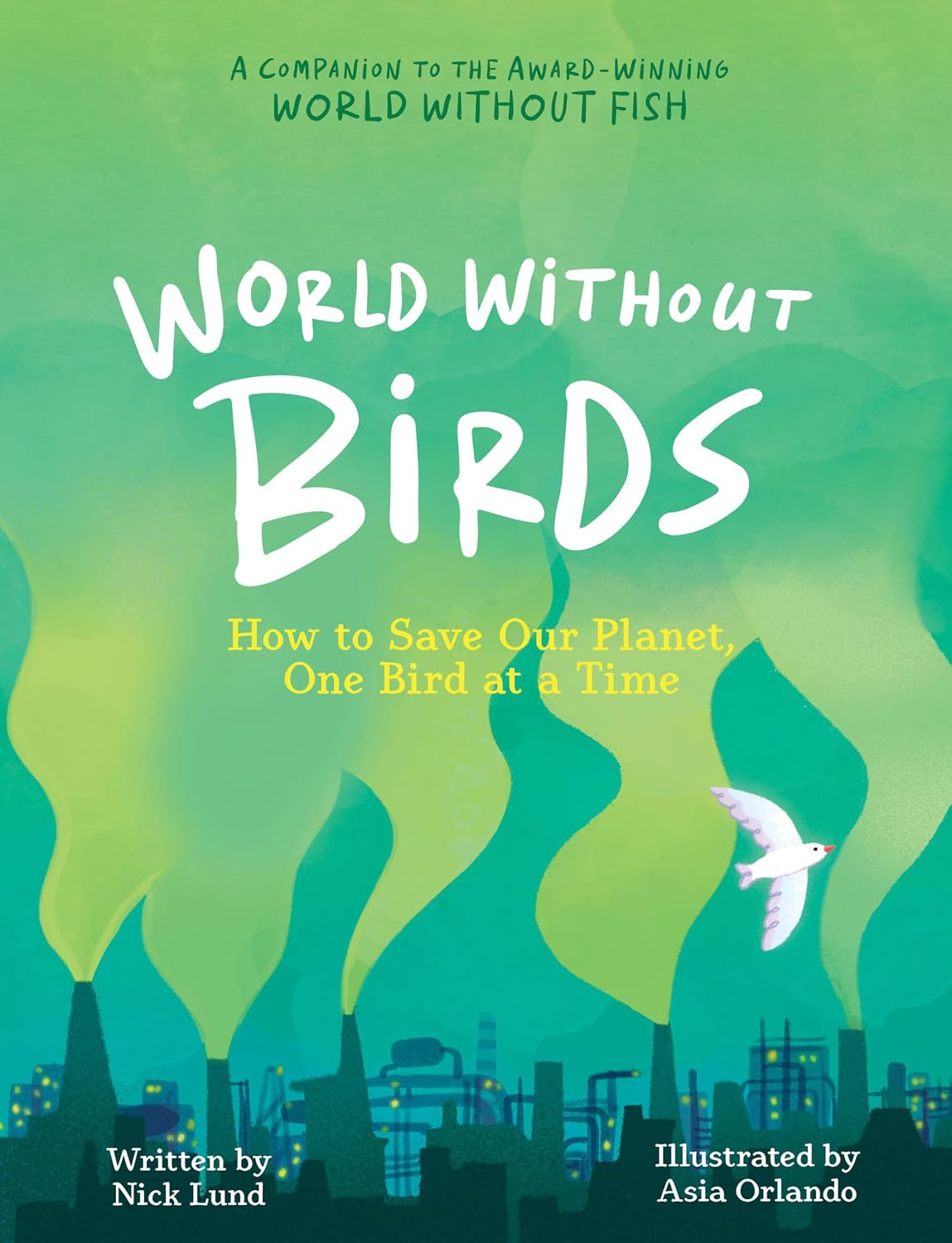
World Without Birds is not what you’re probably thinking it is. Its title, World Without Birds: How to Save Our Planet One Bird at a Time could infer to some people that the book is impossibly pessimistic. The illustration on the cover expands that hypothesis by showing a factory in the bottom sixth that’s belching green pollution. There’s a lonely, white bird flying to the right as if they’re trying to escape the gunk that’s ruining their home, leading to a world without birds. It looks like that. Adults and older readers need to read the introduction first. I know, you never read the introduction, but the one in World Without Birds sets up the book as a series of measured short stories.
After the very short introduction, young readers will dig into a quick chapter about the overall impact of birds and the pollution that humans are producing on the planet. It’s after these two chapters that World Without Birds hits its purpose and becomes what you think it isn’t. The meat of the book, and the part that is the most entertaining, are the numerous short stories that lie within the majority of those chapters.
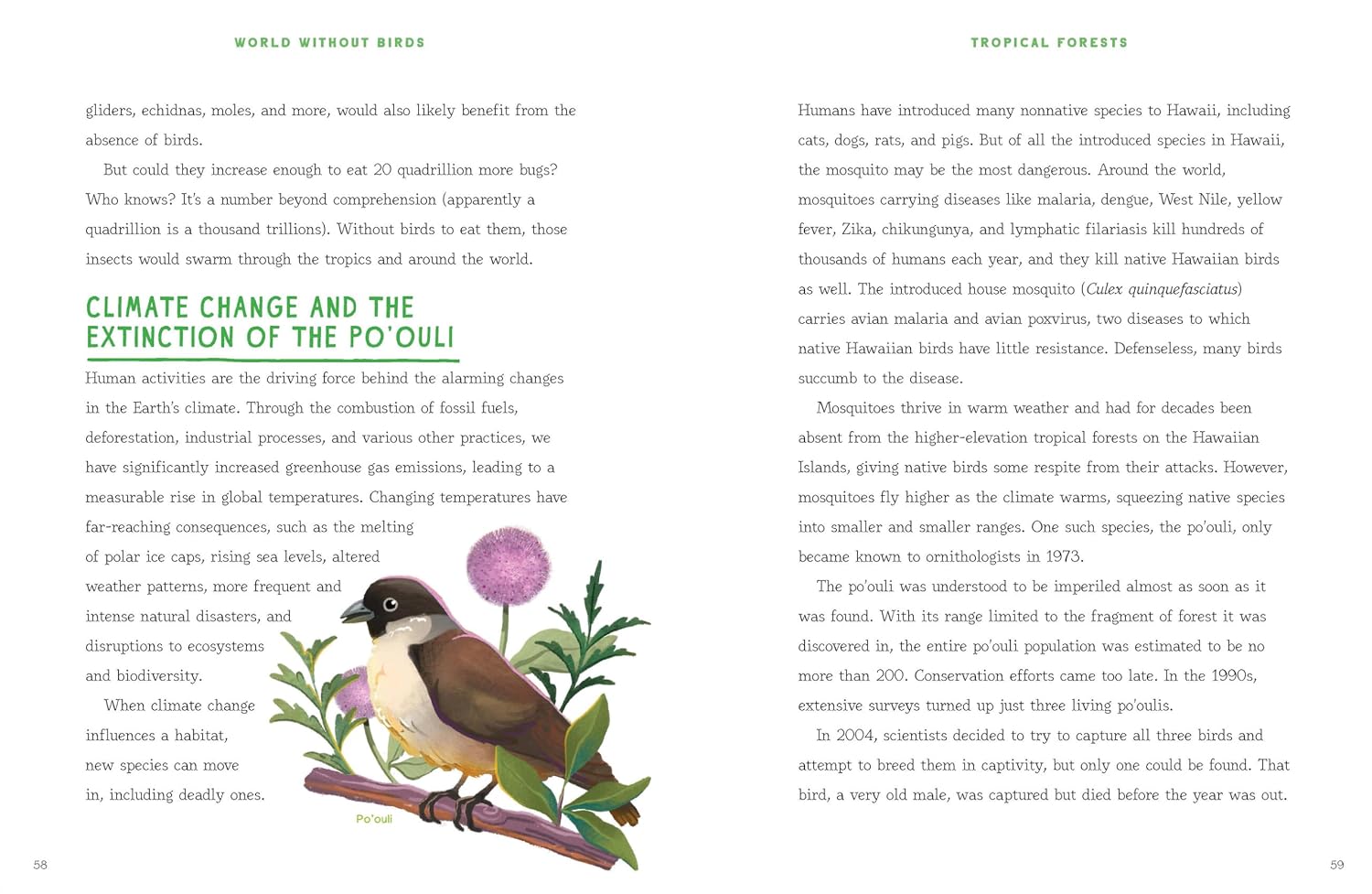
Entertaining might not be the best way to describe the paragraphs that describe the stories. They’re stories about extinct birds, or those that are on their way towards becoming that way. The great auk is an animal that is in the former category. At three feet tall and 11 pounds, this large, flightless bird had millions of its kind waddling around with them when humans started exploring the planet. This bird had a similar look of a penguin, but with poor posture and a more curious-looking neck. The last of this unique bird was spotted alive in 1844 by a trio of Icelandic hunters who were hired by a collector to get a specimen. They found a pair of them, but killed the two birds in short order and accidentally broke their remaining egg.
More often than not, it is humans that have directly impacted the extinction of a bird species. They’re hunted on too large of a scale for their meat or feathers. Young audiences might not think about birds being killed for their feathers, but when the 1900’s started they were in high demand for pillows, blankets and to be placed on women’s hats. Side note: we reviewed Harriet’s Ruffled Feathers, the illustrated book that chronicled how popular that was, and how it came to stop being out of fashion.
Back then, the more colorful, exotic or unknown the feathers looked the more hunters could charge for the plumes. It’s challenging for those young audiences to fathom certain things from times not too long ago and bird feathers as a form of currency is one of them.
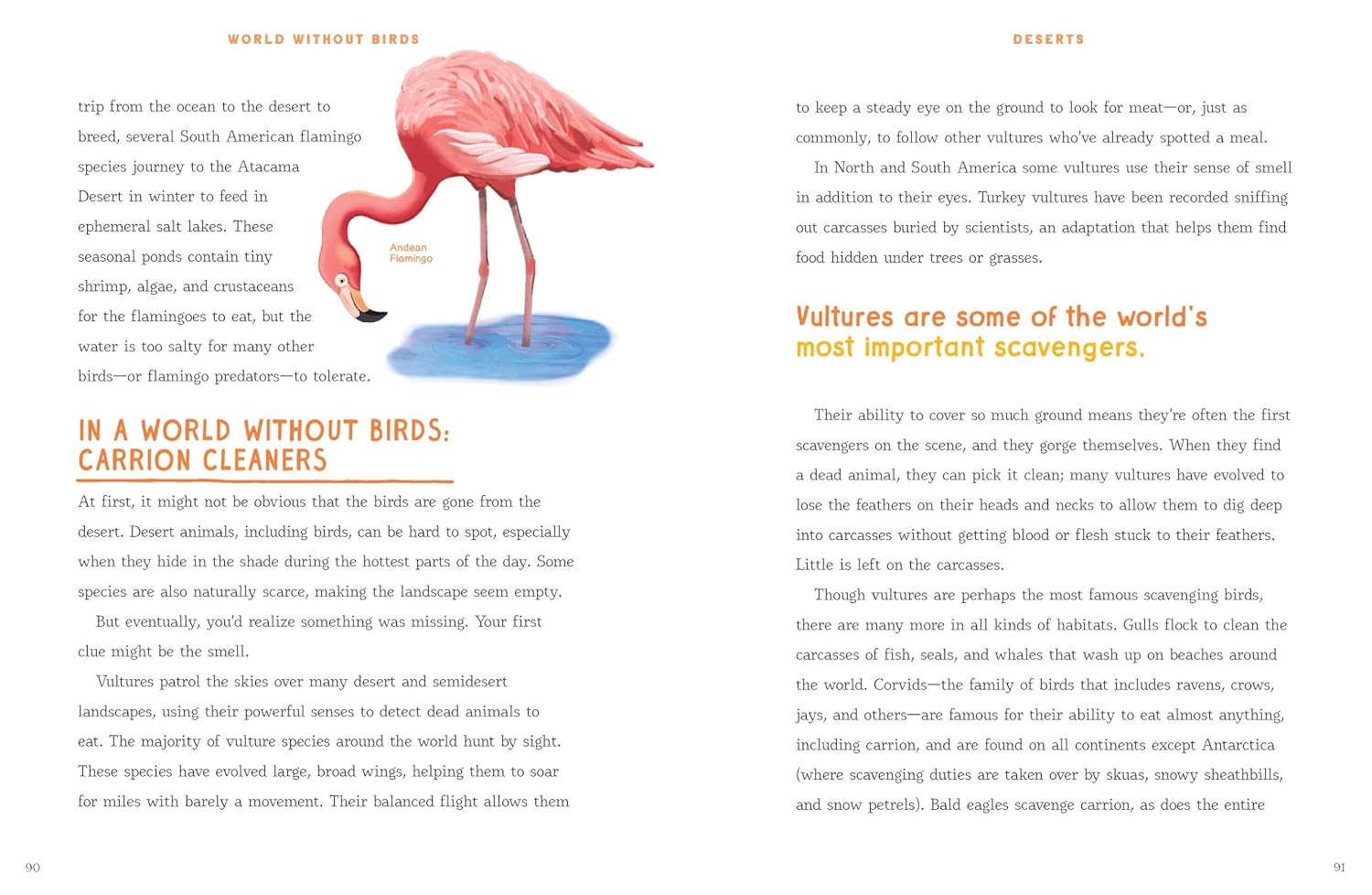
Some birds might also have to relocate because their habitat has changed or decreased. See: humans probably caused that. A book entirely about the decreasing numbers of bird species would be depressing and a chore to read. Nobody, even kids, wants to be shamed or feel their kind is responsible for the complete elimination of a type of critter. That is a heavy responsibility, but it’s true. However, just because something is true, doesn’t mean that the totality of the book is a chore. There, I knew that I could come back to the original prompt.
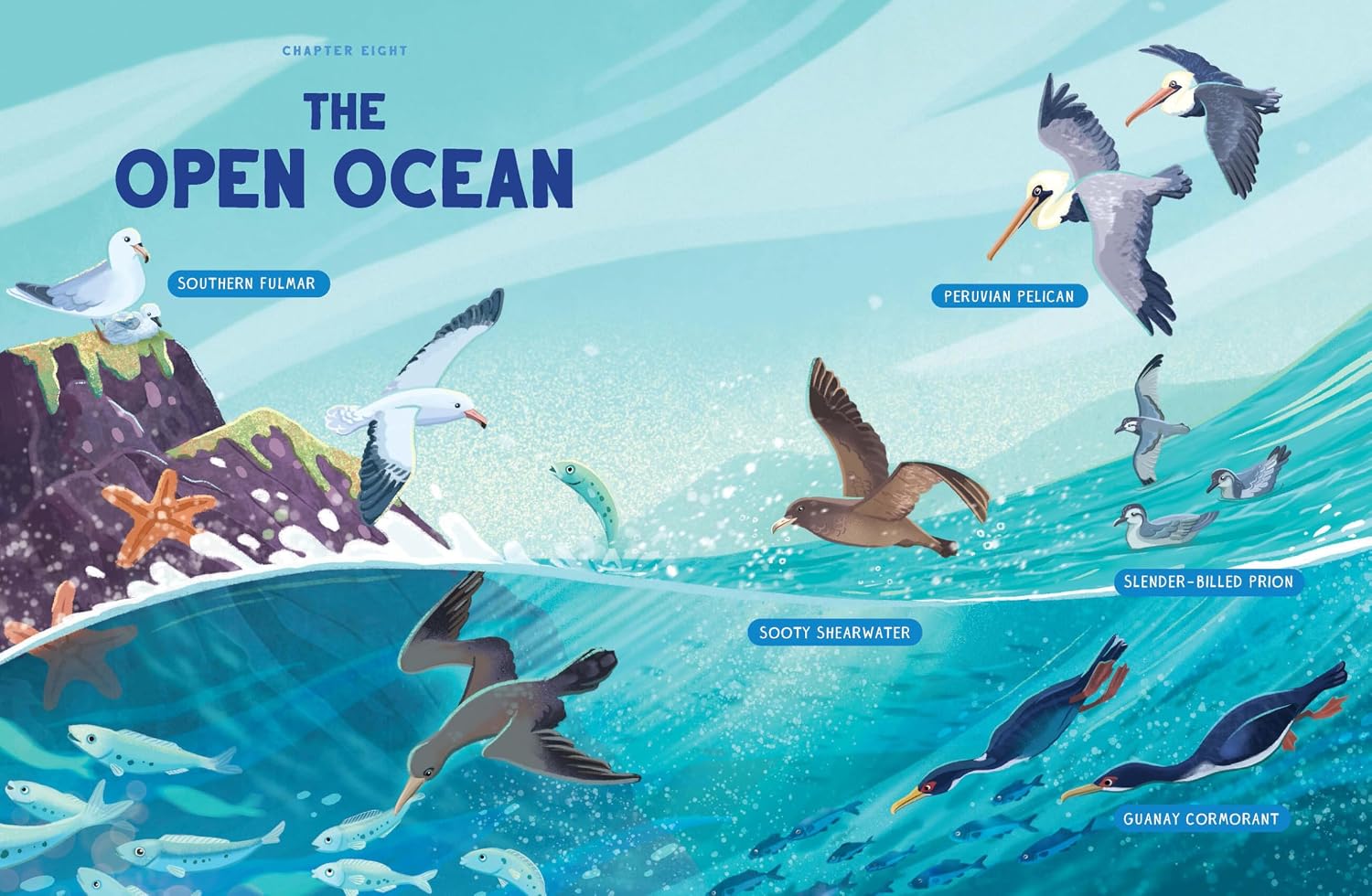
The book is divided into geographic sections and then further split into how various bird absences affect commerce, other animals in the ecosystem or an ancillary manner that kids won’t think of. Your first thought was, this book is depressing and full of guilt, it’s not. Your second thought, after reading how comprehensive the book is in its content is, this book is very smart for young audiences. It is very smart, with lots of great data for young minds, but it’s age-appropriate.
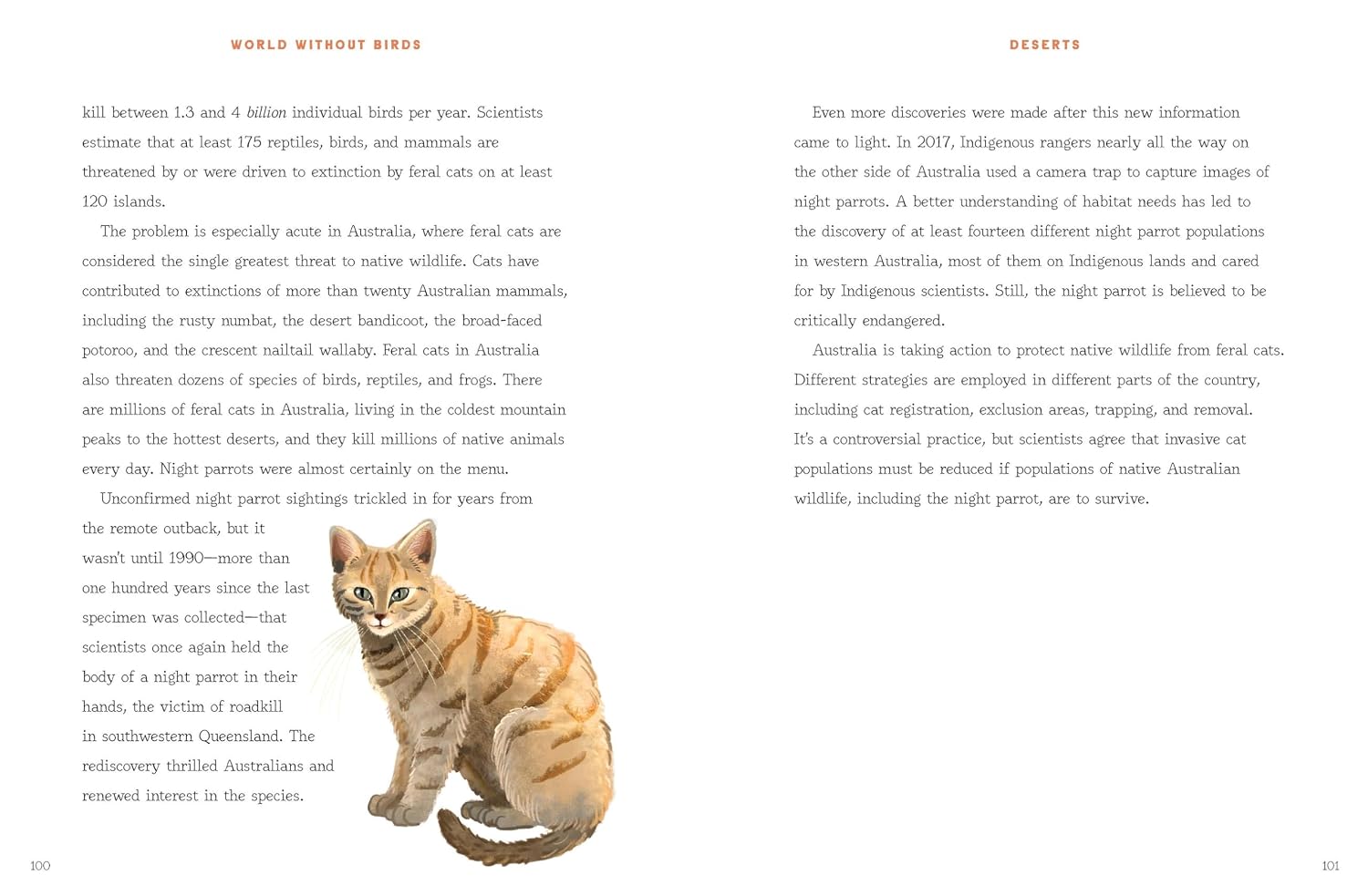
The vocabulary is at a level that upper-elementary ages can understand. There are some words that they won’t be familiar with, but the context clues will push them across the finish line. This is also where the short stories that make up the chapters in World Without Birds will give young readers the confidence to keep reading. Every page has an illustration, blurb, graphic or enlarged text that draws in the attention of young readers.
World Without Birds is the companion book to World Without Fish. That book has a similar cover, in that if you’re judging the book by it, then it’s a dour, guilt-ridden affair. I bet that book has a similar vibe in that the text is educational and approachable, but kids will perceive the book as educational and preachy, due to the cover. Don’t fear the bird book. World Without Birds isn’t all doom and gloom. Instead, it could easily be the secret sauce that adds magic to upper-elementary through middle school non-fiction book reports. The content in the book is smart enough for high school students. Its presentation is juvenile, but for those students who need, take the win accept it for words read.
World Without Birds: How to Save Our Planet, One Bird at a Time is by Nick Lund, with illustrations by Asia Orlando and available on Workman Kids, a division of Workman Publishing.
There are affiliate links in this post.


 Facebook
 Twitter
 Youtube