I just had an Arsenio Hall moment. During his talk show, he had a catch phrase where he’d say “Things that make you go hmmmm.” As best I can remember, Hall would pause his monologue or joke and say his phrase. He wouldn’t directly state the implication that he was going for, because that’s to be determined by the audience. In my “hmmm” moment, I was reading about the Dred Scott decision. It’s just one of the multiple dozens of court decisions that are discussed in a common-sense manner in Rebels, Robbers, and Radicals: The Story of the Bill of Rights.
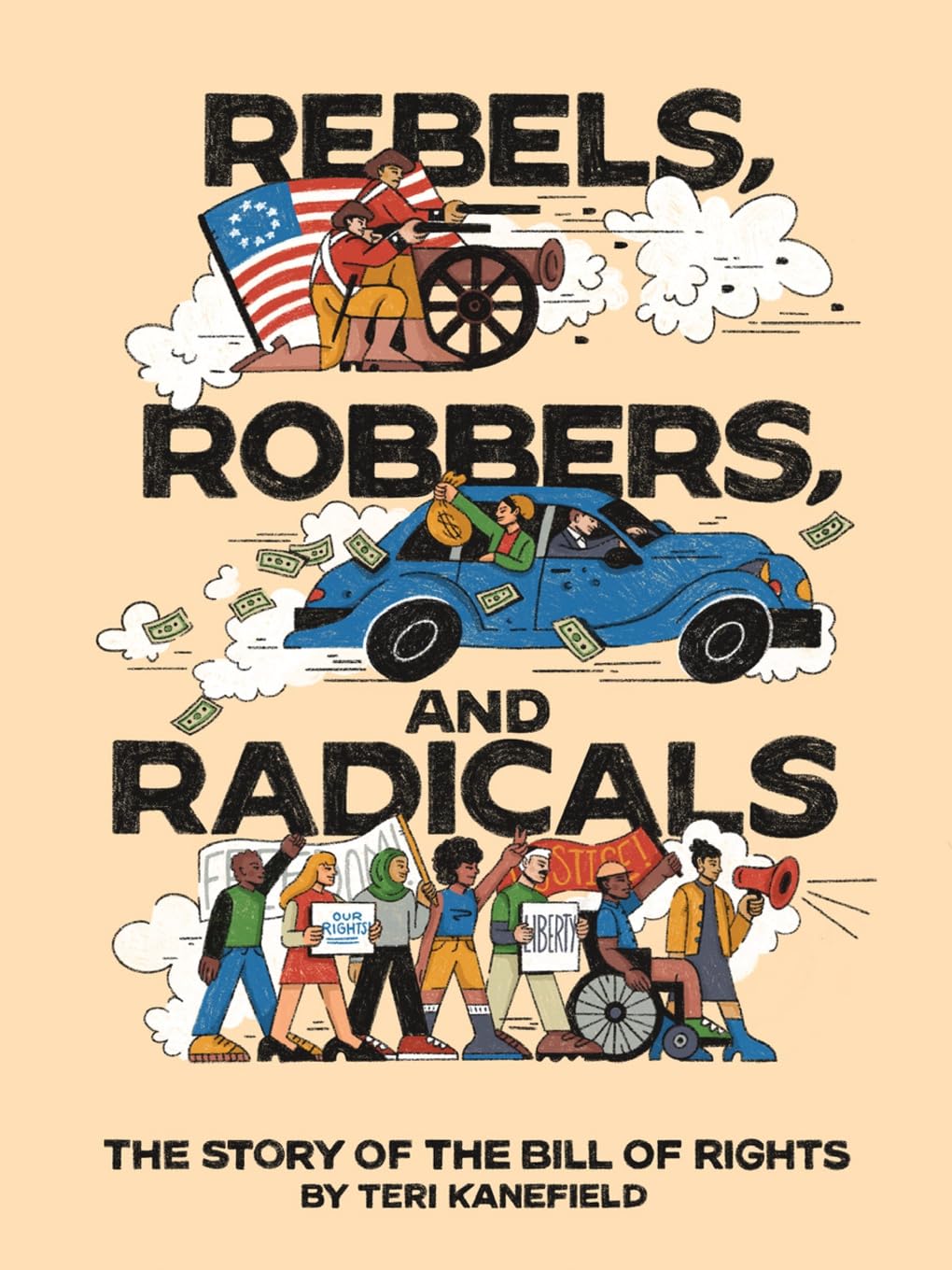
But wait, aside from ‘court decisions,’ could be said to dissuade young readers more? I realize middle and high school students have figured out that Rebels, Robbers, and Radicals is non-fiction. Moreover, it’s educational, non-fiction that isn’t about animals, a YouTuber, an athlete or a celebrity. Those kids who aren’t completely offended yet will read the book’s subtitle, The Story of the Bill of Rights. They will remember the previous time that they heard the document’s name. It was definitely in school and they confused it with the Constitution.
Older readers will have many Arsenio Hall moments while reading Rebels, Robbers, and Radicals. Younger readers, those who are 13 and up will realize that reading something non-fiction can be entertaining. The really smart kids have already discovered this, which is one of the key attributes that make them that way. Kids don’t normally get near non-fiction, much less something with a historical or legal backstory. They’ll wonder if everything they heard about in school has this more interesting version.
Yes and no. Rebels, Robbers, and Radicals is easier to read than the text middle and high school students will encounter from their teachers. The teachers might do a more personable job engaging those students. However, the text they read will probably cut short any organic, sustained interest. And that’s a pity because history, regardless of where you live, has the potential to be fascinating, regardless of whether you agree with it or not.
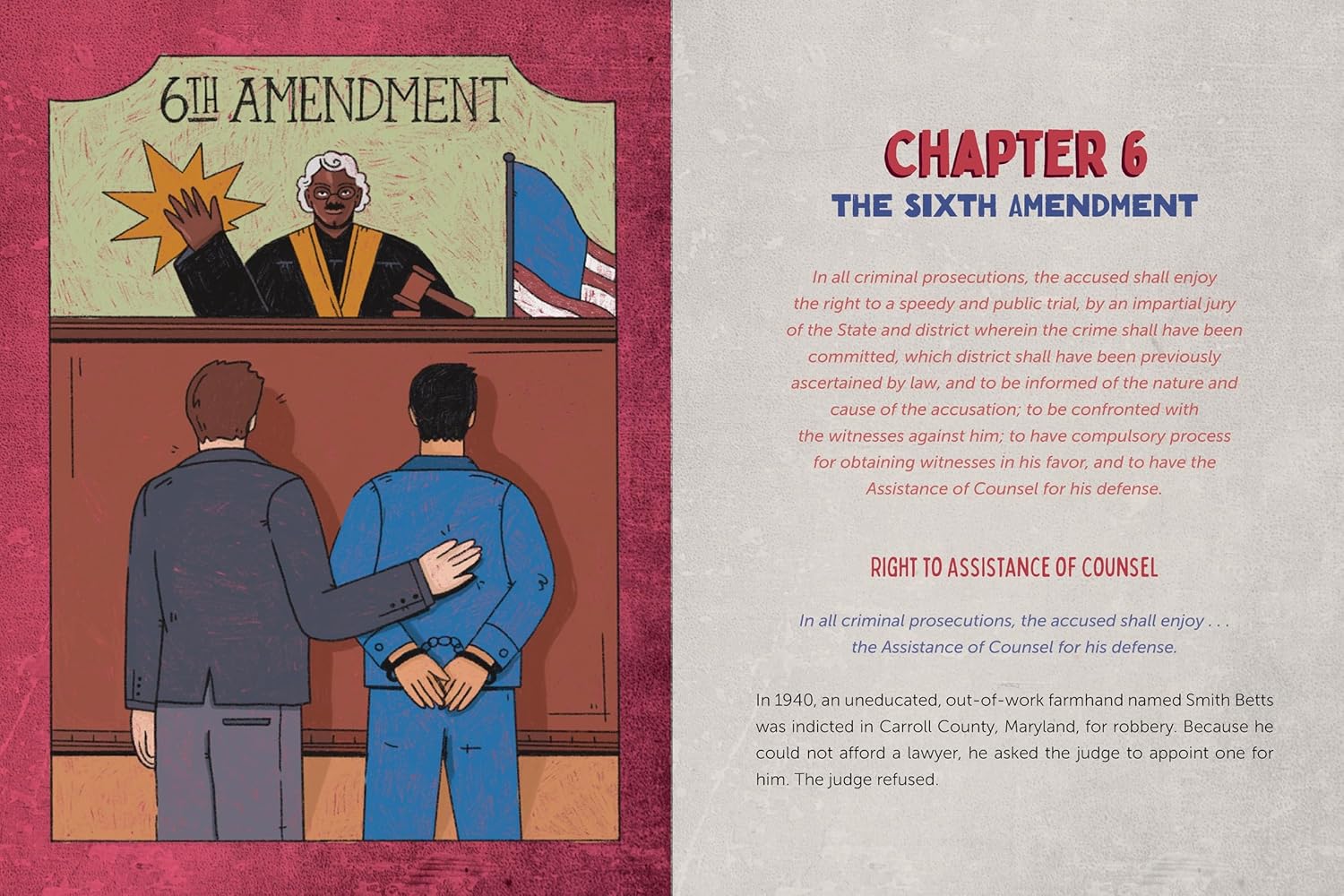
Rebels, Robbers, and Radicals brings the Bill of Rights to life. Each entry in the list tells why that right was included in the original document. When there was a challenge to it, or a court case that highlighted its presence, the books succinctly tells that story too. Kids in upper-middle and high school have studied the Bill of Rights, but they probably just know them as a list. It’s those advanced critical thinking situations, the ones that ask for more details or preemptively give young readers more perspective, which really pay off.
The Fourth Amendment, the right to be free from unreasonable search and seizure, is one that young people want to claim, but don’t always do so in the correct manner. This chapter tells three main stories of people who rightly and wrongly, have had their possessions or residence searched. It deftly brings up the specter of a police state and how the modern interpretation of that title compares to when the United States was a British colony. Back then all an English officer had to do in order to search a person, or their abode, was to suspect them of something.
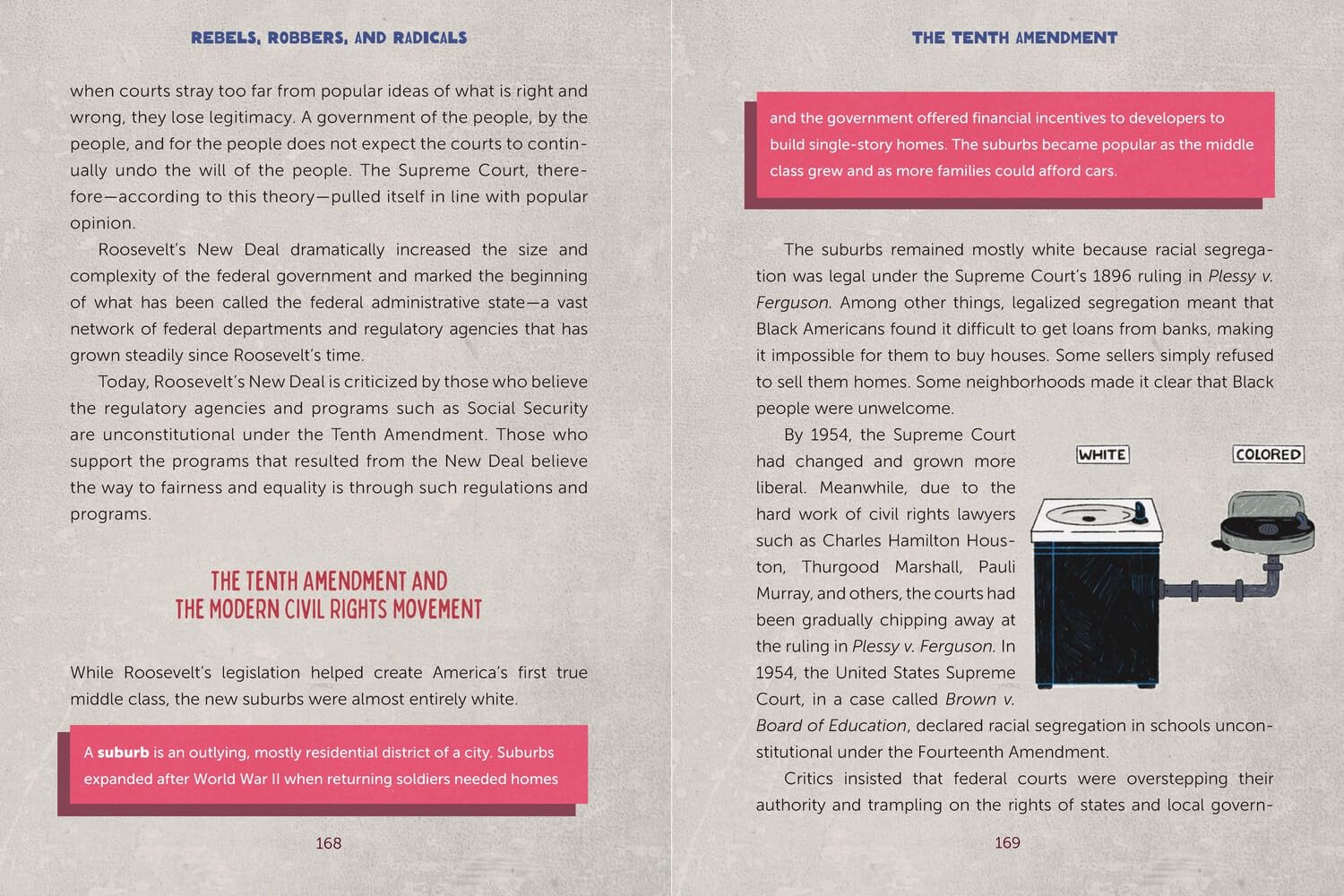
The British were looking for reading materials that they deemed dangerous. It was literature that expressed sympathy for the colonists or spoke ill of the monarchy. This was done due to the Act of Frauds, a law passed in 1696 by the English Parliament to break down doors in a search for any “goods, merchandise whatever…”. This accelerated in 1760 when the Molasses Act taxed sugar and rum was passed. The colonists didn’t want to pay taxes on items that were already taxed.
That last bit got a little academic, sorry about that, but it was necessary. It’s because the American colonies were monitored so harshly that the Fourth Amendment came to be. Every single one of the Bill of Rights were shaped as a result of what the leaders in the colonies, later to be the United States, experienced for better or worse. It’s those stories that put The Bill of Rights in context that help personalize the book and make it understandable.
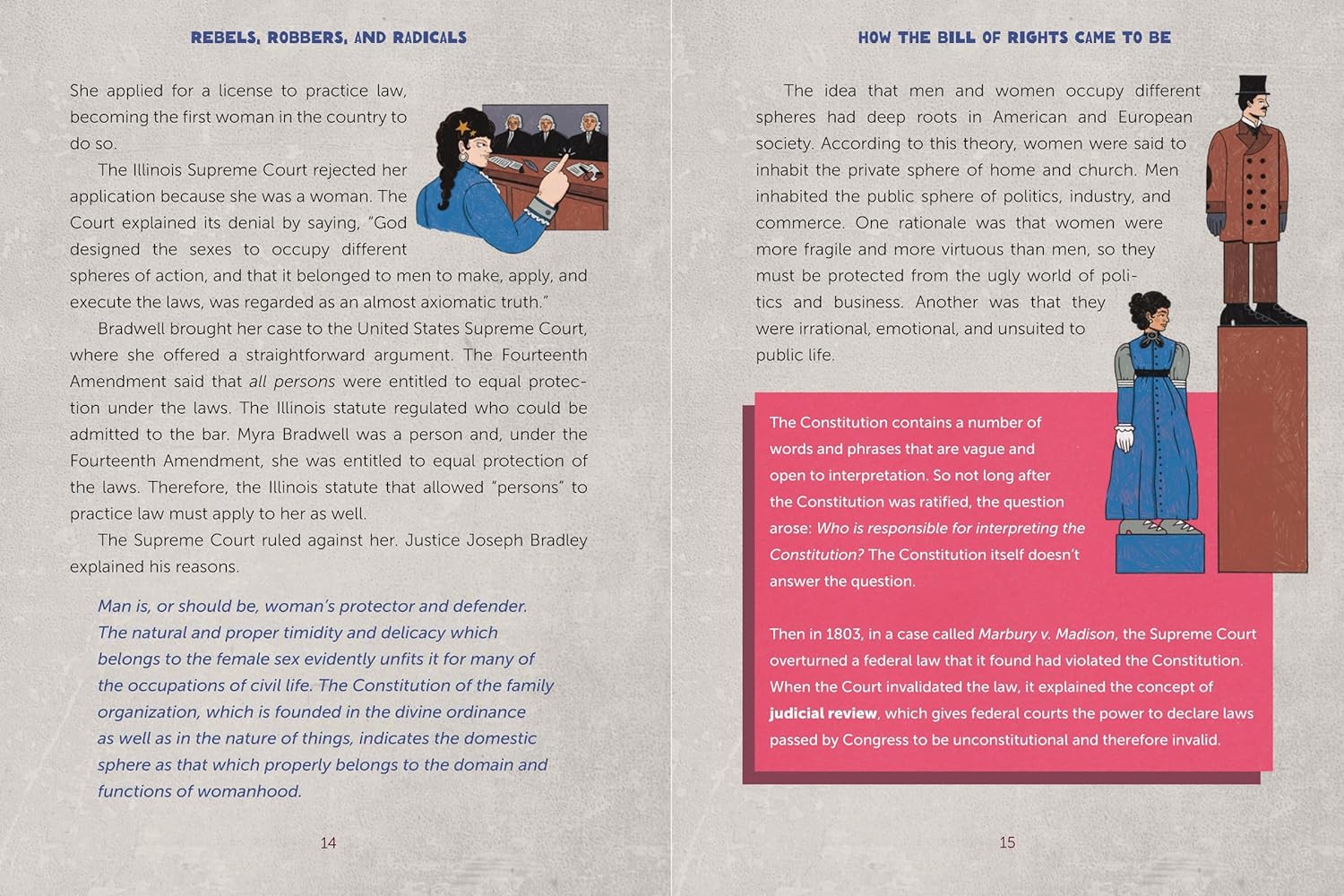
The paragraphs are short and broken up with illustrations or graphs on most pages. Rebels, Robbers, and Radicals also has that thing that Nat Geo Kids books has. This is the factor that allows you to effortlessly read engage in the book due to the content being so disarming, varied, entertaining and educational. As much as students tell you they don’t want to learn, they don’t like being treated as babies even worse. This is a smart book that gives its knowledge in short nuggets that make you go “hmmmmm” in all the best possible ways.
Rebels, Robbers, and Radicals: The Story of the Bill of Rights is by Teri Kanefield and is available on Abrams Books for Young Readers, an imprint of Abrams Books.
There are affiliate links in this post.


 Facebook
 Twitter
 Youtube