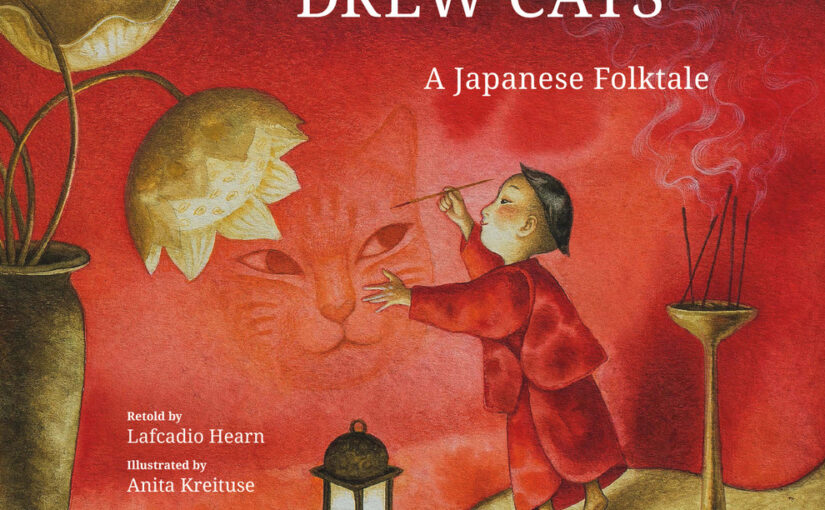
Folk tales are different than fairy tales. The latter have to include magical or supernatural aspects, like beans that grow to the sky or a witch. Folk tales are passed down from generation to generation and are cultural in nature. They don’t have to have magic, but do focus on common people and could have a more graphic ending. The Boy Who Drew Cats: A Japanese Folktale got the memo on that. Originally translated in 1898, this is a new edition has illustrations on a grander scale.
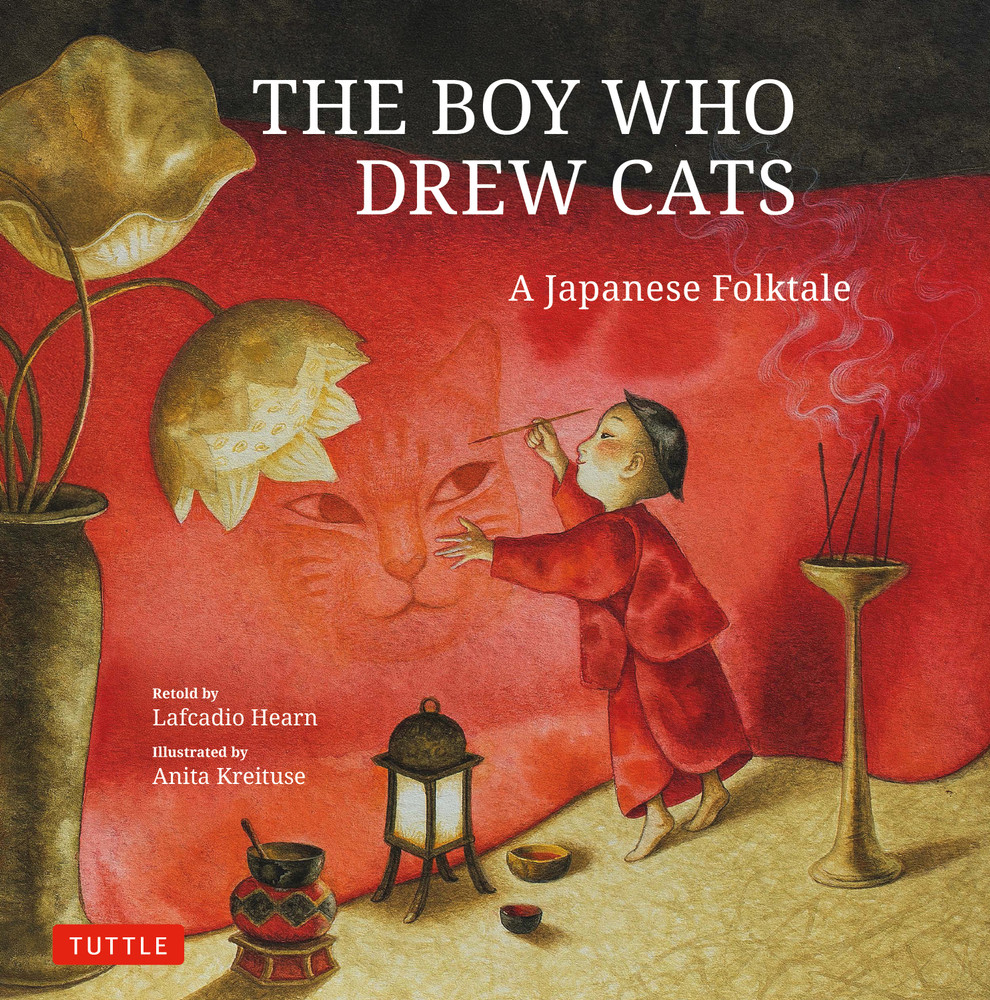
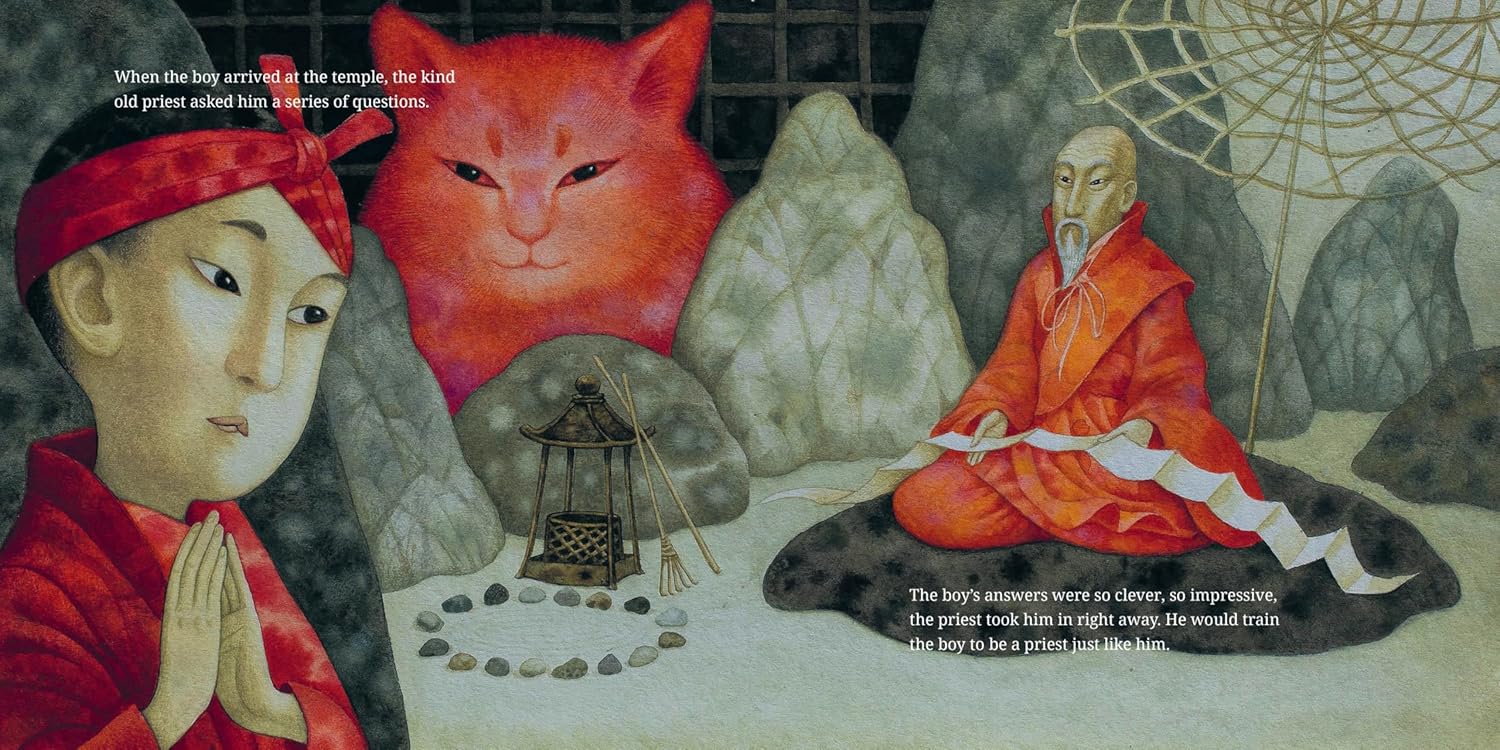
There are several spreads in The Boy Who Drew Cats which simply illustrate the void between the words. The text tells the story, which is quite simple at its core, while the gorgeous illustrations move it along in a deeper manner than you’re used to or expect.
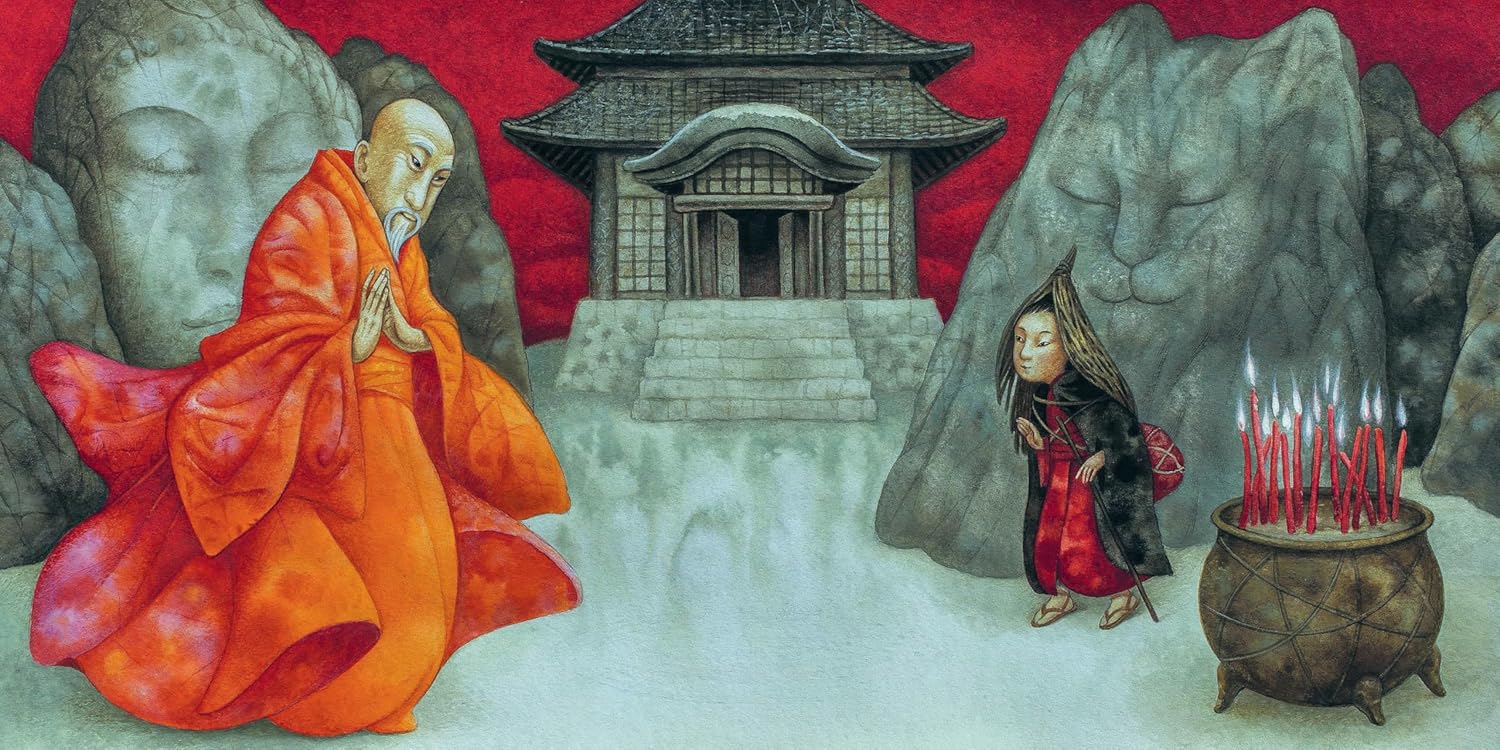
A boy was born to a large farming family who don’t have much money. They quickly realize that this shy, skinny, artistic kid wouldn’t have any future in this village, so they send him away to a temple. When the boy meets the temple leaders he answers their questions in a very wise manner. As time goes on, the boy continues his habit of drawing cats, and soon, illustrations of cats are appearing all around the temple grounds. The head priest admires his talent, but realizes that the boy isn’t the stuff that priests are made of, so he sends him out of the temple.
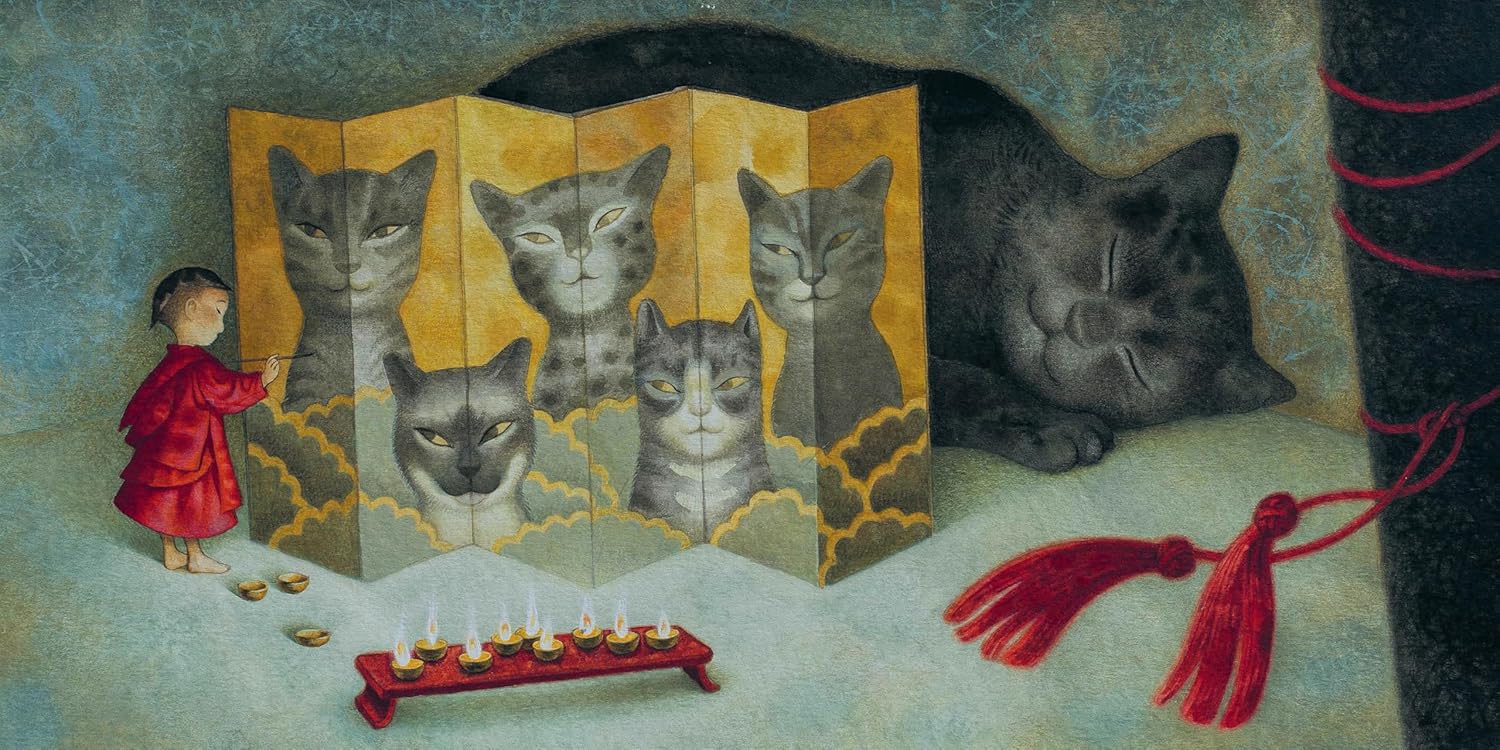
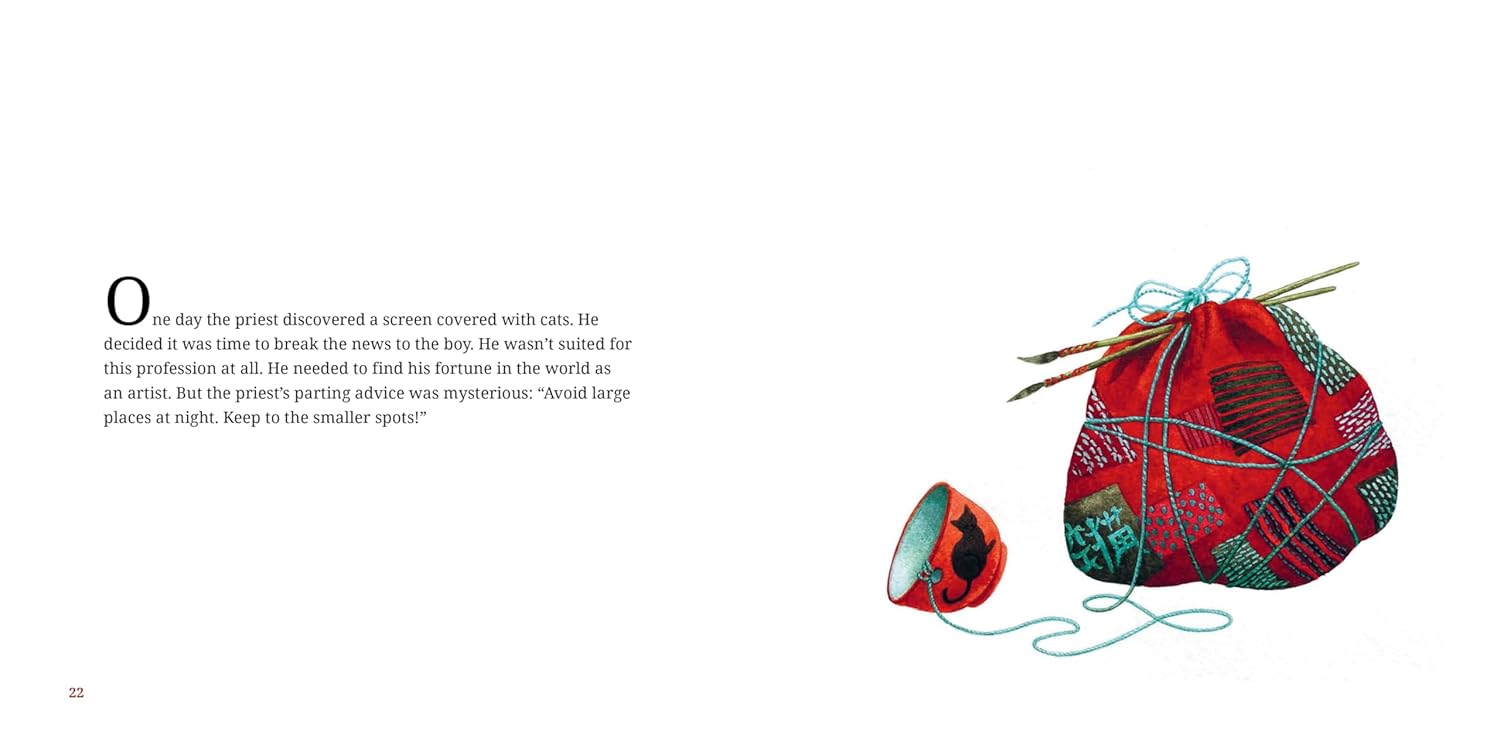
Before leaving the temple, the boy is given some seemingly strange advice by the priest. The boy remembers an abandoned temple a couple of miles away from the one he was thrown out of, so he starts the perilous journey there. At the abandoned temple the boy sees a canvas of walls around him from which he unleash his cat illustrations loose.
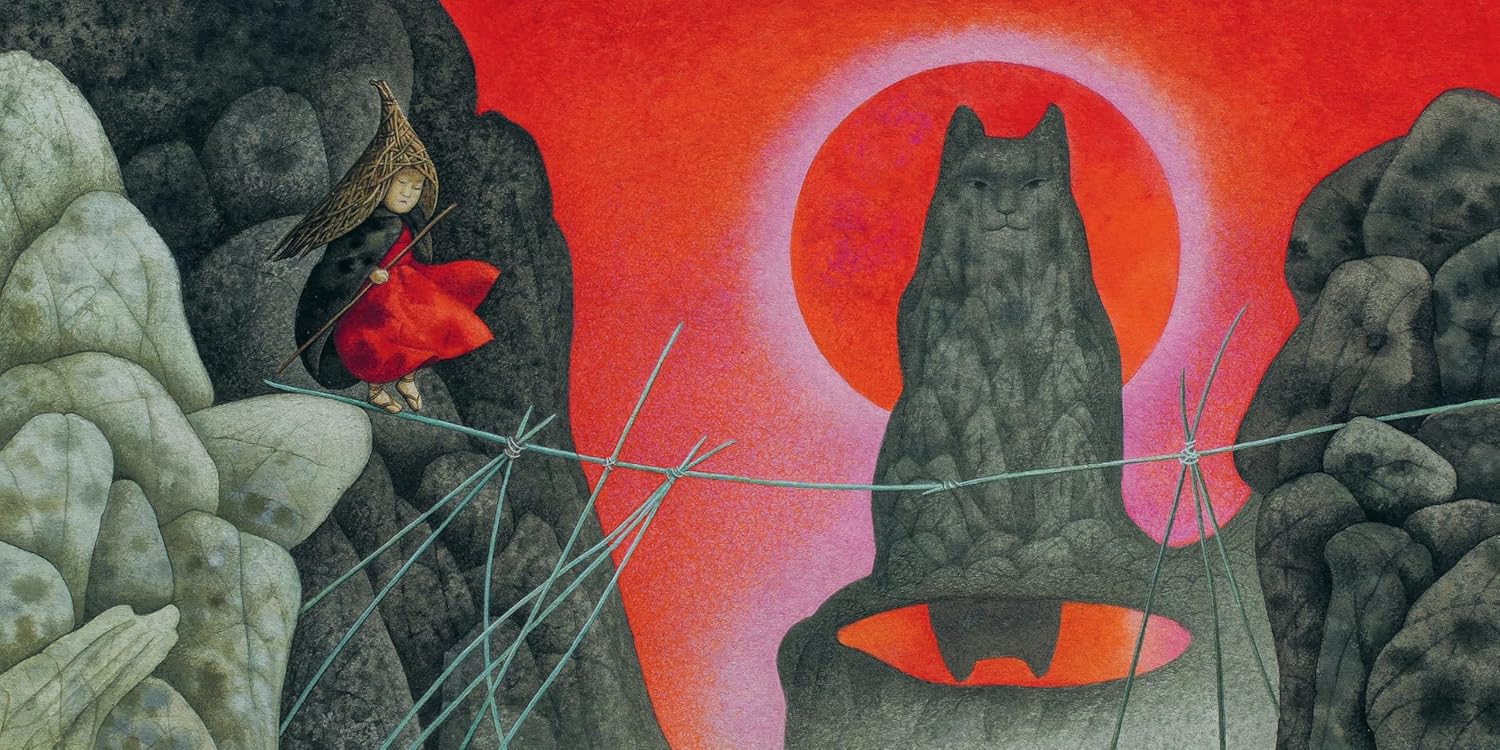
I say ‘cat illustrations’ because they’re far more beautiful that ‘cat art’. Cat art could infer cat doodles or the disposable things I plunk down on student’s papers. The illustrations in The Boy Who Drew Cats are large and haunting. The boy is painting two cats that effortlessly live on and inside the Giant Buddha who is on the wall. The Boy sits on the side of an onsen’s edge, warming his hands from the fire below as a giant red cat, peers in through the window. The Rat Goblin battles an obviously angry and protective cat.
The Rat Goblin is the only named character in The Boy Who Drew Cats. The main character is always called the boy, and the priests are there as background, sage personalities. When readers encounter a named character in the book, we know it’s a big deal. The Rat Goblin isn’t around for long. The boy takes the advice that the priest gave him. He avoided large places at night and kept to the smaller spots. It was that, plus the fact that he drew cats, that kept him alive during the Rat Goblin’s attack. The next morning the boy sees blood around the cat’s mouths on the walls. The boy traveled around Japan illustrating cats on walls and floors throughout the country and was a sought-after artist.
It’s like Johnny Appleseed, but with painted pictures of cats? You can think of it like that, except that Johnny Appleseed was based on a real person. His trademark hat was a myth. The Boy Who Drew Cats is a Japanese folktale. It’s the very definition of a folktale. It’s also very Japanese. Go to any temple in Japan, and you’ll see a small cadre of cats.
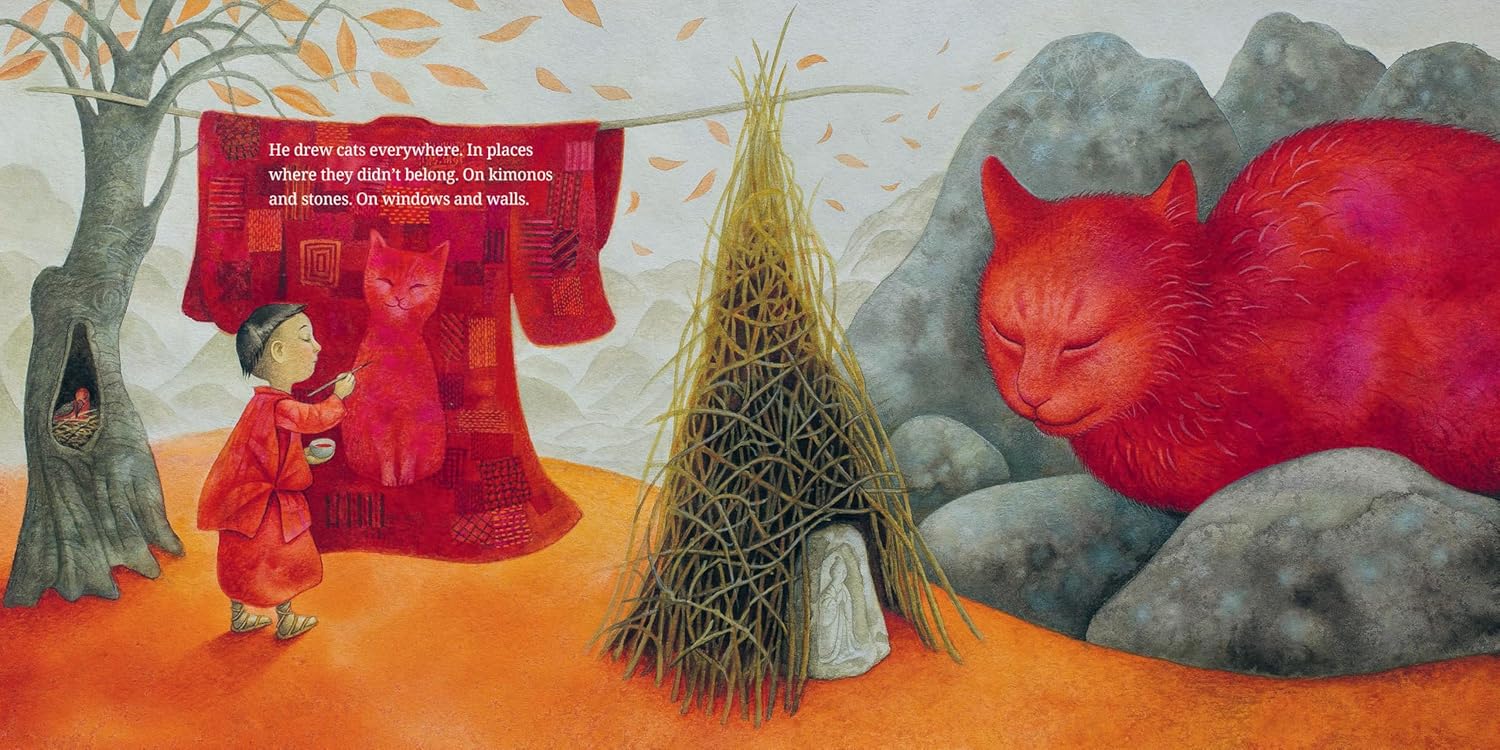
In The Boy Who Drew Cats the text is sometimes on white pages, and laid on top of the illustrations a couple of times. It’s a very patient book. It’s as calming as watching a cat sleep in the sunny spot. The text is succinct and to the point. When the read-aloud crowd experiences the book its illustrations will do the heavy lifting. Those all-text pages will hold their attention due to the utter relatability of the boy. Kids will see themselves in the boy. I’m artistic, just like him. I like cats, just like him. Young audiences will come for the cats, stay for the illustrations and become engulfed in the story. They’ll listen to it once, re-read it by themselves, get lost in the illustrations and think about the scariness of the Rat Goblin.
Folktales have a certain tinge of evil in their story arc. Maybe not evil per se, but a darker antagonist that gives young ages a glimpse into that scary closet they need. The illustrations of the Rat Goblin will be a highlight of the book for the boys at story time. He looks charming, with a head full of black hair, a black cape with a blood-red lining that matches its mouth. The fact that the temple’s walls are stained with blood the next morning brings kids to use their imagination, and it’s not too much, or too graphic for pre-k kids.
The Boy Who Drew Cats: A Japanese Folktale is retold by Lafcadio Hearn with illustrations by Anita Kreituse and is available on Tuttle Publishing.
There are affiliate links in this post.


 Facebook
 Twitter
 Youtube