E. T. The Extra-Terrestrial 40th Anniversary still delivers the feels

Our children have seen E.T. It didn’t carry the same emotional wallop that it did when we initially saw it, but, it’s a classic movie by any estimation. E.T. The Extra-Terrestrial 40th Anniversary is available and throws a couple of E.T. journals, filmed during production that has never been seen that shed some light behind the magic.
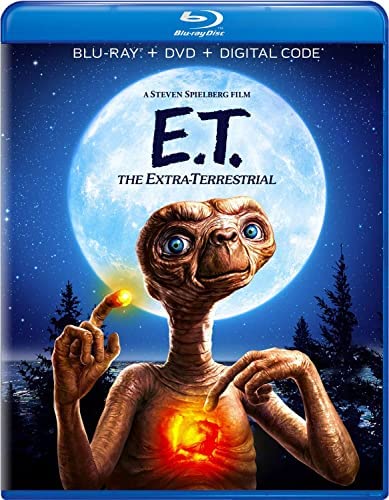
E.T.The Extraterrestrial 40th Anniversary is updated with all the 4K benefits, replete with sharpened images and sound, and retaining the feels.
Resistance is futile

When our 11-year-old saw the film for the second or third time he was still loaded with questions. How big is the spaceship? Was that a person in costume? If it’s a robot how do they make it move? It’s the same questions that adults had when they saw the film except through the rapid-fire succession of an upper elementary school student.

I don’t know how E.T. was made. I never knew how the classic cycling against the moon back was filmed. It’s a nostalgic image that defined a decade of special effects into one shot that was emotional and encapsulated the wonder of going to the cinema. Even today, on television sets that rival the cinematic experience it packs a punch and makes you want to believe in what you’re seeing up on the screen.
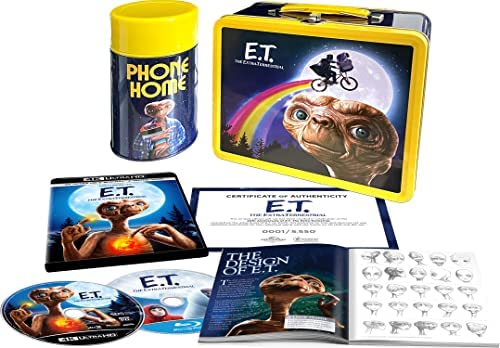
E.T.The Extraterrestrial 40th Anniversary is updated with all the 4K benefits, replete with sharpened images and sound, and retaining the feels.

Watching E.T. forty years after its release is still a joy. You know what’s going to happen, the government agent with the jingly keys, the older teens who come off as bad (but are really just teens), and the fact that some consider E.T. to be the world’s longest (and most effective) candy commercial. Surly audiences who watch the film today might bustle at some of the stereotypes and what they consider to be rote plot mechanics. However, it’s important to remember that this is the film that started it all. Lens flare was a new thing to be intentionally shown during the final product and Spielberg mastered that, in addition to other skills like no other director.

What’s refreshing about seeing the movie now is how patient the film’s scenes are. They’re longer than most modern scenes and use silence and pacing to amp up the tension. They’re also classic Speilberg. While some of his effects are standard now, they were still in their infancy when E.T. came out. However, what most audiences to the 40th Edition are eager to see are the behind-the-scenes features at the end of the film that might answer some of the questions that they or their children have.

The video production diary is fun to watch. Some of the moments are goofy, like when Spielberg dresses up in women’s clothing for the Halloween day shoot, or when Kathleen Kennedy was on location trying not to stress out about the day’s shoot. She says something about the production, Spielberg, and Jaws that was unknown to most people who have seen that classic shark movie. Even after she said it I was having trouble remembering what aspects of his production process she might have been alluding to.

There are current videos of the cast looking back at the iconic movie, Spielberg talking about its effect on his career, a cast reunion, and the music. It’s impossible to see E.T. and not realize the importance of how the soundtrack from John Williams plays into its overall impact. At the 20th Anniversary re-release of E.T., he conducted the score live at the Shrine Auditorium. You’ll see snippets of that show, as well as, a conversation with Williams about his working relationship with Spielberg throughout the years.

E.T. The Extra-Terrestrial 40th Anniversary is the topic at hand. It comes in all manner of packaging, 4K Ultra HD + DVD and digital code, collectibles, and so on. Surely they’ll find some new material for the 50th Anniversary, and then the 100th Anniversary. It’s a film that is in the National Film Registry and will be remembered hundreds of years from now. If we can still enjoy a composition by Beethoven hundreds of years after its creation it’s logical to assume that E.T. The Extra-Terrestrial will still be enjoyed by people hundreds of years from now, let’s just hope that they never remake it or try to create a sequel. And yes, an idea for a sequel was tossed around, but you’ll see that in the DVD extras.

E.T. The Extra-Terrestrial 40th Anniversary is available now wherever you buy or download videos.

There are affiliate links in this post.  
Unmasked gets to the big bad quickly and sustains the teen tension

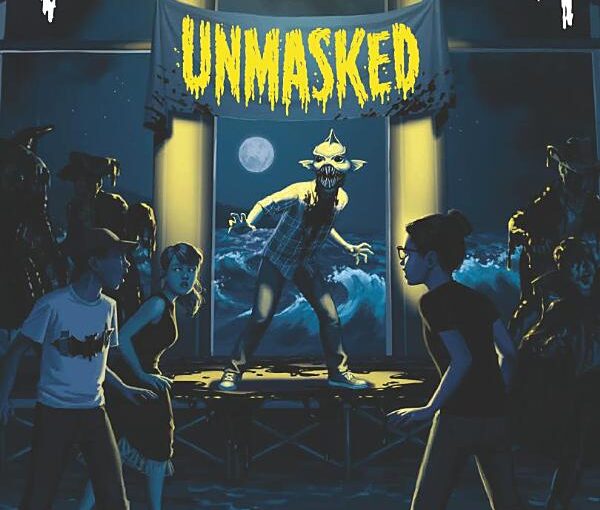
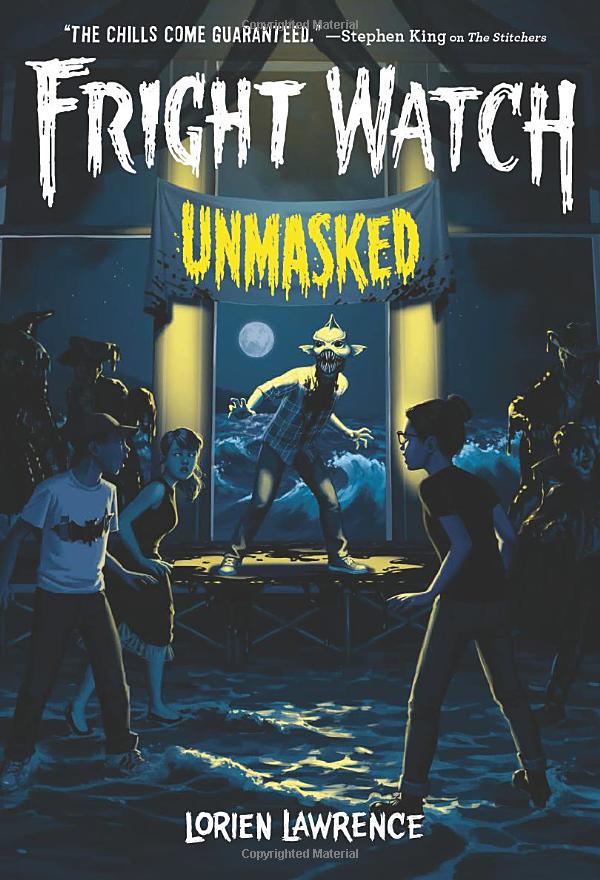
I love it when a book series gets better with a subsequent release. Unmasked is the third book in the Fright Watch series by Lorien Lawrence and manages to do that. We also read The Collectors, which was the second book in the series and while it was enjoyable, it didn’t have as much of an age-appropriate scare that some readers want. Unmasked is about a middle school girl, Marion, who uses the artistic creation of monsters as therapy. Her latest creation is a sea monster that she calls Winston. It’s all happening as the Super Blue Blood Moon and the school dance are around the corner, and Marion has developed a crush on a boy. Things can get complicated when you factor in a super-realistic mask that even gives its creator the creeps.

Unmasked is the third book in the Fright Watch series. It improves upon its predecessor and brings the bad on quicker, whilst keeping the teen feels.
MGLIT, age-OK scares line up at the first page

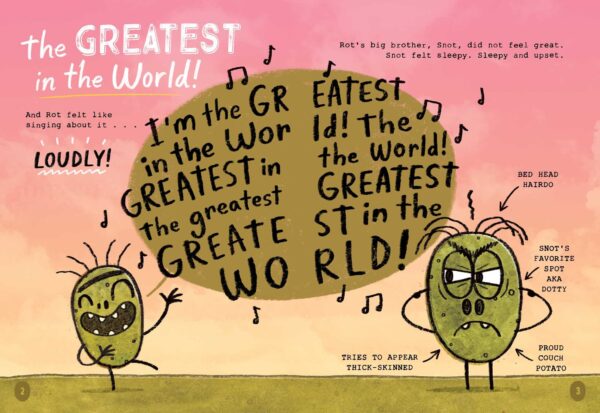
Tater Tales #1: The Greatest in the World! expands Rot’s empire and story

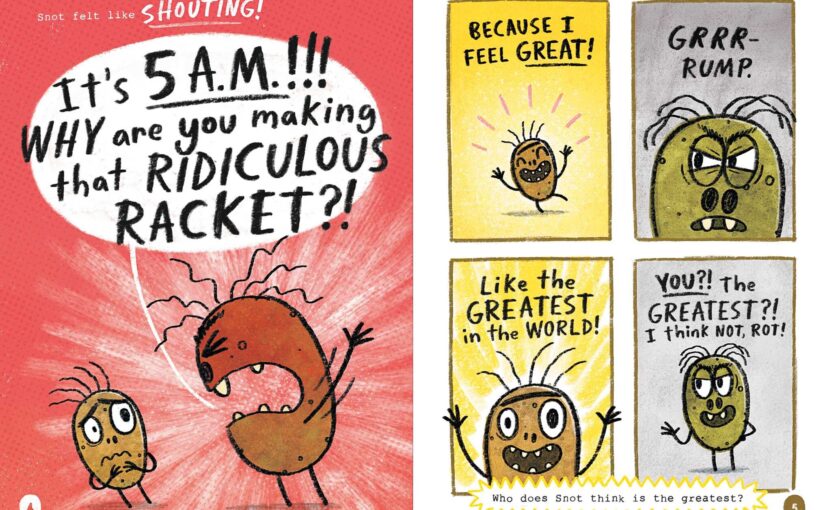
Rot and Snot go through a lot. Previously we saw them in an illustrated book, now it’s many more pages in a book that they took. Tot, their little sister, joins the fray for this adventure. Tater Tales #1, The Greatest in the World!, takes the mutant potato adventures one step further than their previous jaunts in an illustrated book. Tater Tales #1 is an early reader chapter book that heavy on illustrations. One could call this a first graphic novel, but it’s more in line with an emerging reader’s graphic novel. It’s a subtle distinction, but one that will make the book very comfortable for third graders and older, plus a step up for most second graders.

Tater Tales #1: The Greatest in the World! takes Rot and Snot, the two mutant potato, gives them a younger sister and adds chapter that extend beyond the illustrated book reach.
It’s rot and snot, in an early reader chapter book/graphic novel all-skate

National Geographic Kids, the reason why they’re a go-to for elementary age

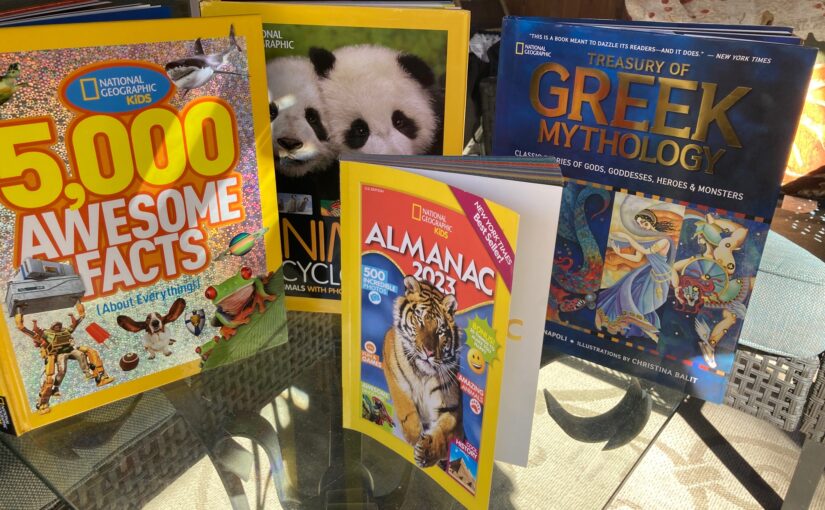
I’m a substitute teacher who mainly works in elementary schools, precisely four of them in the area where I live. This gives me a wider-than-average compression of books and styles. Some of the libraries and classrooms that I visit are next-level, whereas some need more attention to their catalog. The one constant in all of the classrooms and libraries that I teach in is that the reference books from National Geographic and National Geographic Kids are there. It doesn’t matter how old the National Geographic Kids Almanac is, it’s still there, read and enjoyed. I was in a library the other day and saw fourth graders thumbing through the almanac for 2013. We received a couple of the current releases from National Geographic and wanted to highlight a couple of the pros of each of them.

Whether it’s back to school or essays for ages 7 and up, these National Geographic Kids titles are the go-to resource for them.
It’s elementary school go-to for essays on most subjects

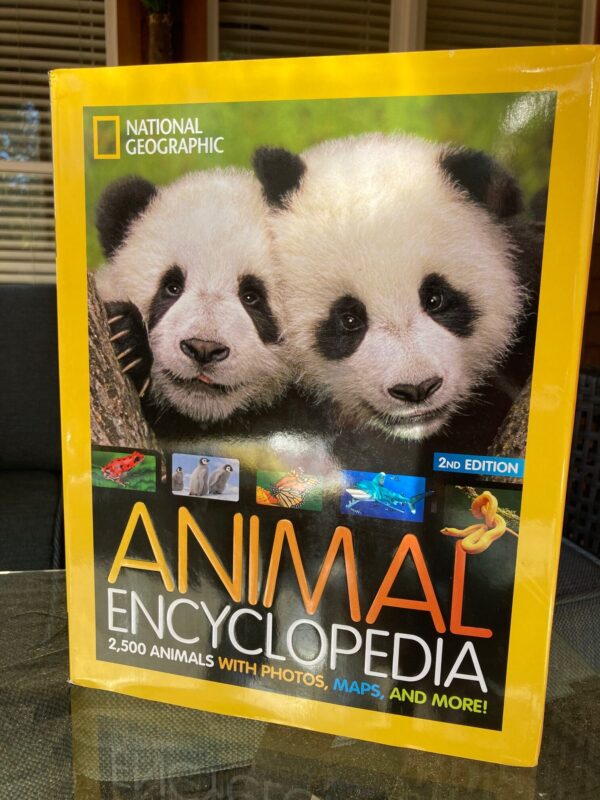
National Geographic Animal Encyclopedia, 2nd Edition

Starting in third-grade students will write essays on various subjects and more often than not, they’ll choose animals. It could be an essay on a wacky critter with a disgusting name, cool characteristic, or unique attribute, but kids like to write about what they love, and they love these books. National Geographic Animal Encyclopedia 2nd Edition is by Dr. Lucy Spelman and is broken up into mammals, birds reptiles, amphibians, invertebrates, and fish. Each of those categories is then provided with dozens of animal examples that make up those areas. For example, I had no idea what a tapir is and how they’re related to rhinos.

Whether it’s back to school or essays for ages 7 and up, these National Geographic Kids titles are the go-to resource for them.

Those two pages alone have enough information for those elementary school ages to create an age-appropriate essay on those thick-skinned beasts that live in Africa, Asia, and South America. This is curiosity food 101 with photographs being the cat videos that bring home the bacon. Kids will listlessly open the book, marvel at the colors in the pictures, become curious about Tomato Frog from Madagascar, and then start sharing facts with you about it.

Treasure of Greek Mythology

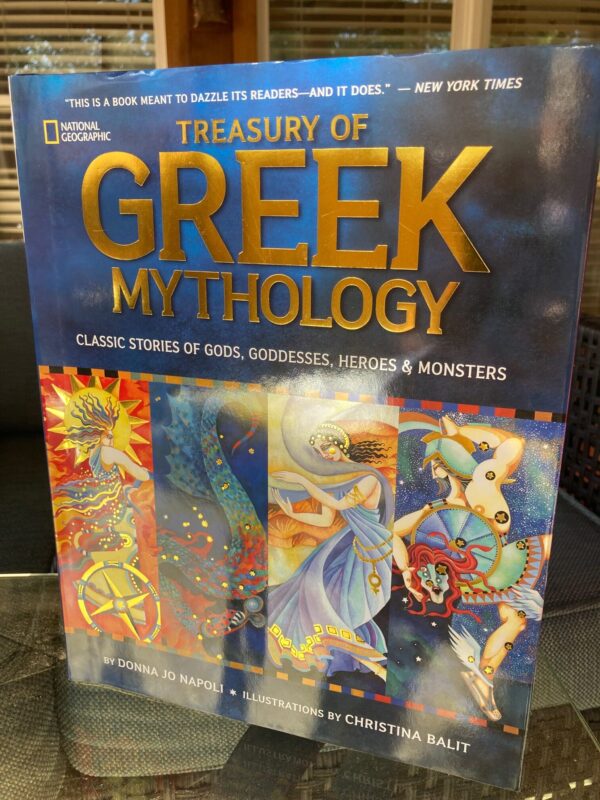
Treasury of Greek Mythology: Classic Stories of Gods, Goddesses, Heroes & Monsters is a National Geographic reference book that takes a slightly different approach. It looks at 25 characters who make up that mythology, including a timeline, map, and more resources. Each profile has gorgeous, painted illustrations that introduce its mythos and shows them at work. You’ll see how Hephaestus was born with a deformed foot and cast to an island where he could throw rocks into a volcano.

Whether it’s back to school or essays for ages 7 and up, these National Geographic Kids titles are the go-to resource for them.

This led him to invent many things made of metal, like a chair with wheels on it which allowed him to move more quickly. His love life didn’t fare so well initially, but patience and ingenuity pay off, which led to his marriage to Aphrodite, who is covered in the next profile. That’s what will interest young readers, Treasure of Greek Mythology has narrative story elements that allow even those who haven’t embraced the Percy Jackson books will enjoy.

5,00 Awesome Facts (About Everything)

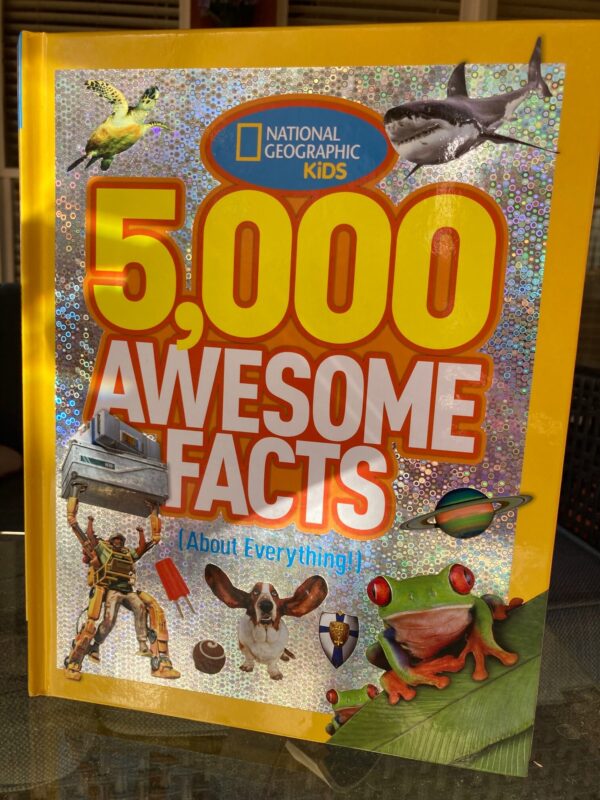
5,000 Awesome Facts (About Everything) from National Geographic Kids is that random, impossible-to-resist, rabbit hole of knowledge that captures ages seven and up for a period of their schooling. It captures them, blazes their eyes with photographs they never thought they’d see, and aligns them with droplets of information and anything and everything.

Whether it’s back to school or essays for ages 7 and up, these National Geographic Kids titles are the go-to resource for them.

The glossary at the end of the book proves that any conceivable interest area is covered. Zorses, yeti, jug bands, creepy facts, Kareem Abdul-Jabbar, and thousands of others have their page number listed so that young readers can dig deep and quickly. Those ages don’t need to explore, they can just thumb any page in the book and be entertained by something. Then they’ll turn to the next page and discover something even more fascinating. Those kids will run into your office and then share with you that tidbit of things that they just discovered. Enjoy the ride, it’s education and this is the process of getting them curious and asking themselves “what is something that I don’t know?”

National Geographic Kids Almanac 2023

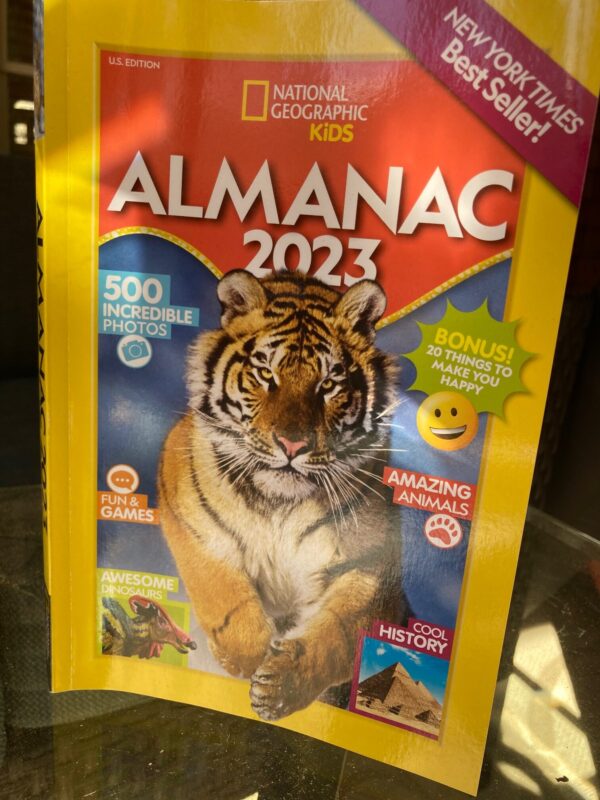
National Geographic Kids Almanac 2023 is the elephant in the room. This is the elementary school armchair traveler that ages 7 and up will go gaga for. Its soft format makes it akin to Grays Sports Almanac. Those ages can bend it, thumb through to different categories, and impress their erstwhile present-day Biff friends as they drop knowledge on any topic under the sun. It’s organized and a steady resource for those essays that elementary school kids will have to do. Like 5,000 Awesome Facts, its glossary is comprehensive and can shortcut readers to exactly the spot they want to research.

Whether it’s back to school or essays for ages 7 and up, these National Geographic Kids titles are the go-to resource for them.

Every elementary school library needs this edition and every fifth-grade classroom would benefit from it. Because I work in various elementary schools I know some of the parents who I’ve seen at schools or out in the community. Sometimes they will ask me what they can do to help. Depending on the subject that their child is in I will tell them that the National Geographic Kids Almanac, 5,000 Awesome Facts or Animal Encyclopedia are low-hanging fruit. They’ll retort that they really want to help, and short of being the room parent and organizing the year’s events; I’ll tell them that these books can do more to help the classroom than almost anything else.

The Almanac retails for only $15.99 and is pound-for-pound one of the most widely read books that any elementary school library has. Depending on the time of year and the schedule for the ELA essays there will be a queue to check them out, so a library having more than one is never a bad thing.

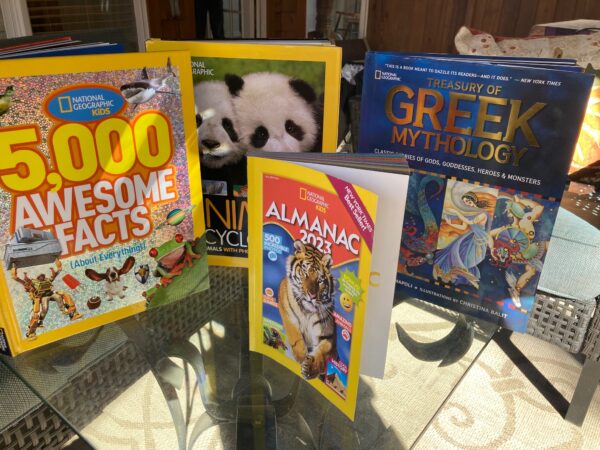
National Geographic Kids Almanac 2023, National Geographic Kids 5,000 Awesome Facts (About Everything), Treasure of Greek Mythology, and National Geographic Animal Encyclopedia 2nd Edition are  National Geographic Kids.  

There are affiliate links in this post.
Drawing Outdoors, aims for STEM but hits the wrong stream

Artistic freedom is at the intersection of Why Am I Creating This Street and Who Is This For Lane. Drawing Outdoors is an illustrated book about a fabulous teacher at a rural school and her very creative students. The pupils gather in the remote single-room house from a variety of trails that snake across the piedmont area. It’s a special day because the kids are told that their lessons will be outside. They’re going to explore, draw things in nature, imagine shapes and expand their horizons. Drawing Outdoors will appeal to lots of elementary-aged students, but there’s one elephant that’s presented early in the book that will water down most of the fun. You’re in for a time if you miss this because the kids won’t, and once they see it you’ll lose all control of the classroom, and the grand message of the book will be lost.

The goal of Drawing Outdoors is creative art interpretation, it succeeds in that, but has an illustration that some won’t be able to get past.
You’re in trouble with some kids if they read this

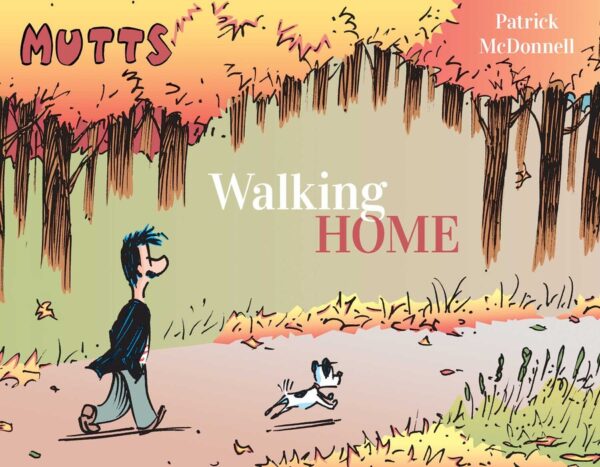
Mutts: Walking Home, comfort comic strip food for everyone, anytime

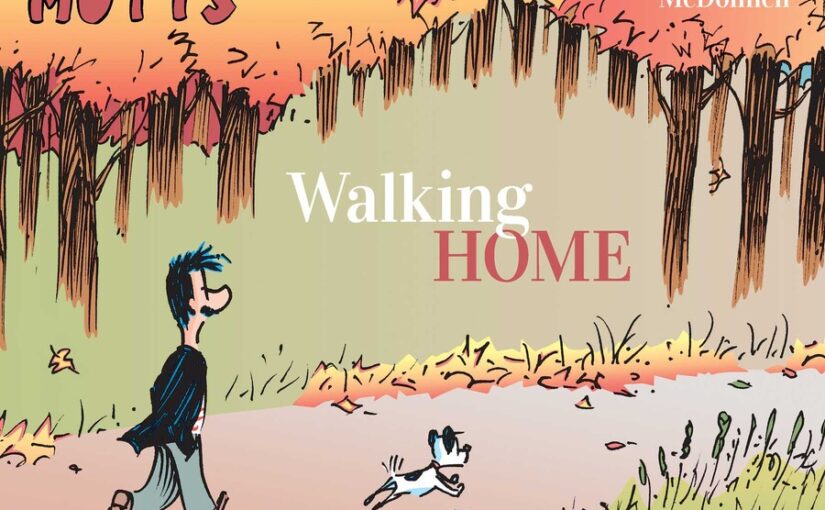
It’s a beautiful autumn day and I’m sitting outside reading Mutts and it’s awesome. One could change every word of that previous sentence, except for ‘Mutts and it’s awesome.’, to something different and it would still be true. It’s a stormy, winter’s day and I’m in bed, under the covers reading Mutts, and it’s awesome. See, it still works. Seasonal comparisons are needed in those sentences because Mutts: Coming Home features Early running on a trail with his human. The leaves on the trees are becoming bright orange to dark yellow and are just about to succumb to gravity. It’s there where they’ll be crunched by walkers, and dogs and will complete the food chain with worms using them to produce compost.

Mutts: Walking Home compiles the tour de force dog and cat comic strip genius that’s as great as it ever was.
Consistant brilliance that’s new and classic

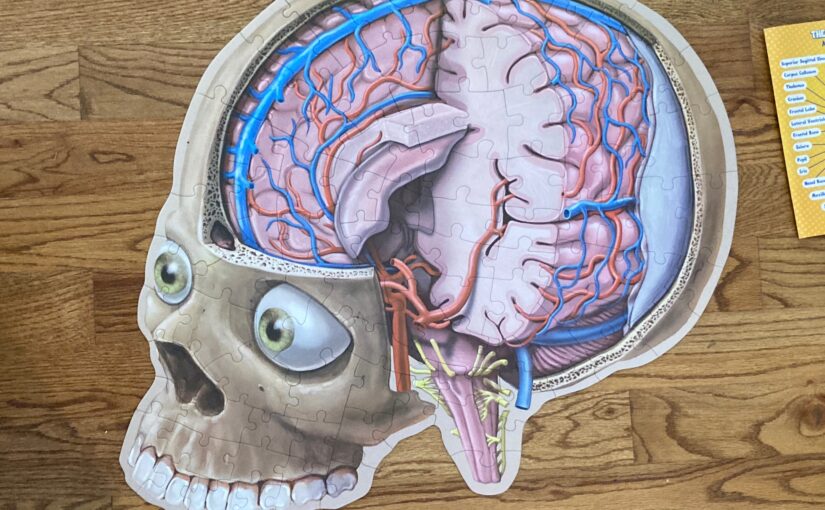
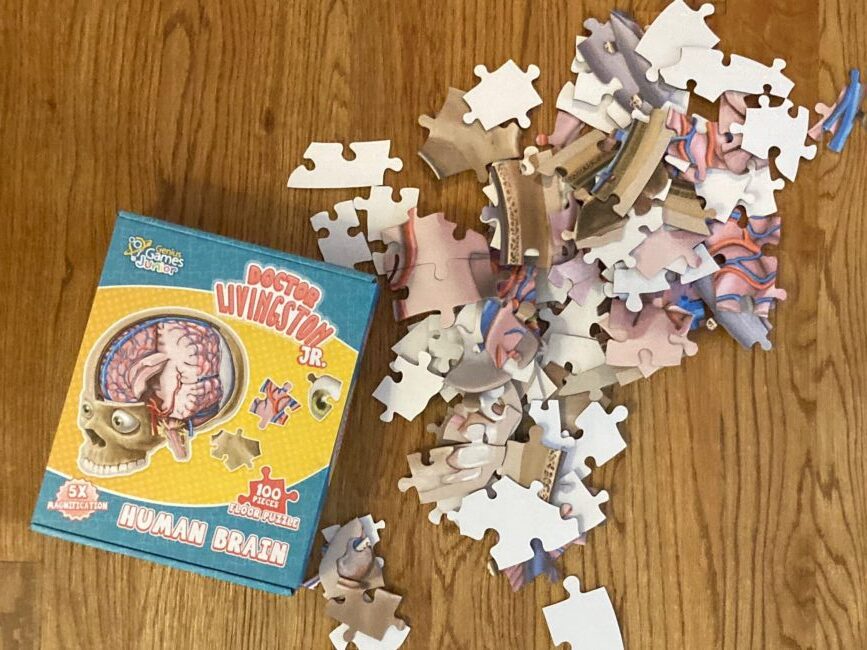
Human Heart Floor Puzzle for kids from Dr. Livingston puts it together

Kids love to have fun. Kids learn in different ways. Everyone knows the first statement, but not enough people acknowledge, pivot, or have the ability to pivot when the learning process might need a different mode of entry. The human body is a naturally curious topic for upper elementary and middle school students. However, there aren’t exactly internal organs that those ages have access to for ‘hands-on’ learning and books can only go so far in motivating them. Genius Games Junior has the Doctor Livingston Jr. line of puzzles that introduces the rabbit hole of our human body that fit like a glove for fifth grade and up.

Human Heart Floor Puzzle for kids from Dr. Livingston puts it together
Just enough education that’s partnered with puzzle fun

What’s the Rush?, uses great art and slow boil to weave differences

Why so serious? was the phrase that crossed my mind the first time I saw What’s the Rush? They’re sibling queries to be sure, but the latter is far less malevolent than the one that folks might associate with the Caped Crusader. What’s the Rush? is a lovely illustrated book by Yiting Lee that proves that books for young audiences don’t need to have a solid, theme-trodden story arc.

What’s the Rush? is an old-school illustrated book that channels the Tao of Pooh, simply by being itself and encouraging others to do the same.
A turtle and a rabbit meet in a bar…..

That might sound like a slam, but I don’t mean it to come across that way. Rather, it’s OK for illustrated books to meander, take their time and allow its characters to smell the roses. To an extent, it is in the vein of The Tao of Pooh, where sometimes a thing just is, or happy characters in a book just are.

What’s the Rush? is an old-school illustrated book that channels the Tao of Pooh, simply by being itself and encouraging others to do the same.

What’s the Rush? sees two friends getting together for some tea and snacks. This book could’ve gone in a different, far less enjoyable, and more predictable manner. That’s because the two friends in question are a rabbit and a turtle. Turtles are slow, rabbits are fast, children got that message and easily know what slow and steady wins the race means.

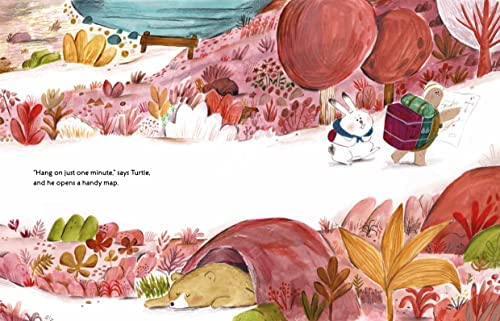
That’s where What the Rush? goes in a different direction and opens up what could be the potential relationship between the two animals. Turtle is a very polite host who serves his friend snacks in an elegantly prepared spread. It’s on this picnic that the turtle innocently mentions that he would like to climb the beautiful mountain that’s in the distance. Rabbit has heard these wistful dreams before and suggests that the two do it tomorrow to which turtle says, “What’s the Rush?”.

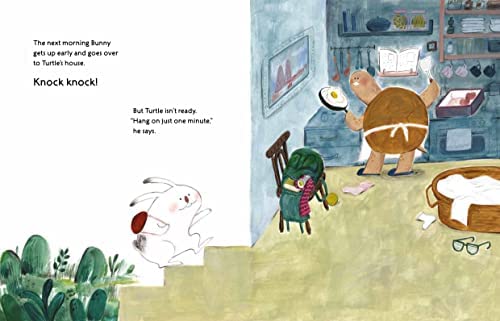
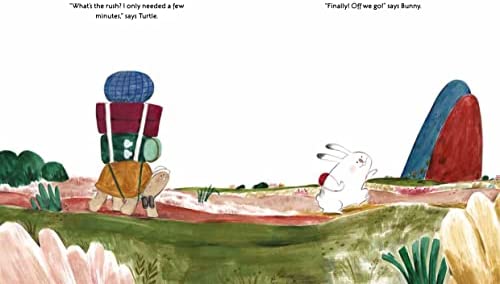
The next morning the two embark on their quest to the mountain. However, the turtle is not quite ready to depart when the rabbit shows up on his doorstep. Turtle is busy folding clothes, trimming shrubbery, watering plants, cooking, painting, cleaning, and packing. Rabbit grows tired of the turtle’s tardiness, screams at him and out the door, the two of them go. Thanks to his hard shell, the turtle is able to carry all of his too many bags on his back.

What’s the Rush? is an old-school illustrated book that channels the Tao of Pooh, simply by being itself and encouraging others to do the same.

As the two make their way to the mountain they encounter troubling obstacles one after the other. “Hang on just one minute”, is what the turtle says to the rabbit each time they get to one of them. Thankfully, due to the turtle’s packing, they’re able to overcome each one of them, all the while the bags on his shell get less numerous.  When they finally get to the mountain top the two friends see the moon, turtle looks up and casually mentions that it would be nice to go there. Rabbit, being the more rabbit of the two suggests that they go tomorrow to which turtle asks his fleet-footed friend, “what’s the rush?”.

The art in What’s the Rush? has an old-school, classic vibe about it that resonates with younger elementary-aged audiences. Some of the illustrations take up full pages, some use white space to fill the void and others use panels. The panels are used very effectively to demonstrate the amount of time that the rabbit perceives as wasted, while his friend is getting ready for the hike.

I read the book to a group of pre-k kids and asked them what the book was about. The responses varied from friendship to working together to taking a vacation. That’s what I meant by the book establishing a folksy, patient way of telling a story that’s a snapshot of the dynamic between two friends. There’s no great conflict or Earth-bending issue they’re navigating. It’s just two friends who are very different and are out for a walk, done with illustrations that will make kids smile.

What’s the Rush? is by Yiting Lee and available on Princeton Architectural Press.

There are affiliate links in this post.
Copy Protected by Chetan's WP-Copyprotect.